




-AI 포뮬레이션, 바이오테크, 피부 마이크로바이옴 등 뷰티 산업의 3대 기술의 각축장
– AI, 마케팅 도구에서 R&D의 심장으로
-스템온·제이앤씨마이크로켐·디에스테크, 초개인화 시대를 여는 한국의 딥테크 스타트업들
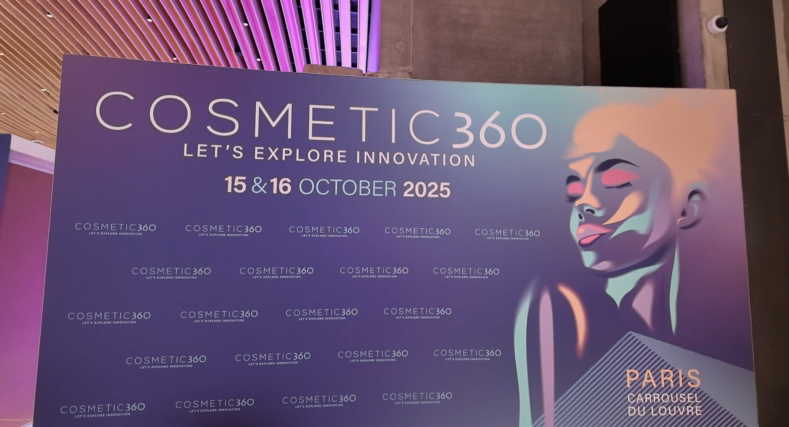
2025년 10월 15~16일 파리의 카루젤 뒤 루브르에서 개최된 제11회 ‘코스메틱 360’은 불확실성 속 뷰티 산업의 대담한 응전이었다. 올해의 슬로건 ‘예측(Predictions)’은 AI 기반 포뮬레이션, 바이오테크 주도의 지속가능성, 그리고 피부 과학의 근본으로의 회귀가 어떻게 융합되어 미래를 형성하는지에 대한 청사진을 제시했다. 무엇보다 이번 행사에서는 K-뷰티 스타트업들이 트렌드 추종자가 아닌 핵심 기술 선도자로서의 위상을 확실히 드러냈다.
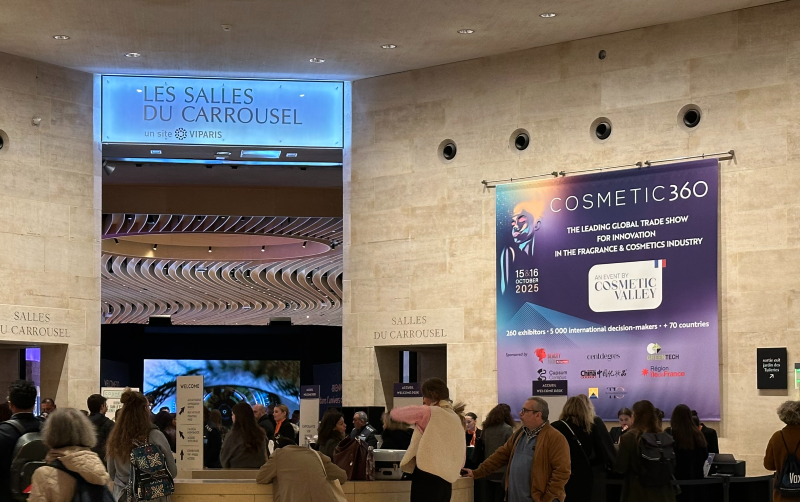
루브르에서 본 풍경: ‘예측’이 재정의하는 뷰티 산업 지형
올해 코스메틱 360의 현장은 미래에 대한 낙관과 기술적 자신감으로 가득했다. 코스메틱 360의 프랑키 베슈로(Franckie Béchereau) 총괄 디렉터는 “우리는 불확실한 세상에 살고 있기 때문에 이 테마를 선택했다. 기술적 도구가 어떻게 내일의 혁신을 상상하는 데 도움이 될 수 있는지 보여주고자 한다”고 밝혔다.
‘예측’이라는 주제는 “극적으로 변화하려는 세상”에 대한 산업의 전략적 대응이자 과거의 성공 방정식이나 단기 유행에 의존하지 않고, 기술을 통해 미래의 수요를 창출하고 위험을 관리하겠다는 선언과도 같았다. 이러한 비전은 그린테크(Greentech)의 ‘예측 캡슐(Anticipation Capsule)’에서 명확히 드러났다. 인류학자, 과학자, 디자이너가 2045년의 화장품 기술과 소비 행태를 상상하는 이 프로젝트는 행사가 지향하는 깊이 있는 통찰을 상징적으로 보여주었다.
세 가지 핵심 기술이 뷰티 산업의 미래 지형을 구체적으로 그려내고 있다.
AI 포뮬레이터: 마케팅 도구에서 R&D의 핵심으로
지금까지 뷰티 산업에서 AI의 역할은 주로 소비자 데이터 분석, 마케팅 자동화, 리테일 재고 관리 등에 국한되어 있지만 이제 AI는 연구개발(R&D)의 심장부로 깊숙이 들어와 있었다.
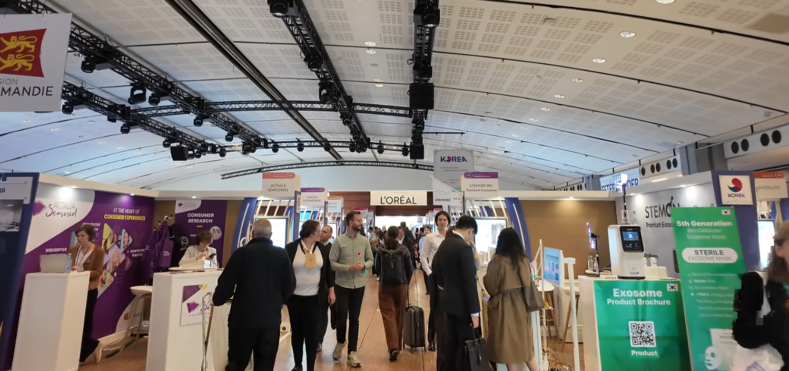
이번 행사의 특별 구역인 ‘욕망을 디자인하라(Design the Desire)’ 존은 AI와 데이터 분석이 인간의 창의성과 결합하여 어떻게 미래의 히트 상품을 설계할 수 있는지를 집중적으로 조명했다. 이는 생성형 AI와 딥러닝 기술을 활용해 새롭고 성능이 뛰어난 맞춤형 제품 포뮬레이션을 개발하는 구체적인 방법론으로 이어졌다.
중국의 프로야 코스메틱스(Proya Cosmetics)가 AI 플랫폼 기업과 협력하여 원료 테스트 단계를 가속화하고, 시너지를 내는 최적의 포뮬레이션을 개발하는 사례는 이러한 흐름이 이미 상업적으로 구현되고 있음을 증명했다.
이러한 변화는 혁신의 속도에 더해 불확실한 시대에 기업의 생존력을 높이는 핵심 전략으로 부상하고 있다. 글로벌 공급망의 불안정성과 원자재 가격 변동성이 커지는 상황에서, 기업들은 신제품 개발에 따르는 막대한 시간과 비용, 그리고 실패의 위험을 줄여야 할 필요성에 직면했다. AI는 이 문제에 대한 가장 강력한 해답을 제시한다.
가상 환경에서 수많은 원료 조합의 상호작용을 시뮬레이션하고, 소비자 반응을 예측하며, 디지털상에서 포뮬레이션을 최적화함으로써, 기업들은 물리적인 실험 횟수를 획기적으로 줄일 수 있다. 이는 실험 폐기물을 줄이는 지속가능성 측면의 이점과도 직결된다. 즉, AI는 이제 혁신의 수단을 넘어 불확실성을 예측하고 통제하여 기업의 회복탄력성을 구축하는 ‘위험 관리(De-risking)’의 핵심 자산으로 자리매김하고 있다.
바이오테크 붐: 지속가능한 효능을 설계하다
AI가 개발의 ‘방법’을 혁신하고 있다면, 바이오테크는 ‘무엇을’ 만들 것인가에 대한 해답을 제시하고 있었다. 바이오테크는 지속가능하면서도 고성능인 원료를 만들어내는 핵심 동력으로 확고히 자리 잡았다. 과거의 ‘안티에이징(anti-aging)’ 담론은 피부의 장수(longevity)와 기능 회복에 초점을 맞춘 ‘웰에이징(well-aging)’으로 진화하고 있었다. 이러한 패러다임 전환의 중심에는 바이오 기술이 있다.
예를 들어, 지방시(Givaudan)의 ‘댄드이레이즈(DandErase™)’는 폐기되던 사프란 꽃잎을 업사이클링하여 만든 비듬 개선 활성 성분으로, ‘순환 뷰티(circular beauty)’의 대표적인 성공 사례로 주목받았다. 또한 미벨 그룹(Mibelle Group)과 란자테크(LanzaTech)가 포집된 이산화탄소를 활용해 팜유 대체재를 개발하는 선구적인 연구는 뷰티 산업이 기후 변화 대응에 어떻게 기여할 수 있는지를 보여주는 중요한 이정표였다.
이러한 흐름은 ‘지속가능성’과 ‘효능’이 상충 관계에 있지 않다는 것을 명확히 보여준다. 과거에는 ‘자연 유래’나 ‘친환경’ 원료가 종종 효능이나 사용감 측면에서 타협의 산물로 여겨졌다. 그러나 2025년의 바이오테크는 이러한 통념을 완전히 뒤집었다. 업사이클링된 원료에서 고효능 활성 성분이 탄생하고, 바이오 발효 기술을 통해 피부 구조와 유사한 독자적인 세라마이드가 만들어지고 있다. 이는 지속가능성이 마케팅 구호나 규제 준수의 영역을 벗어나, 독점적이고 우수한 고효능 원료를 통해 경쟁 우위를 확보하는 핵심 동력임을 의미한다. 기업들이 기존의 ‘지출 기반(spend-based)’ 환경 영향 평가에서 벗어나, 제품 수명 주기 평가(LCA)에 기반한 ‘활동 기반(activity-based)’ 측정 방식으로 전환하려는 움직임은 지속가능성을 핵심적인 운영 전략으로 관리하려는 변화를 명확히 보여준다.
피부 장벽이라는 절대 명제: 모든 건강의 기초
AI와 바이오테크라는 두 거대한 기술 흐름의 기저에는 ‘피부 마이크로바이옴(microbiome)과 피부 장벽 기능’이라는 과학적 화두가 자리하고 있었다.
소비자들이 과학적 근거에 기반한 솔루션을 요구함에 따라, 피부 본연의 생태계를 건강하게 유지하는 것이 모든 스킨케어의 전제 조건이라는 인식이 확산되고 있다. 프리바이오틱스, 프로바이오틱스, 포스트바이오틱스, 그리고 피부 장벽의 핵심 구성 성분인 세라마이드와 나이아신아마이드가 전면에 등장한 것은 이러한 흐름을 반영한다. 또한, 과도한 각질 제거와 불필요한 제품 사용을 지양하고, 소수의 고품질 제품으로 피부 장벽을 보호하는 ‘스키니멀리즘(skinimalism)’ 트렌드 역시 같은 맥락에서 이해할 수 있다.
이 세 가지 거대 트렌드—AI, 바이오테크, 마이크로바이옴 과학—는 독립적으로 움직이는 것이 아니라, 하나의 강력한 시스템으로 융합되며 ‘초개인화(hyper-personalization)’라는 뷰티 산업의 궁극적인 목표를 현실로 만들고 있다. 그 과정은 다음과 같이 예측된다.
먼저, 진보된 센서나 이미징 기술을 통해 개인의 고유한 피부 마이크로바이옴 상태와 장벽 기능이 정밀하게 진단된다. 다음으로, AI가 이 방대한 데이터를 분석하여 특정 미생물 불균형이나 장벽 손상을 해결하기 위한 최적의 맞춤형 포뮬러를 설계한다. 마지막으로, 바이오테크 기술이 그 포뮬러에 필요한 매우 구체적이고 지속가능하며 마이크로바이옴 친화적인 성분(예: 맞춤형 프리바이오틱스, 특정 펩타이드)을 정밀하게 생산해낸다. 이는 ‘건성 피부용’과 같은 대중 시장을 위한 제품에서 벗어나, 개인의 생물학적 상태에 실시간으로 대응하는 진정한 의미의 맞춤형 뷰티 시대를 여는 것이다. 이것이야말로 이번 행사의 주제인 ‘예측’이 궁극적으로 가리키는 미래의 모습이다.
K-뷰티의 새로운 장: 트렌드세터에서 기술 강국으로
이번 코스메틱 360에서 K-뷰티는 중대한 변곡점을 맞이했음을 보여주었다. ‘패스트 뷰티’와 기발한 제품 아이디어로 세계를 휩쓸었던 과거를 지나, 이제는 누구도 쉽게 모방할 수 없는 원천 기술, 즉 ‘딥테크(deep tech)’를 기반으로 글로벌 시장을 공략하는 기술 강국으로 진화하고 있다. 이는 완제품을 수출하는 단계를 넘어, 글로벌 뷰티 산업의 근본적인 기술 및 원료 파트너로서 스스로를 포지셔닝하려는 전략적 움직임이다.
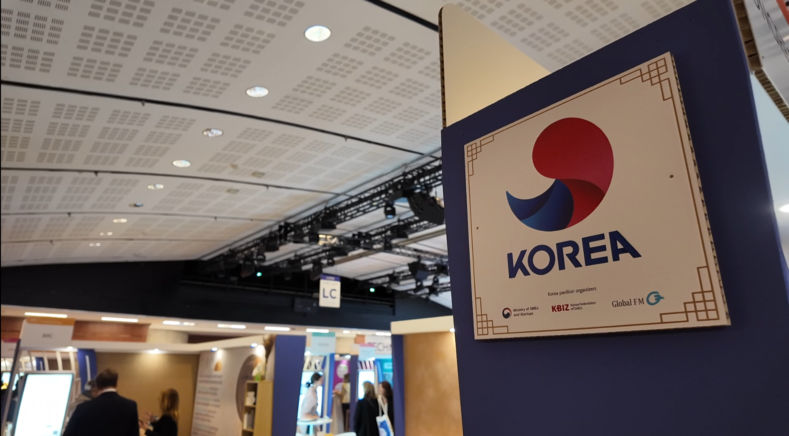
스템온(Stemon Inc.)은 글로벌 뷰티 기업 로레알(L’Oréal)이 주관하는 오픈 이노베이션 프로그램 ‘빅뱅(BIG BANG)’의 연구 혁신 부문 최종 후보(finalist)로 선정됐다. 이는 업계 리더로부터 그들의 핵심 기술이 세계적인 수준의 혁신성을 가졌음을 공식적으로 인정받았다는 증거다.
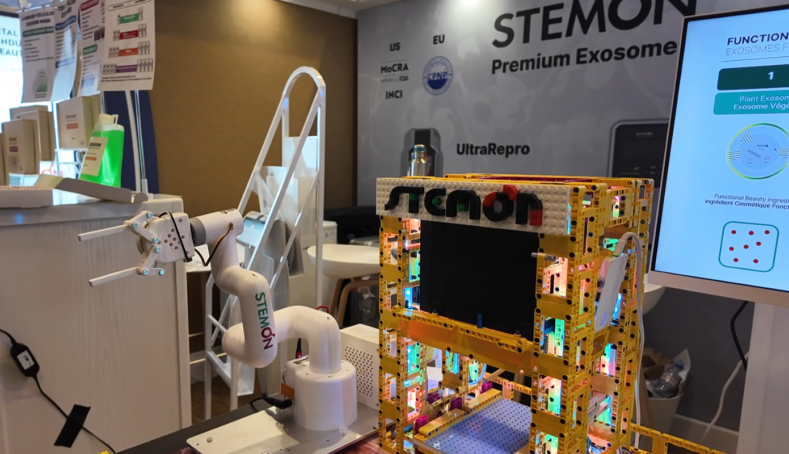
스템온의 기술력은 독자적인 엑소좀 플랫폼에 있다. 식물 유래 엑소좀을 운반체로 사용하여 유효 성분을 피부 깊숙이 안정적으로 전달하는 ‘약물전달시스템(DDDS™)’은 화장품의 효능을 결정하는 ‘전달’의 문제를 해결하는 핵심 기술로 주목받았다. 스템온의 사례는 K-뷰티 스타트업이 완제품 경쟁이라는 레드오션에서 벗어나, 기술 파트너십을 통해 더 높은 부가가치를 창출하는 비즈니스 모델로 진화하고 있음을 명확히 보여준다.
제이앤씨마이크로켐(J&C microchem, Inc.)은 ‘오일 버블 캡슐(Oil Bubble Capsule)’ 기술로 눈길을 끌었다. ‘대즐링듀(DazzlingDew®)’라는 이름의 이 기술은 70% 이상의 높은 함량으로 유효 성분을 오일 내에 담고, 이를 부드러운 생분해성 겔 막으로 감싸는 마이크로 캡슐레이션 기술이다. 이는 최근 환경 문제로 대두된 미세 플라스틱의 완벽한 대안이면서도, 불안정한 유효 성분을 외부 환경으로부터 보호하고 피부에 효과적으로 전달하는 고성능 솔루션이라는 점에서 높은 평가를 받았다.
디에스테크(DS TECH)는 특허 기술인 ‘용해성 마이크로 구조체(Dissolving Micro Structure, DMS)’를 선보였다. 이는 히알루론산과 같은 유효 성분 자체를 미세한 바늘 형태로 만들어 피부의 각질층을 통과시킨 후, 체내에서 자연스럽게 녹아 흡수되도록 하는 혁신적인 경피 약물 전달 시스템이다. 주사 바늘 없이 유효 성분을 피부 깊숙이 전달할 수 있어, 비침습적이고 효과적인 홈케어 솔루션의 새로운 가능성을 제시했다.
또한, 제주도의 아가리쿠스 버섯 추출물에서 주름 개선 및 미백 효과를 증명한 유니제주의 달리시(dalish)처럼, 자연 유래 성분을 과학적으로 검증하여 그 효능을 입증하는 기업들의 기술력도 돋보였다.
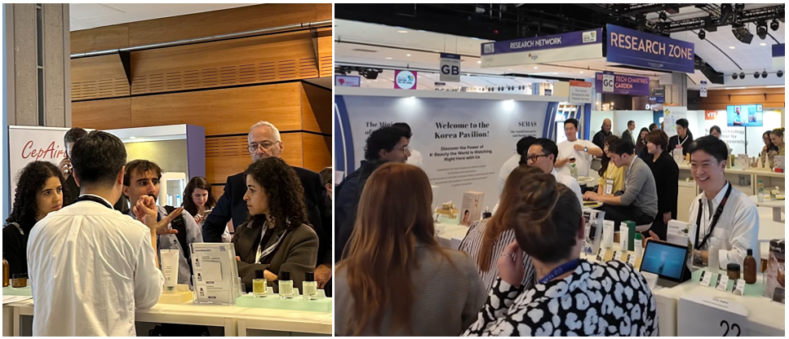
루나셀의 닥터젠틀, 일루틴의 비타-샷, 알엠사이언스의 O’labs 부스 앞에서 프랑스 현지인들이 제품 설명을 듣기 위해 줄을 서서 기다리는 진풍경이 펼쳐지곤 했다. 이는 K-뷰티가 이제 감성적인 트렌드를 넘어, 과학적 효능과 기술력이라는 새로운 무기로 유럽 시장의 문을 두드리고 있음을 보여주는 인상적인 장면이었다.
파리가 제시한 의제 – 지능적이고, 지속가능하며, 개인화된 미래
2025년 코스메틱 360이 보여준 뷰티 산업의 미래는 명확하다. 그 미래의 중심에는 단일 성분이나 일시적 트렌드가 아니라, AI·바이오테크·피부 과학이 융합된 통합적 시스템이다. AI는 정밀한 개인화를, 바이오테크는 지속가능한 효능을, 피부 과학은 근본적 건강에 대한 이해를 이끌며, 세 영역이 서로 긴밀히 연결된 새로운 산업 패러다임을 형성하고 있다.
딥테크 스타트업들의 약진은 한국이 이제 글로벌 뷰티 산업의 기술적 의제를 설정하고 혁신을 주도하는 핵심적인 역할을 수행할 준비가 되었음을 보여준다. 파리가 예측한 미래의 중심에서, 민첩하고 혁신적인 한국의 딥테크 스타트업들이 펼쳐나갈 새로운 장이 더욱 기대되는 이유다.
The Future of Beauty as Revealed by '2025 Cosmetics 360'
A battleground for three major technologies in the beauty industry: AI formulations, biotechnology, and the skin microbiome.
– AI, from a marketing tool to the heart of R&D
StemOn, JNC Microchem, and DS Tech: Korean Deep Tech Startups Ushering in the Era of Hyper-Personalization
The 11th Cosmetics 360, held at the Carrousel du Louvre in Paris from October 15 to 16, 2025, was a bold response from the beauty industry amidst uncertainty. This year's slogan, "Predictions," presented a blueprint for how AI-driven formulations, biotech-driven sustainability, and a return to the fundamentals of skin science will converge to shape the future. Above all, the event solidified K-beauty startups' position as core technology leaders, not just trend followers.
A View from the Louvre: How 'Prediction' Is Redefining the Beauty Industry
This year's Cosmetics 360 event was filled with optimism for the future and technological confidence. Franckie Béchereau, Director of Cosmetics 360, said, "We chose this theme because we live in an uncertain world. We want to show how technological tools can help us imagine tomorrow's innovations."
The theme of "Anticipation" represented the industry's strategic response to a "world undergoing dramatic change," a declaration that it would not rely on past success formulas or short-term trends, but would instead create future demand and manage risks through technology. This vision was clearly expressed in Greentech's "Anticipation Capsule." This project, in which anthropologists, scientists, and designers imagined cosmetics technology and consumer behavior in 2045, symbolically demonstrated the profound insight the event aimed to achieve.
Three key technologies are shaping the future landscape of the beauty industry.
AI Formulator: From Marketing Tool to R&D Core
While AI's role in the beauty industry has traditionally been limited to consumer data analysis, marketing automation, and retail inventory management, it's now finding its way deep into the heart of research and development (R&D).
The event's special zone, "Design the Desire," focused on how AI and data analytics, combined with human creativity, can design future hit products. This led to specific methodologies for developing novel, high-performance, customized product formulations using generative AI and deep learning technologies.
China's Proya Cosmetics' collaboration with an AI platform company accelerates raw material testing and develops optimal formulations that deliver synergy, proving that this trend is already being implemented commercially.
These changes, coupled with the pace of innovation, are emerging as a key strategy for enhancing corporate survival in uncertain times. With global supply chains becoming increasingly unstable and raw material prices becoming increasingly volatile, companies face the need to reduce the enormous time and cost associated with new product development, as well as the risk of failure. AI offers a powerful solution to this challenge.
By simulating the interactions of numerous ingredient combinations in a virtual environment, predicting consumer reactions, and optimizing formulations digitally, companies can dramatically reduce the number of physical trials. This also directly translates to sustainability benefits, such as reducing experimental waste. In other words, AI is now positioned as a key asset for "de-risking," going beyond a tool for innovation to predict and manage uncertainty, thereby building corporate resilience.
The Biotech Boom: Designing Sustainable Effectiveness
While AI is revolutionizing the "method" of development, biotechnology is providing answers to the question of "what" to create. Biotechnology has firmly established itself as a key driving force in creating sustainable, high-performance raw materials. The past "anti-aging" discourse is evolving into "well-aging," focusing on skin longevity and functional restoration. Biotechnology is at the heart of this paradigm shift.
For example, Givaudan's DandErase™, an anti-dandruff active ingredient made from upcycled discarded saffron petals, has garnered attention as a prime example of "circular beauty" success. Furthermore, Mibelle Group and LanzaTech's pioneering research into developing a palm oil alternative using captured carbon dioxide has been a significant milestone, demonstrating how the beauty industry can contribute to climate change response.
This trend clearly demonstrates that "sustainability" and "efficacy" are not mutually exclusive. In the past, "natural" or "eco-friendly" ingredients were often seen as compromises in terms of efficacy and user experience. However, biotechnology in 2025 has completely overturned this conventional wisdom. Highly effective active ingredients are being created from upcycled raw materials, and unique ceramides that resemble the structure of the skin are being created through biofermentation technology. This means that sustainability is no longer a marketing slogan or regulatory compliance, but a key driver of competitive advantage through exclusive, superior, and highly effective ingredients. The shift among companies away from traditional "spend-based" environmental impact assessments to "activity-based" measurement methods based on product life cycle assessments (LCA) clearly demonstrates a shift toward managing sustainability as a core operational strategy.
The absolute proposition of the skin barrier: the foundation of all health.
At the foundation of these two major technological trends—AI and biotechnology—lies the scientific topic of “skin microbiome and skin barrier function.”
As consumers demand science-based solutions, there's a growing recognition that maintaining a healthy skin ecosystem is a prerequisite for all skincare. The rise of prebiotics, probiotics, postbiotics, and key skin barrier components like ceramides and niacinamide reflects this trend. The "skinimalism" trend, which avoids excessive exfoliation and unnecessary products, and instead focuses on protecting the skin barrier with a small number of high-quality products, is also understandable in this context.
These three megatrends—AI, biotechnology, and microbiome science—do not operate independently, but are converging into a single, powerful system, making the beauty industry's ultimate goal of "hyper-personalization" a reality. The process is predicted to unfold as follows:
First, advanced sensors and imaging technologies precisely diagnose an individual's unique skin microbiome and barrier function. Next, AI analyzes this vast data to design an optimal, personalized formula to address specific microbial imbalances or barrier damage. Finally, biotechnology precisely produces the highly specific, sustainable, and microbiome-friendly ingredients needed for these formulas (e.g., customized prebiotics, specific peptides). This marks a shift from mass-market products like "for dry skin" to a truly personalized beauty era that responds to an individual's biological needs in real time. This is the future ultimately envisioned by the event's theme, "Predictive."
A New Chapter for K-Beauty: From Trendsetter to Tech Powerhouse
This year's Cosmetics 360 showcased that K-beauty has reached a significant turning point. Having previously dominated the world with "fast beauty" and innovative product ideas, it is now evolving into a technological powerhouse, targeting the global market based on "deep tech," a core technology that cannot be easily replicated. This strategic move goes beyond simply exporting finished products and positions itself as a fundamental technology and raw material partner for the global beauty industry.
Stemon Inc. has been selected as a finalist in the Research and Innovation category of L'Oréal's open innovation program, "BIG BANG." This represents official recognition from industry leaders for the world-class innovation potential of their core technology.
StemOn's technological prowess lies in its proprietary exosome platform. The "Drug Delivery System (DDDS™)" uses plant-derived exosomes as carriers to reliably deliver active ingredients deep into the skin, garnering attention as a key technology for solving the delivery problem that determines the efficacy of cosmetics. StemOn's case clearly demonstrates how K-beauty startups are evolving beyond the red ocean of finished product competition to embrace business models that generate higher added value through technology partnerships.
J&C microchem, Inc. has attracted attention with its "Oil Bubble Capsule" technology. This technology, called "DazzlingDew®," encapsulates active ingredients in oil at a concentration of over 70%, encapsulating them in a soft, biodegradable gel film. It is a perfect alternative to microplastics, a recent environmental concern, and has been highly praised for its high-performance solution that protects potentially unstable active ingredients from the external environment and effectively delivers them to the skin.
DS TECH unveiled its patented "Dissolving Micro Structure (DMS)" technology. This innovative transdermal drug delivery system creates effective ingredients, such as hyaluronic acid, in the form of microscopic needles that penetrate the stratum corneum, where they dissolve and are absorbed naturally within the body. This needle-free delivery of effective ingredients deep into the skin presents a new possibility for non-invasive and effective home care solutions.
Additionally, the technological prowess of companies that scientifically verify natural ingredients to prove their efficacy, such as Unijeju's Dalish, which has proven its wrinkle-improving and whitening effects from Jeju Island's Agaricus mushroom extract, also stands out.
A spectacle unfolded in front of the booths of Lunacell's Dr. Gentle, Illutine's Vita-Shot, and RM Science's O'labs, with locals lining up to hear product descriptions. This was a striking sight, demonstrating that K-beauty has transcended sentimental trends and is now knocking on the doors of the European market with new weapons: scientific efficacy and technological prowess.
The Paris Agenda: An Intelligent, Sustainable, and Personalized Future
The future of the beauty industry, as depicted in Cosmetics 360 in 2025, is clear. At its core is not a single ingredient or a fleeting trend, but an integrated system converging AI, biotechnology, and dermatology. AI drives precise personalization, biotechnology drives sustainable efficacy, and dermatology drives understanding of fundamental health. These three fields are closely interconnected, forming a new industry paradigm.
The rapid growth of deep-tech startups demonstrates that Korea is now poised to play a key role in setting the technological agenda and driving innovation in the global beauty industry. This is why we anticipate a new chapter unfolding for agile and innovative Korean deep-tech startups at the heart of the future predicted by Paris.
「2025コスメ360」が見せた美容の未来
-AIフォーミュレーション、バイオテク、皮膚マイクロバイオームなどビューティー産業の3大技術の角軸場
– AI、マーケティングツールからR&Dの心臓へ
-ステムオン・ジェイアンシーマイクロケム・ディエステク、初個人化時代を開く韓国のディープテックスタートアップたち
2025年10月15~16日、パリのカルーゼル・デュ・ルーブルで開催された第11回「コスメティック360」は、不確実性の中で美容産業の大胆な応戦だった。今年のスローガン「予測(Predictions)」は、AIベースのフォーミュレーション、バイオテク主導の持続可能性、そして皮膚科学の根本への回帰がどのように融合して未来を形成するかについての青写真を提示した。何よりも今回のイベントでは、K-ビューティースタートアップがトレンドフォロワーではなく、コア技術のリーダーとしての地位をしっかり明らかにした。
ルーブルから見た風景:「予測」が再定義する美容産業地形
今年のコスメティック360の現場は、将来に対する楽観と技術的自信に満ちていた。コスメティック360のFranckie Béchereau氏は、「私たちは不確実な世界に住んでいるので、このテーマを選びました。
「予測」というテーマは、「劇的に変化しようとする世界」に対する産業の戦略的対応であり、過去の成功方程式や短期流行に依存せず、技術を通じて未来の需要を創出してリスクを管理するという宣言とも同じだった。このビジョンは、グリーンテックの「予測カプセル(Anticipation Capsule)」で明確に明らかになった。人類学者、科学者、デザイナーが2045年の化粧品技術と消費行動を想像するこのプロジェクトは、イベントが志向する深い洞察を象徴的に示した。
3つの核心技術が美容産業の未来地形を具体的に描いている。
AIフォーミュレータ:マーケティングツールからR&Dの核心へ
これまでビューティー産業におけるAIの役割は主に消費者データ分析、マーケティング自動化、小売在庫管理などに限られているが、今やAIは研究開発(R&D)の中心部に深く入ってきた。
今回のイベントの特別ゾーンである「欲望をデザインせよ(Design the Desire)」ジョンは、AIとデータ分析が人間の創造性と結合し、どのように将来のヒット商品を設計できるかを集中的に照明した。これは、生成型AIとディープラーニング技術を活用して、新しくて性能に優れたカスタマイズされた製品フォーミュレーションを開発する具体的な方法論につながった。
中国のProya CosmeticsがAIプラットフォーム企業と協力して原料テスト段階を加速し、相乗効果を与える最適なフォーミュレーションを開発する事例は、この流れがすでに商業的に実装されていることを証明した。
この変化は、革新のスピードに加えて不確実な時代に企業の生存力を高める核心戦略として浮上している。グローバルサプライチェーンの不安定性と原材料価格の変動性が高まる状況では、企業は新製品の開発に伴う膨大な時間とコスト、そして失敗のリスクを減らす必要性に直面しました。 AIはこの問題に対する最も強力な答えを提示します。
仮想環境における多数の原料の組み合わせの相互作用をシミュレートし、消費者の反応を予測し、デジタルでのフォーミュレーションを最適化することによって、企業は物理的な実験の数を劇的に減らすことができます。これは、実験廃棄物を減らす持続可能性の側面の利点にも直結する。つまり、AIは今やイノベーションの手段を超えて不確実性を予測して統制し、企業の回復弾力性を構築する「リスク管理(De-risking)」の核心資産として位置づけている。
バイオテックブーム:持続可能な効能を設計する
AIが開発の「方法」を革新している場合、バイオテックは「何を」作るかに対する答えを提示していた。バイオテックは持続可能でありながら高性能な原料を生み出す核心動力としてしっかりと位置づけられた。過去の「アンチエイジング(anti-aging)」談論は、皮膚の長寿(longevity)と機能回復に焦点を合わせた「ウェルエイジング(well-aging)」に進化していた。このパラダイム変換の中心にはバイオ技術があります。
例えば、ジバウダンの「ダンドイレイズ(DandErase™)」は、廃棄されたサフランの花びらをアップサイクリングして作られたフケ改善活性成分で、「循環ビューティー(circular beauty)」の代表的な成功事例として注目された。また、ミベルグループ(Mibelle Group)とランザテック(LanzaTech)が捕集した二酸化炭素を活用してパーム油代替材を開発する先駆的な研究は、美容産業が気候変動対応にどのように貢献できるかを示す重要なマイルストーンだった。
この流れは、「持続可能性」と「効能」が矛盾する関係にないことを明確に示しています。過去には「自然由来」や「環境にやさしい」原料がしばしば効能や使用感の面で妥協の産物とされていた。しかし、2025年のバイオテクはこのような通念を完全に覆した。アップサイクリングされた原料から高効能活性成分が誕生し、バイオ発酵技術を通じて皮膚構造に類似した独自のセラミドが作られている。これは、持続可能性がマーケティングの救済や規制遵守の分野を超えており、独占的で優れた高効率原料を通じて競争優位を確保するための重要な動力であることを意味します。企業が既存の「支出ベース(spend-based)」環境影響評価から逸脱し、製品ライフサイクル評価(LCA)に基づく「活動ベース(activity-based)」測定方式に切り替えようとする動きは、持続可能性をコアな運用戦略に管理する変化を明確に示している。
皮膚障壁という絶対命題:すべての健康の基礎
AIとバイオテクという2つの巨大な技術フローの基礎には「皮膚マイクロバイオム(microbiome)と皮膚バリア機能」という科学的話題が位置していた。
消費者が科学的根拠に基づくソリューションを要求するにつれて、肌の自然の生態系を健康に保つことがすべてのスキンケアの前提条件であるという認識が広がっている。プレバイオティクス、プロバイオティクス、ポストバイオティクス、そして皮膚バリアの核心構成成分であるセラミドとナイアシンアミドが前面に登場したのはこの流れを反映する。また、過度の角質除去と不要な製品の使用を止め、少数の高品質製品で肌の障壁を保護する「スキニマリズム」トレンドも同様の文脈で理解することができる。
この3つの巨大なトレンド – AI、バイオテク、マイクロバイオム科学 – は独立して動くのではなく、一つの強力なシステムに融合し、「超個人化(hyper-personalization)」という美容産業の究極的な目標を現実にしている。その過程は次のように予測される。
まず、高度なセンサーやイメージング技術を使用して、個人の固有の皮膚マイクロバイオーム状態とバリア機能を正確に診断します。次に、AIはこの膨大なデータを分析して特定の微生物の不均衡や障壁の損傷を解決するための最適なカスタマイズされたフォーミュラを設計します。最後に、バイオテク技術は、そのフォーミュラに必要な非常に具体的で持続可能であり、マイクロバイオームに優しい成分(例えば、カスタマイズされたプレバイオティクス、特定のペプチド)を正確に製造する。これは、「乾燥肌用」などの市場のための製品から逸脱し、個人の生物学的状態にリアルタイムで対応する真の意味のカスタマイズされた美しさの時代を開くことです。これこそ今回のイベントのテーマである「予測」が究極的に指す未来の姿だ。
Kビューティーの新章:トレンドセッターから技術強国へ
今回のコスメティック360でK-ビューティーは重大な変曲点を迎えたことを示した。 「ファストビューティー」と奇抜な製品アイデアで世界をさらった過去を過ぎて、今は誰も簡単に模倣できない源泉技術、つまり「ディープテック」を基盤にグローバル市場を攻略する技術強国に進化している。これは、完成品を輸出する段階を超えて、グローバルビューティー業界の基本的な技術と原料パートナーとして自分自身を位置決めする戦略的な動きです。
Stemon Inc.は、グローバルビューティー企業ロレアル(L'Oréal)が主管するオープンイノベーションプログラム「BIG BANG」の研究イノベーション部門最終候補(finalist)に選ばれた。これは、業界リーダーから彼らのコア技術が世界クラスの革新性を持っていることを正式に認められたという証拠だ。
ステムオンの技術力は独自のエキソソームプラットフォームにある。植物由来エキソソームを担体として使用して有効成分を皮膚の奥深くに安定的に伝達する「薬物伝達システム(DDDS™)」は、化粧品の効能を決定する「伝達」の問題を解決する核心技術として注目された。ステムオンの事例は、K-ビューティースタートアップが完成品競争というレッドオーシャンから抜け出して、技術パートナーシップを通じてより高い付加価値を創出するビジネスモデルに進化していることを明確に示している。
J&C microchem, Inc.は「オイルバブルカプセル(Oil Bubble Capsule)」技術で注目を集めた。 「DazzlingDew®」という名前のこの技術は、70%以上の高含有量で有効成分を油中に入れ、これを柔らかい生分解性ゲル膜で包むマイクロカプセル化技術です。これは最近、環境問題として台頭した微細プラスチックの完璧な代替案でありながら、不安定な有効成分を外部環境から保護し、皮膚に効果的に伝達する高性能ソリューションという点で高い評価を受けた。
ディエステック(DS TECH)は、特許技術である「溶解性マイクロ構造体(Dissolving Micro Structure、DMS)」を披露した。これは、ヒアルロン酸などの有効成分自体を微細な針状にして皮膚の角質層を通過させた後、体内で自然に溶けて吸収させる革新的な経皮薬物送達システムである。注射針なしで有効成分を皮膚の奥深くに伝達することができ、非侵襲的で効果的なホームケアソリューションの新たな可能性を提示した。
また、済州島のアガリクスキノコ抽出物でしわの改善と美白効果を証明したユニ済州のダリシのように、自然由来成分を科学的に検証し、その効能を立証する企業の技術力も目立った。
ルナセルのドクタージェントル、イルルーチンのヴィータショット、アルエンサイエンスのO'labsブースの前でフランスの地元の人々が製品説明を聞くために並んで待っている風景が広がっていた。これは、K-ビューティーが今や感性的なトレンドを超えて、科学的効能と技術力という新しい武器でヨーロッパ市場の扉を叩いていることを示す印象的なシーンだった。
パリが提示した議題 – インテリジェントで持続可能で個人化された未来
2025年のコスメティック360が見せた美容産業の未来は明確だ。その未来の中心には単一成分や一時的なトレンドではなく、AI・バイオテク・肌科学が融合した統合的システムだ。 AIは精密なパーソナライゼーションを、バイオテクは持続可能な効能を、皮膚科学は根本的な健康に対する理解を導き、3つの領域が互いに密接につながった新しい産業パラダイムを形成している。
ディープテックスタートアップの躍進は、韓国が今やグローバルビューティー産業の技術的議題を設定し、イノベーションを主導する核心的な役割を遂行する準備ができていることを示している。パリが予測した未来の中心で、機敏で革新的な韓国のディープテックスタートアップが繰り広げていく新しい場がさらに期待される理由だ。
《2025 Cosmetics 360》揭示的美容未来
美妆行业三大技术的战场:AI配方、生物科技、皮肤微生物组。
– 人工智能,从营销工具到研发核心
StemOn、JNC Microchem 和 DS Tech:引领超个性化时代的韩国深度科技初创公司
第11届Cosmetics 360于2025年10月15日至16日在巴黎卢浮宫卡鲁塞尔中心举行,这是美妆行业在充满不确定性的环境下做出的大胆回应。今年的主题是“预测”,描绘了一幅蓝图,展现了人工智能驱动的配方、生物技术驱动的可持续性以及回归皮肤科学基本原理将如何融合,共同塑造未来。最重要的是,此次活动巩固了韩国美妆初创公司作为核心技术领导者而非仅仅是潮流追随者的地位。
卢浮宫视角:“预测”如何重新定义美容行业
今年的Cosmetics 360活动充满了对未来的乐观和对科技的信心。Cosmetics 360总监Franckie Béchereau表示:“我们选择这个主题是因为我们生活在一个充满不确定性的世界。我们希望展示科技工具如何帮助我们构想未来的创新。”
“预期”的主题代表了化妆品行业对“正在经历剧烈变革的世界”的战略回应,它表明化妆品行业不会依赖过去的成功模式或短期趋势,而是要通过技术创造未来需求并管理风险。这一愿景在Greentech的“预期胶囊”中得到了清晰的体现。该项目由人类学家、科学家和设计师共同构想了2045年的化妆品技术和消费者行为,象征性地展现了此次展会旨在实现的深刻洞察。
三大关键技术正在塑造美容行业的未来格局。
AI配方师:从营销工具到研发核心
虽然人工智能在美容行业的作用传统上仅限于消费者数据分析、营销自动化和零售库存管理,但现在它正在深入到研发(R&D)的核心。
本次活动的特别展区“设计渴望”聚焦于如何将人工智能和数据分析与人类创造力相结合,设计未来的热门产品。这催生了利用生成式人工智能和深度学习技术开发新颖、高性能、定制化产品配方的具体方法。
中国珀莱雅化妆品与一家人工智能平台公司的合作加速了原材料测试并开发出具有协同效应的最佳配方,证明这一趋势已经在商业上得到实施。
这些变化,加上创新的步伐,正在成为企业在不确定时期提升生存的关键战略。随着全球供应链日益不稳定,原材料价格波动加剧,企业面临着减少新产品开发所需时间和成本以及降低失败风险的需求。人工智能为这一挑战提供了强有力的解决方案。
通过在虚拟环境中模拟多种成分组合的相互作用,预测消费者反应,并以数字化方式优化配方,企业可以大幅减少实体试验的次数。这也直接转化为可持续性效益,例如减少实验浪费。换句话说,人工智能如今已被定位为“降低风险”的关键资产,它不仅仅是一种创新工具,还可以预测和管理不确定性,从而增强企业的韧性。
生物技术繁荣:设计可持续的有效性
人工智能正在彻底改变发展的“方法”,而生物技术则为“创造什么”这一问题提供了答案。生物技术已牢固确立其作为创造可持续、高性能原材料的关键驱动力的地位。过去的“抗衰老”话语正在演变为“健康老龄化”,重点关注皮肤寿命和功能恢复。生物技术是这一范式转变的核心。
例如,奇华顿的DandErase™是一款由废弃藏红花花瓣升级再造而成的去屑活性成分,作为“循环美容”的成功典范而备受关注。此外,Mibelle集团和LanzaTech利用捕获的二氧化碳开发棕榈油替代品的开创性研究也是一个重要的里程碑,展示了美容行业如何为应对气候变化做出贡献。
这一趋势清晰地表明,“可持续性”与“功效”并非互相排斥。过去,“天然”或“环保”成分常常被视为在功效和用户体验方面的妥协。然而,2025年的生物技术彻底颠覆了这一传统观念。高效活性成分正由升级再造的原材料制成,而类似于皮肤结构的独特神经酰胺正通过生物发酵技术被创造出来。这意味着可持续性不再是营销口号或合规性,而是通过独家、优质和高效的成分来获得竞争优势的关键驱动力。企业从传统的“基于支出”的环境影响评估转向基于产品生命周期评估 (LCA) 的“基于活动”的测量方法,清楚地表明了企业正将可持续性管理作为核心运营战略的转变。
皮肤屏障的绝对主张:一切健康的基础。
人工智能和生物技术这两大科技趋势的根基在于“皮肤微生物群与皮肤屏障功能”这一科学课题。
随着消费者对基于科学的解决方案的需求,人们越来越认识到,维持健康的皮肤生态系统是所有护肤产品的先决条件。益生元、益生菌、后生元以及神经酰胺和烟酰胺等关键皮肤屏障成分的兴起反映了这一趋势。在这种背景下,“皮肤动物主义”趋势也同样可以理解,它避免过度去角质和不必要的产品,而是专注于用少量的高质量产品来保护皮肤屏障。
人工智能、生物技术和微生物组科学这三大趋势并非各自独立运作,而是正在汇聚成一个强大的系统,使美妆行业“超个性化”的终极目标成为现实。预计这一进程将如下展开:
首先,先进的传感器和成像技术能够精准诊断个体独特的皮肤微生物组和屏障功能。其次,人工智能会分析这些海量数据,设计出最佳的个性化配方,以解决特定的微生物失衡或屏障损伤问题。最后,生物技术精准生产这些配方所需的高度特异性、可持续性且对微生物组友好的成分(例如定制益生元、特定肽)。这标志着从“干性皮肤”等大众市场产品向真正个性化的美容时代转变,能够实时响应个体的生物需求。这正是本次活动主题“预测”所最终设想的未来。
韩国美容新篇章:从潮流引领者到科技强国
今年的Cosmetics 360展会展现了韩国美容业已到达一个重要的转折点。韩国美容业曾凭借“快美妆”和创新产品理念称霸全球,如今正发展成为一家科技巨头,以“深度科技”(一项难以复制的核心技术)为基础,瞄准全球市场。这一战略举措超越了单纯的成品出口,将自身定位为全球美容行业的基础技术和原材料合作伙伴。
Stemon Inc. 入围欧莱雅开放式创新项目“BIG BANG”研究与创新类别决赛。这代表着其核心技术的世界级创新潜力获得了行业领袖的正式认可。
StemOn 的技术实力源于其专有的外泌体平台。“药物输送系统 (DDDS™)”利用植物来源的外泌体作为载体,将活性成分可靠地输送至皮肤深层,作为解决决定化妆品功效的输送问题的关键技术而备受关注。StemOn 的案例清晰地展现了韩国美容初创企业如何突破成品竞争的红海,拥抱通过技术合作创造更高附加值的商业模式。
J&C microchem, Inc. 凭借其“油泡胶囊”技术备受瞩目。这项名为“DazzlingDew®”的技术将活性成分以超过70%的浓度封装在油中,并将它们包裹在柔软、可生物降解的凝胶膜中。它是近期备受关注的环境问题——微塑料的完美替代品,并因其高性能解决方案而备受赞誉,该方案能够保护潜在的不稳定活性成分免受外部环境的影响,并有效地将其输送至皮肤。
DS TECH 推出了其专利技术“溶解微结构 (DMS)”。这项创新的透皮给药系统将透明质酸等有效成分以微针的形式输送至角质层,使其溶解并被人体自然吸收。这种无针技术将有效成分输送至肌肤深层,为非侵入式、高效的家庭护理解决方案开辟了全新的可能性。
此外,一些公司通过科学验证天然成分以证明其功效,其技术实力也很突出,例如Unijeju的Dalish,该公司已证明其从济州岛的姬松茸提取物中具有改善皱纹和美白的功效。
在Lunacell的Dr. Gentle、Illutine的Vita-Shot和RM Science的O'labs的展位前,当地民众排起长队,聆听产品介绍,场面十分壮观。这番景象令人叹为观止,表明韩妆已超越了感性潮流,正以新的武器——科学功效和技术实力——敲开欧洲市场的大门。
巴黎议程:智能、可持续和个性化的未来
正如2025年Cosmetics 360所描绘的那样,美妆行业的未来清晰可见。其核心并非单一成分或昙花一现的潮流趋势,而是一个融合人工智能、生物技术和皮肤医学的综合系统。人工智能推动精准个性化,生物技术推动可持续功效,皮肤医学则推动对基础健康的理解。这三个领域紧密相连,构成了全新的行业范式。
深度科技初创企业的快速发展表明,韩国如今已准备好在制定全球美妆行业的技术议程和推动创新方面发挥关键作用。正因如此,我们期待着,在巴黎峰会所预测的未来的核心位置,灵活创新的韩国深度科技初创企业将开启新的篇章。
L'avenir de la beauté révélé par « 2025 Cosmetics 360 »
Un champ de bataille pour trois technologies majeures de l’industrie de la beauté : les formulations d’IA, la biotechnologie et le microbiome cutané.
– L’IA, d’un outil marketing au cœur de la R&D
StemOn, JNC Microchem et DS Tech : les startups coréennes de Deep Tech inaugurent l'ère de l'hyperpersonnalisation
La 11e édition de Cosmetics 360, qui s'est tenue au Carrousel du Louvre à Paris du 15 au 16 octobre 2025, a marqué une réponse audacieuse de l'industrie de la beauté face à l'incertitude. Le slogan de cette année, « Prédictions », présentait un plan directeur sur la manière dont les formulations basées sur l'IA, la durabilité issue des biotechnologies et un retour aux fondamentaux de la dermatologie convergeront pour façonner l'avenir. Surtout, l'événement a consolidé la position des startups de la K-beauty en tant que leaders technologiques clés, et non plus seulement suiveuses de tendances.
Vue du Louvre : comment la « prédiction » redéfinit l'industrie de la beauté
Cette année, l'événement Cosmetics 360 était empreint d'optimisme pour l'avenir et de confiance technologique. Franckie Béchereau, directrice de Cosmetics 360, a déclaré : « Nous avons choisi ce thème car nous vivons dans un monde incertain. Nous voulons montrer comment les outils technologiques peuvent nous aider à imaginer les innovations de demain. »
Le thème « Anticipation » représentait la réponse stratégique de l'industrie à un monde en pleine mutation. Il affirmait ainsi qu'elle ne s'appuierait pas sur les formules du succès passé ni sur les tendances à court terme, mais créerait la demande future et gérerait les risques grâce à la technologie. Cette vision était clairement exprimée dans la « Capsule Anticipation » de Greentech. Ce projet, dans lequel anthropologues, scientifiques et designers imaginaient la technologie cosmétique et le comportement des consommateurs en 2045, témoignait symboliquement de la profonde perspicacité que l'événement visait à atteindre.
Trois technologies clés façonnent le paysage futur de l’industrie de la beauté.
Formulateur d'IA : d'un outil marketing à un cœur de R&D
Alors que le rôle de l’IA dans l’industrie de la beauté se limitait traditionnellement à l’analyse des données des consommateurs, à l’automatisation du marketing et à la gestion des stocks de détail, elle trouve désormais sa place au cœur de la recherche et du développement (R&D).
L'espace dédié de l'événement, « Concevoir le désir », s'est concentré sur la manière dont l'IA et l'analyse de données, combinées à la créativité humaine, peuvent concevoir les futurs produits phares. Cela a conduit à des méthodologies spécifiques pour développer des formulations de produits innovantes, performantes et personnalisées, grâce à l'IA générative et aux technologies d'apprentissage profond.
La collaboration de l'entreprise chinoise Proya Cosmetics avec une société de plate-forme d'IA accélère les tests de matières premières et développe des formulations optimales qui offrent une synergie, prouvant que cette tendance est déjà mise en œuvre commercialement.
Ces changements, conjugués au rythme de l'innovation, apparaissent comme une stratégie clé pour améliorer la survie des entreprises en période d'incertitude. Face à l'instabilité croissante des chaînes d'approvisionnement mondiales et à la volatilité croissante des prix des matières premières, les entreprises doivent réduire les délais et les coûts considérables associés au développement de nouveaux produits, ainsi que les risques d'échec. L'IA offre une solution performante à ce défi.
En simulant les interactions de nombreuses combinaisons d'ingrédients dans un environnement virtuel, en prédisant les réactions des consommateurs et en optimisant numériquement les formulations, les entreprises peuvent réduire considérablement le nombre d'essais physiques. Cela se traduit également par des avantages directs en matière de développement durable, comme la réduction des déchets expérimentaux. Autrement dit, l'IA se positionne désormais comme un atout clé pour la « dé-risque », dépassant le simple rôle d'outil d'innovation permettant de prédire et de gérer l'incertitude, renforçant ainsi la résilience des entreprises.
L'essor des biotechnologies : concevoir une efficacité durable
Alors que l'IA révolutionne les méthodes de développement, les biotechnologies apportent des réponses à la question du « quoi » créer. Elles se sont imposées comme un moteur essentiel de la création de matières premières durables et performantes. Le discours anti-âge d'autrefois évolue vers un « bien-vieillir », axé sur la longévité de la peau et la restauration fonctionnelle. Les biotechnologies sont au cœur de ce changement de paradigme.
Par exemple, DandErase™ de Givaudan, un ingrédient actif antipelliculaire fabriqué à partir de pétales de safran recyclés, a été reconnu comme un exemple parfait de réussite de la « beauté circulaire ». De plus, les recherches pionnières de Mibelle Group et de LanzaTech sur le développement d'une alternative à l'huile de palme utilisant le dioxyde de carbone capté ont marqué une étape importante, démontrant comment l'industrie de la beauté peut contribuer à la lutte contre le changement climatique.
Cette tendance démontre clairement que « durabilité » et « efficacité » ne sont pas incompatibles. Par le passé, les ingrédients « naturels » ou « écologiques » étaient souvent perçus comme des compromis en termes d'efficacité et d'expérience utilisateur. Cependant, la biotechnologie de 2025 a complètement bouleversé cette idée reçue. Des ingrédients actifs hautement efficaces sont créés à partir de matières premières recyclées, et des céramides uniques, semblables à la structure de la peau, sont créés grâce à la biofermentation. Ainsi, la durabilité n'est plus un slogan marketing ni une obligation réglementaire, mais un facteur clé d'avantage concurrentiel grâce à des ingrédients exclusifs, supérieurs et hautement efficaces. L'abandon par les entreprises des évaluations d'impact environnemental traditionnelles « basées sur les dépenses » au profit de méthodes de mesure « basées sur l'activité » basées sur les analyses du cycle de vie des produits (ACV) témoigne clairement d'une évolution vers une gestion de la durabilité au cœur de leur stratégie opérationnelle.
La proposition absolue de la barrière cutanée : le fondement de toute santé.
À la base de ces deux grandes tendances technologiques – l’IA et la biotechnologie – se trouve le thème scientifique du « microbiome cutané et de la fonction barrière cutanée ».
Alors que les consommateurs exigent des solutions scientifiques, il est de plus en plus reconnu que le maintien d'un écosystème cutané sain est une condition préalable à tout soin. L'essor des prébiotiques, des probiotiques, des postbiotiques et des composants clés de la barrière cutanée comme les céramides et la niacinamide reflète cette tendance. La tendance au « skinimalisme », qui consiste à éviter l'exfoliation excessive et les produits superflus, et à privilégier la protection de la barrière cutanée avec un nombre limité de produits de haute qualité, est également compréhensible dans ce contexte.
Ces trois grandes tendances – l'IA, la biotechnologie et la science du microbiome – ne fonctionnent pas indépendamment, mais convergent vers un système unique et puissant, concrétisant ainsi l'objectif ultime de l'industrie de la beauté : l'« hyperpersonnalisation ». Le processus devrait se dérouler comme suit :
Tout d'abord, des capteurs et des technologies d'imagerie de pointe diagnostiquent avec précision le microbiome cutané et la fonction barrière de chaque individu. Ensuite, l'IA analyse ces vastes données pour concevoir une formule optimale et personnalisée afin de remédier à des déséquilibres microbiens spécifiques ou à des atteintes à la barrière cutanée. Enfin, la biotechnologie produit avec précision les ingrédients hautement spécifiques, durables et respectueux du microbiome nécessaires à ces formules (par exemple, des prébiotiques sur mesure, des peptides spécifiques). Cela marque une transition des produits grand public « pour peaux sèches » vers une ère de beauté véritablement personnalisée, répondant aux besoins biologiques de chaque individu en temps réel. C'est l'avenir qu'imagine le thème de l'événement, « Prédictif ».
Un nouveau chapitre pour la K-Beauty : de précurseur à géant technologique
Cette année, Cosmetics 360 a démontré que la K-beauty a franchi un tournant décisif. Après avoir dominé le monde grâce à la « fast beauty » et à ses idées de produits innovantes, elle se transforme aujourd'hui en une puissance technologique, ciblant le marché mondial grâce à la « deep tech », une technologie fondamentale difficilement reproductible. Cette stratégie va au-delà de la simple exportation de produits finis et positionne la K-beauty comme un partenaire technologique et de matières premières essentiel pour l'industrie mondiale de la beauté.
Stemon Inc. a été finaliste dans la catégorie Recherche et Innovation du programme d'innovation ouverte de L'Oréal, « BIG BANG ». Cette nomination constitue une reconnaissance officielle des leaders du secteur pour le potentiel d'innovation de classe mondiale de leur technologie de pointe.
La prouesse technologique de StemOn réside dans sa plateforme exclusive d'exosomes. Le « Drug Delivery System (DDDS™) » utilise des exosomes d'origine végétale comme vecteurs pour délivrer efficacement les ingrédients actifs en profondeur dans la peau. Il s'impose comme une technologie clé pour résoudre le problème de diffusion qui détermine l'efficacité des cosmétiques. Le cas de StemOn illustre clairement comment les startups de la K-beauty évoluent au-delà de la concurrence acharnée des produits finis pour adopter des modèles économiques à plus forte valeur ajoutée grâce à des partenariats technologiques.
J&C microchem, Inc. a attiré l'attention avec sa technologie « Oil Bubble Capsule ». Baptisée « DazzlingDew® », cette technologie encapsule des ingrédients actifs dans l'huile à une concentration supérieure à 70 %, les enfermant dans un film de gel souple et biodégradable. Alternative idéale aux microplastiques, une préoccupation environnementale récente, elle a été plébiscitée pour sa solution haute performance qui protège les ingrédients actifs potentiellement instables de l'environnement extérieur et les diffuse efficacement dans la peau.
DS TECH a dévoilé sa technologie brevetée « Dissolving Micro Structure (DMS) ». Ce système innovant d'administration transdermique de médicaments libère des ingrédients efficaces, comme l'acide hyaluronique, sous forme d'aiguilles microscopiques qui pénètrent la couche cornée, où ils se dissolvent et sont absorbés naturellement par l'organisme. Cette administration sans aiguille d'ingrédients efficaces en profondeur dans la peau offre une nouvelle perspective de solutions de soins à domicile non invasives et efficaces.
De plus, les prouesses technologiques des entreprises qui vérifient scientifiquement les ingrédients naturels pour prouver leur efficacité, comme Dalish d'Unijeju, qui a prouvé ses effets antirides et blanchissants à partir de l'extrait de champignon Agaricus de l'île de Jeju, se démarquent également.
Un spectacle s'est déroulé devant les stands de Dr. Gentle de Lunacell, Vita-Shot d'Illutine et O'labs de RM Science, où les habitants faisaient la queue pour écouter les descriptions des produits. Ce spectacle saisissant démontrait que la K-beauty avait transcendé les modes sentimentales et s'implantait désormais sur le marché européen avec de nouveaux atouts : efficacité scientifique et prouesses technologiques.
L'Agenda de Paris : un avenir intelligent, durable et personnalisé
L'avenir de l'industrie de la beauté, tel que dépeint par Cosmetics 360 en 2025, est clair. Son fondement ne repose pas sur un ingrédient unique ni sur une tendance passagère, mais sur un système intégré alliant IA, biotechnologie et dermatologie. L'IA favorise une personnalisation précise, la biotechnologie une efficacité durable et la dermatologie une compréhension des fondamentaux de la santé. Ces trois domaines sont étroitement interconnectés, formant un nouveau paradigme industriel.
La croissance rapide des startups deep tech démontre que la Corée est désormais prête à jouer un rôle clé dans l'élaboration des priorités technologiques et la promotion de l'innovation dans le secteur mondial de la beauté. C'est pourquoi nous anticipons l'ouverture d'un nouveau chapitre pour les startups deep tech coréennes, agiles et innovantes, au cœur de l'avenir prédit par Paris.
You must be logged in to post a comment.