



-한불 수교 140주년 기념, 중진공 KSC 파리 주최…
-중진공·스테이션F·HEC 파리의 삼각 공조, ‘생태계 연결’로 글로벌 진출모델 구축
-AI부터 우주항공까지, 유럽 시장 향한 K-테크의 담대한 비전 제시
-‘빨리빨리’ 문화의 재발견, 프랑스 창업가들이 본 한국 시장의 기회와 매력
-‘아웃바운드’와 ‘인바운드’를 넘나드는 양방향 생태계 교류의 장
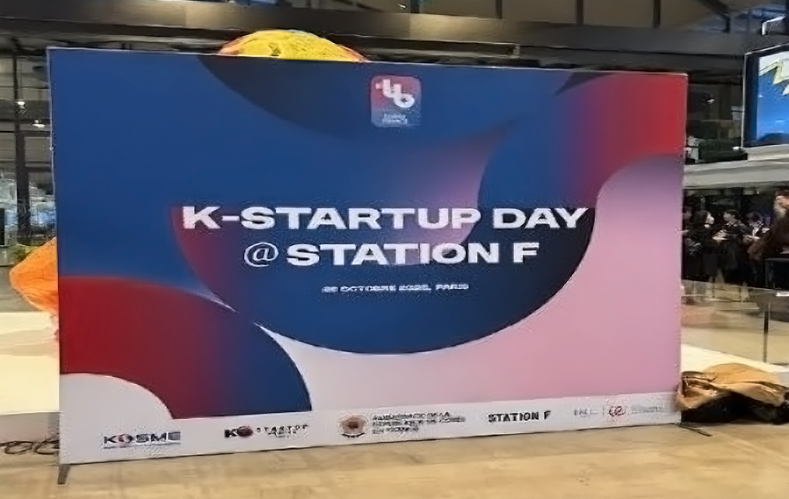
2025년 10월 29일, 프랑스 파리 13구에 위치한 세계 최대 스타트업 캠퍼스 ‘스테이션 F(Station F)’는 평소와 다른 활기로 가득 찼다. 1920년대 화물 철도역사를 개조한 거대한 건물 내부에서는 유창한 한국어와 프랑스어가 뒤섞여 혁신의 언어를 만들어내고 있었다. 이곳에서 한불 수교 140주년을 기념하는 특별한 행사인 ‘K-스타트업 데이 앳 스테이션 F(K-Startup Day at Station F)’의 막이 올랐다.
중소벤처기업진흥공단(이하 중진공, KOSME)이 운영하는 K-스타트업센터 파리(이하 KSC 파리)가 주최한 이번 행사는 한국 스타트업의 유럽 진출(Outbound)과 프랑스 스타트업의 한국 유치(Inbound)를 위한 무대다. AI, 모빌리티, 우주항공, 푸드테크 등 다양한 분야의 한국 혁신 기업 11개사가 유럽 투자자와 파트너를 대상으로 도전적인 비전을 제시했다. 이어 오후에는 한국 시장의 가능성에 주목한 프랑스 창업가들의 뜨거운 관심이 이어졌다. 스테이션 F에 모인 양국 혁신가들의 이러한 열기는 140년의 한불 외교 역사를 기반으로 기술과 아이디어로 새로운 100년을 여는 파트너십의 서막을 알리는 순간이었다.
유럽 최대 혁신 허브, K-스타트업에 문을 열다
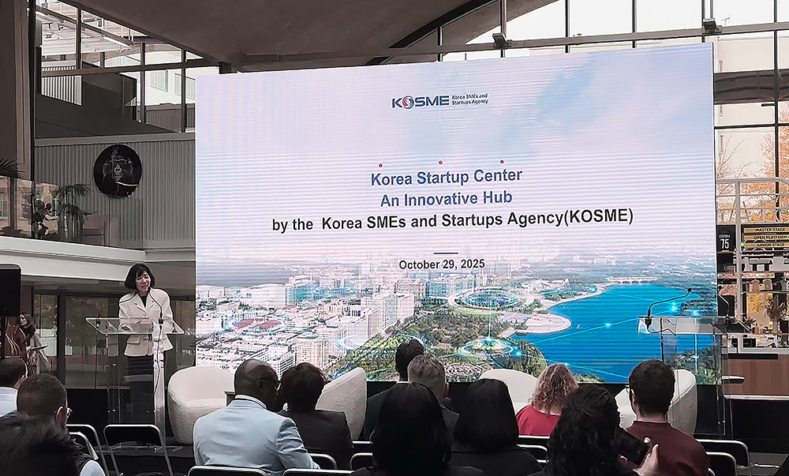
행사의 시작을 알린 KSC 파리 양지애 소장은 이번 행사가 양국 스타트업 생태계의 교류를 통해 지속 가능한 글로벌 협력을 구축하는 교두보가 될 것이라고 강조했다. 그의 말처럼, 행사장은 시작 전부터 양국의 창업가, 투자자, 정부 관계자들로 북적였다.
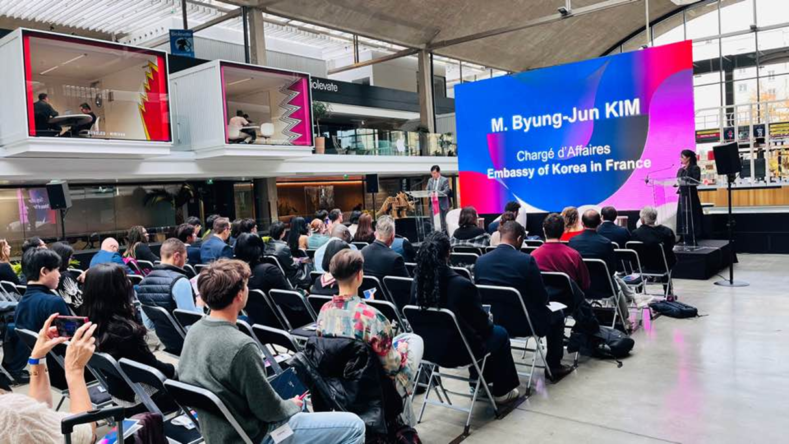
특히 프랑스의 가을 방학 기간임에도 불구하고, 한국의 혁신 기술에 대한 호기심으로 현장을 찾은 프랑스인들의 참여가 두드러졌다. 최근 몇 년간 K-팝, K-드라마, K-푸드 등으로 대표되는 한류가 기술 및 비즈니스 분야로까지 확장되면서 기술 협력과 투자의 문턱을 자연스럽게 낮추고 있는 것이다.
프랑스의 통신 재벌 자비에 니엘(Xavier Niel)이 설립한 스테이션 F는 34,000m² 규모에 1,000개 이상의 스타트업이 상주하는 명실상부한 세계 최대의 혁신 요람이다.
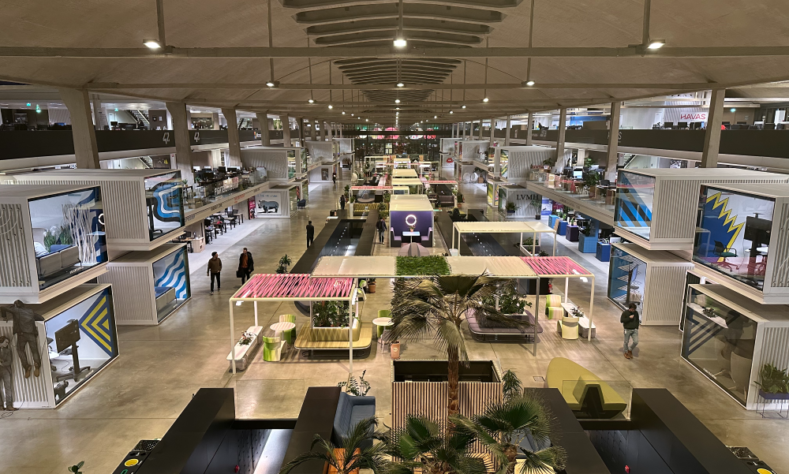
에마뉘엘 마크롱 대통령부터 샘 올트먼 오픈AI CEO, 스눕독까지 전 세계의 정·재계 및 문화계 리더들이 찾는 이곳은 글로벌 혁신의 상징과도 같다. 중진공이 KSC 파리의 거점으로 이곳을 택하고, ‘K-스타트업 데이’의 무대로 삼은 것은 한국 스타트업들이, 구글, 메타, LVMH 등 세계적인 기업들이 파트너로 참여하는 글로벌 혁신의 중심 무대에서 당당히 경쟁할 자격이 있음을 선언하는 것과 같다. 이는 참가 기업들에게 세계 최고 수준의 네트워크와 공신력을 부여하는 강력한 ‘무형의 자산’이 된다.
AI부터 우주까지, 세계를 향한 K-테크의 담대한 도전
오전에 진행된 ‘아웃바운드’ 세션은 유럽 시장을 향한 K-스타트업들의 야심 찬 출사표였다. KSC 파리가 엄선한 입주 및 예비 입주기업들은 스테이션 F의 투자팀, 일드프랑스 레지옹의 아시아 투자 담당자 등 현지 전문가들 앞에서 각자의 핵심 기술과 비전을 피칭하며 유럽 시장의 문을 두드렸다.
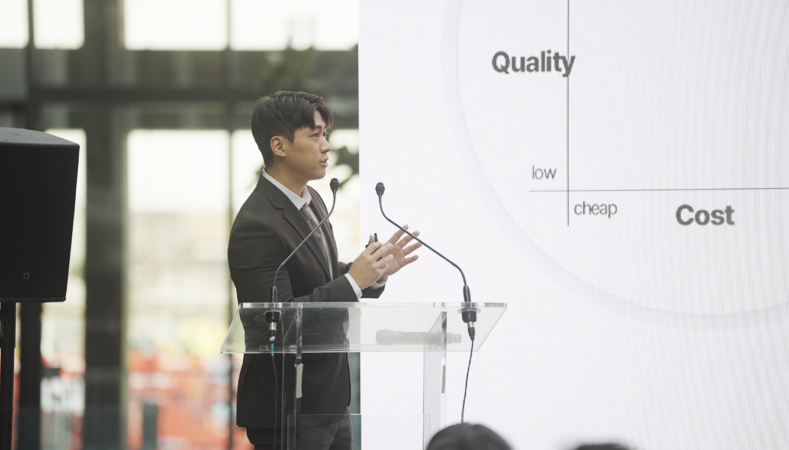
이날 소개된 11개 기업의 포트폴리오는 한국 스타트업 생태계가 얼마나 다층적이고 깊이 있는 기술력을 축적했는지를 명확히 보여주었다. 크게 두 가지 흐름으로 나눌 수 있다. 하나는 AI, 모빌리티, 우주항공 등 고도의 R&D 역량이 필요한 ‘딥테크’ 분야이고, 다른 하나는 전 세계적으로 확산된 한국의 문화적 자산을 비즈니스 모델로 연결한 ‘컬처·라이프스타일 테크’ 분야다.
딥테크 분야에서는 소프트웨어 정의 차량(SDV) 시대를 선도하는 기업들의 약진이 돋보였다.
드림에이스는 온디바이스 AI를 기반으로 차량 내 좌석, 공조, 조명 등을 통합 제어하는 IVI(차량용 인포테인먼트) 플랫폼을 선보이며 개인화된 모빌리티 경험의 미래를 제시했다.
경남 창원에 기반을 둔 이플로우는 고효율 축방향 자속 모터(AFPM) 기술을 바탕으로 한 마이크로모빌리티용 수소연료전지 파워트레인과, 태양광으로 그린수소를 생산·충전하는 소형 설비 ‘HOASIS’를 공개하며 친환경 모빌리티의 하드웨어와 인프라를 아우르는 솔루션을 제안했다.
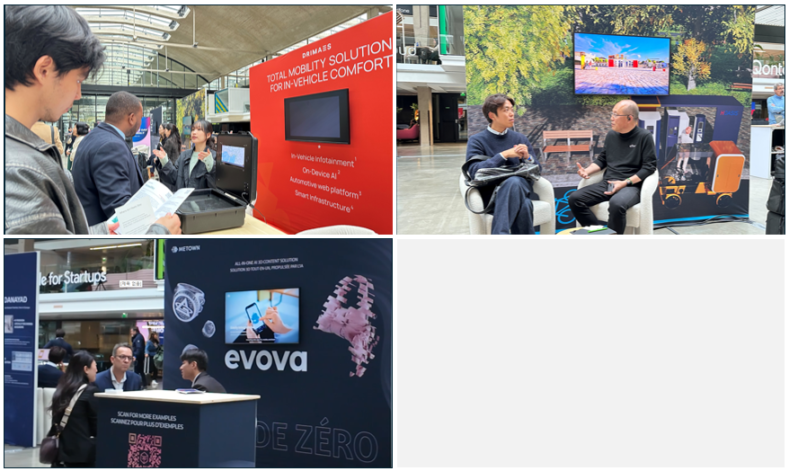
미타운은 자체 개발한 가우시안 스플래팅(Gaussian Splatting) 기술을 통해 실물을 단 몇 분 만에 초경량(약 3MB) 고품질 3D 모델로 자동 변환하는 서비스 ‘EVOVA’를 시연하며 이커머스와 VFX 콘텐츠 제작의 패러다임을 바꿀 가능성을 보였다.
디에스더블유는 세탁기 등 생활가전에 적용해 에너지와 물, 세제 사용량을 획기적으로 줄이는 AI 솔루션 ‘SONNET’을 통해 일상 속 지속가능성을 기술로 구현했다.
가장 담대한 비전을 제시한 곳은 우주항공 분야의 달로에어로스페이스였다. 설립 1년 만에 MVP 모델 검증을 완료한 이들은 2027년 소형위성 발사 서비스 상용화를 목표로, 이미 일본 대학들과 큐브위성 시험발사 계약을 체결하는 등 구체적인 성과를 내놓으며 주목받았다.
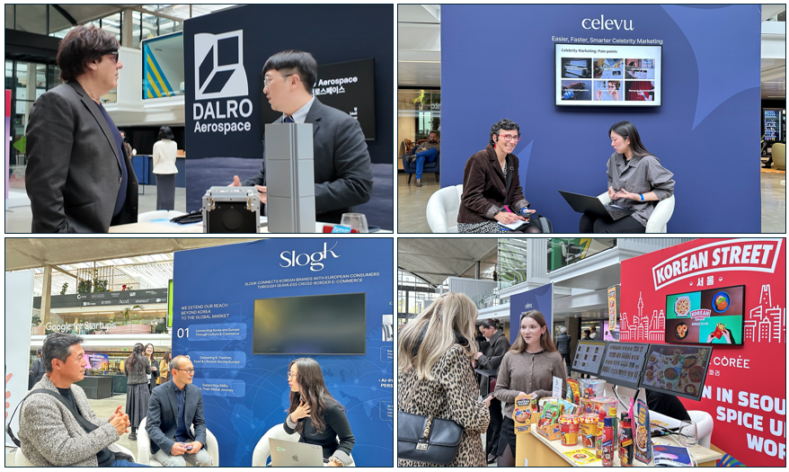
컬처·라이프스타일 테크 기업들은 한국의 소프트파워를 정교한 비즈니스로 풀어냈다.
알리고AI의 ‘Celevu’는 K-팝과 K-드라마의 글로벌 인기를 기반으로, AI가 광고 캠페인에 최적의 셀럽을 매칭하고 ‘디지털 트윈’ 기술로 추가 촬영 없이 고품질 광고 콘텐츠를 생성하는 혁신적인 셀럽 IP 플랫폼이다.
슬로크는 AI 기반 O2O 플랫폼 ‘DANAYAD’를 통해 유럽 소비자들의 취향 데이터를 분석, 한국의 신진 디자이너 패션을 맞춤형으로 큐레이션하며 새로운 시장을 개척하고 있다.
2025년 ‘아기유니콘’으로 선정된 루에랑은 ‘Maison de Corée’ 등의 자체 브랜드로 냉동만두, 닭강정 등을 프랑스 현지 리테일 채널에 성공적으로 안착시킨 K-푸드 토탈 솔루션 기업으로, 이번 행사에서 직접 케이터링을 제공하며 자사 제품의 경쟁력을 입증했다.
새로운 경험을 디자인하는 스타트업들도 눈길을 끌었다. 파리클래스의 ‘TiP(Travel in your Pocket)’는 AI가 사용자의 감성과 취향을 분석해 맞춤형 럭셔리 여행을 설계하는 컨시어지 플랫폼다.
다이브인그룹은 2-4성급 호텔의 객실을 아티스트와 협업해 몰입형 아트룸으로 탈바꿈시키는 ‘아트스테이’ 플랫폼으로 호텔 재생과 새로운 여행 경험을 동시에 창출한다. 파리에 본사를 둔 노매드헐은 전 세계 190개국 40만 명 이상의 여성 여행자를 연결하는 커뮤니티 앱으로, ‘안전’과 ‘연대’라는 핵심 가치를 통해 여성의 독립적인 여행을 지원한다.
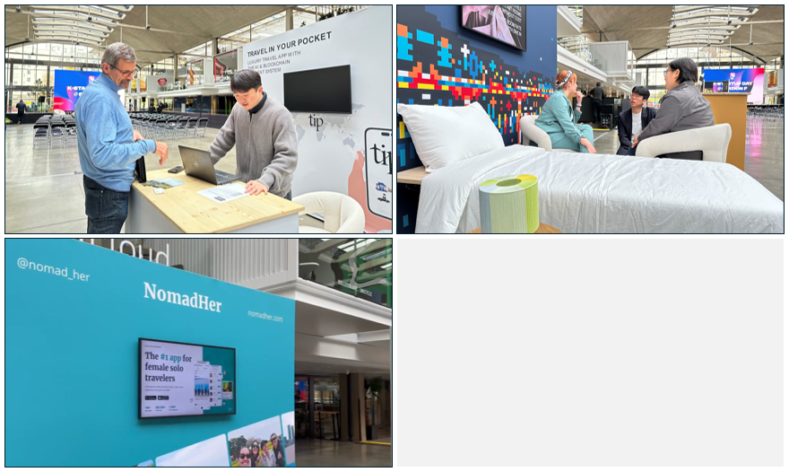
이들 중 다수는 이미 파리에 법인을 설립했거나 본사를 두고 있어, 이번 행사가 유럽 시장에 대한 막연한 탐색을 넘어, 이미 시작된 도전을 가속화하기 위한 전략적 행보임을 분명히 했다.
“생태계를 연결하다” – KSC 파리·스테이션 F·HEC 파리의 삼각편대
‘K-스타트업 데이’의 진정한 차별점은 유망 기업의 성공적인 현지 안착을 위한 정교한 지원 시스템을 투명하게 공개했다는 점에 있다. KSC 파리(정부), 스테이션 F(민간 인프라), 그리고 HEC 파리 경영대학원(학계)으로 이어지는 삼각편대는 스타트업이 해외 시장에서 겪는 거의 모든 실패 요인을 체계적으로 제거하는 고도화된 ‘소프트랜딩’ 모델을 제시했다.
첫 번째 축인 스테이션 F는 글로벌 무대 그 자체다. 스테이션 F의 발표자는 “이곳은 책상을 제공하는 공간 이상의 의미를 지닌다”라며, 전 세계 70개국 이상의 창업가들이 모여 교류하고, 최고의 투자자와 기업 파트너들을 만날 수 있는 독보적인 네트워크 허브임을 강조했다. 특히 스테이션 F는 한국, 일본, 인도 등 특정 국가를 위한 전용 프로그램을 운영하며 국제 스타트업 유치에 대한 체계적인 의지를 보여주고 있다. 한국 스타트업에게 스테이션 F 입주는 곧바로 글로벌 시장의 중심으로 진입하는 티켓을 얻는 것과 같다.
두 번째 축은 유럽 최고의 명문 경영대학원인 HEC 파리다. HEC 인큐베이터를 총괄하는 앙투안 르프레트르(Antoine Leprêtre) 디렉터는 HEC의 역할을 “의도된 우연(serendipity)을 설계하는 것”이라고 정의했다. 그는 HEC가 45년 이상의 기업가정신 교육 경험과 16개의 유니콘 기업을 배출한 동문 네트워크, 1,000명 이상의 전문가 멘토풀을 활용해 스타트업의 전략적 성장을 돕는다고 설명했다. HEC의 프로그램은 일방적인 교육을 넘어, 창업가 커뮤니티가 서로 돕고 성장하는 ‘참여형 생태계’를 지향한다. 이는 시장 정보와 전략적 지혜가 부족한 외국 스타트업에게 가장 필요한 부분이다.
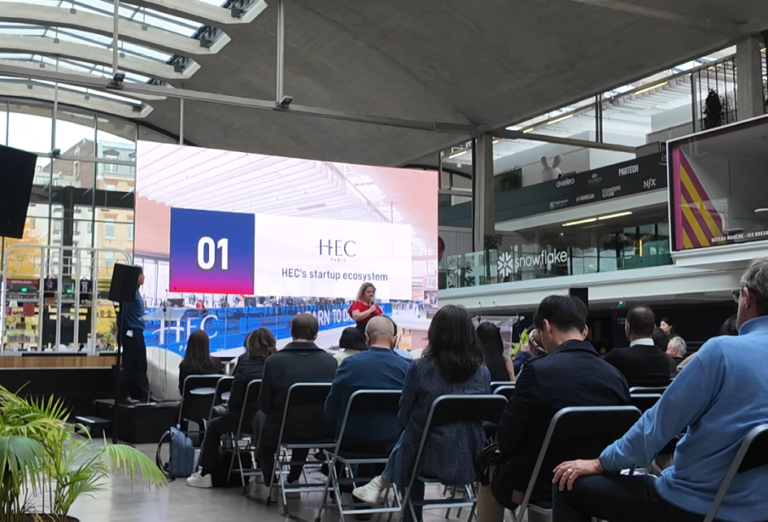
이 두 강력한 파트너를 연결하고 한국 스타트업을 위한 맞춤형 프로그램을 설계하는 것이 바로 세 번째 축인 KSC 파리의 역할이다. 양지애 소장은 KSC 파리는 Station F, HEC 파리와 같은 최고의 파트너와 협력해 프로그램을 디자인했다”고 밝혔다. 하드웨어와 네트워크를 제공하는 Station F와 소프트웨어 프로그램을 제공하는 HEC와 협업하여, 한국 스타트업이 현지 생태계에 가장 쉽게 접근할 수 있는 구조다. 이처럼 정부의 재정적 지원, 민간의 글로벌 네트워크, 학계의 전략적 깊이가 결합된 모델은 해외 진출의 불확실성을 획기적으로 낮추고 성공 가능성을 극대화하는 최적의 공식이라 할 수 있다.
“한국의 ‘빨리빨리’ 문화는 기회” – 프랑스 창업가들이 본 K-생태계
오후에 진행된 ‘인바운드’ 세션 ‘게이트웨이 투 코리아(Gateway to Korea)’는 행사의 백미였다. 한국 정부가 프랑스 스타트업을 유치하기 위해 어떤 노력을 하고 있는지, 그리고 실제로 한국 시장을 경험한 프랑스 창업가들은 무엇을 느꼈는지를 생생하게 들을 수 있는 자리였다.
먼저 한국 정부의 적극적인 ‘러브콜’이 소개되었다. 은행 계좌 개설, 세무 등 외국인에게는 복잡하게만 느껴지는 행정 절차를 무료로 컨설팅해주는 ‘글로벌 스타트업 센터’부터, 상위 5개 팀에 막대한 상금과 후속 지원을 제공하는 ‘K-스타트업 그랜드 챌린지(KSGC)’, 잠재력 높은 해외 기술기업을 발굴해 한국 시장 진출 전 과정을 밀착 지원하는 ‘K-스카우터(K-Scouter)’ 프로그램, 그리고 창업가들을 위한 전용 비자까지, 한국이 ‘열린’ 시장으로 나아가고 있음을 증명하는 다양한 정책들이 제시되었다.
이러한 정부의 노력이 실제 현장에서 어떻게 작동하는지는 이어지는 프랑스 창업가들의 발표를 통해 입증되었다. 헬스케어 스타트업 비밸런스(Bbalance)의 장 마크 드루엔(Jean-Marc Druesne) 대표는 자신의 한국 경험을 공유하며 청중의 이목을 집중시켰다. 그는 한국의 액셀러레이팅 프로그램에 참여한 후 서울대병원, 건국대병원 등 국내 최고 의료기관과 개념증명(PoC)을 성공적으로 마쳤고, 현재는 한국 법인을 설립해 삼성전자 출신 엔지니어들이 설립한 헬스케어 전문 기업과 하드웨어 생산 파트너십을 맺고 있다고 밝혔다.
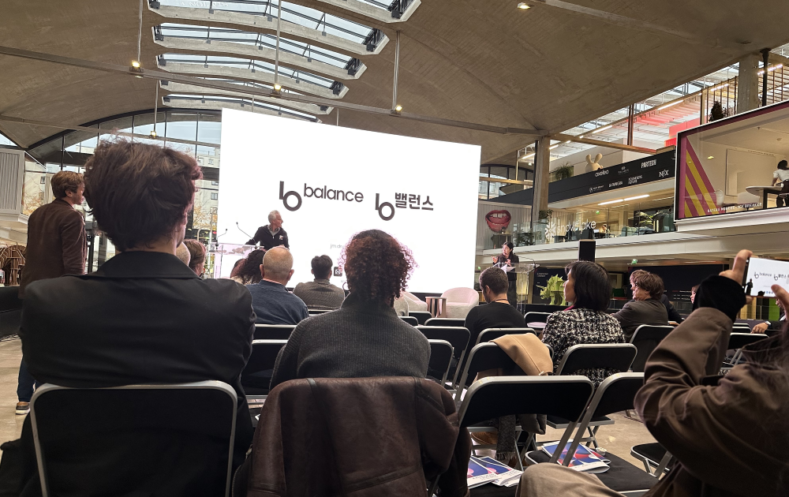
특히 그는 프레젠테이션 슬라이드에 ‘빨리빨리(PaliPali)’라는 한글을 띄우고, 이를 한국 시장의 가장 큰 장점으로 꼽았다. 그는 “한국의 ‘빨리빨리’ 문화 덕분에 6개월이라는 짧은 시간에도 깊이 있는 비즈니스 관계를 형성하고 빠르게 성과를 낼 수 있다”고 평가했다. 이는 서구권에서 종종 부정적으로 인식되던 한국의 속도 문화를 ‘기회의 요인’으로 재해석한 것으로, 속도가 생명인 스타트업에게 한국 시장이 얼마나 매력적인지를 보여주는 강력한 증언이었다.
K-뷰티 브랜드 케이-브라운(K-Brown)의 멜리사 대표는 보다 현실적인 조언을 덧붙였다. 그는 “한국에서는 사업 아이템 이전에 ‘사람’ 자체에 투자하는 경향이 강하므로 장기적인 신뢰를 쌓는 것이 무엇보다 중요하다”고 강조했다. 또한 창업 비자 취득 과정은 “놀라울 정도로 쉬웠다”고 긍정적으로 평가하면서도, 외국인으로서 은행 계좌를 개설하고 쇼피파이(Shopify) 같은 글로벌 결제 시스템을 연동하는 데에는 상당한 어려움을 겪었다는 솔직한 경험을 공유했다. 이처럼 성공 사례의 이면과 현실적인 어려움을 투명하게 공개한 것은 오히려 한국 스타트업 생태계에 대한 신뢰도를 높이는 효과를 낳았다. 이는 한국 정부와 지원 기관들이 외국 창업가들이 겪는 실제적인 문제점을 명확히 인지하고 있으며, 이를 해결하기 위해 노력하고 있다는 진정성 있는 메시지로 전달되었기 때문이다.
140년을 넘어, 혁신으로 이어질 한불 파트너십
‘K-스타트업 데이 앳 스테이션 F’는 한불 수교 140주년이라는 역사적 이정표 위에서, 양국의 미래 경제 협력이 나아갈 방향을 명확하게 제시한 행사였다. 한국의 혁신 기술을 유럽에 선보이는 ‘아웃바운드’와 프랑스의 혁신 역량을 한국으로 유치하는 ‘인바운드’가 유기적으로 맞물리며, 일방적인 진출을 넘어 상호 호혜적인 ‘생태계 교류’의 모델을 성공적으로 구현했다.
이날 스테이션 F에서 목격한 것은 한국이 글로벌 스타트업 지형에서 수동적으로 규칙을 따르는 ‘규칙 수용자’에서 벗어나, K-스카우터와 같은 독자적인 유치 프로그램을 설계하고 ‘아시아 진출의 허브’라는 비전을 제시하며 스스로 판을 짜는 ‘규칙 제정자’로 진화하고 있음을 보여주는 증거다.
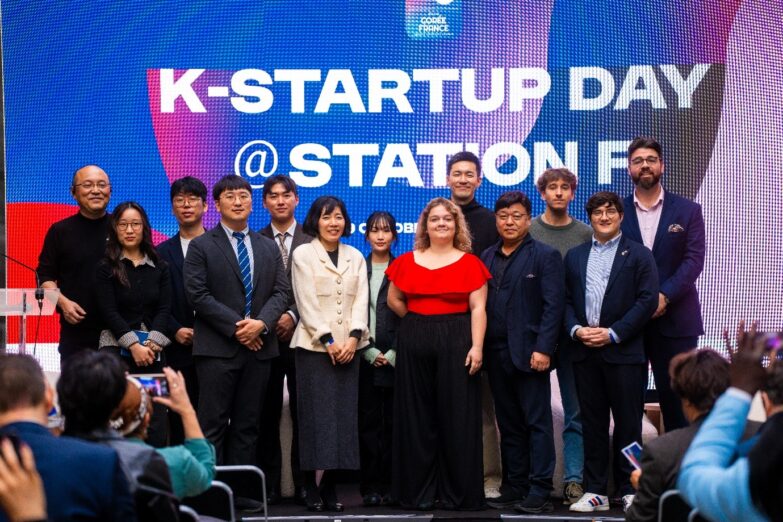
KSC 파리를 중심으로 한 정부의 체계적인 지원, 스테이션 F가 제공하는 세계 최고 수준의 인프라, 그리고 HEC 파리의 전략적 혜안이 결합된 이 강력한 협력 모델은 앞으로 더 많은 K-스타트업들이 성공적으로 유럽 시장에 안착하고, 동시에 더 많은 글로벌 인재들이 한국을 기회의 땅으로 여기게 만드는 선순환 구조를 만들어낼 것이다. 140년 전 외교로 시작된 양국의 인연은 이제 혁신과 기술이라는 새로운 언어를 통해 더욱 깊고 역동적인 파트너십으로 발전하고 있다. ‘K-스타트업 데이’는 그 새로운 시대의 개막을 알리는 힘찬 신호탄이었다.
Celebrating 140 years of diplomatic relations between Korea and France, K-Startups are pulsing in the heart of Paris.
– To commemorate the 140th anniversary of Korea-France diplomatic relations, the Korea Sino-France Cooperation Foundation (KSC) Paris hosted…
The triangular collaboration between Jungjin, Station F, and HEC Paris is building a global expansion model through "ecosystem connectivity."
From AI to aerospace, K-Tech presents a bold vision for the European market.
Rediscovering the "Ppalli Ppalli" culture: The opportunities and appeal of the Korean market as seen by French entrepreneurs.
A two-way ecosystem exchange platform that crosses both 'outbound' and 'inbound' channels.
On October 29, 2025, Station F, the world's largest startup campus located in the 13th arrondissement of Paris, France, was buzzing with unusual energy. Inside the massive building, a converted 1920s freight train station, fluent Korean and French mingled, creating a language of innovation. Here, "K-Startup Day at Station F," a special event commemorating the 140th anniversary of diplomatic relations between Korea and France, kicked off.
Hosted by the K-Startup Center Paris (KSC Paris), operated by the Korea SMEs and Startups Agency (KOSME), this event served as a platform for Korean startups to expand into Europe (outbound) and attract French startups to Korea (inbound). Eleven innovative Korean companies across various fields, including AI, mobility, aerospace, and food tech, presented their challenging visions to European investors and partners. This was followed in the afternoon by a fervent interest from French entrepreneurs, who recognized the potential of the Korean market. The enthusiasm of the two countries' innovators gathered at Station F marked the beginning of a partnership that will usher in a new century of technology and ideas, building on 140 years of diplomatic history between Korea and France.
Europe's Largest Innovation Hub Opens Doors to K-Startups
KSC Paris Director Yang Ji-ae, who opened the event, emphasized that this event would serve as a bridgehead for building sustainable global cooperation through exchanges between the two countries' startup ecosystems. True to her words, the venue was bustling with entrepreneurs, investors, and government officials from both countries even before the event began.
Despite being the French autumn break, the participation of French visitors, driven by curiosity about Korea's innovative technologies, was particularly notable. In recent years, the Korean Wave, represented by K-pop, K-dramas, and K-food, has expanded into the technology and business sectors, naturally lowering the barriers to technological cooperation and investment.
Founded by French telecoms tycoon Xavier Niel, Station F is the world's largest innovation hub, home to over 1,000 startups across 34,000 square meters.
From President Emmanuel Macron to OpenAI CEO Sam Altman and Snoop Dogg, this venue, visited by global leaders in politics, business, and culture, serves as a symbol of global innovation. The fact that KSC Paris chose this location as its base and the venue for "K-Startup Day" is a declaration that Korean startups are worthy of competing on the global innovation stage, where global companies like Google, Meta, and LVMH are partners. This provides participating companies with a powerful "intangible asset," granting them a world-class network and credibility.
From AI to space, K-Tech's bold challenge to the world
The "Outbound" session, held in the morning, was an ambitious launch for K-startups into the European market. KSC Paris's carefully selected resident and prospective resident companies pitched their core technologies and visions to local experts, including Station F's investment team and the Asia investment manager for the Île-de-France region, knocking on the door of the European market.
The portfolios of the 11 companies introduced that day clearly demonstrated the depth and multi-layered technological capabilities accumulated by the Korean startup ecosystem. These can be broadly divided into two streams. One is "deep tech," which requires advanced R&D capabilities in fields like AI, mobility, and aerospace. The other is "culture and lifestyle tech," which leverages Korea's globally recognized cultural assets to create business models.
In the deep tech sector, the advancement of companies leading the era of software-defined vehicles (SDVs) was notable.
Dream Ace presented the future of personalized mobility experiences by introducing an IVI (In-Vehicle Infotainment) platform that integrates and controls in-vehicle seating, air conditioning, and lighting based on on-device AI.
Based in Changwon, Gyeongnam, iFlow presented a solution encompassing both hardware and infrastructure for eco-friendly mobility, unveiling a hydrogen fuel cell powertrain for micromobility based on high-efficiency axial flux motor (AFPM) technology and a small facility called 'HOASIS' that produces and charges green hydrogen using solar energy.
MiTown demonstrated its service 'EVOVA', which automatically converts real objects into ultra-light (approximately 3MB) high-quality 3D models in just a few minutes using its self-developed Gaussian Splatting technology, showing its potential to change the paradigm of e-commerce and VFX content production.
DSW has implemented sustainability in everyday life through technology through 'SONNET', an AI solution that is applied to home appliances such as washing machines to drastically reduce energy, water, and detergent usage.
The most ambitious vision was presented by Dallo Aerospace in the aerospace sector. Having completed verification of their MVP model within a year of their founding, they aim to commercialize small satellite launch services by 2027, and have already garnered attention for their concrete achievements, including signing a contract with Japanese universities for CubeSat test launches.
Culture and lifestyle tech companies have leveraged Korea's soft power to create sophisticated business models.
AligoAI's 'Celevu' is an innovative celebrity IP platform that leverages the global popularity of K-pop and K-dramas to match the optimal celebrity for an advertising campaign using AI and generate high-quality advertising content without additional filming using 'digital twin' technology.
Slok is pioneering a new market by analyzing European consumer preference data through its AI-based O2O platform 'DANAYAD' and curating customized fashion from emerging Korean designers.
Luelang, selected as the 'Baby Unicorn' in 2025, is a K-food total solution company that has successfully established frozen dumplings, fried chicken, etc. in local French retail channels under its own brand 'Maison de Corée'. It proved the competitiveness of its products by directly providing catering at this event.
Startups designing new experiences also attracted attention. Paris Class's "TiP (Travel in your Pocket)" is a concierge platform that uses AI to analyze users' emotions and preferences to design customized luxury trips.
Divein Group collaborates with artists to transform rooms in 2-4 star hotels into immersive art rooms through its "Artstay" platform, simultaneously creating hotel revitalization and innovative travel experiences. Paris-based Nomadhull is a community app connecting over 400,000 female travelers in 190 countries worldwide. Through its core values of "safety" and "solidarity," it supports independent travel for women.
Many of them already have incorporated or headquartered in Paris, making it clear that this event is not just a vague exploration of the European market, but a strategic move to accelerate efforts already underway.
Connecting Ecosystems – The Triangle of KSC Paris, Station F, and HEC Paris
What truly sets "K-Startup Day" apart is its transparent disclosure of a sophisticated support system designed to help promising companies successfully establish themselves in the local market. The triangular structure—KSC Paris (government), Station F (private infrastructure), and HEC Paris Business School (academic)—proposed a sophisticated "soft landing" model that systematically eliminates nearly all the factors that startups face in overseas markets.
The first axis, Station F, is a global stage in itself. "This is more than just a space to provide desks," the Station F presenter emphasized, emphasizing that it is a unique networking hub where entrepreneurs from over 70 countries can gather, network, and connect with top investors and corporate partners. Station F, in particular, demonstrates its systematic commitment to attracting international startups by operating dedicated programs for specific countries like Korea, Japan, and India. For Korean startups, a spot at Station F is like securing a ticket to the heart of the global market.
The second pillar is HEC Paris, Europe's most prestigious business school. Antoine Leprêtre, director of the HEC incubator, defines HEC's role as "designing serendipity." He explains that HEC leverages its 45-plus years of experience in entrepreneurship education, an alumni network that has produced 16 unicorns, and a pool of over 1,000 expert mentors to support the strategic growth of startups. Beyond one-sided education, HEC's programs aim to create an "engaged ecosystem" where the entrepreneurial community supports and grows together. This is crucial for foreign startups lacking market intelligence and strategic wisdom.
Connecting these two powerful partners and designing customized programs for Korean startups is the role of KSC Paris, the third pillar. Director Yang Ji-ae stated, "KSC Paris designed the program in collaboration with top-tier partners like Station F and HEC Paris." By collaborating with Station F, which provides hardware and networking, and HEC, which provides software programs, the structure provides Korean startups with the easiest access to the local ecosystem. This model, which combines government financial support, the private sector's global network, and the strategic depth of academia, is the optimal formula for dramatically reducing the uncertainty of overseas expansion and maximizing the chances of success.
"Korea's 'Ppalli Ppalli' Culture Is an Opportunity" – The K-Ecosystem as Seen by French Entrepreneurs
The afternoon's "Inbound" session, "Gateway to Korea," was the highlight of the event. It provided a vivid insight into the Korean government's efforts to attract French startups and the insights of French entrepreneurs who have actually experienced the Korean market.
First, the Korean government's proactive "love call" was introduced. From the "Global Startup Center," which offers free consulting on administrative procedures that foreigners often find complex, such as opening bank accounts and taxation, to the "K-Startup Grand Challenge (KSGC)," which offers substantial prize money and follow-up support to the top five teams, to the "K-Scouter" program, which identifies high-potential foreign technology companies and provides close support throughout the entire process of entering the Korean market, to dedicated visas for entrepreneurs, various policies were presented, proving that Korea is moving toward an "open" market.
The practical impact of these government efforts was demonstrated in the presentations given by French entrepreneurs. Jean-Marc Druesne, CEO of healthcare startup Bbalance, captivated the audience by sharing his experience in Korea. He revealed that after participating in a Korean accelerator program, he successfully completed proof-of-concept (PoC) projects with top medical institutions in Korea, including Seoul National University Hospital and Konkuk University Hospital. He also revealed that he has established a Korean subsidiary and is currently partnering with a healthcare company founded by former Samsung Electronics engineers to produce hardware.
In particular, he highlighted the Korean word "PaliPali" (hurry, hurry, hurry) on his presentation slides, highlighting it as the Korean market's greatest strength. He stated, "Thanks to Korea's 'hurry, hurry' culture, we can form deep business relationships and achieve rapid results in as little as six months." This reinterpretation of Korea's culture of speed, often perceived negatively in the West, as a "factor of opportunity," was a powerful testament to the attractiveness of the Korean market for startups, where speed is everything.
Melissa, CEO of K-Beauty brand K-Brown, offered more practical advice. She emphasized, "In Korea, there's a strong tendency to invest in 'people' before the business idea itself, so building long-term trust is paramount." While positively assessing the startup visa process, saying it was "surprisingly easy," she candidly shared her experience of the significant challenges she faced as a foreigner, such as opening a bank account and integrating with global payment systems like Shopify. This transparent disclosure of the backstory and practical challenges of success stories has actually boosted trust in the Korean startup ecosystem. This is because it conveys a genuine message that the Korean government and support organizations are clearly aware of the real-world challenges faced by foreign entrepreneurs and are working to address them.
A Korea-France Partnership that Continues Innovation for Over 140 Years
Marking the historic milestone of the 140th anniversary of Korea-France diplomatic relations, "K-Startup Day at Station F" was an event that clearly outlined the future direction of economic cooperation between the two countries. The event organically linked "outbound" efforts, showcasing Korea's innovative technologies to Europe, with "inbound" efforts, attracting France's innovative capabilities to Korea. This successfully implemented a model of mutually beneficial "ecosystem exchange" that transcended unilateral expansion.
What we witnessed at Station F that day was evidence that Korea is evolving from a passive "rule-taker" in the global startup landscape to a "rule-maker," designing its own incubation programs like K-Scouter and presenting a vision of becoming a "hub for Asian expansion."
This powerful collaboration model, combining systematic government support centered around KSC Paris, world-class infrastructure provided by Station F, and strategic acumen from HEC Paris, will create a virtuous cycle in which more K-startups will successfully establish themselves in the European market and, at the same time, attract more global talent to Korea as a land of opportunity. The relationship between our two countries, which began with diplomacy 140 years ago, is now evolving into a deeper and more dynamic partnership through the new language of innovation and technology. "K-Startup Day" served as a powerful signal to mark the beginning of this new era.
韓仏修交140周年、パリの心臓で走るKスタートアップ
-韓仏修交140周年記念、重真空KSCパリ主催…
-重真空・ステーションF・HECパリの三角空調、「生態系連結」でグローバル進出モデル構築
-AIから宇宙航空まで、欧州市場に向けたK-Techの大胆なビジョン提示
– 「早く」文化の再発見、フランスの創業者が見た韓国市場の機会と魅力
– 「アウトバウンド」と「インバウンド」を行き来する双方向エコシステム交流の場
2025年10月29日、フランスのパリ13区に位置する世界最大のスタートアップキャンパス「ステーションF(Station F)」は、いつもと違う活気に満ちた。 1920年代に貨物鉄道歴史を改造した巨大な建物内では流暢な韓国語とフランス語が混ざり合い、革新の言語を作り出していた。ここで韓仏修交140周年を記念する特別なイベントである「K-スタートアップデイアットステーションF(K-Startup Day at Station F)」の幕が上がった。
中小ベンチャー企業振興公団(以下、中真空、KOSME)が運営するK-スタートアップセンターパリ(以下KSCパリ)が主催した今回の行事は、韓国スタートアップの欧州進出(Outbound)とフランススタートアップの韓国誘致(Inbound)のための舞台だ。 AI、モビリティ、宇宙航空、フードテックなど多様な分野の韓国革新企業11社が欧州投資家とパートナーを対象に挑戦的なビジョンを提示した。続いて午後には韓国市場の可能性に注目したフランス創業者の熱い関心が続いた。ステーションFに集まった両国のイノベーターたちのこの熱気は、140年の韓仏外交歴史を基盤に、技術とアイデアで新しい100年を開くパートナーシップの序幕を知らせた瞬間だった。
ヨーロッパ最大のイノベーションハブ、Kスタートアップに扉を開く
イベントの始まりを知らせたKSCパリヤン・ジエ所長は、今回のイベントが両国のスタートアップ生態系の交流を通じて持続可能なグローバル協力を構築する橋頭補になると強調した。彼の言葉のように、会場は始まる前から両国の創業者、投資家、政府関係者で賑わっていた。
特にフランスの秋休み期間にもかかわらず、韓国の革新技術に対する好奇心で現場を訪れたフランス人の参加が目立った。 近年、K-ポップ、K-ドラマ、K-フードなどに代表される韓流が技術やビジネス分野にまで拡大し、技術協力と投資のしきい値を自然に下げているのだ。
フランスの通信財閥慈悲にニエル(Xavier Niel)が設立したステーションFは、34,000m²規模に1,000以上のスタートアップが常駐する名実共に世界最大の革新要覧だ。
エマニュエル・マクロン大統領からサム・オルトマンオープンAI CEO、スヌープドックまで、全世界の政・財界及び文化界リーダーが訪れるここはグローバルイノベーションの象徴とも同じだ。中真空がKSCパリの拠点としてここを選び、「K-スタートアップデー」の舞台にしたのは、韓国スタートアップが、グーグル、メタ、LVMHなど世界的な企業がパートナーとして参加するグローバルイノベーションの中心舞台で堂々と競争する資格があることを宣言するようだ。これは参加企業に世界最高水準のネットワークと共信力を付与する強力な「無形の資産」となる。
AIから宇宙まで、世界に向けたKテックの大胆な挑戦
午前に行われた「アウトバウンド」セッションは、欧州市場に向けたKスタートアップの野心的な出射票だった。 KSCパリが厳選した入居および予備入社会社は、ステーションFの投資チーム、イルドフランスレジオンのアジア投資担当者など、現地の専門家の前で各自の核心技術とビジョンをピッチングしてヨーロッパ市場の扉を叩いた。
この日紹介された11社のポートフォリオは、韓国のスタートアップエコシステムがどれほど多層的で深い技術力を蓄積したかを明確に示した。大きく2つの流れに分けることができる。一つはAI、モビリティ、宇宙航空など高度なR&D能力が必要な「ディープテク」分野であり、もう一つは全世界的に拡散した韓国の文化的資産をビジネスモデルにつなげた「カルチャー・ライフスタイルテック」分野だ。
ディープテク分野ではソフトウェア定義車両(SDV)時代をリードする企業の躍進が目立った。
ドリームエースはオンデバイスAIを基盤に車内座席、空調、照明などを統合制御するIVI(車両用インフォテインメント)プラットフォームを披露し、パーソナライズされたモビリティ体験の未来を提示した。
慶南昌原(キョンナム・チャンウォン)に基づくイフローは、高効率軸方向磁束モータ(AFPM)技術を基盤としたマイクロモビリティ用水素燃料電池パワートレインと、太陽光でグリーン水素を生産・充電する小型設備「HOASIS」を公開し、環境にやさしいモビリティのハードウェアとインフラを合わせるソリューションを提案した。
ミタウンは自社開発したガウススプラッティング(Gaussian Splatting)技術により、実物をわずか数分で超軽量(約3MB)の高品質3Dモデルに自動変換するサービス「EVOVA」を実演し、EコマースとVFXコンテンツ制作のパラダイムを変える可能性を見せた。
ディエスダブル油は洗濯機など生活家電に適用してエネルギーと水、洗剤使用量を画期的に減らすAIソリューション「SONNET」を通じて日常の持続可能性を技術で具現した。
最も大胆なビジョンを提示したのは宇宙航空分野のダロエアロスペースだった。設立から1年ぶりにMVPモデル検証を完了した彼らは、2027年に小型衛星発射サービスの商用化を目指し、すでに日本大学とキューブ衛星試験発射契約を締結するなど、具体的な成果を出して注目されている。
カルチャー・ライフスタイルテック企業は韓国のソフトパワーを精巧なビジネスで解放した。
アリゴAIの「Celevu」は、K-ポップとK-ドラマのグローバル人気を基盤に、AIが広告キャンペーンに最適なセレブをマッチングし、「デジタルツイン」技術で追加撮影なしで高品質の広告コンテンツを生成する革新的なセロップIPプラットフォームだ。
スロークはAIベースのO2Oプラットフォーム「DANAYAD」を通じてヨーロッパの消費者の好みデータを分析し、韓国の新進デザイナーファッションをオーダーメイドでキュレーションし、新しい市場を開拓している。
2025年に「赤ちゃんユニコーン」に選ばれたルエランは、「Maison de Corée」などの独自ブランドで、冷凍餃子、鶏カンジョンなどをフランスの現地小売チャンネルに成功裏に着座させたKフードトータルソリューション企業で、今回のイベントで直接ケータリングを提供し、自社製品の競争力を立証した。
新しい経験をデザインするスタートアップたちも注目を集めた。パリクラスの「TiP(Travel in your Pocket)」は、AIがユーザーの感性と好みを分析してカスタマイズされたラグジュアリー旅行を設計するコンシェルジュプラットフォームだ。
ダイブイングループは2-4つ星ホテルの客室をアーティストとコラボレーションして没入型アートルームに変身させる「アートステイ」プラットフォームで、ホテルの再生と新しい旅行体験を同時に創出する。パリに本社を置くノマド・ハルは、世界190カ国40万人以上の女性旅行者をつなぐコミュニティアプリで、「安全」と「連帯」という核心価値を通じて女性の独立した旅行を支援する。
これらの多くはすでにパリに法人を設立したか本社を置いており、今回の行事が欧州市場への漠然とした探索を超えて、すでに始まった挑戦を加速化するための戦略的歩みであることを明らかにした。
「エコシステムをつなぐ」 – KSCパリ・ステーションF・HECパリの三脚編隊
「K-Startup Day」の真の差別点は、有望企業の成功した現地安着のための洗練された支援システムを透明に公開したという点にある。 KSCパリ(政府)、ステーションF(民間インフラ)、およびHECパリ経営大学院(学界)につながる三角編隊は、スタートアップが海外市場で経験するほぼすべての失敗要因を体系的に除去する高度化された「ソフトランディング」モデルを提示した。
最初の軸であるステーションFはグローバルステージそのものだ。ステーションFの発表者は「ここは机を提供する空間以上の意味を持つ」とし、世界70カ国以上の創業者が集まって交流し、最高の投資家と企業パートナーに会うことができる独歩的なネットワークハブであることを強調した。特にステーションFは韓国、日本、インドなど特定国家向けの専用プログラムを運営し、国際スタートアップ誘致に対する体系的な意志を示している。韓国スタートアップにステーションF入居はすぐにグローバル市場の中心に進入するチケットを得ることと同じだ。
2番目の軸はヨーロッパ最高の名門経営大学院であるHECパリだ。 HECインキュベーターを統括するアントワーヌ・ルプレトール(Antoine Leprêtre)ディレクターは、HECの役割を「意図された偶然(serendipity)を設計すること」と定義した。彼は、HECが45年以上の起業家精神教育経験と16のユニコーン企業を排出した同門ネットワーク、1,000人以上の専門家メンタープールを活用してスタートアップの戦略的成長を助けると説明した。 HECのプログラムは一方的な教育を超えて、創業者のコミュニティが互いに助け合い、成長する「参加型エコシステム」を目指す。これは市場情報と戦略的知恵が不足している外国のスタートアップに最も必要な部分だ。
この2つの強力なパートナーをつなぎ、韓国スタートアップのためのカスタマイズされたプログラムを設計することが、まさに3番目の軸であるKSCパリの役割だ。ヤン・ジエ所長はKSCパリはStation F、HECパリのような最高のパートナーと協力してプログラムをデザインした」と明らかにした。不確実性を画期的に下げ、成功の可能性を最大化する最適な公式といえる。
「韓国の「早く早く」文化は機会」 – フランスの創業者が見たK-エコシステム
午後に行われた「インバウンド」セッション「ゲートウェイ・トゥ・コリア(Gateway to Korea)」はイベントの白米だった。韓国政府がフランスのスタートアップを誘致するためにどんな努力をしているのか、そして実際に韓国市場を経験したフランスの創業者たちは何を感じたのかを鮮やかに聞くことができる場だった。
まず、韓国政府の積極的な「ラブコール」が紹介された。銀行口座開設、税務など外国人には複雑にしか感じられない行政手続きを無料でコンサルティングしてくれる「グローバルスタートアップセンター」から、上位5チームに莫大な賞金と後続支援を提供する「K-スタートアップグランドチャレンジ(KSGC)」、潜在力高い海外技術「K-スカウター(K-Scouter)」プログラム、そして創業者のための専用ビザまで、韓国が「開かれた」市場に進んでいることを証明する様々な政策が提示された。
このような政府の努力が実際の現場でどのように機能するかは、続くフランスの創業者の発表を通じて証明された。ヘルスケアスタートアップビバランス(Bbalance)のジャン・マーク・ドルーエン(Jean-Marc Druesne)代表は自身の韓国経験を共有し、聴衆の注目を集中させた。彼は韓国のアクセラレーティングプログラムに参加した後、ソウル大病院、建国大病院など国内最高の医療機関と概念証明(PoC)を成功裏に終え、現在は韓国法人を設立し、サムスン電子出身エンジニアが設立したヘルスケア専門企業とハードウェア生産パートナーシップを結んでいると明らかにした。
特に彼はプレゼンテーションスライドに「早く(PaliPali)」というハングルを浮かべ、これを韓国市場の最大の長所に挙げた。彼は「韓国の「早く早く」文化のおかげで、6ヶ月という短い時間にも深いビジネス関係を形成し、素早く成果を出すことができる」と評価した。これは西欧圏でしばしば否定的に認識されていた韓国の速度文化を「機会の要因」として再解釈したもので、速度が生命のスタートアップに韓国市場がどれほど魅力的なのかを示す強力な証言だった。
K-BeautyブランドのK-Brownのメリッサ代表は、より現実的なアドバイスを付け加えた。彼は「韓国では事業アイテム以前に「人」自体に投資する傾向が強いため、長期的な信頼を築くことが何よりも重要だ」と強調した。また、創業ビザ取得過程は「驚くほど簡単だった」と肯定的に評価しながらも、外国人として銀行口座を開設し、ショピファイなどのグローバル決済システムを連動するにはかなりの困難を経験したという率直な経験を共有した。このように成功事例の裏面と現実的な困難を透明に公開したのはむしろ韓国スタートアップ生態系に対する信頼度を高める効果を生んだ。これは韓国政府と支援機関が外国創業者が経験する実際的な問題点を明確に認識しており、これを解決するために努力しているという真正なメッセージで伝えられたからだ。
140年を超え、革新につながる韓火パートナーシップ
「K-スタートアップデイアットステーションF」は韓仏修交140周年という歴史的マイルストーンの上で、両国の未来経済協力が進む方向を明確に提示した行事だった。韓国のイノベーション技術を欧州に披露する「アウトバウンド」とフランスのイノベーション力量を韓国に誘致する「インバウンド」が有機的に噛み合い、一方的な進出を越えて相互好恵的な「エコシステム交流」のモデルを成功的に具現した。
この日ステーションFで目撃したのは、韓国がグローバルスタートアップ地形で受動的にルールに従う「ルール受容者」から抜け出して、K-スカウターのような独自の誘致プログラムを設計し、「アジア進出のハブ」というビジョンを提示し、自ら版を組む「ルール制定者」に進化していることを。
KSCパリを中心とした政府の体系的な支援、ステーションFが提供する世界最高水準のインフラ、HECパリの戦略的利益が組み合わされたこの強力な協力モデルは、今後より多くのKスタートアップが首尾よく欧州市場に安着し、同時により多くのグローバル人材が韓国を機会の土地にするようにする循環構造を作り出すだろう。 140年前に外交で始まった両国の縁は、今や革新と技術という新しい言語を通じて、より深くダイナミックなパートナーシップに発展している。 「K-スタートアップデー」は、その新しい時代の開幕を知らせる力強い信号弾だった。
为庆祝韩国与法国建交140周年,K-Startups在巴黎市中心蓬勃发展。
为纪念韩法建交140周年,韩中法合作基金会(KSC)巴黎办事处举办了……
Jungjin、Station F 和巴黎高等商学院之间的三角合作,正在通过“生态系统连通性”构建全球扩张模式。
从人工智能到航空航天,K-Tech 为欧洲市场展现了大胆的愿景。
重新发现“Ppalli Ppalli”文化:法国企业家眼中的韩国市场的机遇和吸引力。
一个跨越“出站”和“入站”渠道的双向生态系统交换平台。
2025年10月29日,位于法国巴黎十三区的全球最大创业园区Station F,洋溢着一股异乎寻常的活力。在这座由20世纪20年代货运火车站改造而成的宏伟建筑内,流利的韩语和法语交织在一起,共同谱写了一曲创新的语言。在这里,为纪念韩法建交140周年而举办的“Station F K-Startup Day”特别活动拉开了帷幕。
本次活动由韩国中小企业与创业振兴院(KOSME)旗下的K-Startup Center Paris(KSC Paris)主办,旨在为韩国初创企业拓展欧洲市场(对外拓展)以及吸引法国初创企业赴韩投资(对接)搭建平台。来自人工智能、出行、航空航天、食品科技等多个领域的11家韩国创新企业向欧洲投资者和合作伙伴展示了他们富有挑战性的愿景。随后,法国企业家们也表现出浓厚的兴趣,他们充分认识到韩国市场的巨大潜力。两国创新者齐聚Station F,共同见证了双方合作的开端,这一合作将引领两国在科技与理念的新世纪中携手前行,并延续韩法两国140年的外交历史。
欧洲最大的创新中心向K-Startups敞开大门
为活动揭幕的KSC巴黎分部主任杨智爱强调,此次活动将成为两国创业生态系统交流,构建可持续全球合作的桥头堡。正如她所言,活动开始前,会场内已是熙熙攘攘,挤满了来自两国的企业家、投资者和政府官员。
尽管正值法国秋假,但出于对韩国创新技术的好奇,法国游客的参与度仍然十分显著。近年来,以韩流音乐、韩剧和韩国美食为代表的韩流已扩展到科技和商业领域,自然而然地降低了技术合作和投资的门槛。
Station F 由法国电信巨头 Xavier Niel 创立,是全球最大的创新中心,占地 34,000 平方米,拥有 1,000 多家初创企业。
从法国总统埃马纽埃尔·马克龙到OpenAI首席执行官萨姆·奥特曼,再到说唱歌手史努比·狗狗,这个曾接待过众多政界、商界和文化界全球领袖的场所,已成为全球创新的象征。KSC Paris选择此地作为其基地和“K-Startup Day”的举办地,这无疑是对韩国初创企业在全球创新舞台上与谷歌、Meta和LVMH等全球巨头企业展开竞争的有力证明。这为参与企业提供了一项强大的“无形资产”:世界一流的人脉网络和信誉。
从人工智能到太空,K-Tech 向世界发起大胆挑战
上午举行的“对外拓展”环节,是韩国初创企业进军欧洲市场的一次雄心勃勃的启动仪式。KSC Paris精心挑选的入驻企业和潜在入驻企业向当地专家,包括Station F的投资团队和法兰西岛大区的亚洲投资经理,展示了他们的核心技术和愿景,敲响了欧洲市场的大门。
当天介绍的11家公司的投资组合清晰地展现了韩国创业生态系统积累的深度和多层次的技术能力。这些能力大致可以分为两大类:一类是“深度科技”,需要在人工智能、移动出行和航空航天等领域拥有先进的研发能力;另一类是“文化生活科技”,利用韩国享誉全球的文化资源来打造商业模式。
在尖端科技领域,引领软件定义汽车(SDV)时代的公司取得了显著进步。
Dream Ace 展示了个性化出行体验的未来,推出了一款基于设备端人工智能的车载信息娱乐 (IVI) 平台,该平台集成并控制车载座椅、空调和照明。
总部位于庆尚南道昌原的 iFlow 公司展示了一套涵盖硬件和基础设施的环保出行解决方案,推出了一款基于高效轴向磁通电机 (AFPM) 技术的微型出行氢燃料电池动力系统,以及一个名为“HOASIS”的小型设施,该设施利用太阳能生产和充电绿色氢气。
MiTown 展示了其“EVOVA”服务,该服务利用其自主研发的高斯飞溅技术,可在短短几分钟内自动将真实物体转换为超轻量级(约 3MB)的高质量 3D 模型,展现了其改变电子商务和 VFX 内容制作范式的潜力。
DSW 通过“SONNET”技术将可持续发展理念融入日常生活。“SONNET”是一种人工智能解决方案,应用于洗衣机等家用电器,以大幅减少能源、水和洗涤剂的使用。
在航空航天领域,Dallo Aerospace提出了最具雄心的愿景。该公司在成立一年内就完成了其最小可行产品(MVP)模型的验证,目标是在2027年实现小型卫星发射服务的商业化,并且已经因其取得的具体成就而备受关注,其中包括与日本大学签署了立方体卫星测试发射合同。
文化和生活方式科技公司利用韩国的软实力,打造了复杂的商业模式。
AligoAI 的“Celevu”是一个创新的名人 IP 平台,它利用 K-pop 和 K-drama 的全球流行度,通过人工智能为广告活动匹配最佳名人,并使用“数字孪生”技术生成高质量的广告内容,而无需额外拍摄。
Slok 通过其基于人工智能的 O2O 平台“DANAYAD”分析欧洲消费者偏好数据,并策划来自韩国新兴设计师的定制时尚,从而开创了一个新市场。
吕浪被评为2025年的“小独角兽”,是一家提供韩式食品整体解决方案的公司,已成功将其自有品牌“Maison de Corée”旗下的冷冻饺子、炸鸡等产品打入法国当地零售渠道。该公司通过直接为本次活动提供餐饮服务,证明了其产品的竞争力。
设计全新体验的初创公司也备受关注。巴黎Class的“TiP(口袋里的旅行)”是一个礼宾平台,它利用人工智能分析用户的情绪和偏好,从而设计定制化的奢华旅行。
Divein Group与艺术家合作,通过其“Artstay”平台将二至四星级酒店的客房改造成沉浸式艺术空间,在实现酒店焕新的同时,也创造了创新的旅行体验。总部位于巴黎的Nomadhull是一款社区应用程序,连接着全球190个国家的超过40万名女性旅行者。Nomadhull秉持“安全”和“团结”的核心价值观,支持女性独立旅行。
其中许多公司已经在巴黎注册成立或设立总部,这清楚地表明,此次活动不仅仅是对欧洲市场的一次模糊探索,而是一项旨在加速已在进行的努力的战略举措。
连接生态系统——巴黎肯尼迪航天中心、F站和巴黎高等商学院构成的三角关系
“K-Startup Day”真正与众不同之处在于,它公开透明地展示了一套完善的支持体系,旨在帮助有潜力的公司成功扎根本地市场。这套体系由KSC Paris(政府)、Station F(私营基础设施)和巴黎高等商学院(学术机构)组成的三方结构构成,提出了一种精密的“软着陆”模式,系统性地消除了初创企业在海外市场面临的几乎所有挑战。
第一展区 Station F 本身就是一个全球舞台。“这里不仅仅是提供办公桌的空间,”Station F 的介绍人强调道,它更是一个独特的交流中心,来自 70 多个国家的创业者可以在这里汇聚一堂,建立联系,并与顶尖投资者和企业合作伙伴建立联系。Station F 尤其注重吸引国际初创企业,为此专门针对韩国、日本和印度等特定国家开展项目。对于韩国初创企业而言,入驻 Station F 就如同获得了一张通往全球市场核心地带的门票。
第二个支柱是巴黎高等商学院(HEC Paris),欧洲最负盛名的商学院。HEC孵化器总监安托万·勒普雷特(Antoine Leprêtre)将HEC的角色定义为“创造机遇”。他解释说,HEC利用其45余年的创业教育经验、已培育出16家独角兽企业的校友网络以及超过1000名专家导师的资源,为初创企业的战略发展提供支持。HEC的项目并非单向教育,而是旨在创建一个“互动生态系统”,让创业社群能够互相支持、共同成长。这对于缺乏市场洞察力和战略智慧的外国初创企业至关重要。
连接这两大实力雄厚的合作伙伴,并为韩国初创企业量身定制项目,正是KSC Paris作为第三大支柱的职责所在。KSC Paris主任杨智爱表示:“KSC Paris与Station F和巴黎高等商学院(HEC Paris)等顶尖合作伙伴携手打造了该项目。”通过与提供硬件和网络资源的Station F以及提供软件项目的HEC合作,该架构为韩国初创企业提供了最便捷的本地生态系统接入途径。这种模式融合了政府财政支持、私营部门的全球网络以及学术界的战略深度,是大幅降低海外扩张不确定性、最大限度提高成功率的最佳方案。
“韩国的‘Ppalli Ppalli’文化是一种机遇”——法国企业家眼中的韩国生态系统
下午的“入境”环节——“通往韩国的门户”——是本次活动的亮点。该环节生动地介绍了韩国政府为吸引法国初创企业所做的努力,以及亲身经历过韩国市场的法国企业家的真知灼见。
首先,韩国政府推出了一系列积极主动的“招商引资”举措。从为外国人提供免费咨询的“全球创业中心”(Global Startup Center),帮助其解决诸如开设银行账户和税务等繁琐的行政手续;到为排名前五的团队提供丰厚奖金和后续支持的“K-Startup Grand Challenge (KSGC)”;再到旨在发掘高潜力外国科技公司并为其进入韩国市场提供全程支持的“K-Scouter”项目;以及为创业者提供的专属签证,这些政策充分展现了韩国正朝着“开放”市场迈进的决心。
法国企业家的演讲充分展现了政府各项举措的实际成效。医疗健康初创公司Bbalance的首席执行官让-马克·德鲁斯内(Jean-Marc Druesne)分享了他在韩国的经验,深深吸引了在场听众。他透露,在参与韩国加速器项目后,他与包括首尔大学医院和建国大学医院在内的韩国顶尖医疗机构成功完成了概念验证(PoC)项目。他还表示,他已在韩国设立子公司,目前正与一家由前三星电子工程师创立的医疗健康公司合作生产硬件。
尤其值得一提的是,他在演示文稿中着重强调了韩语单词“PaliPali”(快快快),并将其视为韩国市场最大的优势。他指出:“得益于韩国快节奏的文化,我们能够在短短六个月内建立深厚的商业关系并取得快速成果。”这种对韩国速度文化(在西方通常被视为负面因素)的重新解读,将其视为“机遇的来源”,有力地证明了韩国市场对初创企业的吸引力——在韩国,速度至关重要。
韩国美妆品牌K-Brown的首席执行官Melissa提供了更为务实的建议。她强调:“在韩国,人们往往更倾向于投资‘人’而非商业理念本身,因此建立长期的信任至关重要。” 她对创业签证流程给予了积极评价,称其“出乎意料地简单”,同时也坦诚地分享了自己作为外国人所面临的诸多挑战,例如开设银行账户以及接入Shopify等全球支付系统。这种对成功案例背后的故事和实际挑战的透明分享,实际上提升了人们对韩国创业生态系统的信任。因为它传递了一个真诚的信息:韩国政府和扶持机构清楚地了解外国创业者面临的实际挑战,并正在努力解决这些问题。
韩法两国携手创新,已持续140余年
为纪念韩法建交140周年这一历史性里程碑,Station F举办的“K-Startup Day”活动清晰地勾勒出两国经济合作的未来方向。该活动巧妙地将“对外”努力(向欧洲展示韩国的创新技术)与“对内”努力(吸引法国的创新能力落户韩国)有机结合起来,成功构建了一种超越单边扩张的互利共赢的“生态系统交流”模式。
我们在 Station F 那天所看到的,证明了韩国正在从全球创业领域中被动的“规则接受者”转变为“规则制定者”,设计了自己的孵化项目,如 K-Scouter,并提出了成为“亚洲扩张中心”的愿景。
这一强有力的合作模式,结合了以KSC Paris为核心的政府系统性支持、Station F提供的世界一流基础设施以及巴黎高等商学院(HEC Paris)的战略远见,将形成良性循环,助力更多韩国初创企业成功打入欧洲市场,同时吸引更多全球人才来到韩国这片充满机遇的土地。我们两国始于140年前外交关系的友好情谊,如今正通过创新和科技这一全新语言,发展成为更加深入、更具活力的伙伴关系。“K-Startup Day”的举办,标志着这一新时代的开启。
Pour célébrer 140 ans de relations diplomatiques entre la Corée et la France, les K-Startups vibrent au cœur de Paris.
– Pour commémorer le 140e anniversaire des relations diplomatiques franco-coréennes, la Fondation de coopération sino-coréenne (KSC) à Paris a organisé…
La collaboration triangulaire entre Jungjin, Station F et HEC Paris construit un modèle d'expansion mondiale grâce à la « connectivité de l'écosystème ».
De l'IA à l'aérospatiale, K-Tech présente une vision audacieuse pour le marché européen.
Redécouvrir la culture « Ppalli Ppalli » : les opportunités et l’attrait du marché coréen vus par les entrepreneurs français.
Une plateforme d'échange écosystémique bidirectionnelle qui couvre à la fois les canaux « sortants » et « entrants ».
Le 29 octobre 2025, Station F, le plus grand campus de startups au monde, situé dans le 13e arrondissement de Paris, vibrait d'une énergie inhabituelle. Dans cet immense bâtiment, une ancienne gare de marchandises des années 1920 reconvertie, le coréen et le français se mêlaient avec aisance, créant un véritable langage de l'innovation. C'est là que se déroulait le « K-Startup Day at Station F », un événement spécial commémorant le 140e anniversaire des relations diplomatiques franco-coréennes.
Organisé par le K-Startup Center Paris (KSC Paris), géré par l'Agence coréenne des PME et des startups (KOSME), cet événement a servi de plateforme aux startups coréennes souhaitant se développer en Europe (exportation) et attirer les startups françaises en Corée (investissement). Onze entreprises coréennes innovantes, issues de divers secteurs tels que l'IA, la mobilité, l'aérospatiale et les technologies alimentaires, ont présenté leurs visions ambitieuses à des investisseurs et partenaires européens. L'après-midi a été marquée par un vif intérêt de la part d'entrepreneurs français, conscients du potentiel du marché coréen. L'enthousiasme des innovateurs des deux pays, réunis à Station F, a inauguré un partenariat prometteur pour le XXIe siècle, s'appuyant sur 140 ans d'histoire diplomatique entre la Corée et la France.
Le plus grand pôle d'innovation d'Europe ouvre ses portes aux startups K-Startups
Yang Ji-ae, directrice de KSC Paris, qui a inauguré l'événement, a souligné que celui-ci jetterait les bases d'une coopération mondiale durable grâce aux échanges entre les écosystèmes de startups des deux pays. Comme prévu, le lieu était déjà animé par la présence d'entrepreneurs, d'investisseurs et de représentants gouvernementaux des deux pays avant même le début de l'événement.
Malgré les vacances d'automne en France, la participation des visiteurs français, attirés par les technologies innovantes coréennes, a été particulièrement remarquable. Ces dernières années, la vague coréenne, représentée par la K-pop, les K-dramas et la K-food, s'est étendue aux secteurs de la technologie et des affaires, facilitant ainsi la coopération et l'investissement technologiques.
Fondée par le magnat français des télécommunications Xavier Niel, Station F est le plus grand pôle d'innovation au monde, abritant plus de 1 000 start-ups sur une superficie de 34 000 mètres carrés.
Du président Emmanuel Macron au PDG d'OpenAI, Sam Altman, en passant par Snoop Dogg, ce lieu, fréquenté par des personnalités politiques, économiques et culturelles du monde entier, est un symbole d'innovation mondiale. Le choix de KSC Paris comme siège et lieu d'accueil du « K-Startup Day » témoigne de la capacité des startups coréennes à rivaliser sur la scène internationale de l'innovation, aux côtés de géants comme Google, Meta et LVMH. Cette présence offre aux entreprises participantes un atout majeur, un réseau de premier plan et une crédibilité indéniable.
De l'IA à l'espace, le défi audacieux de K-Tech au monde
La session « Outbound », organisée le matin, constituait un lancement ambitieux pour les startups coréennes sur le marché européen. Les entreprises résidentes et candidates au KSC Paris, soigneusement sélectionnées, ont présenté leurs technologies clés et leurs visions à des experts locaux, notamment l'équipe d'investissement de Station F et le responsable des investissements Asie pour la région Île-de-France, frappant ainsi à la porte du marché européen.
Les portefeuilles des 11 entreprises présentées ce jour-là ont clairement démontré la richesse et la diversité des compétences technologiques accumulées par l'écosystème des startups coréennes. Celles-ci peuvent être globalement divisées en deux catégories. La première, la « deep tech », requiert des capacités de R&D avancées dans des domaines tels que l'IA, la mobilité et l'aérospatiale. La seconde, la « culture and lifestyle tech », tire parti du patrimoine culturel coréen, reconnu mondialement, pour créer des modèles économiques innovants.
Dans le secteur des technologies de pointe, les progrès des entreprises pionnières de l'ère des véhicules à gestion logicielle (SDV) ont été remarquables.
Dream Ace a présenté l'avenir des expériences de mobilité personnalisées en introduisant une plateforme IVI (In-Vehicle Infotainment) qui intègre et contrôle les sièges, la climatisation et l'éclairage du véhicule grâce à une IA embarquée.
Basée à Changwon, dans la province de Gyeongnam, la société iFlow a présenté une solution englobant à la fois le matériel et l'infrastructure pour une mobilité écologique, dévoilant un groupe motopropulseur à pile à combustible à hydrogène pour la micromobilité basé sur la technologie des moteurs à flux axial à haut rendement (AFPM) et une petite installation appelée « HOASIS » qui produit et charge de l'hydrogène vert à l'aide de l'énergie solaire.
MiTown a présenté son service « EVOVA », qui convertit automatiquement des objets réels en modèles 3D ultra-légers (environ 3 Mo) de haute qualité en quelques minutes seulement grâce à sa technologie Gaussian Splatting développée en interne, démontrant ainsi son potentiel à changer le paradigme du commerce électronique et de la production de contenu VFX.
DSW a intégré le développement durable dans la vie quotidienne grâce à la technologie avec « SONNET », une solution d'IA appliquée aux appareils électroménagers tels que les machines à laver afin de réduire considérablement la consommation d'énergie, d'eau et de détergent.
Dans le secteur aérospatial, la vision la plus ambitieuse a été présentée par Dallo Aerospace. Ayant validé leur prototype moins d'un an après leur création, ils visent à commercialiser des services de lancement de petits satellites d'ici 2027 et ont déjà attiré l'attention grâce à leurs réalisations concrètes, notamment la signature d'un contrat avec des universités japonaises pour des lancements d'essai de CubeSats.
Les entreprises technologiques spécialisées dans la culture et le style de vie ont tiré parti du soft power coréen pour créer des modèles commerciaux sophistiqués.
« Celevu » d'AligoAI est une plateforme innovante de propriété intellectuelle de célébrités qui tire parti de la popularité mondiale de la K-pop et des K-dramas pour trouver la célébrité optimale pour une campagne publicitaire grâce à l'IA et générer un contenu publicitaire de haute qualité sans tournage supplémentaire grâce à la technologie du « jumeau numérique ».
Slok innove sur un nouveau marché en analysant les données de préférences des consommateurs européens grâce à sa plateforme O2O basée sur l'IA « DANAYAD » et en proposant une mode personnalisée de créateurs coréens émergents.
Luelang, désignée « Baby Unicorn » en 2025, est une entreprise de solutions complètes en produits alimentaires coréens qui a implanté avec succès des raviolis surgelés, du poulet frit, etc., dans les circuits de distribution français sous sa propre marque « Maison de Corée ». Elle a démontré la compétitivité de ses produits en assurant elle-même le service traiteur lors de cet événement.
Les startups proposant des expériences inédites ont également suscité l'intérêt. « TiP (Travel in your Pocket) » de Paris Class est une plateforme de conciergerie qui utilise l'IA pour analyser les émotions et les préférences des utilisateurs afin de concevoir des voyages de luxe sur mesure.
Le groupe Divein collabore avec des artistes pour transformer des chambres d'hôtels 2 à 4 étoiles en espaces artistiques immersifs grâce à sa plateforme « Artstay », contribuant ainsi à la revitalisation des hôtels et à la création d'expériences de voyage innovantes. Basée à Paris, Nomadhull est une application communautaire qui met en relation plus de 400 000 voyageuses dans 190 pays. Axée sur les valeurs fondamentales de « sécurité » et de « solidarité », elle encourage les voyages indépendants pour les femmes.
Nombre d'entre elles sont déjà constituées en société ou ont leur siège social à Paris, ce qui montre clairement que cet événement n'est pas seulement une vague exploration du marché européen, mais une démarche stratégique visant à accélérer les efforts déjà en cours.
Connecter les écosystèmes – Le triangle formé par le KSC Paris, la station F et HEC Paris
Ce qui distingue véritablement le « K-Startup Day », c'est la transparence de son système d'accompagnement sophistiqué, conçu pour aider les entreprises prometteuses à réussir leur implantation sur le marché local. La structure triangulaire – KSC Paris (gouvernement), Station F (infrastructures privées) et HEC Paris Business School (établissement d'enseignement supérieur) – propose un modèle d'« atterrissage en douceur » performant qui élimine systématiquement la quasi-totalité des obstacles rencontrés par les startups sur les marchés étrangers.
Le premier axe, Station F, est une véritable scène internationale. « Il ne s'agit pas simplement d'un espace de coworking », a souligné le présentateur de Station F, insistant sur le fait qu'il s'agit d'un hub de réseautage unique où des entrepreneurs de plus de 70 pays peuvent se réunir, échanger et nouer des contacts avec des investisseurs et des partenaires de premier plan. Station F, en particulier, témoigne de son engagement constant à attirer les startups internationales en proposant des programmes dédiés à des pays spécifiques comme la Corée, le Japon et l'Inde. Pour les startups coréennes, être présentes à Station F, c'est comme s'assurer un accès privilégié au cœur du marché mondial.
Le deuxième pilier est HEC Paris, la plus prestigieuse école de commerce d'Europe. Antoine Leprêtre, directeur de l'incubateur HEC, définit le rôle d'HEC comme celui de « créer des opportunités inattendues ». Il explique qu'HEC s'appuie sur plus de 45 ans d'expérience dans la formation à l'entrepreneuriat, un réseau d'anciens élèves ayant permis la création de 16 licornes, et un vivier de plus de 1 000 mentors experts pour accompagner la croissance stratégique des startups. Au-delà d'une simple formation, les programmes d'HEC visent à créer un « écosystème engagé » où la communauté entrepreneuriale se soutient et se développe ensemble. Un atout essentiel pour les startups étrangères qui manquent souvent de connaissances du marché et de vision stratégique.
Le rôle de KSC Paris, troisième pilier du dispositif, est de mettre en relation ces deux partenaires clés et de concevoir des programmes sur mesure pour les startups coréennes. Sa directrice, Yang Ji-ae, a déclaré : « KSC Paris a conçu ce programme en collaboration avec des partenaires de premier plan tels que Station F et HEC Paris. » Grâce à cette collaboration avec Station F, qui fournit le matériel et les réseaux, et HEC, qui propose des formations logicielles, la structure offre aux startups coréennes un accès simplifié à l’écosystème local. Ce modèle, qui allie le soutien financier de l’État, le réseau mondial du secteur privé et l’expertise stratégique du monde universitaire, constitue la formule optimale pour réduire considérablement l’incertitude liée à l’expansion à l’international et maximiser les chances de succès.
« La culture du "Ppalli Ppalli" en Corée : une opportunité » – L'écosystème coréen vu par les entrepreneurs français
La session « Inbound » de l'après-midi, intitulée « Porte d'entrée vers la Corée », a été le point fort de l'événement. Elle a permis de mieux comprendre les efforts déployés par le gouvernement coréen pour attirer les startups françaises et de bénéficier des témoignages d'entrepreneurs français ayant une expérience concrète du marché coréen.
Tout d'abord, le gouvernement coréen a lancé une campagne proactive d'accompagnement des entreprises étrangères. Du « Global Startup Center », qui propose des conseils gratuits sur les démarches administratives souvent complexes pour les étrangers, comme l'ouverture de comptes bancaires et la fiscalité, au « K-Startup Grand Challenge (KSGC) », qui offre des prix importants et un suivi personnalisé aux cinq meilleures équipes, en passant par le programme « K-Scouter », qui identifie les entreprises technologiques étrangères à fort potentiel et leur apporte un soutien étroit tout au long de leur processus d'implantation sur le marché coréen, jusqu'aux visas dédiés aux entrepreneurs, diverses mesures ont été présentées, démontrant ainsi la volonté de la Corée de s'orienter vers un marché plus ouvert.
L'impact concret de ces initiatives gouvernementales a été illustré par les présentations d'entrepreneurs français. Jean-Marc Druesne, PDG de la start-up Bbalance, spécialisée dans la santé, a captivé l'auditoire en partageant son expérience en Corée. Il a révélé qu'après avoir participé à un programme d'accélération coréen, il avait mené à bien des projets de validation de concept (PoC) avec des établissements médicaux de premier plan en Corée, notamment l'hôpital universitaire national de Séoul et l'hôpital universitaire Konkuk. Il a également indiqué avoir créé une filiale coréenne et collaborer actuellement avec une entreprise du secteur de la santé fondée par d'anciens ingénieurs de Samsung Electronics pour la production de matériel.
Il a notamment mis en avant le mot coréen « PaliPali » (dépêche-toi, dépêche-toi, dépêche-toi) dans ses diapositives, le présentant comme le principal atout du marché coréen. Il a déclaré : « Grâce à la culture coréenne de la rapidité, nous pouvons nouer des relations d'affaires solides et obtenir des résultats rapides en seulement six mois. » Cette réinterprétation de la culture coréenne de la vitesse, souvent perçue négativement en Occident, comme un « facteur d'opportunités », a démontré avec force l'attractivité du marché coréen pour les startups, où la rapidité est primordiale.
Melissa, PDG de la marque de K-Beauty K-Brown, a offert des conseils plus pratiques. Elle a souligné : « En Corée, on a tendance à privilégier l’investissement dans les personnes plutôt que dans l’idée commerciale elle-même. Il est donc primordial d’établir une relation de confiance à long terme. » Tout en qualifiant positivement la procédure de visa pour startups de « surprenante simplicité », elle a partagé avec franchise son expérience des difficultés importantes rencontrées en tant qu’étrangère, comme l’ouverture d’un compte bancaire et l’intégration à des systèmes de paiement internationaux tels que Shopify. Cette transparence quant au contexte et aux défis pratiques rencontrés par les entreprises à succès a renforcé la confiance dans l’écosystème des startups coréennes. En effet, elle transmet un message authentique : le gouvernement coréen et les organismes de soutien sont pleinement conscients des difficultés concrètes auxquelles sont confrontés les entrepreneurs étrangers et s’efforcent d’y remédier.
Un partenariat franco-coréen qui perpétue l'innovation depuis plus de 140 ans
Marquant l'étape historique du 140e anniversaire des relations diplomatiques franco-coréennes, le « K-Startup Day at Station F » a clairement défini les orientations futures de la coopération économique entre les deux pays. Cet événement a harmonieusement lié les efforts de promotion des technologies innovantes coréennes en Europe aux efforts d'attraction des capacités d'innovation françaises en Corée. Il a ainsi permis la mise en œuvre réussie d'un modèle d'échange d'écosystèmes mutuellement bénéfique, dépassant le cadre d'une expansion unilatérale.
Ce que nous avons vu ce jour à Station F prouvait que la Corée est en train d'évoluer d'un rôle passif de « suiveur de règles » dans le paysage mondial des startups à celui de « créateur de règles », concevant ses propres programmes d'incubation comme K-Scouter et présentant une vision de devenir un « centre névralgique de l'expansion asiatique ».
Ce modèle de collaboration performant, alliant un soutien gouvernemental systématique articulé autour du Centre spatial Kennedy (KSC) de Paris, l'infrastructure de pointe de Station F et l'expertise stratégique d'HEC Paris, créera un cercle vertueux. Grâce à ce soutien, davantage de startups coréennes pourront s'implanter avec succès sur le marché européen et, simultanément, attireront en Corée, terre d'opportunités, plus de talents internationaux. La relation entre nos deux pays, initiée par la diplomatie il y a 140 ans, évolue aujourd'hui vers un partenariat plus profond et plus dynamique, porté par l'innovation et la technologie. La « Journée des startups coréennes » a marqué avec force le début de cette nouvelle ère.
You must be logged in to post a comment.