




“15미터 앞에서 오른쪽 방향입니다.”
시각장애인용 길 안내 앱이 반복해서 음성으로 알려준다. 하지만 이 음성 때문에 정작 중요한 달려오는 오토바이와 같은 주변 소리가 잘 들리지 않는다. 국내 시각장애인 25만명의 구매력이 약하다는 이유로 기업들이 외면하는 ‘시장 실패’ 영역이었다.
김제필 에이드올 대표는 이 문제를 뉴로모픽 AI로 풀었다. 음성 대신 촉각으로 길을 안내하고, 거대한 서버 없이도 로봇 스스로 판단하는 ‘인공 소뇌’를 만들었다. 올해 에이드올은 자율주행 안내 로봇 ‘베디비어’로 CES 2025 혁신상 2개 부문을 수상했고, 독일 최고 AI 연구소 DFKI와 공동연구를 시작했다.
누군가의 팔을 잡고 의지해 걷는 것과 스스로 로봇을 잡고 주도적으로 걷는 것은 완전히 다르다. 김제필 대표가 되찾고 싶은 건 단순한 이동 수단이 아니라 ‘이동의 주권’이다.
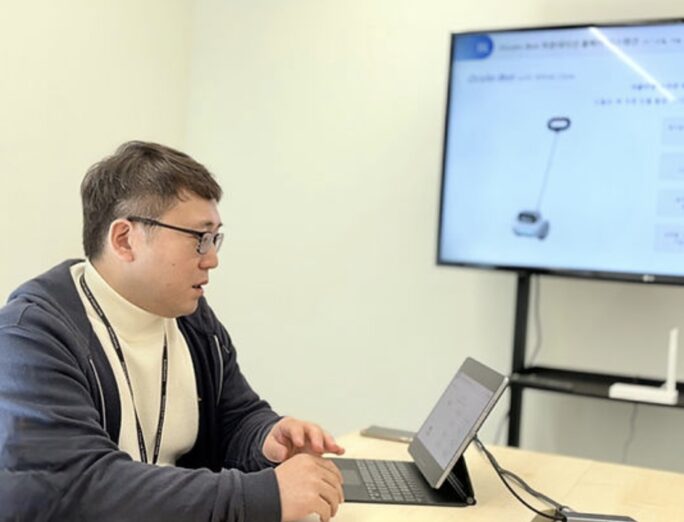
어머니의 눈과 25만 명의 시장 실패
김제필 대표는 창업 이유를 “두 가지 결핍”으로 설명한다. 하나는 개인적인 시간의 결핍이고, 다른 하나는 시장의 결핍이다.
“어머니께서 눈이 안 좋으세요. 그런데 저는 24시간 어머니 옆에서 수발을 들 수 없습니다. 어머니께서 연세가 많으시니 이 문제를 해결할 시간은 한정적입니다. 하지만 지금 정부나 기업이 이 문제를 풀고 있지 않습니다. 기껏해야 선심성 서비스 몇 종이 있을 뿐이고, 그 서비스는 가장 어려운 분들을 위해 쓰여야 하니 저희 어머니까지 차례가 오지 않습니다.”
김제필 대표는 이를 ‘시장 실패’라고 정의한다. 우리나라 등록 시각장애인은 2024년 기준 약25만 명이다. 이 중 심한 시각장애인은 4만 5천 명 정도 된다. 시장이 너무 작고, 돈을 낼 능력도 부족하다. 당연히 기업들이 외면한다.
“이 돈 안 될 구석을, 돈을 벌면서 좋은 서비스로 만들 수 있는 건 대기업이 아니라, 스타트업뿐이라고 생각했습니다. 구매력이 약한 사용자에게 아무도 최첨단 기술을 주지 않는 전형적인 시장 실패를, 내가 해결해 보겠다는 일종의 오만이랄까요.”
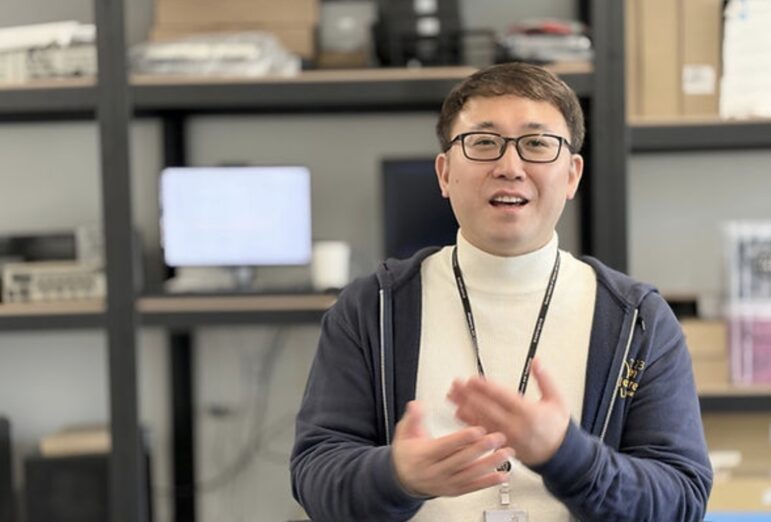
음성 대신 촉각, 안내견처럼 길을 알려주다
베디비어가 기존 서비스와 다른 가장 큰 차이는 사용 방식이다. 기존 길 안내 앱들은 대부분 GPS로 위치를 잡고 ‘5미터 앞에서 오른쪽으로 가세요’와 같은 음성으로 길을 알려준다.
“그런데 이 반복적인 음성 안내는 문제가 있습니다. 카페에서 친구와 이야기할 때처럼 다른 소리가 잘 안 들립니다. 그런데 주변 소리는 시각장애인 분들에게 정말 중요하거든요. 내 옆으로 오토바이가 지나가는지, 맞은편에 차가 달려오는지… 이런 것들을 소리로 듣고 판단하시거든요.”
그래서 베디비어는 말 대신 촉각, 정확히는 ‘고유수용성 감각’으로 길을 안내한다. 우리 몸이 균형을 잡고 움직임을 느끼는 감각이다.
“인간 길잡이의 지능을 안내견의 사용법으로 바꿔 전달한다”고 김제필 대표는 설명한다.
두 번째 차이는 기술이다. 에이드올은 ‘뉴로모픽 인공지능’을 사용한다. 대부분의 자율주행 로봇은 강력한 컴퓨터를 써서 전기를 많이 쓴다. 그러려면 배터리 크기가 엄청나게 커진다.
“발전소를 등에 짊어지고 다니는 셈입니다. 그런데 뉴로모픽 인공지능은 계산이 아주 가볍죠. 그러니 전기 사용량이 적습니다. 저희는 ‘인공 소뇌’를 만들고 있습니다. 우리가 걸어다닐 때 머릿속에서 복잡한 수학 계산을 하지 않잖아요. 우리 뇌는 아주 짧은 순간만 보고, 끊임없이 자세를 고칩니다. 저희 로봇도 비슷해요.”
이런 방식으로 거대한 서버와 연결하지 않고도, 로봇 스스로 어디에 있는지, 주변이 어떤지, 앞으로 어떻게 될지를 예측하고 움직인다. 통신이 끊긴 지하철이나 처음 가는 건물에서도 바로 사용할 수 있다.
개발 과정에서 가장 어려웠던 건 “저렴한 부품으로 어떻게 빠르게 계산할 것인가”였다. 처음에는 한 번 계산하는 데 40초나 걸렸다. 해결 방법은 생각을 바꾸는 것이었다.
“로봇의 정확한 위치를 계산하려는 강박을 버리고, 로봇을 중심으로 주변과의 관계만 파악하는 데 집중했어요. 계산 방식을 단순하게 만들고, AI가 전체가 아닌, 변화만 보도록 했습니다. 그렇게 계산량을 크게 줄일 수 있었죠.”
에이드올은 로봇 회사처럼 보이지만, 진짜 핵심은 로봇 안에 들어가는 ‘온디바이스 AI 추론 플랫폼’이다. 플랫폼 이름은 ‘하릴(HARIL)’이다.
베디비어는 아서왕 전설에 나오는 충직한 외팔이 기사 이름이다. 사용자에게 충실한 길 안내자가 되길 바라는 마음에서 붙였다. 하릴은 우리말 ‘하릴없다’에서 따왔다. 원래는 ‘흠잡을 데 없다’는 뜻인데, 요즘은 ‘할 일 없다’로 알고 있어서, “할 일 없는, 즉 계산을 효율적으로 하는 인공지능”이라는 뜻으로 이름을 지었다.
“이 하릴 플랫폼이 저희 핵심입니다. 냉난방 시스템, 스마트팜, 드론 업체 등에서 사고 있어요. 플랫폼 자체는 형태에 구애받지 않으니 여러 곳에 쓸 수 있죠. 저희가 창업 2년이 채 되지 않은 딥테크 하드웨어 기업인데도 벌써 매출이 발생하는 이유죠.”
에이드올의 초기 시장 전략은 명확하다. 최종 사용자는 시각장애인이지만, 돈을 내는 건 정부와 기관이다.
“저 혼자서 사회적 합의를 만들거나 시장을 만드는 건 불가능합니다. 이미 돈이 쓰이고 있는 곳을 공략해야 해요. 시각장애인 보조기기 시장이 잘 만들어져 있고, 법으로 사줘야 하는 나라들이 있습니다. 저희는 그런 곳들을 먼저 공략합니다. 구매력이 확실하고 이미 큰 돈이 움직이고 있거든요.”
CES 2025에서 혁신상 두 개를 받았다. 하나는 인공지능(AI), 하나는 모두를 위한 인간 안보 부문이다. 김제필 대표는 “CES 혁신상은 베디비어의 신뢰도를 높이는 증명서 같은 것”이라며 “저희가 제안하는 급진적인 기술이 시장에 가져올 혁신 가능성을 보여주는 것”이라고 말했다.
최근에는 독일 최고 AI 연구소인 DFKI에서 공동연구 제안을 받았다. “세계 최고 연구소에서 선제안을 받아, 저희의 기술개발 방향성의 타당성을 인정받았다는 안도감이 들었습니다. 이 공동연구가 보수적인 정부 구매 시장의 문을 여는 열쇠가 될 겁니다.”
기술이 아닌 존엄, 이동의 주권을 되찾다
김제필 대표가 만드는 기술은 단순히 부족한 기능을 보완하는 게 아니다.
“인간이 인간으로서 누려야 할 자유와 자율, 이동권을 되찾기 위한 기술입니다. 누군가의 팔을 잡고 의지해 걷는 것과, 내 손으로 로봇을 잡고 주도적으로 걷는 것은 인간의 존엄성 측면에서 완전히 다릅니다. 기술을 통해 사용자가 다른 사람 도움 없이도 자기 의지대로 세상을 탐험할 수 있는 권리, 즉 이동의 주권을 돌려드리고자 합니다.”
단기 목표는 베디비어의 미국 시장 안착과 대량 생산 체계 구축이다. 하지만 궁극적으로는 지능형 로봇의 에너지 낭비 문제를 해결한 표준 기술로 자리 잡는 것이다.
그는 “세상에 남기고 싶은 메시지는 명확하다. 가장 훌륭한 기술은 가장 적은 에너지로 가장 많은 생명을 구하는 기술”이라며, ‘이 철학을 앞으로 증명해 나갈 것”이라고 강조했다.
어머니의 눈이 되고 싶었던 아들이 만든 로봇에는 ‘인공 소뇌’가 들어있다. 25만 명의 시장 실패를 온디바이스 AI로 해결하고, 정부 구매 시장에서 범용 플랫폼으로 확장하는 전략. 그 중심에는 ‘이동의 주권’이라는 철학이 있다.
김제필 대표가 증명하려는 건 기술이 아니라 존엄이다. 가장 적은 에너지로 가장 많은 생명을 구하는 기술, 그것이 에이드올이 존재하는 이유다.
Kim Je-pil, CEO of Aid All, implants an "artificial cerebellum" in a robot, giving the visually impaired freedom of movement.
“15 meters ahead, on the right.”
Navigation apps for the visually impaired repeatedly announce directions with a voice. However, this voice obscures important surrounding sounds, such as oncoming motorcycles. This has been a "market failure" for companies, citing the limited purchasing power of the 250,000 visually impaired people in Korea.
Kim Je-pil, CEO of Aidol, solved this problem with neuromorphic AI. He created an "artificial cerebellum" that guides with touch instead of voice and enables robots to make decisions on their own without the need for massive servers. This year, Aidol won two CES 2025 Innovation Awards for its autonomous guidance robot, "Bediveer," and began joint research with DFKI, Germany's leading AI research institute.
There's a world of difference between holding someone's arm and walking independently, and holding a robot and walking independently. What CEO Kim Je-pil wants to reclaim isn't simply a means of transportation, but "sovereignty over movement."
Mother's Eyes and the Market Failure of 250,000 People
CEO Kim Je-pil explains his reasons for starting his business as "two deficiencies." One is a lack of personal time, and the other is a lack of market access.
"My mother has poor eyesight. And I can't be there for her 24 hours a day to care for her. Given her advanced age, time is limited to address this issue. But neither the government nor businesses are currently addressing this issue. At best, there are a few charity services, and those services are meant for the most needy, so my mother's turn is never reached."
CEO Kim Je-pil defines this as a "market failure." As of 2024, there are approximately 250,000 registered visually impaired people in Korea. Of these, approximately 45,000 are severely visually impaired. The market is too small, and funding is limited. Naturally, companies are turning a blind eye.
"I believed that only startups, not large corporations, could turn this unprofitable niche into a profitable and compelling service. It was a kind of arrogance, a kind of arrogance, that I was trying to solve a classic market failure: no one was providing cutting-edge technology to users with limited purchasing power."
Tactile guidance instead of voice, like a guide dog
The biggest difference between Bedivere and existing services is its user experience. Most existing navigation apps use GPS to determine your location and then provide voice directions, such as "Go 5 meters ahead and turn right."
"But this repetitive voice guidance is problematic. It makes it difficult to hear other sounds, like when you're talking to a friend at a cafe. However, ambient sounds are incredibly important to visually impaired people. They hear things like a motorcycle passing by, a car approaching, and so on. They make these judgments through sound."
So, instead of using words, Bedivere guides us through touch, or more precisely, through "proprioception," the sense that allows our bodies to sense balance and movement.
“We translate the intelligence of human guides into the way guide dogs are used,” explains CEO Kim Je-pil.
The second difference is technology. Aidol uses "neuromorphic artificial intelligence." Most autonomous robots use powerful computers, which consume a lot of electricity. This requires a huge battery size.
"It's like carrying a power plant on your back. Neuromorphic AI, however, is very computationally lightweight. Therefore, it uses less electricity. We're building an 'artificial cerebellum.' When we walk, we don't perform complex mathematical calculations in our heads. Our brains only see split-second moments and constantly adjust their posture. Our robots are similar."
In this way, the robot can predict its own location, surroundings, and future behavior without having to connect to a massive server. It can be used immediately, even in subways with communication interruptions or in unfamiliar buildings.
The most challenging part of the development process was "How can we calculate quickly using inexpensive components?" Initially, a single calculation took 40 seconds. The solution was a change in thinking.
"We abandoned the obsession with calculating the robot's exact location and focused solely on understanding its relationship to its surroundings. We simplified the calculation method and ensured the AI only considered changes, not the overall picture. This significantly reduced the amount of computation."
Aidall may look like a robotics company, but its true core is an "on-device AI inference platform" built into the robot. The platform is called "HARIL."
Bedivere is the name of a loyal one-armed knight from Arthurian legend. It was named with the hope that it would be a faithful guide to its users. Halil is derived from the Korean word "할릴없" (Halyilsseupda). Originally meaning "impeccable," it's now understood as "has nothing to do." Therefore, the name was given to imply "an AI with nothing to do, that is, an AI that efficiently performs calculations."
"This Halil platform is our core. We're being purchased by companies in the heating and cooling system, smart farm, and drone industries. The platform itself is flexible and can be used in a variety of applications. That's why we're already generating revenue, even though we're a deep-tech hardware company less than two years old."
Aidol's initial market strategy is clear: the end users are visually impaired, but the money is coming from governments and institutions.
"It's impossible for me to create a social consensus or market on my own. I need to target places where money is already being spent. There are countries with well-established markets for assistive devices for the visually impaired, and some require them by law. We target those places first. They have solid purchasing power and already have significant money moving in."
Bedivere received two Innovation Awards at CES 2025, one in the Artificial Intelligence (AI) category and one in the Human Security for All category. "The CES Innovation Awards are like a testament to Bedivere's credibility," said CEO Kim Je-pil. "They demonstrate the innovative potential our radical technology can bring to the market."
Recently, we received a joint research proposal from DFKI, Germany's leading AI research institute. "Receiving a proactive proposal from a world-class research institute gives me a sense of relief that our technological development direction has been recognized. This joint research will be the key to unlocking the door to the conservative government procurement market."
Reclaiming Sovereignty of Mobility: Dignity, Not Technology
The technology that CEO Kim Je-pil creates is not simply about supplementing insufficient functions.
"This technology aims to restore the freedom, autonomy, and mobility that humans deserve as human beings. Walking while holding someone's arm is completely different from walking independently while holding a robot with your own hands is a completely different matter in terms of human dignity. Through technology, we aim to restore the sovereignty of mobility—the right to explore the world at your own will, without the assistance of others."
The short-term goal is to establish Bedivere in the US market and establish a mass production system. However, the ultimate goal is to establish it as a standard technology that solves the energy waste problem of intelligent robots.
He emphasized, "The message I want to leave the world is clear: the best technology is the one that saves the most lives with the least amount of energy," and "I will continue to prove this philosophy."
The robot, created by a son who wanted to be his mother's eyes, contains an "artificial cerebellum." This strategy addresses the market failures of 250,000 people with on-device AI and expands from the government procurement market to a universal platform. At its core lies the philosophy of "sovereignty over movement."
What CEO Kim Je-pil seeks to prove is not technology, but dignity. A technology that saves the most lives with the least amount of energy—that's the reason Aidol exists.
ロボットに「人工小脳」を植え、視覚障害者に移動自由を…キム・ジェピルエイドオール代表
「15メートル前から右方向です。」
視覚障害者用の道案内アプリが繰り返し音声で知らせる。だが、この声のためにいちばん重要な走るバイクのような周囲の音がよく聞こえない。国内視覚障害者である25万人の購買力が弱いという理由で企業が無視する「市場失敗」領域だった。
キム・ジェピルエイドオール代表はこの問題をニューロモルフィックAIに解決した。音声の代わりに触覚で道を案内し、巨大なサーバーなしでロボット自ら判断する「人工小脳」を作った。今年、エイドオールは自律走行案内ロボット「ベディビア」でCES 2025革新賞2部門を受賞し、ドイツ最高AI研究所DFKIと共同研究を開始した。
誰かの腕を握って頼って歩くのと自らロボットを握って主導的に歩くのは全く違う。キム・ジェピル代表が取り戻したいのは、単純な移動手段ではなく「移動の主権」だ。
母の目と25万人の市場が失敗
キム・ジェピル代表は創業理由を「二つの欠乏」と説明する。 1つは個人的な時間の欠乏であり、もう1つは市場の欠乏です。
「母は目が悪いですが、私は24時間母親の隣で手足を挙げることができません。お母さんまで順番が来ません。」
キム・ジェピル代表はこれを「市場失敗」と定義する。韓国登録視覚障害者は2024年基準で約25万人だ。このうち重度の視覚障害者は4万5千人程度となる。市場が小さすぎ、お金を出す能力も不足している。当然、企業が無視する。
「このお金にならない隅を、お金を稼いで良いサービスにすることができるのは大企業ではなく、スタートアップだけだと思いました。購買力が弱いユーザーに誰も最先端技術を与えない典型的な市場失敗を、私が解決してみるという一種の傲慢でしょうか。」
音声ではなく触覚、案内犬のように道を教えてくれる
ベディビアが既存のサービスと異なる最大の違いは使用方法です。既存の道案内アプリはほとんどGPSで位置をとって「5メートル前から右に行きなさい」のような音声で道を知らせる。
「しかし、この繰り返しの音声案内は問題があります。カフェで友達と話すときのように、他の音がよく聞こえません。ところで、周囲の音は視覚障害者の方にとって本当に重要なんです。私の隣にバイクが通り過ぎるのか、向かいに車が走ってくるのか…こういうものを音で聞いて判断するんですよ。」
それでベディビアは言葉の代わりに触覚、正確には「固有水溶性感覚」で道を案内する。私たちの体がバランスをとって動きを感じる感覚だ。
「人間アシスタントの知能を案内犬の使い方に変えて伝達する」とキム・ジェピル代表は説明する。
2番目の違いは技術です。エイドオールは「ニューロモルフィック人工知能」を使用する。ほとんどの自律走行ロボットは強力なコンピュータを使って電気をたくさん使う。これを行うには、バッテリーのサイズが非常に大きくなります。
「発電所を背中に背負って通うわけです。ところでニューロモフィック人工知能は計算が非常に軽いです。だから電気使用量が少ないです。私たちは「人工小脳」を作っています。私たちのロボットも似ています。」
このように巨大なサーバーと接続しなくても、ロボット自体どこにいるのか、周辺がどうなっているのか、これからどうなるのかを予測して動かす。通信が切れた地下鉄や初めて行く建物でもすぐに使える。
開発過程で最も難しかったのは「安価な部品でどのように迅速に計算するか」だった。最初は一度計算するのに40秒もかかった。解決策は考えを変えることでした。
「ロボットの正確な位置を計算しようとする強迫を捨て、ロボットを中心に周辺との関係だけを把握することに集中しました。
エイドオールはロボット会社のように見えるが、本当の核心はロボットの中に入る「オンデバイスAI推論プラットフォーム」だ。プラットフォーム名は「ハリル(HARIL)」だ。
ベディビアはアーサー王伝説に出てくる忠実な片腕が記事名だ。ユーザーに忠実な道案内者になりたいという気持ちでつけた。ハリルは韓国語「ハリルなし」から取った。もともとは「傷つけることができない」という意味だが、最近は「やるべきことはない」と知っていて、「やるべきこと、つまり計算を効率的にする人工知能」という意味で名前をつけた。
「このハリルプラットフォームが私たちの核心です。冷暖房システム、スマートファーム、ドローンメーカーなどで買っています。プラットフォーム自体は形にこだわらないので、いろいろなところに書けます。私たちが創業2年が経っていないディープテックハードウェア企業なのにすでに売り上げが発生する理由です。」
エイドオールの初期市場戦略は明確である。エンドユーザーは視覚障害者だが、お金を出すのは政府と機関だ。
「私一人で社会的合意を作ったり市場を作ったりすることは不可能です。すでにお金が使われているところを攻略しなければなりません。視覚障害者補助機器市場がうまく作られており、法で買わなければならない国があります。私たちはそんな所を先に攻略します。
CES 2025で2つの革新賞を受賞しました。一つは人工知能(AI)、一つは皆のための人間安全保障部門だ。キム・ジェピル代表は「CESイノベーション賞はベディビアの信頼度を高める証明書のようなもの」とし「私たちが提案する急進的な技術が市場にもたらす革新の可能性を示すもの」と話した。
最近はドイツ最高AI研究所DFKIで共同研究提案を受けた。 「世界最高の研究所で先制案を受け、私たちの技術開発方向性の妥当性を認められたという安堵感がありました。この共同研究が保守的な政府購買市場の扉を開く鍵となるでしょう」
技術ではなく尊厳、移動の主権を取り戻す
キム・ジェピル代表が作る技術は、単に不足した機能を補完するものではない。
「人間が人間として味わわなければならない自由と自律、移動権を取り戻すための技術です。 」
短期目標は、ベディビアの米国市場の安着と大量生産システムの構築です。しかし、最終的にはインテリジェントロボットのエネルギー無駄問題を解決した標準技術として位置づけることだ。
彼は「世界に残したいメッセージは明確である。最も優れた技術は、最も少ないエネルギーで最も多くの命を救う技術」とし、「この哲学を今後証明していくだろう」と強調した。
母の目になりたかった息子が作ったロボットには「人工小脳」が入っている。 25万人の市場障害をオンデバイスAIで解決し、政府購入市場から汎用プラットフォームに拡張する戦略。その中心には「移動の主権」という哲学がある。
キム・ジェピル代表が証明しようとするのは技術ではなく尊厳だ。最も少ないエネルギーで最も多くの命を救う技術、それがエイドオールが存在する理由だ。
Aid All 首席执行官金济弼(Kim Je-pil)在机器人体内植入“人工小脑”,使视障人士获得行动自由。
“前方15米,右侧。”
面向视障人士的导航应用程序会反复用语音播报路线。然而,这种语音会掩盖周围重要的声音,例如迎面驶来的摩托车。对于相关公司而言,这被视为一种“市场失灵”,他们指出韩国25万视障人士的购买力有限。
Aidol公司首席执行官金济弼(Kim Je-pil)利用神经形态人工智能解决了这个问题。他创造了一种“人工小脑”,可以通过触觉而非语音进行引导,使机器人无需庞大的服务器即可自主决策。今年,Aidol凭借其自主引导机器人“Bediveer”荣获两项CES 2025创新奖,并开始与德国领先的人工智能研究机构DFKI开展联合研究。
牵着别人的胳膊走路和独立行走,与抱着机器人独立行走之间有着天壤之别。CEO金济弼想要重新获得的不仅仅是一种交通工具,而是“行动自主权”。
母亲的眼睛与25万人的市场失灵
首席执行官金济弼解释说,他创办这家公司的原因是“两个不足之处”。一是缺乏个人时间,二是缺乏市场准入渠道。
“我母亲视力很差。我无法24小时照顾她。考虑到她年事已高,解决这个问题的时间有限。但无论是政府还是企业,目前都没有重视这个问题。充其量,有一些慈善机构提供援助,但这些服务都是面向最需要帮助的人,所以我母亲根本得不到帮助。”
首席执行官金济弼将此定义为“市场失灵”。截至2024年,韩国约有25万登记在册的视障人士,其中约4.5万人为重度视障人士。市场规模太小,资金也有限。自然,企业对此视而不见。
“我当时认为,只有初创公司,而不是大型企业,才能将这个无利可图的细分市场变成一项有利可图且极具吸引力的服务。这是一种傲慢,一种自负,因为我试图解决一个经典的市场失灵问题:没有人向购买力有限的用户提供尖端技术。”
用触觉而非语音进行引导,就像导盲犬一样
Bedivere 与现有服务的最大区别在于其用户体验。大多数现有的导航应用程序使用 GPS 来确定您的位置,然后提供语音指示,例如“向前走 5 米然后右转”。
“但是这种重复的语音提示是有问题的。它让人难以听到其他声音,比如在咖啡馆和朋友聊天时。然而,环境声音对视障人士来说极其重要。他们能听到摩托车驶过、汽车靠近等等声音。他们通过声音做出这些判断。”
因此,贝狄威尔没有使用语言,而是通过触觉,或者更准确地说,通过“本体感觉”(即让我们的身体感知平衡和运动的感觉)来引导我们。
“我们将人类向导的智慧转化为导盲犬的使用方式,”首席执行官金济弼解释道。
第二个区别在于技术。Aidol 采用的是“神经形态人工智能”。大多数自主机器人使用功能强大的计算机,这会消耗大量电力,因此需要体积巨大的电池。
“这就像背着一座发电厂。然而,神经形态人工智能的计算量非常小,因此耗电量也更少。我们正在构建一个‘人工小脑’。我们走路时,大脑不会进行复杂的数学运算。我们的大脑只关注瞬间,并不断调整姿势。我们的机器人也是如此。”
这样一来,机器人无需连接大型服务器即可预测自身位置、周围环境和未来行为。即使在通讯中断的地铁或陌生的建筑物中,它也能立即投入使用。
开发过程中最具挑战性的部分是“如何用低成本的组件快速进行计算?”最初,一次计算需要40秒。解决方案在于转变思维方式。
“我们放弃了对计算机器人精确位置的执着,而专注于理解它与周围环境的关系。我们简化了计算方法,并确保人工智能只考虑变化,而不是整体情况。这大大减少了计算量。”
Aidall 看起来像是一家机器人公司,但它的核心是内置于机器人中的“设备端人工智能推理平台”。该平台名为“HARIL”。
贝狄威尔(Bedivere)是亚瑟王传说中一位忠诚的独臂骑士的名字。它的命名寓意是希望它能成为用户忠实的向导。哈利尔(Halil)源自韩语“할릴없”(Halyilsseupda),原意为“完美无瑕”,现在被理解为“无所事事”。因此,这个名字暗示着“一个无所事事的AI,也就是一个高效执行计算的AI”。
“Halil平台是我们的核心。我们的产品已被供暖制冷系统、智能农场和无人机行业的公司采用。该平台本身非常灵活,可用于各种应用。正因如此,尽管我们是一家成立不到两年的深度科技硬件公司,但我们已经开始盈利了。”
Aidol 的初始市场策略很明确:最终用户是视障人士,但资金来自政府和机构。
“我一个人不可能建立社会共识或市场。我需要瞄准那些已经有消费需求的地方。有些国家已经建立了成熟的视障辅助设备市场,有些国家甚至立法强制要求使用。我们会优先瞄准这些地方。这些地方购买力强劲,而且已经有大量资金流入。”
Bedivere在2025年国际消费电子展(CES)上荣获两项创新奖,分别属于人工智能(AI)类别和全民安全类别。“CES创新奖是对Bedivere信誉的有力证明,”首席执行官金济弼表示,“它们展现了我们颠覆性技术能够为市场带来的创新潜力。”
最近,我们收到了德国领先的人工智能研究机构DFKI的联合研究提案。“收到世界一流研究机构主动提出的提案,让我感到如释重负,这表明我们的技术发展方向得到了认可。这项联合研究将成为打开保守的政府采购市场大门的关键。”
重塑出行主权:尊严,而非技术
CEO金济弼所创造的技术并非仅仅是对不足功能的补充。
“这项技术旨在恢复人类作为人应享有的自由、自主和行动能力。搀扶他人行走与亲手扶着机器人独立行走截然不同,这关乎人类尊严。我们希望通过技术恢复行动自主权——即无需他人协助,即可随心所欲探索世界的权利。”
短期目标是将Bedivere打入美国市场并建立大规模生产体系。然而,最终目标是将其打造成为一项标准技术,以解决智能机器人的能源浪费问题。
他强调:“我想留给世界的信息很明确:最好的技术是用最少的能源拯救最多的生命,”并且“我将继续证明这一理念。”
这款由儿子创造的机器人,旨在成为母亲的眼睛,它内置了“人工小脑”。这项战略利用设备端人工智能解决了25万人的市场失灵问题,并从政府采购市场扩展到通用平台。其核心理念是“行动自主权”。
金济弼首席执行官想要证明的不是技术,而是尊严。用最少的能源拯救最多生命的技术——这就是Aidol存在的意义。
Kim Je-pil, PDG d'Aid All, implante un « cervelet artificiel » dans un robot, offrant ainsi aux personnes malvoyantes une liberté de mouvement.
« 15 mètres plus loin, sur la droite. »
Les applications de navigation pour personnes malvoyantes annoncent les directions à voix haute de manière répétée. Cependant, cette voix masque des sons ambiants importants, comme le bruit des motos qui arrivent en sens inverse. Ce problème a engendré un échec commercial pour les entreprises, qui invoquent le faible pouvoir d'achat des 250 000 personnes malvoyantes que compte la Corée.
Kim Je-pil, PDG d'Aidol, a résolu ce problème grâce à l'IA neuromorphique. Il a créé un « cervelet artificiel » qui guide les robots par le toucher plutôt que par la voix et leur permet de prendre des décisions de manière autonome, sans avoir besoin de serveurs puissants. Cette année, Aidol a remporté deux prix de l'innovation au CES 2025 pour son robot de guidage autonome, « Bediveer », et a entamé une collaboration de recherche avec le DFKI, le principal institut de recherche allemand en IA.
Il y a un monde de différence entre se tenir au bras de quelqu'un et marcher de façon autonome, et se tenir au bras d'un robot et marcher de façon autonome. Ce que le PDG Kim Je-pil souhaite reconquérir, ce n'est pas simplement un moyen de transport, mais la « souveraineté sur le mouvement ».
Les yeux de la mère et la défaillance du marché de 250 000 personnes
Le PDG Kim Je-pil explique les raisons qui l'ont poussé à créer son entreprise par « deux lacunes ». La première est un manque de temps personnel, et la seconde un manque d'accès au marché.
« Ma mère a une mauvaise vue. Je ne peux pas être à ses côtés 24 heures sur 24 pour m'occuper d'elle. Vu son âge avancé, le temps manque pour régler ce problème. Or, ni le gouvernement ni les entreprises ne s'en préoccupent actuellement. Au mieux, il existe quelques services caritatifs, mais ils sont réservés aux plus démunis, si bien que ma mère n'en bénéficie jamais. »
Le PDG Kim Je-pil qualifie cette situation de « défaillance du marché ». En 2024, la Corée comptait environ 250 000 personnes malvoyantes enregistrées, dont près de 45 000 souffraient d'une déficience visuelle sévère. Le marché étant trop restreint et les financements limités, les entreprises font l'autruche.
« Je croyais que seules les startups, et non les grandes entreprises, pouvaient transformer ce créneau non rentable en un service profitable et attractif. C'était une forme d'arrogance, une certaine arrogance, de croire que j'essayais de résoudre un problème classique du marché : personne ne proposait de technologies de pointe aux utilisateurs au pouvoir d'achat limité. »
Un guidage tactile plutôt que vocal, comme un chien guide
La principale différence entre Bedivere et les services existants réside dans son expérience utilisateur. La plupart des applications de navigation existantes utilisent le GPS pour déterminer votre position, puis fournissent des instructions vocales, telles que « Avancez de 5 mètres et tournez à droite ».
« Mais ce guidage vocal répétitif pose problème. Il rend difficile la perception d'autres sons, comme lorsqu'on discute avec un ami dans un café. Or, les sons ambiants sont extrêmement importants pour les personnes malvoyantes. Elles entendent par exemple une moto qui passe, une voiture qui approche, etc. Elles se repèrent grâce au son. »
Ainsi, au lieu d'utiliser des mots, Bedivere nous guide par le toucher, ou plus précisément, par la « proprioception », le sens qui permet à notre corps de percevoir l'équilibre et le mouvement.
« Nous transposons l’intelligence des guides humains dans la manière dont les chiens guides sont utilisés », explique le PDG Kim Je-pil.
La seconde différence réside dans la technologie. Aidol utilise une « intelligence artificielle neuromorphique ». La plupart des robots autonomes utilisent des ordinateurs puissants, qui consomment beaucoup d'électricité et nécessitent donc des batteries de grande capacité.
« C'est comme porter une centrale électrique sur le dos. L'IA neuromorphique, en revanche, est très légère en termes de calcul. Par conséquent, elle consomme moins d'électricité. Nous sommes en train de construire un « cervelet artificiel ». Lorsque nous marchons, nous n'effectuons pas de calculs mathématiques complexes mentalement. Notre cerveau ne perçoit que des instants fugaces et ajuste constamment notre posture. Nos robots fonctionnent de la même manière. »
Ainsi, le robot peut prédire sa position, son environnement et son comportement futur sans avoir besoin de se connecter à un serveur centralisé. Il est immédiatement opérationnel, même dans le métro en cas d'interruptions de communication ou dans des bâtiments inconnus.
La partie la plus difficile du processus de développement a été de trouver comment effectuer des calculs rapides avec des composants peu coûteux. Au départ, un seul calcul prenait 40 secondes. La solution a consisté à changer d'approche.
« Nous avons abandonné l'obsession de calculer la position exacte du robot et nous nous sommes concentrés uniquement sur la compréhension de sa relation avec son environnement. Nous avons simplifié la méthode de calcul et veillé à ce que l'IA ne prenne en compte que les changements, et non la situation globale. Cela a considérablement réduit la quantité de calculs. »
Aidall a beau ressembler à une entreprise de robotique, son véritable cœur de métier est une plateforme d'inférence IA embarquée, appelée HARIL, intégrée au robot.
Bedivere est le nom d'un chevalier loyal et manchot issu de la légende arthurienne. Il fut nommé ainsi dans l'espoir qu'il serait un guide fidèle pour ses utilisateurs. Halil dérive du mot coréen « 할릴없 » (Halyilsseupda). Signifiant à l'origine « impeccable », il est aujourd'hui compris comme « qui n'a rien à faire ». Par conséquent, ce nom fut choisi pour désigner une IA qui n'a rien à faire, c'est-à-dire une IA qui effectue des calculs avec une grande efficacité.
« La plateforme Halil est au cœur de notre activité. Nous sommes rachetés par des entreprises des secteurs du chauffage et de la climatisation, de l'agriculture intelligente et des drones. La plateforme elle-même est flexible et peut être utilisée dans une variété d'applications. C'est pourquoi nous générons déjà des revenus, même si nous sommes une entreprise de matériel de pointe de moins de deux ans. »
La stratégie de marché initiale d'Aidol est claire : les utilisateurs finaux sont des personnes malvoyantes, mais l'argent provient des gouvernements et des institutions.
« Il m'est impossible de créer un consensus social ou un marché par moi-même. Je dois cibler les endroits où l'argent est déjà dépensé. Certains pays ont des marchés bien établis pour les aides visuelles, et certains les rendent même obligatoires. Nous ciblons ces pays en priorité. Ils ont un fort pouvoir d'achat et des investissements importants y sont déjà réalisés. »
Bedivere a reçu deux prix de l'innovation au CES 2025, l'un dans la catégorie Intelligence artificielle (IA) et l'autre dans la catégorie Sécurité humaine pour tous. « Ces prix témoignent de la crédibilité de Bedivere », a déclaré Kim Je-pil, PDG de l'entreprise. « Ils démontrent le potentiel novateur que notre technologie de pointe peut apporter au marché. »
Nous avons récemment reçu une proposition de recherche conjointe du DFKI, le principal institut de recherche allemand en intelligence artificielle. « Recevoir une proposition proactive d'un institut de recherche de renommée mondiale est un soulagement : cela confirme que notre orientation technologique est reconnue. Cette recherche conjointe sera essentielle pour accéder au marché des marchés publics, un secteur traditionnellement conservateur. »
Reconquérir la souveraineté en matière de mobilité : la dignité, et non la technologie
La technologie créée par le PDG Kim Je-pil ne se limite pas à pallier des fonctions insuffisantes.
« Cette technologie vise à restaurer la liberté, l'autonomie et la mobilité auxquelles les êtres humains ont droit. Marcher en s'appuyant sur le bras de quelqu'un est totalement différent de marcher seul en tenant un robot de ses propres mains ; c'est une tout autre affaire en termes de dignité humaine. Grâce à cette technologie, nous souhaitons rétablir la souveraineté de la mobilité : le droit d'explorer le monde à sa guise, sans l'aide de personne. »
L'objectif à court terme est d'implanter Bedivere sur le marché américain et de mettre en place un système de production de masse. Toutefois, l'objectif ultime est d'en faire une technologie de référence permettant de résoudre le problème du gaspillage énergétique des robots intelligents.
Il a souligné : « Le message que je veux laisser au monde est clair : la meilleure technologie est celle qui sauve le plus de vies avec le moins d'énergie possible », et « je continuerai à prouver cette philosophie ».
Ce robot, créé par un fils désireux d'être les yeux de sa mère, est doté d'un « cervelet artificiel ». Cette stratégie vise à pallier les carences du marché de l'IA embarquée pour 250 000 personnes et s'étend du secteur public à une plateforme universelle. Elle repose sur le principe de la « souveraineté du mouvement ».
Ce que le PDG Kim Je-pil cherche à démontrer, ce n'est pas la technologie, mais la dignité. Une technologie qui sauve le plus de vies avec le moins d'énergie possible : voilà la raison d'être d'Aidol.
You must be logged in to post a comment.