




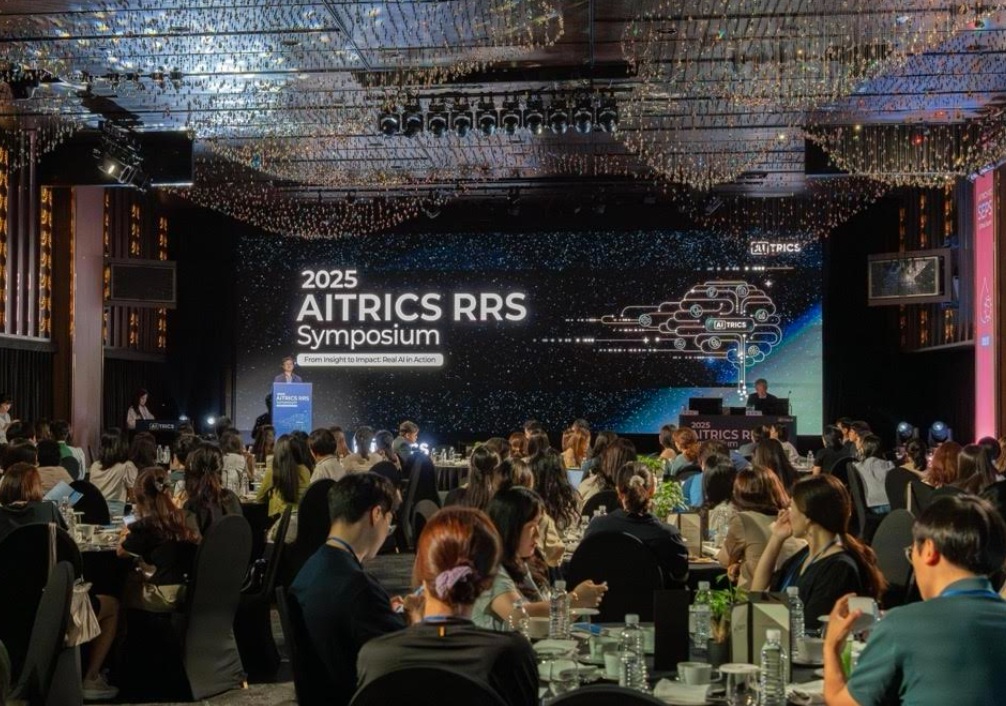
의료 인공지능(AI) 기업 에이아이트릭스(AITRICS, 대표 김광준)는 지난 26일 서울 반얀트리 클럽 앤 스파에서 ‘2025 신속대응시스템(RRS, Rapid Response System) 심포지엄’을 개최했다고 29일 밝혔다.
‘From Insight to Impact: Real AI in Action’을 주제로 열린 이번 심포지엄에는 전국 신속대응팀 소속 의료진 약 140명이 참석해 RRT 운영 현황 및 변화, 환자 상태 악화 예측 AI 솔루션 ‘AITRICS-VC(바이탈케어)’의 임상 적용 사례를 공유하고 논의했다.
심포지엄에서는 가톨릭대 서울성모병원 김석찬 교수, 강남세브란스병원 조재화 교수, 분당서울대병원 이연주 교수 등이 좌장을 맡았으며, 주요 병원 신속대응팀 의료진 4명이 현장 경험과 AI 솔루션 활용 사례를 발표했다.
첫 세션에서는 세종충남대병원 문재영 교수와 서울대병원 및 분당서울대병원 신속대응팀 간호사들이 신속대응시스템의 변화 및 운영 사례를 소개했다. 문 교수는 “신속대응팀의 역할이 확대되고 있으며, AI 기반 예측 솔루션이 의료진의 의사결정에 큰 도움을 준다”고 밝혔다. 또한 의료 AI 도입에 따른 신뢰 형성과 소통의 중요성도 강조했다.
이어진 발표에서는 신속대응팀 간호사들이 RRT 핵심 역할과 AI 솔루션 도입 후 운영 변화에 대해 구체적으로 공유했다.
두 번째 세션에서는 아주대 호흡기내과 박지은 교수가 ‘바이탈케어’의 임상 활용 경험을 발표했다. 박 교수는 “AI 데이터와 임상 경험의 결합으로 중환자 관리 효율성과 정확성이 향상됐으며, 환자 예후 개선 등 긍정적 결과가 확인돼 의료진의 신뢰를 얻고 있다”고 말했다.
김석찬 교수(대한중환자의학회 신속대응시스템연구회장)는 “이번 심포지엄은 신속대응시스템과 AI 기술이 의료 현장에 실제 적용되는 모습을 공유하는 의미 있는 자리였다”며 “AI 기반 조기 예측 솔루션이 환자 안전 향상과 조기 대응 역량 강화에 기여할 것”이라고 평가했다.
에이아이트릭스 김광준 대표는 “전국 의료진과 직접 소통하며 임상 현장 경험을 확인한 뜻깊은 시간이었다”며 “바이탈케어의 임상적 가치가 입증된 만큼, 앞으로도 제품과 근거를 강화해 환자 안전 증진에 힘쓸 것”이라고 말했다.
- 관련 기사 더보기
AITRIX Hosts '2025 Rapid Response System Symposium'
AITRICS (CEO Gwangjun Kim), a medical artificial intelligence (AI) company, announced on the 29th that it held the '2025 Rapid Response System (RRS) Symposium' at the Banyan Tree Club & Spa in Seoul on the 26th.
This symposium, held under the theme of 'From Insight to Impact: Real AI in Action,' was attended by approximately 140 medical staff from nationwide rapid response teams, who shared and discussed the current status and changes in RRT operation, as well as clinical application cases of 'AITRICS-VC (Vital Care),' an AI solution for predicting patient condition deterioration.
The symposium was chaired by Professor Seok-Chan Kim of Seoul St. Mary's Hospital, Catholic University of Korea, Professor Jae-Hwa Cho of Gangnam Severance Hospital, and Professor Yeon-Ju Lee of Bundang Seoul National University Hospital, and four medical staff from rapid response teams at major hospitals presented their field experiences and cases of utilizing AI solutions.
In the first session, Professor Jae-young Moon of Sejong Chungnam National University Hospital and nurses from the Rapid Response Teams at Seoul National University Hospital and Seoul National University Bundang Hospital presented examples of changes and operational practices in the rapid response system. Professor Moon stated, "The role of the rapid response team is expanding, and AI-based predictive solutions are greatly assisting medical staff in their decision-making." He also emphasized the importance of building trust and communication with the introduction of medical AI.
In the following presentation, nurses from the rapid response team shared details about the core role of RRT and operational changes following the introduction of the AI solution.
In the second session, Professor Park Ji-eun of the Department of Respiratory Medicine at Ajou University presented her clinical experience with Vital Care. Professor Park stated, "The combination of AI data and clinical experience has improved the efficiency and accuracy of critical care management. Positive outcomes, such as improved patient prognosis, have been confirmed, earning the trust of medical professionals."
Professor Seok-Chan Kim (Chairman of the Rapid Response System Research Group of the Korean Society of Critical Care Medicine) said, “This symposium was a meaningful opportunity to share how rapid response systems and AI technology are actually applied in medical settings,” and evaluated that “AI-based early prediction solutions will contribute to improving patient safety and strengthening early response capabilities.”
AITricks CEO Kim Gwang-jun said, “It was a meaningful time to directly communicate with medical staff across the country and confirm their clinical field experience,” and added, “Now that the clinical value of Vital Care has been proven, we will continue to strengthen our products and evidence to improve patient safety.”
- See more related articles
エイアイトリックス、「2025迅速対応システムシンポジウム」開催
医療人工知能(AI)企業のエイトリクス(AITRICS、代表キム・グァンジュン)は26日、ソウルバンヤンツリークラブ&スパで「2025迅速対応システム(RRS、Rapid Response System)シンポジウム」を開催したと29日明らかにした。
「From Insight to Impact: Real AI in Action」をテーマに開かれた今回のシンポジウムには、全国の迅速対応チーム所属の医療スタッフ約140人が参加し、RRT運営の現状と変化、患者の状態悪化予測AIソリューション「AITRICS-VC(バイタルケア)」の臨床適用事例を共有し議論した。
シンポジウムではカトリック大学ソウル聖母病院キム・ソクチャン教授、江南セブランス病院チョ・ジェファ教授、盆唐ソウル大病院イ・ヨンジュ教授などが座場を引き受け、主要病院迅速対応チーム医療陣4人が現場経験とAIソリューション活用事例を発表した。
初セッションでは、世宗忠南大病院のムン・ジェヨン教授とソウル大病院およびブンダンソウル大病院の迅速対応チームの看護師たちが、迅速対応システムの変化と運営事例を紹介した。強調した。
続く発表では、迅速対応チーム看護師たちがRRTの核心役割とAIソリューション導入後の運用変化について具体的に共有した。
2回目のセッションでは、非常に呼吸器内とパク・ジウン教授が「バイタルケア」の臨床活用経験を発表した。
キム・ソクチャン教授(大韓集中医療医学会迅速対応システム研究会長)は「今回のシンポジウムは、迅速対応システムとAI技術が医療現場に実際に適用される姿を共有する意味のある席だった」とし、「AIベースの早期予測ソリューションが患者の安全向上と早期対応能力の強化に寄与する」と評価した。
エイアイトリックスのキム・グァンジュン代表は「全国医療スタッフと直接コミュニケーションし臨床現場経験を確認した重要な時間だった」とし「バイタルケアの臨床的価値が立証されただけに、今後も製品と根拠を強化して患者の安全増進に努めるだろう」と話した。
- 関連記事をもっと見る
AITRIX 举办“2025 年快速反应系统研讨会”
医疗人工智能(AI)企业AITRICS(代表:金光俊) 29日宣布,于26日在首尔悦榕庄俱乐部及水疗中心举办了“2025快速反应系统(RRS)研讨会”。
本次研讨会以“从洞察到影响:真正的人工智能在行动”为主题,来自全国快速反应小组的约140名医务人员参加了会议,分享和讨论了RRT运营的现状和变化,以及预测患者病情恶化的人工智能解决方案“AITRICS-VC(Vital Care)”的临床应用案例。
研讨会由韩国天主教大学首尔圣母医院的金锡灿教授、江南Severance医院的赵在华教授、盆唐首尔大学医院的李妍珠教授主持,来自各大医院快速反应团队的四名医务人员介绍了利用AI解决方案的现场经验和案例。
在第一场研讨会上,世宗忠南大学医院文在永教授以及首尔大学医院和盆唐首尔大学医院快速反应小组的护士们介绍了快速反应系统的变化和运作实践案例。文教授表示:“快速反应小组的作用正在不断扩大,基于人工智能的预测解决方案正在极大地协助医务人员的决策。”他还强调了在引入医疗人工智能的同时建立信任和沟通的重要性。
在接下来的演讲中,快速反应小组的护士们详细分享了RRT的核心作用以及引入AI解决方案后的运营变化。
在第二场研讨会上,亚洲大学呼吸内科朴智恩教授介绍了其在Vital Care方面的临床经验。朴教授表示:“AI数据与临床经验的结合,提高了重症监护管理的效率和准确性。患者预后改善等积极成果已得到证实,赢得了医护人员的信任。”
金锡灿教授(韩国重症医学会快速反应系统研究组组长)表示:“本次研讨会是分享快速反应系统和AI技术在医疗环境中实际应用的一次有意义的机会”,并评价道:“基于AI的早期预测解决方案将有助于提高患者安全性并加强早期反应能力。”
AITricks首席执行官金光俊表示,“这是与全国各地的医务人员直接沟通并确认他们的临床现场经验的一次有意义的时刻”,并补充道,“现在Vital Care的临床价值已经得到证实,我们将继续加强我们的产品和证据,以提高患者的安全性。”
- 查看更多相关文章
AITRIX organise le « Symposium 2025 sur les systèmes de réponse rapide »
AITRICS (PDG Gwangjun Kim), une société d'intelligence artificielle médicale (IA), a annoncé le 29 qu'elle organisait le « Symposium 2025 sur le système de réponse rapide (RRS) » au Banyan Tree Club & Spa à Séoul le 26.
Ce symposium, organisé sous le thème « De la compréhension à l'impact : l'IA réelle en action », a réuni environ 140 membres du personnel médical des équipes nationales d'intervention rapide, qui ont partagé et discuté de l'état actuel et des changements dans le fonctionnement des RRT, ainsi que des cas d'application clinique de « AITRICS-VC (Vital Care) », une solution d'IA permettant de prédire la détérioration de l'état des patients.
Le symposium était présidé par le professeur Seok-Chan Kim de l'hôpital St. Mary de Séoul, Université catholique de Corée, le professeur Jae-Hwa Cho de l'hôpital Gangnam Severance et le professeur Yeon-Ju Lee de l'hôpital universitaire national de Bundang Séoul, et quatre membres du personnel médical des équipes d'intervention rapide des principaux hôpitaux ont présenté leurs expériences sur le terrain et des cas d'utilisation de solutions d'IA.
Lors de la première séance, le professeur Jae-young Moon de l'hôpital universitaire national Sejong Chungnam et des infirmières des équipes d'intervention rapide de l'hôpital universitaire national de Séoul et de l'hôpital universitaire national de Séoul Bundang ont présenté des exemples d'évolution et de pratiques opérationnelles du système d'intervention rapide. Le professeur Moon a déclaré : « Le rôle de l'équipe d'intervention rapide s'élargit et les solutions prédictives basées sur l'IA aident grandement le personnel médical dans sa prise de décision. » Il a également souligné l'importance de renforcer la confiance et la communication avec l'introduction de l'IA médicale.
Dans la présentation suivante, les infirmières de l’équipe d’intervention rapide ont partagé des détails sur le rôle principal de l’équipe d’intervention rapide et les changements opérationnels suite à l’introduction de la solution d’IA.
Lors de la deuxième séance, la professeure Park Ji-eun, du département de médecine respiratoire de l'université d'Ajou, a présenté son expérience clinique avec Vital Care. Elle a déclaré : « La combinaison des données d'IA et de l'expérience clinique a amélioré l'efficacité et la précision de la gestion des soins intensifs. Les résultats positifs, tels que l'amélioration du pronostic des patients, ont été confirmés, gagnant la confiance des professionnels de santé. »
Le professeur Seok-Chan Kim (président du groupe de recherche sur les systèmes de réponse rapide de la Société coréenne de médecine de soins intensifs) a déclaré : « Ce symposium a été une occasion significative de partager la manière dont les systèmes de réponse rapide et la technologie de l'IA sont réellement appliqués dans les milieux médicaux », et a estimé que « les solutions de prédiction précoce basées sur l'IA contribueront à améliorer la sécurité des patients et à renforcer les capacités de réponse précoce. »
Le PDG d'AITricks, Kim Gwang-jun, a déclaré : « C'était un moment important pour communiquer directement avec le personnel médical à travers le pays et confirmer leur expérience clinique sur le terrain », et a ajouté : « Maintenant que la valeur clinique de Vital Care a été prouvée, nous continuerons à renforcer nos produits et nos preuves pour améliorer la sécurité des patients. »
- Voir plus d'articles connexes
You must be logged in to post a comment.