



라온시큐어가 Web3 생태계와 AI의 융합을 통한 데이터 주권 및 초연결 사회의 비전을 제시하며 ‘2025 시큐업&해커톤’을 종료했다.
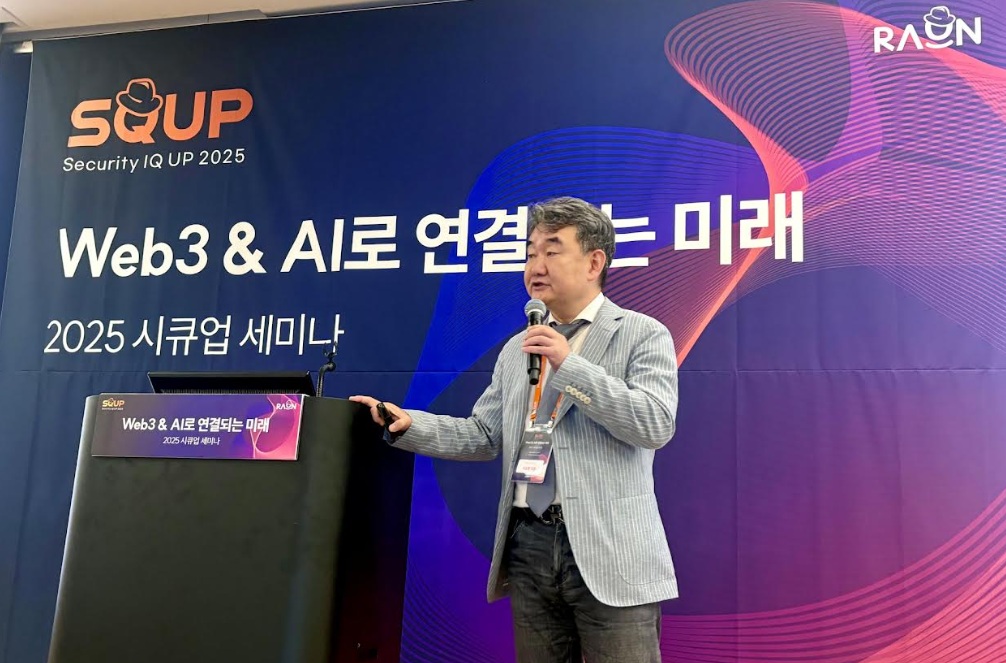
IT 보안·인증 플랫폼 기업 ‘라온시큐어’(대표 이순형, 이정아, 042510)는 23일 서울 코엑스에서 ‘Web3와 AI로 연결되는 미래’를 주제로 개최한 ‘2025 시큐업&해커톤’을 마무리했다. 이번 행사는 국내외 보안·인증 업계 전문가와 학계, 산업계 관계자들이 대거 참석해 역대 최대 규모로 진행됐다.
올해로 13회째를 맞은 시큐업 세미나에서 라온시큐어는 Web3와 AI 기술 융합이 가져올 정보보호 산업의 새로운 변화와 발전 방향을 공유했다.
이순형 라온시큐어 대표는 모두발언에서 “데이터 주권은 디지털 사회에서 인류의 기본권이며, 출생부터 노년까지 생애 전 주기를 아우르는 디지털 신원 인프라 구축이 필수적”이라고 강조했다. 이어 “Web3는 AI의 빅데이터 독점과 악용 우려를 완화하고 신뢰 기반 프레임워크를 완성하는 역할을 하며, AI는 탈중앙 환경의 Web3가 합리적이고 자율적인 의사결정을 내릴 수 있도록 보완하는 상호 보완적 관계”라며 “두 기술의 융합이 새로운 신뢰 체계와 사회적 가치를 창출할 것”이라고 덧붙였다.
라온시큐어는 행사에서 Web3·AI 기반 초연결 플랫폼 서비스 로드맵도 공개했다. 블록체인 기반 디지털 인증 기술을 토대로 Web3 생태계를 확장하고, 정보보호 통합 솔루션과 AI 기술을 결합한 보안·인증 서비스를 통해 정보보호 산업 발전에 기여한다는 계획이다.
이를 위해 NFT·스테이블코인 등 Web3 토큰경제 플랫폼, DID와 AI 기반 의료, 교육. 공공. 금융 데이터 플랫폼, 양자내성암호(PQC) 및 영지식증명(ZKP) 기반 디지털 인증 플랫폼 등 온·오프라인, 메타버스 시공간을 넘어서는 미래지향적인 초연결 플랫폼 방향성을 제시했다.
라온시큐어는 이어진 세션에서 강력한 사용자 인증과 접근 통제, 데이터와 정보자산에 대한 제로 트러스트 전략, 최근 국정원이 발표한 국가보안망체계(N2SF) 가이드라인 1.0을 비롯해 AI 보안, 양자내성암호 기반 정보보호 등 Web3와 AI 시대 주요 보안 현안과 대응 전략을 제시했다. 김용성 원광대 교수는 의료 분야의 DID 신원 인증 사례를 통해 민감 데이터 보호와 신뢰 확보 방안을 설명했으며, 김선교 건국대 교수는 디지털 배지의 실제 운영 경험을 공유했다.
라온시큐어의 자회사인 라온메타는 메타데미 트랙을 통해 Web3·AI 기반 메타버스 혁신 방향, 실용적 메타버스 플랫폼과 동력보트 조종, 지게차 운전, 장애인 직업훈련 등 콘텐츠를 소개했다. 키노트 발표를 통해 우운택 카이스트(KAIST) 교수는 공간지능과 확장현실(XR)이 여는 K-메타버스(K-Metaverse)를 주제로 메타버스의 미래를 예측했으며, 채재병 SK텔레콤 부장은 메타버스 실습용 디바이스 트렌드와 향후 디바이스 환경의 획기적 변화 가능성을 전망했다. 이후 이어진 패널 토의에서는 우운택 교수, 채재병 부장, 최용기 한국메타버스산업협회(K-meta) 부회장이 콘텐츠, 플랫폼, 디바이스 등 기술 변화에 따른 K-메타버스 산업의 미래 성장 가능성에 대해 열띤 논의를 펼쳤다.
글로벌 연사들도 참석해 글로벌 보안·인증 현안을 공유했다. 미즈마 이츠노부 사이버링크스 CTO는 라온시큐어의 ‘옴니원 디지털아이디(OmniOne Digital ID)’를 활용한 일본 자격증명 시장 진출 전략을 소개했으며, 케빈 가르시아 코스타리카 공대 교수는 한국과 코스타리카 간 오픈DID(OpenDID) 기반의 디지털 주권 강화와 신뢰 가능한 신원 체계 구축을 위한 협력 필요성을 강조했다. 벤자민 구글 안드로이드 엔터프라이즈 개발 수석은 제로 트러스트 보안 모델의 필요성과 글로벌 적용 사례를 발표해 관심을 모았다.
이번 행사와 함께 열린 해커톤 결선에서는 본선에 오른 10개 팀이 블록체인과 AI 기술을 활용한 현실적이고 창의적인 사업 아이디어를 선보이며 성황리에 막을 내렸다.
이순형 대표는 “2025 시큐업&해커톤은 Web3와 AI 융합이 만들어낼 초연결 사회의 미래 비전을 제시하는 뜻깊은 자리였다”며, “라온시큐어는 소버린 AI 시대의 핵심인 데이터 주권 확보에 앞장서고, 지속적인 기술 혁신으로 글로벌 디지털 신뢰 인프라 구축을 선도하는 기업으로 도약하겠다”고 말했다.
- 관련 기사 더보기
LaonSecure concludes its '2025 Security Up & Hackathon'
LaonSecure concluded the '2025 Secure Up & Hackathon' by presenting a vision of data sovereignty and a hyper-connected society through the convergence of the Web3 ecosystem and AI.
IT security and authentication platform company Laonsecure (CEO Lee Soon-hyung, Lee Jeong-ah, 042510) concluded the "2025 SecureUp & Hackathon," held on the 23rd at COEX in Seoul under the theme of "The Future Connected by Web3 and AI." This event was the largest ever, with a large number of domestic and international security and authentication industry experts, academics, and industry representatives in attendance.
At the 13th annual SecureUp seminar, RaonSecure shared the new changes and development directions for the information security industry brought about by the convergence of Web3 and AI technologies.
In his opening remarks, Lee Soon-hyung, CEO of Raonsecure, emphasized, "Data sovereignty is a fundamental human right in the digital society, and it is essential to establish a digital identity infrastructure that encompasses the entire life cycle, from birth to old age." He continued, "Web3 plays a role in alleviating concerns about AI's monopoly on big data and misuse and completing a trust-based framework. AI complements Web3 in a decentralized environment, enabling rational and autonomous decision-making. They are mutually complementary." He added, "The convergence of these two technologies will create a new trust system and social value."
At the event, Laonsecure also unveiled its roadmap for its Web3 and AI-based hyper-connected platform service. The company plans to expand the Web3 ecosystem based on blockchain-based digital authentication technology and contribute to the advancement of the information security industry through security and authentication services that combine integrated information protection solutions with AI technology.
To this end, the company presented a future-oriented, hyper-connected platform that transcends online and offline, and the metaverse's time and space, including a Web3 token economy platform featuring NFTs and stablecoins, a DID and AI-based healthcare, education, public, and financial data platform, and a digital authentication platform based on quantum-resistant cryptography (PQC) and zero-knowledge proofs (ZKP).
In the following session, RaonSecure presented key security issues and response strategies for the Web3 and AI era, including strong user authentication and access control, a zero-trust strategy for data and information assets, the National Security Network System (N2SF) Guideline 1.0 recently announced by the National Intelligence Service, AI security, and information protection based on quantum-resistant cryptography. Professor Yongseong Kim of Wonkwang University explained ways to protect sensitive data and ensure trust using the case of DID identity authentication in the medical field, and Professor Seonkyo Kim of Konkuk University shared his practical experience in operating digital badges.
RaonMeta, a subsidiary of RaonSecure, introduced the direction of metaverse innovation based on Web3 and AI, a practical metaverse platform, and contents such as powerboat operation, forklift operation, and job training for the disabled through the Metademi track. In his keynote presentation, Professor Woo Woon-taek of KAIST predicted the future of the metaverse with the topic of K-Metaverse opened by spatial intelligence and extended reality (XR), and SK Telecom Vice President Chae Jae-byeong predicted the trend of metaverse practice devices and the possibility of groundbreaking changes in the future device environment. In the panel discussion that followed, Professor Woo Woon-taek, Vice President Chae Jae-byeong, and Vice President Choi Yong-gi of the Korea Metaverse Industry Association (K-meta) had a heated discussion about the future growth potential of the K-metaverse industry according to technological changes in content, platforms, and devices.
Global speakers also attended and shared current global security and authentication issues. Itsunobu Mizuma, CTO of Cyberlinks, introduced Raonsecure's strategy to enter the Japanese credential market using 'OmniOne Digital ID', and Professor Kevin Garcia of the University of Costa Rica emphasized the need for cooperation between Korea and Costa Rica to strengthen digital sovereignty and build a trustworthy identity system based on OpenDID. Benjamin Benjamin, Head of Android Enterprise Development at Google, garnered attention by presenting the necessity of a zero-trust security model and global application cases.
The hackathon finals, held alongside this event, concluded successfully with the ten finalist teams presenting realistic and creative business ideas utilizing blockchain and AI technologies.
CEO Lee Soon-hyung said, “The 2025 SecureUp & Hackathon was a meaningful event that presented a future vision of a hyper-connected society created by the convergence of Web3 and AI,” and added, “Laonsecure will take the lead in securing data sovereignty, which is the core of the sovereign AI era, and will leap forward as a company that leads the establishment of a global digital trust infrastructure through continuous technological innovation.”
- See more related articles
ラオンセキュア、「2025セキュア&ハッカートン」終了
ラオン・セキュアがWeb3エコシステムとAIの融合を通じたデータ主権及び超連結社会のビジョンを提示し、「2025セキュア&ハッカートン」を終了した。
ITセキュリティ・認証プラットフォーム企業「ラオンセキュア」(代表イ・スンヒョン、イ・ジョンア、042510)は23日、ソウルCOEXで「Web3とAIでつながる未来」をテーマに開催した「2025セキュア&ハッカートン」を終えた。今回の行事は国内外のセキュリティ・認証業界の専門家と学界、産業界の関係者が大挙参加し、歴代最大規模で行われた。
今年で13回目を迎えたセキュアセミナーで、ラオンセキュアはWeb3とAI技術融合がもたらす情報保護産業の新しい変化と発展方向を共有した。
イ・スンヒョンラオンセキュア代表はすべて発言で「データ主権はデジタル社会で人類の基本権であり、出生から老年まで生涯前周期を合わせるデジタルアイデンティティインフラ構築が必須」と強調した。続いて「Web3はAIのビッグデータ独占と悪用の懸念を緩和し、信頼基盤フレームワークを完成する役割を果たし、AIは、脱中央環境のWeb3が合理的かつ自律的な意思決定を下すことができるように補完する相互補完的関係」とし「両技術の融合が新たな信頼体系と社会的価値。
ラオンセキュアはイベントでWeb3・AIベースの超接続プラットフォームサービスロードマップも公開した。ブロックチェーンベースのデジタル認証技術をもとにWeb3エコシステムを拡張し、情報保護統合ソリューションとAI技術を組み合わせたセキュリティ・認証サービスを通じて情報保護産業の発展に寄与するという計画だ。
このためにNFT・ステーブルコインなどWeb3トークン経済プラットフォーム、DIDとAIベースの医療、教育。公共。金融データプラットフォーム、量子耐性パスワード(PQC)および英知知識証明(ZKP)ベースのデジタル認証プラットフォームなど、オン・オフライン、メタバス時空間を超えた未来志向の超接続プラットフォーム方向性を提示した。
ラオンセキュアは、続くセッションで強力なユーザー認証とアクセス制御、データと情報資産に対するゼロ信頼戦略、最近国家情報院が発表した国家セキュリティネットワークシステム(N2SF)ガイドライン1.0をはじめ、AIセキュリティ、量子耐性パスワードベースの情報保護など、Web3とAI時代の主要セキュリティ懸案と対応戦略を提示した。キム・ヨンソン元光大学教授は、医療分野のDID身元認証事例を通じて機密データ保護と信頼確保方案を説明し、キム・ソンギョ建国大学教授はデジタルバッジの実際の運営経験を共有した。
ラオンセキュアの子会社であるラオンメタは、メタデミートラックを通じてWeb3・AIベースのメタバス革新方向、実用的メタバスプラットフォームと動力ボート操縦、フォークリフト運転、障害者職業訓練などのコンテンツを紹介した。キーノート発表を通じてウ・ウンテク・カイスト(KAIST)教授は空間知能と拡張現実(XR)が開くK-メタバース(K-Metaverse)をテーマにメタバスの未来を予測した。以後続いたパネル討議では、ウ・ウンテク教授、チェ・ジェビョン部長、チェ・ヨンギ韓国メタバス産業協会(K-meta)副会長がコンテンツ、プラットフォーム、デバイスなど技術変化によるK-メタバス産業の未来成長可能性について熱い議論を広げた。
グローバル講師たちも参加し、グローバルセキュリティ・認証懸案を共有した。ミズマ・イツノブサイバーリンクスCTOは、ラオン・セキュアの「オムニワン・デジタル・アイディー」を活用した日本資格証明市場進出戦略を紹介し、ケビン・ガルシア・コスタリカ工科大学教授は韓国とコスタリカ間のオープンDID(OpenDID)基盤のデジタル協力を必要とした。ベンジャミングーグルのAndroidエンタープライズ開発シニアは、ゼロ信頼セキュリティモデルの必要性とグローバル適用事例を発表して関心を集めた。
今回のイベントと共に開かれたハッカートン結線では、本選に上がった10チームがブロックチェーンとAI技術を活用した現実的で創造的な事業アイデアを披露し、盛況裏に幕を下ろした。
イ・スンヒョン代表は「2025セキュア&ハッカートンはWeb3とAI融合が生み出す超連結社会の未来ビジョンを提示する重要な席だった」とし、「ラオンセキュアはソバリンAI時代の核心であるデータ主権確保に先駆け、持続的な技術革新でグローバルデジタル信頼インフラ構築をリードする企業だ」
- 関連記事をもっと見る
LaonSecure 的“2025 年安全升级与黑客马拉松”圆满落幕
LaonSecure在“2025 Secure Up & Hackathon”活动中,通过 Web3 生态系统和人工智能的融合,提出了数据主权和高度互联社会的愿景。
IT安全认证平台公司Laonsecure(CEO:李顺亨,李正雅,042510)于23日在首尔COEX举办了以“Web3和AI连接的未来”为主题的“2025 SecureUp & Hackathon”活动。本次活动规模空前,吸引了众多国内外安全认证行业的专家、学者和行业代表参加。
在第 13 届 SecureUp 年度研讨会上,RaonSecure 分享了 Web3 和 AI 技术融合给信息安全行业带来的新变化和发展方向。
Raonsecure首席执行官李顺亨在开幕致辞中强调:“数据主权是数字社会的一项基本人权,建立涵盖从出生到老年整个生命周期的数字身份基础设施至关重要。”他继续说道:“Web3有助于缓解人们对人工智能垄断大数据及其滥用的担忧,并完善基于信任的框架。人工智能在去中心化的环境中与Web3相辅相成,能够实现理性自主的决策。两者相辅相成。”他补充道:“这两种技术的融合将创造一种新的信任体系和社会价值。”
在本次活动中,Laonsecure 还公布了其基于 Web3 和人工智能的超互联平台服务的路线图。该公司计划基于区块链数字认证技术扩展 Web3 生态系统,并通过将集成信息保护解决方案与人工智能技术相结合的安全和认证服务,为信息安全行业的进步做出贡献。
为此,该公司推出了面向未来的超连接平台,该平台超越了线上和线下,以及元宇宙的时间和空间,其中包括一个以 NFT 和稳定币为特色的 Web3 代币经济平台、一个基于 DID 和 AI 的医疗保健、教育、公共和金融数据平台,以及一个基于抗量子密码学 (PQC) 和零知识证明 (ZKP) 的数字认证平台。
在接下来的环节中,RaonSecure介绍了Web3和人工智能时代的关键安全问题及应对策略,包括强用户身份验证和访问控制、数据和信息资产的零信任策略、国家情报院近期发布的国家安全网络系统(N2SF)指南1.0、人工智能安全以及基于抗量子密码技术的信息保护。圆光大学的金永成教授以医疗领域的DID身份验证为例,讲解了如何保护敏感数据并确保信任;建国大学的金善教教授则分享了他在数字徽章运营方面的实践经验。
RaonSecure旗下子公司RaonMeta介绍了基于Web3和人工智能的元宇宙创新方向,以及一个实用的元宇宙平台,并通过Metademi项目展示了动力艇操作、叉车操作、残疾人职业培训等内容。韩国科学技术院(KAIST)的禹云泽教授在主题演讲中,以空间智能和扩展现实(XR)为切入点,展望了K-Metaverse元宇宙的未来发展。SK Telecom副总裁蔡在炳则预测了元宇宙实践设备的趋势,以及未来设备环境可能发生的突破性变革。随后的小组讨论中,禹云泽教授、蔡在炳副总裁和韩国元宇宙产业协会(K-meta)副总裁崔勇基就内容、平台和设备方面的技术变革,展开了关于K-metaverse产业未来增长潜力的热烈讨论。
来自世界各地的演讲嘉宾也出席了会议,并分享了当前全球安全和身份验证方面的问题。讯连科技首席技术官水间逸信介绍了Raonsecure利用“OmniOne数字身份”进军日本凭证市场的战略;哥斯达黎加大学的凯文·加西亚教授强调了韩国和哥斯达黎加之间加强合作的必要性,以加强数字主权并构建基于OpenDID的可信赖身份系统。谷歌Android企业开发主管本杰明·本杰明阐述了零信任安全模型的必要性及其全球应用案例,引起了广泛关注。
与本次活动同期举行的黑客马拉松决赛圆满落幕,十支决赛队伍展示了利用区块链和人工智能技术提出的切实可行且富有创意的商业理念。
首席执行官李顺亨表示:“2025 SecureUp & Hackathon 是一场意义非凡的活动,它展现了 Web3 和人工智能融合所创造的超互联社会的未来愿景。”他还补充道:“Laonsecure 将在保障数据主权方面发挥领导作用,而数据主权正是自主人工智能时代的核心。我们将通过持续的技术创新,成为引领全球数字信任基础设施建设的公司。”
- 查看更多相关文章
LaonSecure conclut son « Hackathon et mise à jour de la sécurité 2025 ».
LaonSecure a clôturé le « 2025 Secure Up & Hackathon » en présentant une vision de la souveraineté des données et d'une société hyperconnectée grâce à la convergence de l'écosystème Web3 et de l'IA.
La société Laonsecure (PDG Lee Soon-hyung, Lee Jeong-ah, 042510), spécialisée dans les plateformes de sécurité informatique et d'authentification, a clôturé le « SecureUp & Hackathon 2025 », qui s'est tenu le 23 au COEX de Séoul sur le thème « L'avenir connecté par le Web3 et l'IA ». Cet événement, le plus important jamais organisé, a réuni un grand nombre d'experts, d'universitaires et de représentants de l'industrie, tant nationaux qu'internationaux, du secteur de la sécurité et de l'authentification.
Lors du 13e séminaire annuel SecureUp, RaonSecure a présenté les nouvelles évolutions et orientations de développement du secteur de la sécurité de l'information induites par la convergence des technologies Web3 et d'IA.
Dans son discours d'ouverture, Lee Soon-hyung, PDG de Raonsecure, a souligné : « La souveraineté des données est un droit fondamental dans la société numérique, et il est essentiel de mettre en place une infrastructure d'identité numérique qui couvre l'ensemble du cycle de vie, de la naissance à la vieillesse. » Il a poursuivi : « Le Web3 contribue à apaiser les inquiétudes liées au monopole de l'IA sur les mégadonnées et à leur utilisation abusive, et à compléter un cadre de confiance. L'IA complète le Web3 dans un environnement décentralisé, permettant une prise de décision rationnelle et autonome. Ces deux technologies sont complémentaires. » Il a ajouté : « La convergence de ces deux technologies créera un nouveau système de confiance et une nouvelle valeur sociale. »
Lors de cet événement, Laonsecure a également dévoilé sa feuille de route pour sa plateforme hyperconnectée Web3 basée sur l'IA. L'entreprise prévoit d'étendre l'écosystème Web3 grâce à une technologie d'authentification numérique basée sur la blockchain et de contribuer à l'avancement du secteur de la sécurité de l'information grâce à des services de sécurité et d'authentification combinant des solutions intégrées de protection de l'information et l'intelligence artificielle.
À cette fin, la société a présenté une plateforme tournée vers l'avenir et hyperconnectée qui transcende le monde en ligne et hors ligne, ainsi que le temps et l'espace du métavers, comprenant une plateforme d'économie de jetons Web3 avec des NFT et des stablecoins, une plateforme de données DID et IA pour la santé, l'éducation, le secteur public et les finances, et une plateforme d'authentification numérique basée sur la cryptographie résistante à l'informatique quantique (PQC) et les preuves à divulgation nulle de connaissance (ZKP).
Lors de la session suivante, RaonSecure a présenté les principaux enjeux de sécurité et les stratégies de réponse pour l'ère du Web3 et de l'IA, notamment l'authentification forte des utilisateurs et le contrôle d'accès, une stratégie de confiance zéro pour les données et les actifs informationnels, les directives 1.0 du Système national de réseau de sécurité (N2SF) récemment publiées par le Service national de renseignement, la sécurité de l'IA et la protection de l'information basée sur la cryptographie résistante à l'informatique quantique. Le professeur Yongseong Kim de l'université Wonkwang a expliqué comment protéger les données sensibles et garantir la confiance en s'appuyant sur l'exemple de l'authentification d'identité par DID dans le domaine médical, et le professeur Seonkyo Kim de l'université Konkuk a partagé son expérience pratique en matière de gestion des badges numériques.
RaonMeta, filiale de RaonSecure, a présenté les orientations de l'innovation dans le métavers, fondées sur le Web3 et l'IA, une plateforme métaversale pratique et des contenus tels que la conduite de hors-bord et de chariots élévateurs, ainsi que des formations professionnelles pour les personnes handicapées, via le parcours Metademi. Lors de sa conférence inaugurale, le professeur Woo Woon-taek de KAIST a esquissé les contours de l'avenir du métavers, notamment le concept de K-Métavers, ouvert par l'intelligence spatiale et la réalité étendue (XR). Le vice-président de SK Telecom, Chae Jae-byeong, a quant à lui anticipé l'évolution des dispositifs pratiques du métavers et les transformations majeures que pourraient connaître les futurs environnements numériques. La table ronde qui a suivi a réuni le professeur Woo Woon-taek, le vice-président Chae Jae-byeong et le vice-président Choi Yong-gi de l'Association coréenne de l'industrie du métavers (K-meta), qui ont débattu avec passion du potentiel de croissance future du secteur du K-Métavers, en fonction des évolutions technologiques des contenus, des plateformes et des dispositifs.
Des intervenants internationaux ont également participé et partagé leurs points de vue sur les enjeux actuels de la sécurité et de l'authentification à l'échelle mondiale. Itsunobu Mizuma, directeur technique de Cyberlinks, a présenté la stratégie de Raonsecure pour pénétrer le marché japonais des identifiants numériques grâce à « OmniOne Digital ID ». Le professeur Kevin Garcia, de l'Université du Costa Rica, a quant à lui souligné la nécessité d'une coopération entre la Corée et le Costa Rica afin de renforcer la souveraineté numérique et de construire un système d'identité fiable basé sur OpenDID. Benjamin Benjamin, responsable du développement Android Enterprise chez Google, a captivé l'attention en présentant l'importance d'un modèle de sécurité « zéro confiance » et des exemples d'applications à l'échelle mondiale.
La finale du hackathon, organisée en parallèle de cet événement, s'est conclue avec succès, les dix équipes finalistes présentant des idées commerciales réalistes et créatives utilisant les technologies blockchain et d'IA.
Le PDG Lee Soon-hyung a déclaré : « L'événement SecureUp & Hackathon 2025 a été un moment fort qui a présenté une vision d'avenir d'une société hyperconnectée créée par la convergence du Web3 et de l'IA », et a ajouté : « Laonsecure jouera un rôle de premier plan dans la sécurisation de la souveraineté des données, qui est au cœur de l'ère de l'IA souveraine, et s'imposera comme une entreprise leader dans la mise en place d'une infrastructure de confiance numérique mondiale grâce à une innovation technologique continue. »
- Voir plus d'articles connexes
You must be logged in to post a comment.