




– IoT 기반 스마트 의류 수거 솔루션 ‘페이옷’으로 재활용 투명성 강화
– 세종 스마트시티 실증 통해 시민기업·지자체 신뢰 확보
– 글로벌 스마트시티와 맞물려 순환경제 인프라 확장 도전

“의류 폐기물은 쓰레기가 아닌 자원입니다.” 경기 부천시 오정로에 한 사무실. 그린루프 한강진 대표가 전했다.
버려지는 옷더미 속에서 기회를 보다
한강진 그린루프 대표가 창업을 결심한 계기는 단순했다. 사람들이 무심히 버리고 가는 의류 더미 속에서 그는 새로운 가능성을 발견했다. 한강진 대표는 “옷은 단순히 버려지는 쓰레기가 아니라 다시 쓸 수 있는 자원이라고 생각했다”며 하지만 당시 의류 폐기물 배출 과정은 제대로 관리되지 않았고, 재활용 구조도 불투명했다.”고 설명했다.
이 문제를 해결하기 위해 그는 ‘IoT와 데이터’를 꺼내 들었다. 기존의 깡통 수거함 방식을 혁신해, 배출-수거-분류-유통-ESG 리포팅까지 연결하는 통합 플랫폼, 그린루프가 탄생한 순간이었다.
낯설었던 IoT 기반 스마트 의류 수거함, 시민들의 참여로 자리 잡다
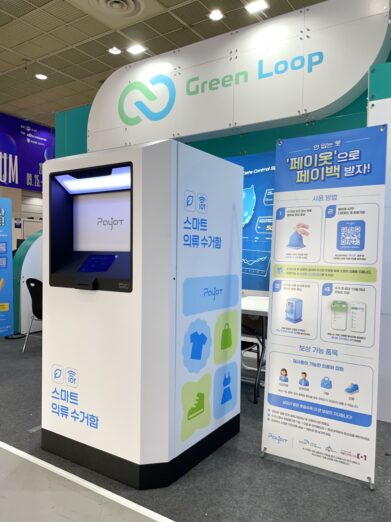
그린루프의 상징은 IoT 의류 수거함 ‘페이옷(Payiot)’이다. 사용자가 옷을 넣으면 투입량과 무게, 사용자 정보가 자동 기록되고, 보상까지 제공된다.
그린루프 한강진 대표는 “기존 방식은 누가 얼마나 배출했는지조차 알 수 없었다. 하지만 저희 서비스는 데이터를 기록하고, 이를 ESG 지표로 환산할 수 있어 지자체와 기업이 투명하게 성과를 관리할 수 있다.”
세종 스마트시티 실증 사업은 이 시스템이 현실에서도 충분히 작동한다는 것을 보여줬다. 그러나 무엇보다 가장 큰 도전은 기술이 아니라 바로 ‘사람’이었다. 한 대표는 “시민들에게는 낯선 경험이었고, 이해관계자 조율도 쉽지 않았다. 그래서 시민에겐 리워드, 지자체엔 ESG 데이터, 이해관계자에겐 새로운 수거 채널을 제공하며 설득해 나갔다.”고 전했다.
페이옷 서비스를 통해 축적된 데이트는 단순 재활용률을 높이는데 그치지 않았다. 솔루션의 가장 큰 혁신인 ‘의류 재활용을 눈에 보이는 성과와 가치로 전환시킨다’는 점을 통해 의류 재활용의 새로운 패러다임을 제시하고 있는 부분이다.
데이터가 만든 신뢰, 그리고 글로벌 확장
데이터 기반 검증은 곧 신뢰로 이어졌다. 세종 스마트시티 실증사업에 이어 현대건설, 현대백화점 등 다양한 기업, 지자체들과의 협업과 현장 실증을 거듭하며 그린루프는 사업성과 기술성을 동시에 입증했다. 하지만 한강진 대표는 이러한 국내에서의 성과에 멈추지 않았다. 그의 시선은 국내를 넘어 글로벌로 향하고 있다.
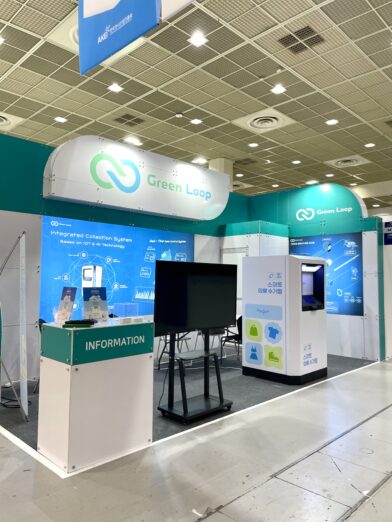
한 대표는 “저희 최종 목표는 개인 간 탄소배출권 시장을 선도하는 순환경제 모델을 만드는 것이다. 이를 위해 AI 기반 수요예측과 분류 최적화 알고리즘을 개발 및 고도화하여, 운영효율을 높일 뿐만 아니라 장기적으로는 재사용 의류 외 폐기 대상 의류를 맞춤형 소재로 유통 가능한 소재사로 확장할 계획이다.”라고 설명했다.
그린루프와 한강진 대표는 현재 이미 태국·두바이 등 해외 스마트시티 프로젝트 관련해 협의 단계에 있다.
한강진 대표 “궁극적으로는 글로벌 순환경제 인프라를 구축하는 기업으로 자리매김하겠다”는 포부를 밝혔다.
실행으로 증명한 스타트업 리더십
환경 스타트업 창업가는 종종 ‘그린워싱’이라는 비판에 직면하기 마련이다. 한강진 대표 역시 비판을 피하진 못했다. 하지만 시간이 지나 그가 선택한 무기는 진정한 투명성과 실행력이었다. 한 대표는 “처음엔 사기꾼 아니냐는 눈초리를 받았었다. 하지만 이럴때일수록 말로만 표현하는 ‘ESG’가 아닌 실제 데이터를 통해 성과를 입증해야 한다. 실행으로 증명할 때 신뢰가 쌓이고, 사회적 가치가 만들어진다.”고 전했다.
그는 예비 창업가들에게도 같은 메시지를 전한다. 한 대표는 “어렵고 곤란한 문제일수록 투명하게 해결하고, 빠른 실행으로 도전한다면 반드시 성과를 만들 수 있다. 저를 포함한 많은 창업가들이 함께 도전해 지속 가능한 세상을 만들어가길 바란다.”고 조언했다.
그린루프의 IoT 의류수거함은 단순한 기부형 모델과 달리 ‘페이옷(Payiot)’ 앱과 연결된다. 시민들은 앱을 통해 수거함 위치를 확인한 뒤, 입지 않는 의류를 봉투에 담아 투입하면 의류 가치에 따라 포인트 형태의 리워드를 지급받는다. 이 방식은 의류 재활용에 경제적 동기를 더하며, 단순한 기부를 넘어선 ‘순환경제 참여형 서비스’로 평가받고 있다.
그린루프가 앞으로 열어갈 ‘스마트시티 혁신 서비스’와 ‘시민 참여형 환경 정책’을 동시에 실현할 수 있을지 관심이 모아지고 있다.
Innovation that began in the clothing waste disposal process: Designing a circular economy with IoT: Greenloop CEO Han Kang-jin
Strengthening recycling transparency with Payot, an IoT-based smart clothing collection solution.
– Securing trust from citizens, businesses, and local governments through the Sejong Smart City demonstration project.
– Challenges to expand circular economy infrastructure in conjunction with global smart cities
"Clothing waste is not trash, it's a resource," said Greenloop CEO Han Kang-jin at an office on Ojeong-ro in Bucheon, Gyeonggi Province.
Seeing opportunity in a pile of discarded clothes
The reason Han Kang-jin, CEO of Greenloop, decided to start his own business was simple. He discovered new possibilities in the piles of clothing people were carelessly discarding. "I believed that clothing wasn't simply trash to be thrown away, but a resource that could be reused," Han explained. "However, at the time, the clothing waste disposal process was poorly managed, and the recycling structure was unclear."
To solve this problem, he brought out "IoT and data." This was the moment Greenloop, an integrated platform that revolutionized the existing can collection system and connected everything from disposal to collection, sorting, distribution, and ESG reporting, was born.
The once-unfamiliar IoT-based smart clothing collection box is taking hold thanks to citizen participation.
Greenloop's signature feature is the IoT clothing collection box, "Payiot." When a user places a garment in the bin, the amount, weight, and user information are automatically recorded, and compensation is even provided.
Greenloop CEO Han Kang-jin said, "With existing methods, it was impossible to even know who emitted what. But our service records data and converts it into ESG indicators, enabling local governments and companies to transparently manage their performance."
The Sejong Smart City demonstration project demonstrated that this system can function effectively in the real world. However, the biggest challenge wasn't technology, but people. "It was an unfamiliar experience for citizens, and coordinating stakeholders proved challenging. So, we persuaded them by offering rewards to citizens, ESG data to local governments, and new collection channels to stakeholders," said Han.
The data accumulated through the Payot service goes beyond simply increasing recycling rates. The solution's greatest innovation, "transforming clothing recycling into tangible results and value," presents a new paradigm for clothing recycling.
Trust Built on Data and Global Expansion
Data-driven verification quickly led to trust. Following the Sejong Smart City demonstration project, Greenloop has proven both its commercial viability and technological prowess through collaborations and field trials with various companies and local governments, including Hyundai Engineering & Construction and Hyundai Department Store. However, CEO Han Kang-jin hasn't stopped at these domestic achievements. His focus is now shifting beyond the domestic market to the global market.
A representative explained, "Our ultimate goal is to create a circular economy model that leads the individual carbon credit market. To achieve this, we are developing and enhancing AI-based demand forecasting and classification optimization algorithms. This will not only increase operational efficiency, but also, in the long term, expand our business to include not only reusable clothing but also discarded clothing, enabling the distribution of customized materials."
Greenloop and CEO Han Kang-jin are currently in discussions regarding overseas smart city projects in Thailand, Dubai, and other countries.
CEO Han Kang-jin expressed his ambition, saying, “Ultimately, we want to establish ourselves as a company that builds a global circular economy infrastructure.”
Startup Leadership Proven Through Action
Environmental startup founders often face criticism for "greenwashing." CEO Han Kang-jin was no exception. However, over time, he found true transparency and execution as his weapons of choice. "At first, I was looked at as if I were a fraud," CEO Han said. "But in times like these, we need to prove our performance with actual data, not just talk about 'ESG.' When we demonstrate this through action, trust is built and social value is created."
He delivers the same message to aspiring entrepreneurs. One representative advised, "The more difficult and challenging a problem is, the more transparently you address it and take on the challenge with swift action. If you do so, you will inevitably achieve results. I hope many entrepreneurs, including myself, will join us in this challenge and create a sustainable world."
Unlike simple donation-based models, Greenloop's IoT clothing collection boxes are connected to the "Payiot" app. Citizens can locate the collection boxes via the app, place their unwanted clothing in a bag, and receive rewards in the form of points based on the value of the clothing. This approach adds economic incentives for clothing recycling and is recognized as a "circular economy participatory service" that goes beyond simple donations.
Attention is focused on whether Greenloop will be able to simultaneously realize its future "smart city innovation services" and "citizen-participatory environmental policies."
衣料廃棄物排出過程で始まったイノベーション、IoTで循環経済を設計する、Greenloopハンガンジン代表
– IoTベースのスマート衣類収集ソリューション「ペイ服」でリサイクル透明性を強化
– 世宗スマートシティ実証を通じて市民企業・自治体の信頼確保
– グローバルスマートシティと噛み合う循環経済インフラ拡張挑戦
「衣類廃棄物はゴミではなく資源です」京畿道富川市五丁路にある事務所。 Greenloopハンガンジン代表が伝えた。
捨てられる服の山の中でチャンスを
ハン・カンジンGreenloop代表が創業を決心したきっかけは単純だった。人々が思わず捨てて行く衣類の山の中で、彼は新しい可能性を発見した。ハン・カンジン代表は「服は単に捨てられるゴミではなく、再び使える資源だと思った」と述べたが、当時の衣類廃棄物排出過程はきちんと管理されておらず、リサイクル構造も不透明だった」と説明した。
この問題を解決するために、彼は「IoTとデータ」を取り出した。既存の缶回収箱方式を革新し、排出-収集-分類-流通-ESGレポートまで接続する統合プラットフォーム、Greenloopが誕生した瞬間だった。
見知らぬIoTベースのスマート衣類収集箱、市民の参加として位置づける
Greenloopの象徴は、IoT衣類収集箱「Payiot」だ。ユーザーが服を入れると投入量と重量、ユーザー情報が自動記録され、報酬まで提供される。
Greenloopハンガンジン代表は「既存の方式は誰がどれだけ排出したのかさえ分からなかった。しかし、当社サービスはデータを記録し、これをESG指標に換算することができ、自治体と企業が透明に成果を管理することができる」。
世宗スマートシティ実証事業は、このシステムが現実でも十分に機能することを示した。しかし、何よりも最大の挑戦は技術ではなく、まさに「人」だった。ある代表は「市民には見知らぬ経験であり、利害関係者の調整も容易ではなかった。だから市民にはリワード、自治体にはESGデータ、利害関係者には新しい収集チャンネルを提供して説得していった」と伝えた。
ペイ服サービスを通じて蓄積されたデートは単純なリサイクル率を高めるのにとどまらなかった。ソリューションの最大の革新である「衣類リサイクルを目に見える成果と価値に転換させる」という点を通じて、衣類リサイクルの新しいパラダイムを提示している部分だ。
データが作成した信頼、そしてグローバル拡張
データベースの検証はすぐに信頼につながりました。世宗スマートシティ実証事業に続き、現代建設、現代デパートなど多様な企業、自治体とのコラボレーションと現場実証を重ね、Greenloopは事業性と技術性を同時に立証した。しかし、漢江陣代表はこのような国内での成果に止まらなかった。彼の視線は国内を越えてグローバルに向かっている。
ある代表は「私たちの最終目標は、個人間炭素排出権市場を先導する循環経済モデルを作ることである。このためにAIベースの需要予測と分類最適化アルゴリズムを開発・高度化し、運営効率を高めるだけでなく、長期的には再使用衣類以外の廃棄対象衣類をカスタム素材で流通可能な素材会社に拡張する計画だ」と説明した。
Greenloopとハン・カンジン代表は現在、すでにタイ・ドバイなど海外スマートシティプロジェクト関連で協議段階にある。
ハン・ガンジン代表「最終的にはグローバル循環経済インフラを構築する企業として位置づける」という抱負を明らかにした。
実行で証明されたスタートアップリーダーシップ
環境スタートアップの創業者はしばしば「グリーンウォッシング」という批判に直面する。ハン・カンジン代表も批判を避けられなかった。しかし、時間が経つと彼が選んだ武器は真の透明性と実行力だった。ある代表は「初めは詐欺師じゃないかという瞑想を受けた。だがこういう時ほど言葉だけ表現する'ESG'ではなく実際のデータを通じて成果を立証しなければならない。実行で証明する時信頼が積み重なり、社会的価値が作られる。」と伝えた。
彼は予備創業者にも同じメッセージを伝える。ある代表は「困難で困難な問題ほど透明に解決し、速い実行で挑戦すれば必ず成果を作ることができる。私を含む多くの創業者が共に挑戦して持続可能な世界を作っていきたい」と助言した。
GreenloopのIoTアパレルボックスは、単純な寄付モデルとは異なり、「Payiot」アプリにリンクされています。市民たちはアプリを通じて収集箱の位置を確認した後、着ない衣類を封筒に入れて投入すれば衣類の価値に応じてポイント形態のリワードを支給される。この方式は衣類のリサイクルに経済的動機を加え、単純な寄付を超えた「循環経済参加型サービス」と評価されている。
Greenloopが今後開いていく「スマートシティイノベーションサービス」と「市民参加型環境政策」を同時に実現できるか関心が集まっている。
源于服装废弃物处理流程的创新:利用物联网构建循环经济:Greenloop CEO 韩康镇
利用基于物联网的智能服装回收解决方案 Payot 加强回收透明度。
– 通过世宗智慧城市示范项目赢得市民、企业和地方政府的信任。
– 与全球智慧城市相结合,扩大循环经济基础设施面临的挑战
“服装废料不是垃圾,而是一种资源,”Greenloop 首席执行官韩康镇在京畿道富川市五井路的办公室里说道。
从一堆废弃衣物中发现商机
Greenloop首席执行官韩康镇(Han Kang-jin)决定创业的原因很简单。他从人们随意丢弃的成堆衣物中发现了新的可能性。“我认为衣物不仅仅是应该扔掉的垃圾,而是一种可以重复利用的资源,”韩康镇解释说,“然而,当时的服装废弃物处理流程管理不善,回收体系也不清晰。”
为了解决这个问题,他提出了“物联网和数据”的概念。正是在那时,Greenloop诞生了。Greenloop是一个集成平台,它彻底改变了现有的易拉罐回收系统,并将从处置到收集、分类、配送以及ESG报告的所有环节连接起来。
曾经鲜为人知的基于物联网的智能衣物回收箱,如今在市民的参与下正逐渐普及。
Greenloop 的标志性产品是物联网衣物回收箱“Payiot”。当用户将衣物放入回收箱时,数量、重量和用户信息都会被自动记录,甚至还会获得相应的补偿。
Greenloop首席执行官韩康镇表示:“以现有的方法,甚至无法知道是谁排放了什么。但我们的服务会记录数据并将其转化为ESG指标,使地方政府和企业能够透明地管理其绩效。”
世宗智慧城市示范项目证明了这套系统在现实世界中能够有效运行。然而,最大的挑战并非技术,而是人。“这对市民来说是一次全新的体验,协调各利益相关方也颇具挑战性。因此,我们通过向市民提供奖励、向地方政府提供ESG数据以及为利益相关方开辟新的信息收集渠道来说服他们,”韩说道。
Payot 服务收集的数据不仅仅体现在提高回收率上。该解决方案最大的创新之处在于“将服装回收转化为切实可见的成果和价值”,这为服装回收提供了一种全新的模式。
基于数据和全球扩张的信任
数据驱动的验证迅速赢得了信任。继世宗智慧城市示范项目之后,Greenloop通过与包括现代工程建设公司和现代百货公司在内的多家企业和地方政府的合作和实地试验,证明了其商业可行性和技术实力。然而,首席执行官韩康镇并未止步于这些国内成就。他正将目光从国内市场转向全球市场。
一位代表解释说:“我们的最终目标是打造引领个人碳信用市场的循环经济模式。为了实现这一目标,我们正在开发和改进基于人工智能的需求预测和分类优化算法。这不仅能提高运营效率,而且从长远来看,还能将我们的业务拓展到包括可重复使用的服装和废弃服装,从而实现定制化材料的分销。”
Greenloop和首席执行官韩康镇目前正在讨论泰国、迪拜等国家的海外智慧城市项目。
CEO韩康镇表达了他的雄心壮志,他说:“最终,我们希望将自己打造成为一家构建全球循环经济基础设施的公司。”
以实际行动证明的创业领导力
环保创业公司的创始人经常因“漂绿”而受到批评,CEO韩康镇也不例外。然而,随着时间的推移,他发现真正的透明度和执行力才是制胜法宝。“起初,人们都觉得我是个骗子,”韩康镇说,“但在如今这样的时代,我们需要用实际数据来证明我们的业绩,而不是空谈‘ESG’。当我们用行动来证明这一点时,信任就会建立,社会价值也会随之创造。”
他向有志创业者传达了同样的信息。一位代表建议道:“问题越棘手、越具有挑战性,你就越应该以透明的方式去应对,并迅速采取行动迎接挑战。如果你这样做,就必然会取得成功。我希望包括我在内的许多创业者都能加入我们,共同迎接这一挑战,创造一个可持续发展的世界。”
与简单的捐赠模式不同,Greenloop 的物联网衣物回收箱与“Payiot”应用程序相连。市民可以通过该应用程序找到回收箱,将不需要的衣物放入袋中,并根据衣物的价值获得积分奖励。这种方式为衣物回收增加了经济激励,被认为是一种超越简单捐赠的“循环经济参与式服务”。
人们关注的焦点在于 Greenloop 能否同时实现其未来的“智慧城市创新服务”和“公民参与的环境政策”。
L'innovation née du traitement des déchets textiles : concevoir une économie circulaire grâce à l'IoT : Han Kang-jin, PDG de Greenloop
Renforcer la transparence du recyclage grâce à Payot, une solution intelligente de collecte de vêtements basée sur l'IoT.
– Gagner la confiance des citoyens, des entreprises et des administrations locales grâce au projet de démonstration de ville intelligente de Sejong.
– Les défis liés au développement des infrastructures de l'économie circulaire en lien avec les villes intelligentes mondiales
« Les déchets textiles ne sont pas des ordures, ce sont une ressource », a déclaré Han Kang-jin, PDG de Greenloop, dans ses bureaux situés sur Ojeong-ro à Bucheon, dans la province de Gyeonggi.
Saisir une opportunité dans un tas de vêtements jetés
La raison qui a poussé Han Kang-jin, PDG de Greenloop, à créer sa propre entreprise était simple : il avait décelé un potentiel inexploité dans les montagnes de vêtements jetés sans ménagement. « Je pensais que les vêtements n’étaient pas de simples déchets, mais une ressource réutilisable », explique-t-il. « Cependant, à l’époque, la gestion des déchets textiles était déficiente et le système de recyclage peu clair. »
Pour résoudre ce problème, il a mis en avant « l'Internet des objets et les données ». C'est ainsi qu'est née Greenloop, une plateforme intégrée qui a révolutionné le système de collecte des canettes existant et connecté tout, de l'élimination à la collecte, en passant par le tri, la distribution et le reporting ESG.
Le système de collecte de vêtements intelligent basé sur l'Internet des objets, autrefois peu connu, se développe grâce à la participation citoyenne.
La caractéristique phare de Greenloop est sa boîte de collecte de vêtements connectée, « Payiot ». Lorsqu'un utilisateur y dépose un vêtement, la quantité, le poids et les informations de l'utilisateur sont automatiquement enregistrés, et une compensation est même versée.
Le PDG de Greenloop, Han Kang-jin, a déclaré : « Avec les méthodes existantes, il était impossible de savoir qui émettait quoi. Mais notre service enregistre les données et les convertit en indicateurs ESG, permettant ainsi aux collectivités locales et aux entreprises de gérer leurs performances de manière transparente. »
Le projet pilote de ville intelligente de Sejong a démontré l'efficacité de ce système en situation réelle. Cependant, le principal défi n'était pas d'ordre technologique, mais humain. « Pour les citoyens, c'était une expérience inédite, et la coordination des parties prenantes s'est avérée complexe. Nous les avons donc convaincus en offrant des récompenses aux citoyens, des données ESG aux collectivités locales et de nouveaux canaux de collecte aux parties prenantes », a expliqué Han.
Les données recueillies grâce au service Payot ne se limitent pas à l'augmentation des taux de recyclage. La principale innovation de cette solution, « transformer le recyclage des vêtements en résultats et en valeur concrets », instaure un nouveau paradigme pour ce secteur.
La confiance fondée sur les données et l'expansion mondiale
La vérification fondée sur les données a rapidement instauré la confiance. Suite au projet pilote de ville intelligente de Sejong, Greenloop a démontré sa viabilité commerciale et son expertise technologique grâce à des collaborations et des essais sur le terrain avec diverses entreprises et collectivités locales, dont Hyundai Engineering & Construction et les grands magasins Hyundai. Toutefois, le PDG, Han Kang-jin, ne s'est pas contenté de ces succès nationaux. Il se tourne désormais vers le marché international.
Un représentant a expliqué : « Notre objectif ultime est de créer un modèle d’économie circulaire qui domine le marché des crédits carbone individuels. Pour y parvenir, nous développons et améliorons des algorithmes d’optimisation de la prévision et de la classification de la demande basés sur l’IA. Cela permettra non seulement d’accroître notre efficacité opérationnelle, mais aussi, à long terme, d’étendre notre activité aux vêtements usagés en plus des vêtements réutilisables, permettant ainsi la distribution de matériaux personnalisés. »
Greenloop et son PDG Han Kang-jin discutent actuellement de projets de villes intelligentes à l'étranger en Thaïlande, à Dubaï et dans d'autres pays.
Le PDG Han Kang-jin a exprimé son ambition en déclarant : « À terme, nous voulons nous imposer comme une entreprise qui construit une infrastructure d'économie circulaire mondiale. »
Leadership de startup prouvé par l'action
Les fondateurs de startups environnementales sont souvent accusés d'écoblanchiment. Le PDG Han Kang-jin n'a pas fait exception. Cependant, au fil du temps, il a trouvé dans la transparence et la mise en œuvre de ses actions les meilleurs atouts. « Au début, on me prenait pour un imposteur », a déclaré Han Kang-jin. « Mais dans le contexte actuel, nous devons prouver nos résultats par des données concrètes, et non pas nous contenter de parler de critères ESG. C'est en agissant concrètement que nous instaurons la confiance et créons de la valeur sociale. »
Il adresse le même message aux futurs entrepreneurs. Un représentant a conseillé : « Plus un problème est complexe et ardu, plus vous l’abordez avec transparence et réactivité. En agissant ainsi, vous obtiendrez inévitablement des résultats. J’espère que de nombreux entrepreneurs, moi y compris, se joindront à nous pour relever ce défi et bâtir un monde durable. »
Contrairement aux modèles basés sur les dons classiques, les boîtes de collecte de vêtements connectées de Greenloop sont reliées à l'application « Payiot ». Grâce à cette application, les citoyens peuvent localiser les boîtes de collecte, y déposer leurs vêtements usagés et recevoir des récompenses sous forme de points, calculées en fonction de la valeur des vêtements. Cette approche incite financièrement au recyclage des vêtements et est reconnue comme un service participatif d'économie circulaire, allant au-delà du simple don.
L'attention se porte sur la capacité de Greenloop à réaliser simultanément ses futurs « services d'innovation pour les villes intelligentes » et ses « politiques environnementales participatives ».
You must be logged in to post a comment.