




-AI가 사람의 감정까지 읽는 ‘공간지능’으로 경기장·항만·선박 등 네트워크 제약 공간 지능화
-K리그 시각장애인용 AI 음성중계에서 캐나다 BC Ferries·밴쿠버 항만으로 확장 준비
-엣지 AI와 데이터 주권을 앞세워 방산·우주 등 미션 크리티컬 산업까지 노린다
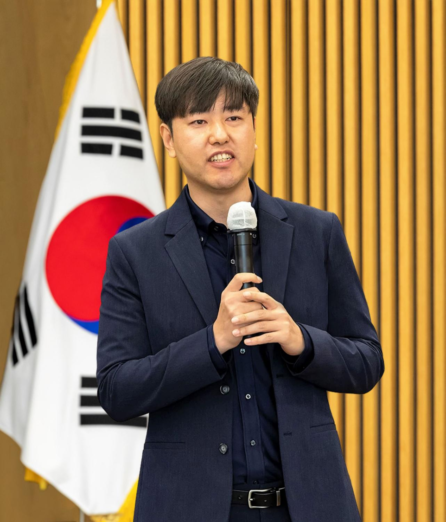
AI가 인간의 삶을 바꾸는 무대는 점점 더 ‘현장’으로 내려오고 있다. 경기장, 항만, 선박, 공항, 심지어 우주까지. 수많은 센서와 카메라가 데이터를 쏟아내지만, 여전히 그 안에서 무슨 일이 일어나는지 ‘이야기’로 이해하는 능력은 사람의 몫이었다.
에이치인텔리전스(H’ Intelligence)는 이 지점을 파고드는 스타트업이다. 이 회사가 만들고자 하는 것은 공의 위치나 스코어를 알려주는 AI가 아니라, 공간 안에서 벌어지는 움직임의 흐름과 맥락, 그 순간의 긴장과 환호까지 읽어내는 ‘공간지능 AI’다.
지난 11월 1일, 대전월드컵경기장에서 열린 K리그 경기에서는 시각장애인 관중을 위한 AI 음성중계가 시범 운영됐다. 선수와 공의 움직임을 AI가 실시간으로 분석해 해설진의 감정이 담긴 음성으로 전달하는 이 시스템 덕분에, 시각장애인 한종민 군은 “동생의 도움 없이 축구를 본 것은 처음”이라고 말했다.
에이치인텔리전스 김병준 대표에게 이 장면은 단순한 기술 데모가 아니다. 기술이 한 사람의 자립성과 존엄을 회복시키는 순간이자, 더 큰 변화를 예고하는 출발점이다. 김 대표를 만나 에이치인텔리전스가 정의하는 ‘공간지능 AI’와 K리그에서 캐나다, 그리고 항만·우주·방산으로 이어지는 확장 전략을 들어봤다.
결과가 아닌 ‘과정’을 이해하는 AI
에이치인텔리전스의 정체성을 관통하는 키워드는 ‘공간지능(Spatial Intelligence)’이다. 김 대표는 이 개념을 “5년간의 현장 경험과 시행착오 속에서 만들어낸, 과정을 이해하는 AI의 철학”이라고 설명했다.
“기존의 범용 비전 AI나 클라우드 기반 AI는 대부분 결과만 봅니다. ‘현재 2대1로 이기고 있다’, ‘공이 어디에 있다’, ‘저 선수가 뛰고 있다’ 수준에서 멈추죠. 왜 2대1이 됐는지, 지난 20분 동안 무엇이 있었는지, 지금 슈팅이 정말 결정적인 순간인지까지는 이해하지 못합니다.”
에이치인텔리전스가 말하는 공간지능은 이와 다르다. 김 대표는 자사가 정의한 공간지능을 이렇게 정리했다.
“특정 공간 내에서 일어나는 모든 객체의 움직임을 시간 축과 맥락의 차원에서 통합적으로 이해하고, 그것을 의미 있는 이야기로 전달하는 AI 기술입니다.”
이를 구현하기 위해 에이치인텔리전스는 먼저 ‘공간’을 재정의했다. 축구장을 예로 들면, 인간이 직관적으로 느끼는 ‘앞·뒤·좌·우’ 감각을 AI가 수학적으로 다룰 수 있도록, 경기장 전체를 0~100 범위의 x, y 좌표로 고정한다. AI는 “이 선수는 우측 윙(85, 40)에 있다”는 식으로 위치를 정밀하게 인식한다. 기존 AI가 “왼쪽에 사람이 있다” 정도로만 표현하는 것과는 차원이 다르다.
다음 단계는 시간 축 통합이다. AI는 현재 화면에 보이는 장면만 보는 것이 아니라, 경기 시작부터 지금까지의 움직임을 모두 기억한다.
“전반 5분에 이 선수가 어디 있었고, 전반 38분 현재 어디에 있는지, 어떤 경로로 움직여왔는지, 비슷한 상황에서 어떤 선택을 했는지를 함께 분석합니다. 그래서 ‘지금은 역전이 걸린 상황이고, 골대까지 얼마나 남았으며, 이 선수는 과거 유사 상황에서 왼쪽으로 파고드는 경향이 있다’는 식의 맥락을 이해할 수 있습니다.”
여기에 다중 객체 추적이 더해진다. 축구장 안에는 선수 22명, 심판 3명, 공 1개, 총 26개의 객체가 동시에 움직인다. 에이치인텔리전스의 AI는 이들을 독립적으로 추적하는 데 그치지 않고, 이 움직임이 전술과 경기 흐름 속에서 어떤 의미를 갖는지까지 해석한다. “11번 선수가 전방을 돌파한다”는 행동을 넘어, “상대 수비가 왼쪽으로 쏠리면서 우측에 공간이 열렸기 때문에 나온 돌파”라는 맥락을 함께 이해하는 구조다.
이렇게 얻은 정보는 마지막에 ‘이야기’가 된다. 김 대표는 “감정은 단순 데이터가 아니라, 맥락·중요도·시간성과 인간 경험이 결합된 결과”라며 “공간지능 AI가 이 요소들을 함께 이해하기 때문에, 시각장애인 관중도 음성만으로 ‘지금이 긴장되는 순간인지, 결정적 기회인지, 안타까운 실수인지’를 함께 느낄 수 있다”고 말했다.
실시간 음성중계 엔진이 더하는 ‘현장감’
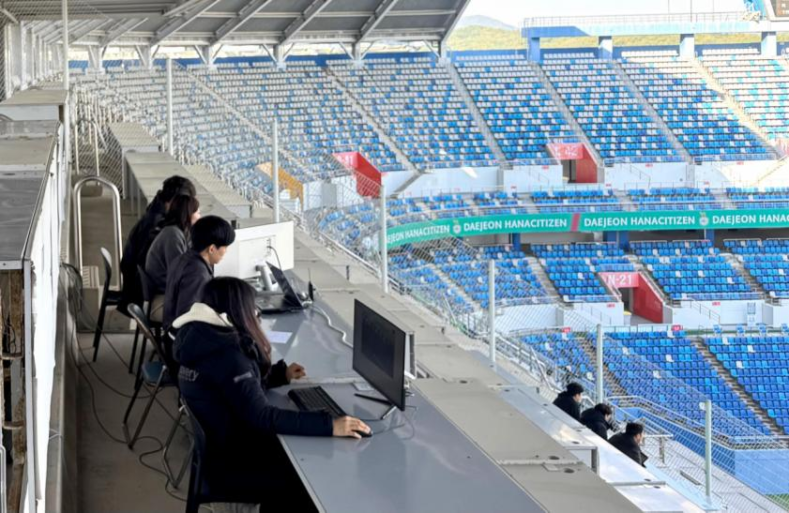
공간지능만으로는 현장의 감정선을 완전히 전달하기 어렵다. 에이치인텔리전스는 여기에 ‘실시간 음성중계 엔진’을 결합해 시각 정보를 완결된 경험으로 바꾼다. 김 대표는 이 시스템을 “세 단계로 정교하게 동기화되는 구조”라고 설명한다.
첫 번째 단계는 공간지능 AI의 무음 분석이다.
대전월드컵경기장이나 수원월드컵경기장에 설치된 다수의 카메라가 경기장을 촬영하면, 엣지 환경에서 돌아가는 AI가 0.05~0.59초 안에 좌표 설정, 객체 인식, 위치 계산, 관계 분석, 시간 맥락 분석까지 수행한다. 이때 생성되는 것은 의미가 부여된 메타데이터다.
두 번째 단계는 자연어 생성이다.
비전-언어 모델이 이 메타데이터를 받아 ‘지금 어떤 상황인지’를 문장으로 바꾼다. 단순히 ‘공이 왼쪽 측면으로 갔다’가 아니라, ‘역전 기회를 앞둔 상황에서 왼쪽 측면에 결정적인 공간이 열렸다’는 식으로 전술적·시간적 의미를 함께 담는다.
세 번째 단계에서 에이치인텔리전스의 차별성이 드러난다. 회사는 실제 해설진(소준일 캐스터, 임형철 해설위원)의 음성을 상황별로 녹음해두고, AI가 실시간 맥락에 맞춰 이 음성을 매칭해 송출한다.
“기존 TTS는 텍스트를 표준화된 기계음으로 바꿀 뿐입니다. 저희는 텍스트와 상황을 함께 이해한 뒤, 거기에 맞는 해설진의 실제 감정 톤을 실시간으로 골라내는 방식을 사용합니다. 같은 문장이라도 경기 흐름에 따라 목소리의 힘과 속도, 호흡이 달라지죠.”
결과적으로 이 시스템은 ‘AI가 상황을 이해하고, 그 이해를 인간의 감정으로 표현하는 구조’를 갖게 된다. 그 덕분에 시각장애인 관중도 경기장에 있는 다른 관중과 최대한 비슷한 감정 곡선을 따라갈 수 있다.
시각장애인에서 시작된 ‘포용적 설계’
K리그 AI 음성중계는 에이치인텔리전스의 기술이 처음으로 대중 앞에 선 무대이자, 회사가 말하는 ‘포용적 기술(Inclusive Technology)’이 어떤 모습인지 보여주는 사례이기도 하다.
“축구장에서의 경험은 단순히 ‘보는 것’이 아닙니다. 관중석의 함성, 골 장면의 폭발적인 환호, 추가 시간의 긴장감까지 합쳐진 종합적인 감정의 경험입니다. 시각장애인은 같은 자리에 있어도 이 경험의 상당 부분이 차단될 수밖에 없습니다.”
기존 접근성 기술이 부족한 기능을 보완하는 방향에 초점을 맞췄다면, 에이치인텔리전스는 처음부터 “모두가 같은 순간을 함께 즐길 수 있는 경험”을 설계 목표로 잡았다. 그래서 이들은 세 가지 원칙을 세웠다. 지연이 없는 실시간성, 해설진의 감정을 살린 음성, 그리고 ‘무슨 일’뿐 아니라 ‘왜 중요한지’를 설명하는 맥락 중심 서사다.
김 대표는 이를 포용적 설계(Inclusive Design)와 보편적 설계(Universal Design)의 관점에서 설명한다. 휠체어를 위한 경사로가 유모차를 미는 부모에게도 유용하고, 시각장애인을 위한 음성 안내를 외국인 관광객이 활용하는 것처럼, 시각장애인을 위해 설계한 기술이 결국 더 많은 사람에게 도움이 된다는 것이다.
“시각장애인을 위해 만든 AI 중계 시스템이, 운전 중인 사람이나 요리 중인 부모, 운동하는 사람에게도 유용한 오디오 인터페이스가 될 수 있습니다. 처음에는 특정 집단을 위한 기술이지만, 시간이 지날수록 더 넓은 대중을 위한 기술이 됩니다.”
그는 포용적 설계의 힘을 ‘규모’로 설명한다.
“어떤 기술이 한 승객의 대기 시간을 1분 줄여준다고 가정해보겠습니다. 연간 2,000만 명이 이용하는 인프라에 이 기술을 적용하면, 2,000만 분, 약 38년의 시간이 절약됩니다. 작은 개선 하나가 사회 전체의 효율을 바꾸는 사례죠.”
대전월드컵경기장에서 한종민 군이 “동생 도움 없이 처음으로 축구를 봤다”고 말한 장면은 그래서 더 큰 상징성을 가진다. 김 대표는 “한 개인의 자유와 존엄이 회복되는 장면이자, 수많은 사람의 삶을 바꿀 수 있는 가능성을 보여주는 순간”이라고 말했다.
축구장에서 항만·선박·우주로… 네트워크의 공백을 메운다
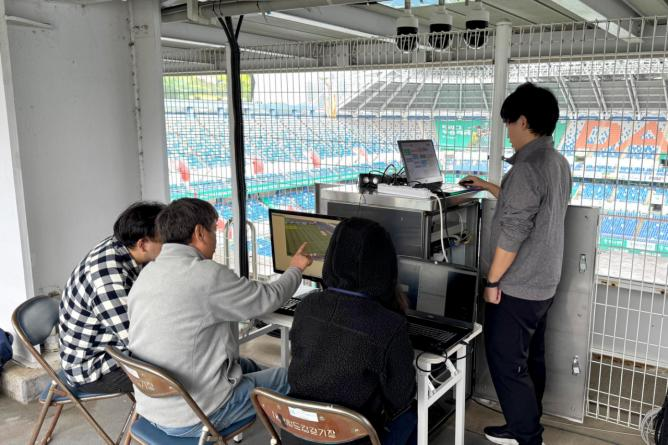
에이치인텔리전스의 시선은 경기장을 넘어선다. 김 대표는 “세상에는 수많은 공간이 있고, 이 공간들은 데이터와 AI를 바탕으로 지능화를 시도하고 있다”며 “그 중에서도 네트워크 제약이 큰 항만, 선박, 비행기 같은 공간은 구조적으로 해결되지 않은 문제를 안고 있다”고 말했다.
에이치인텔리전스가 엣지 기반 공간지능 AI를 선택한 이유도 여기에 있다. 인터넷이 불안정하거나 아예 없는 환경에서도 독립적으로 작동하는 AI를 만들어야, 진짜 미션 크리티컬 상황에서 쓸 수 있기 때문이다. 이 AI는 각 공간 안의 객체를 인지·식별하고, 움직임을 추적한 뒤, 그 결과를 실시간 음성으로 전달할 수 있도록 설계됐다.
축구장은 이 기술을 검증하기 위한 ‘극한 테스트베드’였다. 예측 가능한 반복 동작이 아니라, 선수마다 다른 움직임이 끊임없이 발생하는 환경에서 22명의 선수, 3명의 심판, 1개의 공을 실시간으로 추적하고 맥락까지 해석하는 것은 기술적으로 까다로운 도전이다. 김 대표는 “가장 난이도가 높은 환경에서 기술을 검증하면, 이후 항만·선박·항공·우주 등으로 확장할 때 신뢰성이 생긴다”고 말했다.
이제 에이치인텔리전스는 이 기술을 들고 캐나다로 향하고 있다. 회사는 2026년 1월 캐나다 밴쿠버에 자회사 설립을 목표로 준비 중이다. 김 대표는 직접 캐나다를 방문해 BC Ferries, 밴쿠버 항만청, Seaspan 등과 논의를 진행했다. 이들이 보유한 시설은 방대하다. BC Ferries는 48개 터미널을 운영하고, 밴쿠버 항만청은 27개 항만을 관리한다. Seaspan은 227척의 컨테이너선을 보유하고 있다. 고객 수는 적어 보여도, 그들이 가진 ‘공간’은 수백 개에 이른다.
비즈니스 모델도 인프라 사업의 특성을 따른다. 초기에는 시스템 구축비가 일회성으로 발생하고, 이후에는 각 공간의 연간 운영비가 구독 형태로 반복 매출을 만든다. 일정 기간 운영되며 축적되는 공간 고유의 데이터는 서비스 고도화의 핵심 자산이 되며, 미션 크리티컬 특성상 한 번 도입된 시스템은 쉽게 교체하기 어렵다. 김 대표가 “인프라 종속성과 미션 크리티컬 특성이 높은 고객 유지율로 이어진다”고 보는 이유다.
성장 전략을 묻자 그는 “하나부터 제대로”라는 짧은 문장으로 요약했다.
“숫자를 목표로 세우기보다는, 터미널 1개, 항만 1개, 선박 1척을 정말 고객이 원하는 수준으로 완성하는 것이 더 중요합니다. 하나의 레퍼런스가 제대로 만들어지면, 그 공간이 자연스럽게 다음 고객을 소개해주는 구조가 생깁니다.”
2026년은 에이치인텔리전스에게 전환점이 된다. 한국 법인 설립 1주년이자, 캐나다 현지 법인이 출범하는 해이기 때문이다. 김 대표는 “2026년에는 최소 한 개의 프로젝트를 캐나다에서 제대로 완수해 신뢰를 쌓는 것이 목표”라며 “이를 시작으로 캐나다에서 안정적인 성장을 이어가고 싶다”고 말했다.
엣지 AI, 데이터 주권, 그리고 안전한 가드레일
김 대표가 공간지능 AI를 설명할 때 빼놓지 않는 주제가 있다. 바로 데이터 주권과 가드레일이다.
“클라우드 기반 AI는 확장성과 유연성 면에서 뛰어나지만, 경기장 영상이나 터미널 차량 정보, 선박 운항 데이터 같은 민감한 정보가 모두 외부 서버로 나간다는 의미이기도 합니다. 이는 개인정보 보호뿐 아니라 국가 안보 차원에서도 상당한 리스크입니다.”
엣지 AI는 이런 고민에 대한 답 중 하나다. 데이터가 현장을 떠나지 않고 그 자리에서 처리되기 때문에, 민감한 정보가 외부로 유출될 위험이 줄어든다. 인터넷이 닿지 않는 바다 위, 네트워크가 제한된 우주 공간에서도 독립적으로 작동하는 구조이기 때문에, 방위산업과 우주 산업에서도 엣지 기반 공간지능은 경쟁력을 갖는다.
김 대표는 국제사회에서도 이 문제의식을 공유해왔다. 그는 UN 인권 기반 접근(UN/HRBA)이 발간한 “A Human Rights-Based Approach to AI for Tech Startups and Global Normative Governance(GENEVA II)” 보고서에서, AI의 누적적 위험성과 초기 가드레일의 중요성을 언급했다.
“AI 시스템은 오염된 데이터를 학습하면 오염된 결과를 내고, 그 결과가 다시 입력으로 돌아가면서 문제가 기하급수적으로 증폭될 수 있습니다. 그래서 초기에 안전한 가드레일을 세우는 것이 무엇보다 중요합니다. 기술의 자유도가 높아질수록, 안전장치의 중요성도 함께 커집니다.”
그가 말하는 가드레일은 기술을 억제하는 장치가 아니라, 기술이 더 멀리, 더 오래 갈 수 있게 지켜주는 난간에 가깝다.
“모든 공간에서, 모든 순간을, 모든 이야기로”
인터뷰 내내 김 대표의 화두는 기술 자체가 아니라, 기술이 놓이는 ‘공간’과 그 안에 사는 ‘사람’이었다. 시각장애인이 동생의 도움 없이 축구를 보게 되는 순간, 항만과 선박에서 승객의 대기 시간을 1분 줄이는 경험, 군사·우주 현장에서 데이터 주권을 지키는 시스템까지. 각각은 작은 장면이지만, 모이면 사회 구조를 바꾸는 힘이 된다.
“AI 기술이 빠르게 발전하면서 우리가 자주 놓치는 질문이 있습니다. ‘누가 데이터를 소유하는가?’, ‘누가 이 기술의 혜택을 먼저, 더 많이 누리는가?’입니다. 에이치인텔리전스는 이 질문들에 조금 더 책임감 있게 답하는 회사를 만들고 싶습니다.”
네트워크가 닿지 않는 바다 위에서도, 우주에서도, 경기장 관중석에서도. 시각장애인부터 승객, 항만 근무자, 우주비행사까지 모두가 혜택을 받는 AI. 데이터 주권을 지키면서도 최고의 성능을 내는 AI.
김 대표는 이것이 한국 AI 산업이 지향해야 할 새로운 기준이라고 말한다.
"Turning stadium moments into stories with spatial intelligence AI"… H-Intelligence CEO Kim Byungjoon
AI can even read human emotions, making network-constrained spaces like stadiums, ports, and ships more intelligent.
K-League AI voice broadcasting for the visually impaired is preparing to expand to BC Ferries and the Port of Vancouver in Canada.
We are targeting mission-critical industries like defense and space, leveraging edge AI and data sovereignty.
The stage where AI transforms human life is increasingly being moved to the "field." Stadiums, ports, ships, airports, even space. Countless sensors and cameras pour out data, but the ability to understand what's happening within it as a "story" remains a human prerogative.
H' Intelligence is a startup exploring this very point. The company aims to create not an AI that can tell you the ball's position or the score, but a "spatial intelligence AI" that can interpret the flow and context of movement within a space, even the tension and cheers of the moment.
On November 1st, a K-League match held at Daejeon World Cup Stadium saw a pilot program for visually impaired spectators using AI-powered commentary. Thanks to this system, which analyzes player and ball movements in real time and delivers the emotional commentary of a commentator, Han Jong-min, who is visually impaired, said, "This is the first time I've watched a soccer game without the help of my younger brother."
For Kim Byungjoon, CEO of H-Intelligence, this scene isn't just a technology demonstration. It's a moment where technology restores a person's independence and dignity, and a starting point for greater change. We met with CEO Kim to learn about H-Intelligence's definition of "spatial intelligence AI" and its expansion strategy, which will extend from the K-League to Canada, and into ports, space, and defense.
AI that understands the process, not the outcome
The keyword that permeates H-Intelligence's identity is "spatial intelligence." CEO Kim described this concept as "a philosophy of AI that understands processes, developed through five years of field experience and trial and error."
"Most existing general-purpose vision AI or cloud-based AI only sees the outcome. They stop at things like, 'We're currently winning 2-1,' 'Where the ball is,' or 'That player is running.' They don't understand why it's 2-1, what happened in the last 20 minutes, or whether the shot is truly a decisive moment."
The spatial intelligence H-Intelligence talks about is different. CEO Kim summarized his company's definition of spatial intelligence as follows:
"This is an AI technology that comprehensively understands the movements of all objects within a specific space, across time and context, and conveys them as a meaningful story."
To implement this, H-Intelligence first redefined "space." For example, taking a soccer field as an example, the entire field is fixed to x and y coordinates ranging from 0 to 100, allowing AI to mathematically process the intuitive human sense of "front, back, left, right." The AI precisely recognizes locations, such as "This player is on the right wing (85, 40)." This is a significant departure from existing AI, which simply expresses "There's a person on the left."
The next step is timeline integration. The AI doesn't just see what's currently on screen; it remembers every movement from the start of the match to the present.
"We analyze where this player was at the 5th minute of the first half, where he is at the 38th minute, what paths he's taken, and what choices he's made in similar situations. This allows us to understand context, such as, 'We're on the verge of a comeback, how close is the goal, and this player has tended to cut to the left in similar situations in the past.'"
Multi-object tracking is added here. On a soccer field, 22 players, three referees, and a ball—a total of 26 objects—move simultaneously. H-Intelligence's AI doesn't just track these objects independently; it interprets their meaning within the context of tactics and the flow of the game. Beyond the action of "Player 11 breaks forward," it also understands the context of the breakthrough: "The opposing defense shifted to the left, opening up space on the right."
The information gained this way ultimately becomes a "story." CEO Kim stated, "Emotions aren't simply data; they're the result of a combination of context, importance, temporality, and human experience." Because spatial intelligence AI understands these elements, even visually impaired spectators can sense, simply by listening, whether this is a tense moment, a crucial opportunity, or a regrettable mistake.
The real-time voice broadcast engine adds a sense of presence.
Spatial intelligence alone cannot fully convey the emotional arc of the scene. H-Intelligence combines this with a "real-time voice relay engine" to transform visual information into a complete experience. CEO Kim describes this system as "a structure that is meticulously synchronized in three stages."
The first step is silent analysis by spatial intelligence AI.
When multiple cameras installed at Daejeon World Cup Stadium or Suwon World Cup Stadium capture footage, AI running in an edge environment performs coordinate setting, object recognition, location calculation, relationship analysis, and temporal context analysis within 0.05 to 0.59 seconds. What is generated during this process is meaningful metadata.
The second step is natural language generation.
The vision-language model takes this metadata and translates it into a sentence describing the current situation. Rather than simply stating, "The ball went to the left," it also conveys tactical and temporal implications, such as, "A crucial space opened up on the left side in a situation where a comeback opportunity was imminent."
The third step reveals H-Intelligence's unique strength. The company records the voices of actual commentators (caster So Jun-il and commentator Lim Hyeong-cheol) according to specific situations, and AI matches these voices to the real-time context and broadcasts them.
"Existing TTS simply converts text into standardized machine-generated speech. We use a method that understands both the text and the context, then selects the commentator's true emotional tone in real time to match it. Even within the same sentence, the power, speed, and breathing of the voice can vary depending on the flow of the game."
Ultimately, this system has a structure that allows AI to understand the situation and express that understanding through human emotions. This allows visually impaired spectators to follow the same emotional curve as other spectators in the stadium.
Inclusive Design: A Beginning for the Visually Impaired
The K-League AI voice broadcast marks the first time H-Intelligence's technology has been showcased to the public, and it also serves as an example of what the company calls "inclusive technology."
"The experience of being on a football pitch isn't simply about 'seeing.' It's a holistic emotional experience, encompassing everything from the roar of the stands, the explosive cheers of a goal, and the thrill of added time. Even if a person is present, a significant portion of this experience is blocked."
While existing accessibility technologies focused on complementing the shortcomings of existing technologies, H-Intelligence set its design goal from the outset to create an experience where everyone can enjoy the same moment together. Therefore, they established three principles: real-time, lag-free experience, emotionally engaging voices from commentators, and a context-driven narrative that explains not just "what" happened but "why" it matters.
CEO Kim explains this from the perspective of inclusive design and universal design. Just as wheelchair ramps are also useful for parents pushing strollers, and audio guidance for the visually impaired is utilized by foreign tourists, technology designed for the visually impaired ultimately benefits a wider audience.
"An AI relay system designed for the visually impaired could also serve as a useful audio interface for drivers, parents cooking, and even exercisers. Initially, this technology was intended for a specific group, but over time, it will become accessible to a wider audience."
He explains the power of inclusive design in terms of 'scale'.
"Let's say a technology reduces a passenger's waiting time by one minute. If we apply this technology to infrastructure used by 20 million people annually, that saves 20 million minutes, or approximately 38 years of time. This is an example of how a small improvement can transform the efficiency of an entire society."
The scene at Daejeon World Cup Stadium where Han Jong-min said, "This is the first time I've seen a soccer game without my younger brother's help," carries even greater symbolic significance. Representative Kim said, "It's a moment where an individual's freedom and dignity are restored, and it demonstrates the potential to change countless lives."
From soccer fields to ports, ships, and space… Filling the network gaps.
H-Intelligence's vision extends beyond the stadium. CEO Kim stated, "There are countless spaces in the world, and these spaces are attempting to become more intelligent through data and AI. Among these, spaces with significant network constraints, such as ports, ships, and airplanes, face structural and unresolved challenges."
This is precisely why H-Intelligence chose edge-based spatial intelligence AI. To ensure its use in truly mission-critical situations, AI must operate independently even in environments with unstable or no internet access. This AI is designed to recognize and identify objects within a space, track their movements, and then deliver the results in real-time voice.
The soccer field served as an "extreme testbed" for validating this technology. Tracking 22 players, three referees, and a ball in real time and interpreting their context in an environment where each player's movements are constantly changing, rather than predictable and repetitive, is a technically demanding challenge. "Validating the technology in the most challenging environments will ensure reliability when expanding to ports, ships, aviation, and space," said CEO Kim.
Now, H-Intelligence is heading to Canada with this technology. The company is preparing to establish a subsidiary in Vancouver, Canada, by January 2026. CEO Kim personally visited Canada and held discussions with BC Ferries, the Vancouver Port Authority, and Seaspan. Their facilities are extensive. BC Ferries operates 48 terminals, while the Vancouver Port Authority manages 27 ports. Seaspan owns 227 container ships. While their customer base may seem small, their "space" encompasses hundreds of vessels.
The business model also follows the characteristics of infrastructure businesses. Initially, system construction costs are one-time, while annual operating costs for each space generate recurring revenue in the form of subscriptions. The space-specific data accumulated over a period of operation becomes a key asset for service enhancement. Due to its mission-critical nature, once a system is implemented, it's difficult to replace it. This is why CEO Kim believes that "infrastructure dependency and mission-critical characteristics lead to high customer retention."
When asked about his growth strategy, he summarized it in one short sentence: “Start from the beginning.”
"Rather than setting a numerical target, it's more important to complete each terminal, each port, each vessel to the level the customer truly desires. Once a single reference is established, the space naturally becomes structured to introduce the next customer."
2026 marks a turning point for H Intelligence. It marks the first anniversary of the establishment of its Korean subsidiary and the launch of its Canadian subsidiary. CEO Kim stated, "Our goal for 2026 is to successfully complete at least one project in Canada and build trust. Starting with this, we hope to continue our steady growth in Canada."
Edge AI, Data Sovereignty, and Secure Guardrails
When CEO Kim explains spatial intelligence AI, there's one topic he never fails to mention: data sovereignty and guardrails.
Cloud-based AI offers superior scalability and flexibility, but it also means sensitive data like stadium footage, terminal vehicle information, and vessel operation data are all transferred to external servers. This poses a significant risk not only to privacy but also to national security.
Edge AI offers one solution to these concerns. Because data is processed on-site, without leaving the field, the risk of sensitive information being leaked is reduced. Because it operates independently, even in areas with limited network coverage, such as oceans and space, edge-based spatial intelligence offers a competitive edge in the defense and space industries.
CEO Kim has shared this concern with the international community. In the report "A Human Rights-Based Approach to AI for Tech Startups and Global Normative Governance (GENEVA II)," published by the United Nations Human Rights-Based Approach (UN/HRBA), he highlighted the cumulative risks of AI and the importance of early-stage guardrails.
"If an AI system learns from corrupted data, it can produce corrupted results, and when those results are fed back into the input, problems can multiply exponentially. Therefore, establishing safe guardrails early on is paramount. As the degree of freedom in technology increases, so too does the importance of safeguards."
The guardrails he speaks of are not devices that hold back technology, but rather guardrails that allow technology to go further and longer.
“In every space, in every moment, in every story”
Throughout the interview, CEO Kim's main focus wasn't the technology itself, but the "space" where it resides and the "people" who inhabit it. These included the moment a visually impaired person could watch a soccer game without the assistance of a sibling, the experience of reducing passenger wait times by a minute at ports and ships, and systems that protect data sovereignty in military and space settings. Each of these moments is small, but when combined, they become a force that can transform the very fabric of society.
As AI technology rapidly advances, there are questions we often overlook: 'Who owns the data?' and 'Who will benefit from this technology first and foremost?' H-Intelligence aims to build a company that answers these questions more responsibly.
AI benefits everyone, from the visually impaired to passengers, port workers, and astronauts, even on the ocean floor, where networks are unavailable, in space, and in stadium stands. AI delivers peak performance while maintaining data sovereignty.
CEO Kim says this is the new standard the Korean AI industry should strive for.
「空間知能AIでスタジアムの瞬間を物語に」…エイチインテリジェンスKim Byungjoon代表
-AIが人の感情まで読む「空間知能」で競技場・港湾・船舶などネットワーク制約空間知能化
-Kリーグ視覚障害者用AI音声中継でカナダBC Ferries・バンクーバー港に拡張準備
-エッジAIとデータ主権を前面に出し、放散・宇宙などミッションクリティカル産業まで狙う
AIが人間の人生を変える舞台は、ますます「現場」に降りてきている。スタジアム、港、船、空港、さらには宇宙まで。数多くのセンサーとカメラがデータを注ぐが、依然としてその中で何が起こるのか「物語」と理解する能力は人の分け前だった。
エイチ・インテリジェンス(H' Intelligence)はこの地点を掘り下げるスタートアップだ。同社が作ろうとするのは、ボールの位置やスコアを知らせるAIではなく、空間内で繰り広げられる動きの流れと脈絡、その瞬間の緊張と歓呼まで読み出す「空間知能AI」だ。
去る11月1日、大田ワールドカップ競技場で開かれたKリーグ競技では視覚障害者観衆のためのAI音声中継が試験運営された。選手とボールの動きをAIがリアルタイムで分析し、解説陣の感情が込められた音声で伝えるこのシステムのおかげで、視覚障害者ハン・ジョンミン君は「弟の助けなしにサッカーを見たのは初めて」と話した。
エイチインテリジェンスKim Byungjoon代表にとって、このシーンは単なる技術デモではない。技術が一人の自立性と尊厳を回復させる瞬間であり、より大きな変化を予告する出発点だ。キム代表に会ってエイチインテリジェンスが定義する「空間知能AI」とKリーグでカナダ、そして港湾・宇宙・防散につながる拡張戦略を聞いた。
結果ではなく「コース」を理解するAI
エイチインテリジェンスのアイデンティティを貫くキーワードは「空間インテリジェンス(Spatial Intelligence)」だ。キム代表はこの概念を「5年間の現場経験と試行錯誤の中で作り出した、過程を理解するAIの哲学」と説明した。
「既存の汎用ビジョンAIやクラウドベースのAIはほとんど結果だけを見ています。 「現在2対1で勝っている」、「ボールがどこにある」、「あの選手が走っている」レベルで止まります。
エイチインテリジェンスが言う空間知能はこれと異なる。キム代表は自社が定義した空間知能をこうまとめた。
「特定空間内で起こるすべてのオブジェクトの動きを時間軸とコンテキストの次元で統合的に理解し、それを意味のある話で伝えるAI技術です。」
これを実現するためにエイチインテリジェンスはまず「空間」を再定義した。サッカー場を例にとると、人間が直感的に感じる「前・後・左・右」感覚をAIが数学的に扱えるように、競技場全体を0~100の範囲のx、y座標に固定する。 AIは、「このプレーヤーは右ウィング85、40にあります」と位置を正確に認識します。既存のAIが「左側に人がいる」程度だけ表現するのとは次元が違う。
次のステップは時間軸統合です。 AIは現在画面に見えるシーンだけ見るのではなく、試合開始から今までの動きをすべて覚えている。
「前半5分にこの選手がどこにいて、前半38分現在どこにいるのか、どの経路に動いてきたのか、類似した状況でどのような選択をしたのかを一緒に分析します。だから「今は逆転がかかった状況で、ゴールまでどれだけ残っており、この選手は過去類似状況で左に掘り起こす傾向がある」と、
ここにマルチオブジェクト追跡が追加されます。サッカー場の中には選手22人、審判3人、ボール1個、合計26個のオブジェクトが同時に動く。エイチインテリジェンスのAIは、それらを独立して追跡するのにとどまらず、この動きが戦術と試合の流れの中でどのような意味を持つかまで解釈する。 「11番選手が前方を突破する」という行動を超えて、「相手守備が左に撃たれながら右側に空間が開かれたために出た突破」という脈絡を共に理解する仕組みだ。
このように得た情報は最後に「物語」になる。キム代表は「感情は単純データではなく、脈絡・重要度・時間性と人間経験が結合された結果」とし「空間知能AIがこれらの要素を共に理解するため、視覚障害者観客も音声だけで「今が緊張する瞬間なのか、決定的な機会なのか、残念なミスなのか」を一緒に感じることができる」と話した。
リアルタイム音声中継エンジンが加える「臨場感」
空間知能だけでは現場の感情線を完全に伝えにくい。エイチインテリジェンスはここに「リアルタイム音声中継エンジン」を組み合わせて視覚情報を完結した経験に変える。キム代表はこのシステムを「三段階で精巧に同期する仕組み」と説明する。
最初のステップは空間知能AIの無音分析です。
大田ワールドカップスタジアムや水原ワールドカップスタジアムに設置された多数のカメラがスタジアムを撮影すると、エッジ環境から戻るAIが0.05~0.59秒以内に座標設定、オブジェクト認識、位置計算、関係分析、時間脈絡分析まで行う。この時生成されるのは意味が与えられたメタデータだ。
2番目のステップは自然言語生成です。
ビジョン-言語モデルがこのメタデータを受けて「今どんな状況なのか」を文章に変える。単に「ボールが左側面に行った」ではなく、「逆転機会を控えた状況で左側面に決定的な空間が開かれた」という式で戦術的・時間的意味を共に盛る。
第三段階でエイチインテリジェンスの差別性が明らかになる。会社は実際の解説陣(ソ・ジュンイルキャスター、イム・ヒョンチョル解説委員)の音声を状況別に録音しておき、AIがリアルタイムの文脈に合わせてこの音声をマッチングして送出する。
「従来のTTSはテキストを標準化された機械音に変えるだけです。私たちはテキストと状況を一緒に理解した後、そこに合う解説陣の実際の感情トーンをリアルタイムで選抜する方式を使います。同じ文章でも試合の流れによって声の力と速度、呼吸が変わります」
その結果、このシステムは「AIが状況を理解し、その理解を人間の感情で表現する構造」を持つようになる。そのおかげで、視覚障害者の観客もスタジアムの他の観客とできるだけ似た感情曲線に従うことができる。
視覚障害者から始まった「包括的な設計」
KリーグAI音声中継は、エイチインテリジェンスの技術が初めて大衆の前に立った舞台であり、会社が言う「包含的技術(Inclusive Technology)」がどんな姿かを示す事例でもある。
「サッカー場での経験は単に「見ること」ではありません。観客席の歓声、ゴールシーンの爆発的な歓声、追加時間の緊張感まで合わせた総合的な感情の経験です。
既存のアクセシビリティ技術が不足している機能を補完する方向に焦点を当てた場合、エイチインテリジェンスは最初から「みんなが同じ瞬間を一緒に楽しむことができる経験」を設計目標にとった。それで彼らは3つの原則を立てました。遅れのないリアルタイム性、解説陣の感情を活かした声、そして「何事」だけでなく「なぜ重要なのか」を説明する文脈中心の物語だ。
金代表はこれを包括的設計(Inclusive Design)と普遍的設計(Universal Design)の観点から説明する。車いすのための傾斜路がベビーカーを押す両親にも有用であり、視覚障害者のための音声案内を外国人観光客が活用するように、視覚障害者のために設計した技術が結局より多くの人に役立つということだ。
「視覚障害者のために作られたAI中継システムが、運転中の人や調理中の親、運動する人にも便利なオーディオインターフェースになることができます。最初は特定の集団のための技術ですが、時間が経つにつれてより広い大衆のための技術になります。」
彼は包括的な設計の力を「規模」として説明する。
「ある技術が一人の乗客の待ち時間を1分減らすと仮定しましょう。年間2,000万人が利用するインフラにこの技術を適用すれば、2,000万分、約38年の時間が節約されます。小さな改善一つが社会全体の効率を変える事例です。」
大田ワールドカップ競技場でハン・ジョンミン君が「弟の助けなしに初めてサッカーを見た」と話したシーンはそれでより大きな象徴性を持つ。キム代表は「ある個人の自由と尊厳が回復する場面であり、数多くの人の人生を変える可能性を示す瞬間」と話した。
サッカー場から港湾・船舶・宇宙へ…ネットワークの空白を埋める
エイチインテリジェンスの視線はスタジアムを越える。キム代表は「世界には数多くの空間があり、これらの空間はデータとAIをもとに知能化を試みている」とし「その中でもネットワーク制約が大きい港湾、船舶、飛行機のような空間は構造的に解決されない問題を抱えている」と話した。
エイチインテリジェンスがエッジベースの空間知能AIを選択した理由もここにある。インターネットが不安定であるか、まったくない環境でも独立して動作するAIを作らなければ、本当のミッションクリティカルな状況で使うことができるからだ。このAIは各空間内のオブジェクトを認知・識別し、動きを追跡した後、その結果をリアルタイム音声で伝達できるように設計された。
サッカー場はこの技術を検証するための「極限テストベッド」だった。予測可能な繰り返し動作ではなく、選手ごとに異なる動きが絶えず発生する環境で、22人の選手、3人の審判、1つのボールをリアルタイムで追跡し、文脈まで解釈するのは技術的に難しい課題だ。キム代表は「最も難易度の高い環境で技術を検証すれば、以後、港湾・船舶・航空・宇宙などに拡張する際に信頼性が生じる」と話した。
今エイチインテリジェンスはこの技術を持ってカナダに向かっている。同社は2026年1月、カナダのバンクーバーに子会社設立を目指して準備中だ。キム代表は直接カナダを訪問し、BC Ferries、バンクーバー港湾庁、Seaspanなどと議論を進めた。彼らが保有する施設は膨大である。 BC Ferriesは48のターミナルを運営し、バンクーバー港湾庁は27の港湾を管理する。 Seaspanは227隻のコンテナ船を保有している。顧客数は少なく見えても、彼らが持つ「空間」は数百個に達する。
ビジネスモデルもインフラ事業の特性に従う。初期にはシステム構築費が一回で発生し、その後は各空間の年間運営費が購読形態で繰り返し売上を作る。一定期間運営され蓄積される空間固有のデータはサービス高度化の核心資産となり、ミッションクリティカルな性質上一度導入されたシステムは容易に交換が難しい。キム代表が「インフラ依存性とミッションクリティカル特性が高い顧客維持率につながる」と見る理由だ。
成長戦略を尋ねると、彼は「一つからきちんと」という短い文章に要約した。
「数字を目指すのではなく、ターミナル1個、港1個、船舶1隻を本当に顧客が望むレベルに仕上げることがより重要です。一つのリファレンスがきちんと作られれば、その空間が自然に次の顧客を紹介してくれる仕組みができます。」
2026年はエイチインテリジェンスに転換点となる。韓国法人設立1周年であり、カナダ現地法人が発足する年だからだ。キム代表は「2026年には少なくとも1つのプロジェクトをカナダできちんと果たして信頼を積むことが目標」とし「これを皮切りにカナダで安定的な成長を続けたい」と話した。
エッジAI、データ主権、そして安全なガードレール
キム代表が空間知能AIを説明する際に欠かせないテーマがある。まさにデータ主権とガードレールだ。
「クラウドベースのAIは拡張性と柔軟性の面で優れていますが、スタジアム映像やターミナル車両情報、船舶運航データなどの機密情報がすべて外部サーバーに出てくるという意味でもあります。これは個人情報保護だけでなく国家安全保障レベルでもかなりのリスクです」
エッジAIはこのような悩みに対する答えの一つだ。データが現場を離れることなくその場で処理されるため、機密情報が外部に漏洩する危険性が減少します。インターネットが届かない海上、ネットワークが制限された宇宙空間でも独立して動作する構造であるため、防衛産業や宇宙産業でもエッジベースの空間知能は競争力を持つ。
金代表は国際社会でもこの問題意識を共有してきた。彼は、国連人権ベースのアプローチ(UN / HRBA)によって発行された「A Human Rights-Based Approach to AI for Tech Startups and Global Normative Governance(GENEVA II)」報告書で、AIの累積的な危険性と初期のガードレールの重要性について述べました。
「AIシステムは、汚染されたデータを学習すると汚染された結果を出し、その結果が再び入力に戻り、問題が指数関数的に増幅される可能性があります。そのため、最初に安全なガードレールを立てることが何よりも重要です。技術の自由度が高くなるほど、安全装置の重要性も一緒に大きくなります。」
彼が言うガードレールは技術を抑制する装置ではなく、技術がより遠く、より長く行くことができるように保つ手すりに近い。
「すべての空間で、すべての瞬間を、すべての話で」
インタビューを通してキム代表の話題は技術そのものではなく、技術が置かれる「空間」とその中に住む「人」だった。視覚障害者が弟の助けなしにサッカーを見ることになる瞬間、港湾と船舶で乗客の待ち時間を1分減らす経験、軍事・宇宙現場でデータ主権を守るシステムまで。それぞれは小さな場面だが、集まると社会構造を変える力になる。
「AI技術が急速に発展しつつ、私たちがよく見逃す質問があります。「誰がデータを所有するのか?」、「誰がこの技術の恩恵を先に、もっともっと享受するのですか?」です。
ネットワークが届かない海の上でも、宇宙でも、スタジアム観客席でも。視覚障害者から乗客、港湾勤務者、宇宙飛行士まですべてが恩恵を受けるAI。データ主権を守りながらも最高の性能を発揮するAI。
金代表はこれが韓国AI産業が志向すべき新しい基準だと言う。
“利用空间智能人工智能将体育场馆瞬间转化为故事”……H-Intelligence首席执行官金昞俊
人工智能甚至可以读取人类的情感,使体育场、港口和船舶等网络受限的空间变得更加智能。
韩国K联赛面向视障人士的AI语音播报服务即将扩展到加拿大BC渡轮公司和温哥华港。
我们瞄准国防和航天等关键任务行业,利用边缘人工智能和数据主权技术。
人工智能改变人类生活的舞台正日益向“场馆”转移。体育场、港口、轮船、机场,甚至太空。无数传感器和摄像头源源不断地输出数据,但理解这些数据背后的“故事”的能力仍然是人类的特权。
H' Intelligence 是一家致力于探索这一领域的初创公司。该公司的目标并非打造一款能够告诉你球的位置或比分的 AI,而是打造一款“空间智能 AI”,它能够解读空间内运动的流动和语境,甚至包括当下的紧张气氛和欢呼声。
11月1日,在韩国职业足球联赛(K联赛)大田世界杯体育场举行的一场比赛中,一项针对视障观众的AI解说试点项目正式启动。这套系统能够实时分析球员和球的运动轨迹,并提供如同真人解说般的情感化解说。视障观众韩钟民表示:“这是我第一次不用弟弟帮忙就能观看足球比赛。”
对于H-Intelligence首席执行官金昞俊而言,这不仅仅是一场技术演示,更是科技重塑个人独立与尊严的时刻,也是更大变革的起点。我们采访了金昞俊首席执行官,了解H-Intelligence对“空间智能AI”的定义及其拓展战略。该战略将涵盖韩国职业足球联赛、加拿大、港口、太空和国防等领域。
理解过程而非结果的人工智能
贯穿 H-Intelligence 公司核心理念的关键词是“空间智能”。首席执行官 Kim 将这一概念描述为“一种理解流程的人工智能理念,它是通过五年的实地经验和反复试验发展而来的”。
“目前大多数通用视觉人工智能或云端人工智能只能看到结果。它们止步于诸如‘我们目前2-1领先’、‘球在哪里’或‘那个球员在跑’之类的信息。它们不理解为什么比分是2-1,过去20分钟发生了什么,或者那次射门是否真的是决定性时刻。”
H-Intelligence公司所谈论的空间智能有所不同。首席执行官金先生将公司对空间智能的定义总结如下:
“这是一种人工智能技术,它能够全面理解特定空间内所有物体在时间和背景下的运动,并将它们转化为有意义的故事。”
为了实现这一点,H-Intelligence 首先重新定义了“空间”。例如,以足球场为例,整个场地被固定在 0 到 100 的 x 和 y 坐标范围内,这使得 AI 能够以数学方式处理人类直观感知的“前、后、左、右”等概念。AI 可以精确识别位置,例如“这名球员在右翼(85,40)”。这与现有 AI 的简单表达“左边有人”截然不同。
下一步是时间线整合。人工智能不仅能看到屏幕上当前显示的内容,还能记住从比赛开始到现在的每一个动作。
“我们会分析这名球员在上半场第5分钟的位置,第38分钟的位置,他走过的路线,以及在类似情况下做出的选择。这让我们能够了解比赛的背景,例如,‘我们即将扳平比分,进球有多近,而这名球员过去在类似情况下倾向于向左内切。’”
这里加入了多目标追踪功能。在足球场上,22名球员、3名裁判和一个足球——总共26个物体——同时移动。H-Intelligence的AI不仅能独立追踪这些物体,还能结合战术和比赛节奏来解读它们的意义。除了“11号球员前插”这样的动作之外,它还能理解这次突破的背景:“对方防线向左移动,在右路留下了空间。”
以这种方式获得的信息最终会形成一个“故事”。首席执行官金表示:“情感不仅仅是数据;它是情境、重要性、时间性和人类经验共同作用的结果。” 由于空间智能人工智能理解这些要素,即使是视障人士也能仅凭聆听来感知当前是紧张时刻、关键机遇还是令人遗憾的错误。
实时语音广播引擎增强了临场感。
单凭空间智能无法完整传达场景的情感走向。H-Intelligence 将空间智能与“实时语音中继引擎”相结合,将视觉信息转化为完整的体验。首席执行官 Kim 将该系统描述为“一个经过精心同步的三阶段结构”。
第一步是利用空间智能人工智能进行静默分析。
当安装在大田世界杯体育场或水原世界杯体育场的多台摄像机拍摄视频时,运行在边缘环境中的人工智能会在0.05到0.59秒内完成坐标设置、物体识别、位置计算、关系分析和时间上下文分析。在此过程中生成的是有意义的元数据。
第二步是自然语言生成。
视觉语言模型获取这些元数据,并将其翻译成描述当前情况的句子。它不仅简单地陈述“球向左偏了”,还传达了战术和时间上的含义,例如“左侧出现了一个关键空间,反击的机会即将到来”。
第三步展现了H-Intelligence的独特优势。该公司会根据特定情况录制真实解说员(苏俊日和林亨哲)的声音,然后利用人工智能将这些声音与实时情境匹配并进行广播。
“现有的文本转语音技术只是简单地将文本转换成标准化的机器语音。我们采用的方法能够理解文本及其上下文,然后实时选择解说员真实的语气与之匹配。即使在同一句话中,声音的力度、速度和呼吸也会根据比赛的进程而变化。”
最终,这套系统构建的架构使人工智能能够理解情境,并通过人类情感表达这种理解。这使得视障观众能够像体育场内的其他观众一样,感受到同样的情感变化。
包容性设计:为视障人士开启新篇章
K联赛的AI语音播报标志着H-Intelligence的技术首次向公众展示,同时也体现了该公司所谓的“包容性技术”。
“在足球场上的体验不仅仅是‘观看’。它是一种整体的情感体验,涵盖了从看台上的呐喊、进球时的爆发式欢呼到补时阶段的激动人心的一切。即使有人身处现场,这种体验的很大一部分也会被阻隔。”
现有的无障碍技术主要致力于弥补现有技术的不足,而H-Intelligence从一开始就将设计目标设定为创造一种让所有人都能共同享受同一时刻的体验。因此,他们确立了三大原则:实时无延迟的体验、富有感染力的解说员声音,以及以情境为导向的叙事,不仅解释“发生了什么”,更解释“为什么”这件事至关重要。
金首席执行官从包容性设计和通用设计的角度解释了这一点。正如轮椅坡道对推婴儿车的父母也很有用,视障人士使用的语音导览也被外国游客所使用一样,为视障人士设计的技术最终也会惠及更广泛的用户群体。
“专为视障人士设计的AI中继系统也可以作为驾驶员、做饭的父母甚至锻炼者的实用音频界面。这项技术最初是为特定群体设计的,但随着时间的推移,它将惠及更广泛的用户群体。”
他从“规模”的角度解释了包容性设计的力量。
“假设一项技术能将乘客的等待时间缩短一分钟。如果我们把这项技术应用到每年有两千万人使用的基础设施上,就能节省两千万分钟,相当于大约38年的时间。这说明一个小小的改进就能极大地提升整个社会的效率。”
在韩国大田世界杯体育场,韩钟民说道:“这是我第一次没有弟弟的陪伴,独自观看足球比赛。”这一幕更具象征意义。金议员表示:“这是个人自由和尊严得以恢复的时刻,也展现了改变无数人命运的潜力。”
从足球场到港口、船舶和太空……填补网络空白
H-Intelligence的愿景远不止于体育场馆。首席执行官金表示:“世界上有无数的空间,这些空间都在尝试通过数据和人工智能变得更加智能。其中,像港口、船舶和飞机这样网络受限的空间,面临着结构性和尚未解决的挑战。”
这正是H-Intelligence选择边缘空间智能AI的原因。为了确保其在真正关键的任务场景中发挥作用,AI必须能够在网络连接不稳定或没有网络连接的环境中独立运行。该AI旨在识别空间内的物体,跟踪它们的运动,然后以实时语音方式呈现结果。
足球场成为了验证这项技术的“极端试验场”。实时追踪22名球员、3名裁判和足球,并在球员动作不断变化而非可预测和重复的环境中解读他们的动作,这是一项技术难度极高的挑战。“在最具挑战性的环境中验证这项技术,将确保其在扩展到港口、船舶、航空和航天领域时的可靠性,”首席执行官金表示。
如今,H-Intelligence正携这项技术进军加拿大市场。该公司计划于2026年1月前在加拿大温哥华设立子公司。首席执行官金先生亲自访问加拿大,并与卑诗渡轮公司、温哥华港务局和Seaspan公司进行了洽谈。这些公司的设施规模庞大。卑诗渡轮公司运营着48个码头,温哥华港务局管理着27个港口。Seaspan公司拥有227艘集装箱船。虽然他们的客户群看似不大,但他们的业务范围却涵盖数百艘船舶。
该商业模式也符合基础设施业务的特点。初期系统建设成本为一次性投入,而各空间的年度运营成本则以订阅的形式产生持续收入。运营过程中积累的空间特定数据成为服务提升的关键资产。由于其任务关键性,系统一旦部署,就很难替换。因此,CEO Kim认为“基础设施依赖性和任务关键性是实现高客户留存率的关键所在”。
当被问及他的增长策略时,他用一句话概括道:“从头开始。”
与其设定具体的数字目标,不如将每个码头、每个港口、每艘船舶都做到客户真正期望的水平。一旦建立了一个成功案例,整个流程自然而然就会为迎接下一位客户做好准备。
2026年对H Intelligence而言是一个转折点。这一年是其韩国子公司成立一周年,也是其加拿大子公司成立一周年。首席执行官金表示:“我们2026年的目标是在加拿大成功完成至少一个项目,并建立信任。以此为起点,我们希望在加拿大继续稳步发展。”
边缘人工智能、数据主权和安全防护措施
当 CEO Kim 解释空间智能 AI 时,他总会提到一个话题:数据主权和防护措施。
基于云的人工智能技术提供了卓越的可扩展性和灵活性,但也意味着诸如体育场馆视频、码头车辆信息和船舶运营数据等敏感数据都需要传输到外部服务器。这不仅对隐私构成重大风险,也对国家安全构成威胁。
边缘人工智能为解决这些问题提供了一种方案。由于数据在现场处理,无需离开现场,因此降低了敏感信息泄露的风险。此外,边缘空间智能即使在网络覆盖有限的区域(例如海洋和太空)也能独立运行,因此在国防和航天领域具有竞争优势。
金首席执行官已向国际社会表达了这一担忧。在联合国人权方法(UN/HRBA)发布的报告《面向科技初创企业的AI人权方法和全球规范治理(GENEVA II)》中,他强调了AI的累积风险以及早期阶段防护措施的重要性。
“如果人工智能系统从损坏的数据中学习,就会产生损坏的结果;而当这些结果被反馈到输入系统中时,问题会呈指数级增长。因此,尽早建立安全保障措施至关重要。随着技术自由度的提高,安全保障措施的重要性也随之增加。”
他所说的护栏不是阻碍技术发展的装置,而是让技术发展得更远、更持久的护栏。
“在每个空间,在每个瞬间,在每个故事里”
在整个采访过程中,金首席执行官的关注点并非技术本身,而是技术所处的“空间”以及身处其中的“人”。他列举了一些例子,例如视障人士无需兄弟姐妹的帮助就能观看足球比赛,港口和船舶上乘客等待时间缩短一分钟的体验,以及在军事和太空环境中保护数据主权的系统。这些看似微小的瞬间,汇聚起来却能形成一股足以改变社会结构的巨大力量。
随着人工智能技术的飞速发展,我们常常忽略一些问题:“谁拥有数据?”以及“谁将首先从这项技术中受益?” H-Intelligence 致力于打造一家能够更负责任地回答这些问题的公司。
人工智能惠及所有人,从视障人士到乘客、港口工人、宇航员,即使在网络信号无法覆盖的海底、太空以及体育场看台上,人工智能也能发挥作用。人工智能在确保数据主权的同时,提供卓越的性能。
金社长表示,这是韩国人工智能产业应该努力达到的新标准。
« Transformer les moments forts des stades en récits grâce à l'IA spatiale »… Kim Byungjoon, PDG de H-Intelligence
L'IA peut même lire les émotions humaines, rendant ainsi plus intelligents les espaces à connectivité limitée comme les stades, les ports et les navires.
Le service de diffusion vocale par intelligence artificielle de la K-League destiné aux personnes malvoyantes s'apprête à s'étendre à BC Ferries et au port de Vancouver au Canada.
Nous ciblons des secteurs essentiels comme la défense et l'aérospatiale, en tirant parti de l'IA embarquée et de la souveraineté des données.
Le terrain où l'IA transforme la vie humaine se déplace de plus en plus : stades, ports, navires, aéroports, voire l'espace. D'innombrables capteurs et caméras déversent des données, mais la capacité à en comprendre le sens et à en tirer des conclusions reste l'apanage de l'humain.
H' Intelligence est une start-up qui explore précisément cette question. L'entreprise vise à créer non pas une IA capable de donner la position du ballon ou le score, mais une « IA d'intelligence spatiale » qui peut interpréter le flux et le contexte des mouvements dans un espace, voire la tension et les acclamations du moment.
Le 1er novembre, un match de K-League disputé au stade de la Coupe du monde de Daejeon a été l'occasion d'un projet pilote destiné aux spectateurs malvoyants, utilisant un système de commentaires assistés par intelligence artificielle. Grâce à ce système, qui analyse en temps réel les mouvements des joueurs et du ballon et restitue les commentaires d'un commentateur, Han Jong-min, malvoyant, a déclaré : « C'est la première fois que je regarde un match de football sans l'aide de mon petit frère. »
Pour Kim Byungjoon, PDG de H-Intelligence, cette scène ne se limite pas à une simple démonstration technologique. C'est un moment où la technologie redonne à une personne son autonomie et sa dignité, et le point de départ d'un changement plus profond. Nous avons rencontré Kim Byungjoon pour en savoir plus sur la définition que H-Intelligence donne de l'« intelligence artificielle spatiale » et sur sa stratégie d'expansion, qui s'étendra de la K-League au Canada, et aux secteurs portuaire, spatial et de la défense.
Une IA qui comprend le processus, et non le résultat.
Le mot-clé qui imprègne l'identité de H-Intelligence est « intelligence spatiale ». Le PDG, Kim, a décrit ce concept comme « une philosophie de l'IA qui comprend les processus, développée grâce à cinq années d'expérience sur le terrain et à la méthode des essais et erreurs ».
« La plupart des systèmes d'IA de vision généralistes ou basés sur le cloud existants ne voient que le résultat. Ils s'arrêtent à des choses comme : « Nous menons actuellement 2-1 », « Où se trouve le ballon ? » ou « Ce joueur court ». Ils ne comprennent pas pourquoi le score est de 2-1, ce qui s'est passé au cours des 20 dernières minutes, ni si le tir en question est véritablement un moment décisif. »
L'intelligence spatiale dont parle H-Intelligence est différente. Le PDG, Kim, a résumé la définition de l'intelligence spatiale de son entreprise comme suit :
« Il s'agit d'une technologie d'IA qui comprend de manière exhaustive les mouvements de tous les objets dans un espace spécifique, à travers le temps et le contexte, et les restitue sous forme d'histoire cohérente. »
Pour ce faire, H-Intelligence a d'abord redéfini la notion d'« espace ». Prenons l'exemple d'un terrain de football : celui-ci est entièrement délimité par des coordonnées x et y comprises entre 0 et 100, permettant ainsi à l'IA de traiter mathématiquement la perception humaine intuitive des notions d'« avant, arrière, gauche, droite ». L'IA reconnaît précisément les positions, comme par exemple : « Ce joueur se trouve sur l'aile droite (85, 40) ». Il s'agit d'une avancée significative par rapport aux IA existantes, qui se contentent d'exprimer « Il y a une personne à gauche ».
L'étape suivante est l'intégration de la chronologie. L'IA ne se contente pas de voir ce qui est actuellement à l'écran ; elle se souvient de chaque mouvement depuis le début du match jusqu'à présent.
« Nous analysons la position de ce joueur à la 5e minute de la première mi-temps, sa position à la 38e minute, les trajectoires qu'il a empruntées et les choix qu'il a faits dans des situations similaires. Cela nous permet de comprendre le contexte, par exemple : « Nous sommes sur le point de renverser la situation, le but est proche et ce joueur a eu tendance à se décaler vers la gauche dans des situations similaires par le passé. » »
Le suivi multi-objets est ici intégré. Sur un terrain de football, 22 joueurs, trois arbitres et un ballon – soit 26 objets au total – se déplacent simultanément. L'IA de H-Intelligence ne se contente pas de suivre ces objets individuellement ; elle interprète leur signification dans le contexte tactique et le déroulement du jeu. Au-delà de l'action « Le joueur 11 se projette vers l'avant », elle comprend également le contexte de cette percée : « La défense adverse s'est décalée sur la gauche, libérant un espace sur la droite. »
Les informations ainsi recueillies finissent par se transformer en « récit ». Le PDG Kim a déclaré : « Les émotions ne sont pas de simples données ; elles résultent d’une combinaison de contexte, d’importance, de temporalité et d’expérience humaine. » Grâce à son intelligence spatiale, l’IA comprend ces éléments, permettant même aux spectateurs malvoyants de percevoir, par la simple écoute, s’il s’agit d’un moment tendu, d’une opportunité cruciale ou d’une erreur regrettable.
Le moteur de diffusion vocale en temps réel ajoute une sensation de présence.
L'intelligence spatiale seule ne peut restituer pleinement la dimension émotionnelle d'une scène. H-Intelligence l'associe à un moteur de relais vocal en temps réel pour transformer l'information visuelle en une expérience complète. Le PDG, Kim, décrit ce système comme « une structure méticuleusement synchronisée en trois étapes ».
La première étape consiste en une analyse silencieuse par une IA d'intelligence spatiale.
Lorsque plusieurs caméras installées aux stades de la Coupe du monde de Daejeon et de Suwon capturent des images, une intelligence artificielle exécutée en périphérie du réseau effectue, en 0,05 à 0,59 seconde, le paramétrage des coordonnées, la reconnaissance des objets, le calcul de leur position, l'analyse des relations et l'analyse du contexte temporel. Ce processus génère des métadonnées pertinentes.
La deuxième étape consiste à générer du langage naturel.
Le modèle vision-langage exploite ces métadonnées et les traduit en une phrase décrivant la situation actuelle. Plutôt que de simplement affirmer : « La balle est partie à gauche », il transmet également des implications tactiques et temporelles, telles que : « Un espace crucial s’est ouvert sur la gauche, offrant une opportunité de retournement de situation imminente. »
La troisième étape révèle la force unique de H-Intelligence. L'entreprise enregistre les voix de commentateurs (le commentateur So Jun-il et le commentateur Lim Hyeong-cheol) en fonction de situations spécifiques, puis une IA associe ces voix au contexte en temps réel et les diffuse.
« Les systèmes de synthèse vocale existants se contentent de convertir le texte en parole standardisée générée par machine. Nous utilisons une méthode qui comprend à la fois le texte et le contexte, puis sélectionne en temps réel le ton émotionnel authentique du commentateur pour s'y adapter. Même au sein d'une même phrase, la puissance, le débit et la respiration de la voix peuvent varier en fonction du déroulement du match. »
En définitive, ce système possède une structure qui permet à l'IA de comprendre la situation et d'exprimer cette compréhension par le biais d'émotions humaines. Ainsi, les spectateurs malvoyants peuvent ressentir les mêmes émotions que les autres spectateurs du stade.
Conception inclusive : un point de départ pour les personnes malvoyantes
La diffusion vocale par IA de la K-League marque la première fois que la technologie de H-Intelligence est présentée au public, et elle sert également d'exemple de ce que l'entreprise appelle une « technologie inclusive ».
« L’expérience d’être sur un terrain de football ne se résume pas à “voir”. C’est une expérience émotionnelle globale, englobant tout, des clameurs des tribunes aux explosions de joie lors d’un but, en passant par le frisson du temps additionnel. Même si une personne est présente, une part importante de cette expérience lui est inaccessible. »
Alors que les technologies d'accessibilité existantes visaient principalement à pallier les lacunes des technologies existantes, H-Intelligence s'est fixé dès le départ pour objectif de créer une expérience permettant à tous de partager le même moment. Pour ce faire, trois principes ont été établis : une expérience en temps réel et sans latence, des voix de commentateurs captivantes et un récit contextualisé expliquant non seulement ce qui s'est passé, mais aussi pourquoi c'est important.
Le PDG Kim explique cela dans l'optique de la conception inclusive et universelle. De même que les rampes d'accès pour fauteuils roulants sont utiles aux parents poussant des poussettes et que les audioguides pour les personnes malvoyantes sont utilisés par les touristes étrangers, les technologies conçues pour les personnes malvoyantes profitent en fin de compte à un public plus large.
« Un système de relais basé sur l'intelligence artificielle, conçu pour les personnes malvoyantes, pourrait également servir d'interface audio utile aux conducteurs, aux parents qui cuisinent et même aux personnes faisant de l'exercice. Initialement destinée à un groupe spécifique, cette technologie deviendra accessible à un public plus large au fil du temps. »
Il explique le pouvoir de la conception inclusive en termes d’« échelle ».
« Imaginons une technologie qui réduit d'une minute le temps d'attente d'un passager. Si nous appliquons cette technologie à une infrastructure utilisée par 20 millions de personnes chaque année, cela représente 20 millions de minutes gagnées, soit environ 38 ans de vie. Voilà un exemple de la façon dont une petite amélioration peut transformer l'efficacité de toute une société. »
La scène au stade de la Coupe du monde de Daejeon où Han Jong-min a déclaré : « C'est la première fois que je vois un match de football sans l'aide de mon petit frère », revêt une portée symbolique encore plus grande. Le député Kim a affirmé : « C'est un moment où la liberté et la dignité de chacun sont restaurées, et cela démontre le potentiel de transformer d'innombrables vies. »
Des terrains de football aux ports, en passant par les navires et l'espace… Combler les lacunes du réseau
La vision de H-Intelligence dépasse le cadre du stade. Son PDG, Kim, a déclaré : « Il existe d’innombrables espaces dans le monde qui cherchent à devenir plus intelligents grâce aux données et à l’IA. Parmi eux, les espaces présentant d’importantes contraintes de réseau, tels que les ports, les navires et les avions, sont confrontés à des défis structurels et non résolus. »
C’est précisément pour cette raison que H-Intelligence a opté pour une IA spatiale embarquée. Afin de garantir son utilisation dans des situations critiques, cette IA doit fonctionner de manière autonome, même dans des environnements où la connexion internet est instable ou inexistante. Elle est conçue pour reconnaître et identifier les objets dans un espace, suivre leurs mouvements et fournir les résultats en temps réel par la voix.
Le terrain de football a servi de banc d'essai extrême pour valider cette technologie. Suivre en temps réel 22 joueurs, trois arbitres et un ballon, et interpréter leur contexte dans un environnement où les mouvements de chaque joueur sont en constante évolution, plutôt que prévisibles et répétitifs, représente un défi technique de taille. « Valider cette technologie dans les environnements les plus difficiles garantira sa fiabilité lors de son déploiement dans les ports, les navires, l'aviation et l'espace », a déclaré le PDG, M. Kim.
H-Intelligence s'apprête à déployer cette technologie au Canada. L'entreprise prévoit d'y établir une filiale d'ici janvier 2026. Son PDG, Kim, s'est rendu personnellement au Canada et a rencontré des représentants de BC Ferries, de l'Administration portuaire de Vancouver et de Seaspan. Leurs infrastructures sont vastes : BC Ferries exploite 48 terminaux, tandis que l'Administration portuaire de Vancouver gère 27 ports. Seaspan possède 227 porte-conteneurs. Bien que leur clientèle puisse paraître restreinte, leur réseau comprend des centaines de navires.
Le modèle économique reprend les caractéristiques des entreprises d'infrastructures. Initialement, les coûts de construction du système sont uniques, tandis que les coûts d'exploitation annuels de chaque espace génèrent des revenus récurrents sous forme d'abonnements. Les données spécifiques à chaque espace, accumulées au fil du temps, constituent un atout majeur pour l'amélioration du service. De par sa nature critique, un système mis en place est difficilement remplaçable. C'est pourquoi le PDG, Kim, estime que « la dépendance à l'infrastructure et le caractère critique du système sont des facteurs clés de la fidélisation de la clientèle ».
Interrogé sur sa stratégie de croissance, il l'a résumée en une phrase : « Commencer par le début. »
« Plutôt que de fixer un objectif chiffré, il est plus important de réaliser chaque terminal, chaque port, chaque navire au niveau souhaité par le client. Une fois une référence établie, l'espace se structure naturellement pour accueillir le client suivant. »
L’année 2026 marque un tournant pour H Intelligence. Elle célèbre le premier anniversaire de la création de sa filiale coréenne et le lancement de sa filiale canadienne. Le PDG, M. Kim, a déclaré : « Notre objectif pour 2026 est de mener à bien au moins un projet au Canada et d’y instaurer un climat de confiance. Forts de ce succès, nous espérons poursuivre notre croissance soutenue au Canada. »
Intelligence artificielle en périphérie, souveraineté des données et garde-fous de sécurité
Lorsque le PDG Kim explique l'intelligence artificielle spatiale, il y a un sujet qu'il ne manque jamais d'évoquer : la souveraineté des données et les garde-fous.
L'IA basée sur le cloud offre une évolutivité et une flexibilité supérieures, mais elle implique également le transfert de données sensibles, telles que les images de stades, les informations sur les véhicules terminaux et les données d'exploitation des navires, vers des serveurs externes. Cela représente un risque important non seulement pour la protection de la vie privée, mais aussi pour la sécurité nationale.
L'intelligence artificielle en périphérie (Edge AI) apporte une solution à ces problématiques. Le traitement des données s'effectuant sur site, sans quitter le terrain, le risque de fuite d'informations sensibles est réduit. Fonctionnant de manière autonome, même dans des zones à faible couverture réseau comme les océans et l'espace, l'intelligence spatiale en périphérie offre un avantage concurrentiel aux secteurs de la défense et de l'aérospatiale.
Le PDG Kim a fait part de cette préoccupation à la communauté internationale. Dans le rapport « Une approche de l’IA fondée sur les droits humains pour les startups technologiques et la gouvernance normative mondiale (GENEVA II) », publié par l’Approche fondée sur les droits humains des Nations Unies (UN/HRBA), il a souligné les risques cumulatifs de l’IA et l’importance de garde-fous dès les premières étapes.
« Si un système d'IA apprend à partir de données corrompues, il peut produire des résultats erronés, et lorsque ces résultats sont réinjectés dans les données d'entrée, les problèmes peuvent se multiplier de façon exponentielle. Par conséquent, il est primordial d'établir des garde-fous dès le départ. À mesure que le degré de liberté technologique augmente, l'importance des protections s'accroît également. »
Les garde-fous dont il parle ne sont pas des dispositifs qui freinent la technologie, mais plutôt des garde-fous qui permettent à la technologie d'aller plus loin et plus longtemps.
« Dans chaque espace, à chaque instant, dans chaque histoire »
Tout au long de l'entretien, le PDG Kim s'est surtout intéressé non pas à la technologie elle-même, mais à l'« espace » dans lequel elle s'inscrit et aux « personnes » qui l'utilisent. Il a notamment évoqué le moment où une personne malvoyante a pu regarder un match de football sans l'aide d'un frère ou d'une sœur, la réduction d'une minute du temps d'attente des passagers dans les ports et sur les navires, et les systèmes qui protègent la souveraineté des données dans les secteurs militaire et spatial. Chacun de ces moments est modeste, mais leur accumulation crée une force capable de transformer en profondeur la société.
Avec les progrès rapides de l'intelligence artificielle, certaines questions sont souvent négligées : « À qui appartiennent les données ? » et « Qui bénéficiera en premier lieu de cette technologie ? » H-Intelligence ambitionne de créer une entreprise qui réponde à ces questions de manière plus responsable.
L'IA profite à tous, des personnes malvoyantes aux passagers, en passant par les dockers et les astronautes, même au fond des océans où les réseaux sont inexistants, dans l'espace et dans les tribunes des stades. L'IA offre des performances optimales tout en préservant la souveraineté des données.
Le PDG Kim affirme que c'est la nouvelle norme vers laquelle devrait tendre l'industrie coréenne de l'IA.
You must be logged in to post a comment.