




BDC(기업성장집합투자기구) 제도가 입법예고 단계에 들어서며 국내 자본시장 전반에 구조적 변화 가능성이 제기되고 있다. 비상장·벤처 투자에 대한 공모 자금 참여가 제도적으로 열리면서, 그동안 IPO 중심으로 편중됐던 국내 자본조달 구조의 재편을 예고한다는 평가다.
정부는 자본시장법 시행령 및 금융투자업규정 개정안을 통해 내년 3월 BDC 제도 시행을 예고했다. BDC는 공모펀드 구조를 활용해 비상장·벤처·코스닥 기업 등에 성장 자금을 공급하도록 설계된 투자기구로, 개인 투자자의 모험자본 접근성을 제도권 안으로 끌어들이는 수단으로 자리매김하고 있다.
입법예고안에 따르면 BDC는 자산의 최소 60%를 비상장 벤처·혁신기업, 코스닥·코넥스 중소·창업기업, 벤처조합 구주 등에 투자해야 한다. 최소 300억원 이상을 모집하고 만기 5년 이상의 환매금지 구조를 적용해, 일정 규모의 자금이 중장기 모험자본으로 묶이는 구조를 전제로 한다.
운용 방식은 기존 공모펀드 대비 유연성을 확대하면서도 책임 장치를 강화한 형태다. 운용사는 규모에 따라 시딩투자 의무를 지며, BDC는 분기별 공정가치 평가와 주요 경영사항 공시 등 강화된 정보 제공 규율을 적용받는다. 금전대여는 주투자대상기업 투자액의 40% 이내에서 허용되지만, 동일 기업 10% 초과 투자나 지분 50% 이상 보유, 외부 성장성 평가 없이 투자하는 행위는 금지된다.
BDC가 주목받는 배경에는 국내 자본시장의 구조적 편향이 있다. 지금까지 국내 시장은 상장 이후 기업에 자금이 집중되는 IPO 중심 경향이 강했으며, 개인이 비상장·미들마켓 기업에 접근할 수 있는 경로는 제한적이었다. BDC는 비상장·벤처·중견기업에 대한 지분·대출 투자라는 공모 구조의 통로를 제공함으로써, 상장 성공 기업만이 자본시장 잇점을 누리는 현실을 완화할 수 있다는 기대를 낳는다.
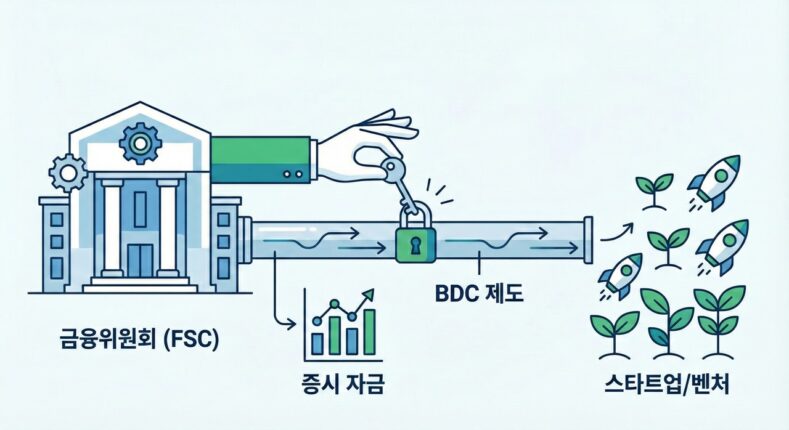
벤처투자 흐름 확대 개대감과 함께 폭탄 돌리기 논란도
해외사례는 제도 도입 효과에 대한 단서를 제공한다. 미국에서는 BDC가 중간시장 LBO와 비은행 직접대출(Direct lending)의 축으로 자리 잡으면서 운용자산이 수천억 달러 규모로 확대됐다. 특히 중간시장 LBO 조달에서 직접대출 비중이 급증해 기존 은행 중심 신용중개 구조를 일부 대체하기도 했다.
국내 벤처·스타트업 생태계에서도 변화가 예상된다. BDC가 안착할 경우 VC·PE·정책금융 중심으로 구성된 비상장·벤처 자금 공급 구조에 공모 자금이 결합되며, 후기 단계 기업과 상장 직전 기업군에 새로운 자본 레이어가 생성될 가능성이 있다. 최근 ICT 중심으로 회복 조짐을 보이는 벤처투자 흐름과 맞물릴 경우 엑시트 경로 다변화에도 기여할 수 있다.
개인 투자자에게는 새로운 기회와 위험이 동시에 존재한다. BDC를 통해 개인은 상장주식·ETF 중심의 기존 투자 스펙트럼을 벗어나 비상장·벤처 영역의 수익·위험 구조에 접근할 수 있다. 그러나 비유동 자산 비중이 높은 구조적 특성상 장기 보유가 기본 전제이며, 포트폴리오 구성·수수료·평가 체계 등 상품 구조에 대한 이해가 필요해 단기 매매 중심의 투자문화와 충돌 가능성도 지적된다.
시장에서는 기대와 우려가 교차한다. 공모펀드 시장 침체 국면에서 새로운 성장 동력이 될 수 있다는 기대와 함께, BDC 도입이 비상장·벤처 밸류에이션의 추가 상승 압력으로 이어질 수 있다는 우려도 제기된다. 특히 운용사의 리스크 관리 능력과 외부 평가기관의 독립성이 제도 성패를 좌우할 핵심 변수로 지목된다.
업계 관계자는 “기존 벤처투자에 몰입해왔던 액셀러레이터, 벤처캐피탈 등과 협업이나 M&A를 통해 역할 분담을 하지 않으면 시장의 왜곡 현상이 심화될 수 있다”고 우려하며 “스타트업 벤처 투자자들과 세컨더리 및 M&A 협력을 이어나가야 한다”고 강조했다.
정부는 향후 규제심사·법제처 심사·국무회의 등을 거쳐 하위 규정을 정비할 계획이다. 첫 세대 BDC가 어떤 전략과 구조로 시장에 등장할지, 그리고 제도가 지향하는 ‘모험자본 공급 확대’와 ‘투자자 보호’ 사이 균형이 실제 상품·판매·사후관리 단계에서 구현될지가 시장의 가장 큰 관심사로 떠오르고 있다.
Unlisted and venture capital investments, BDC system complete: "Half hope, half concern"
As the BDC (Corporate Growth Collective Investment Corporation) system enters the legislative notice stage, the potential for structural changes across the domestic capital market is being raised. With the institutional opening of public offerings for unlisted and venture capital investments, some anticipate a restructuring of the domestic capital raising structure, which has historically been heavily focused on IPOs.
The government announced the implementation of the BDC system in March of next year through amendments to the Enforcement Decree of the Capital Markets Act and the Financial Investment Business Regulations. BDCs are investment vehicles designed to provide growth capital to unlisted, venture, and KOSDAQ-listed companies using a public offering fund structure. They are positioning themselves as a means of bringing individual investors' access to venture capital within the institutional framework.
According to the proposed legislation, BDCs must invest at least 60% of their assets in unlisted venture and innovative companies, KOSDAQ and KONEX listed SMEs and startups, and venture capital funds. The fund must raise at least KRW 30 billion and adopt a no-redeem policy with a maturity of at least five years, ensuring a certain amount of funds are tied up as mid- to long-term venture capital.
The management method offers greater flexibility compared to existing public offering funds while strengthening accountability. Management companies are required to make seed investments based on their size, and BDCs are subject to stricter information disclosure requirements, including quarterly fair value assessments and disclosure of key management information. While lending is permitted up to 40% of the investment in the primary investee company, investments exceeding 10% in the same company, holding more than 50% of the equity, and investing without external growth assessments are prohibited.
The growing attention given to BDCs stems from structural biases in the domestic capital market. Historically, the domestic market has been heavily focused on IPOs, with funds concentrated in companies after they go public. Individuals have had limited access to unlisted and middle-market companies. BDCs offer a public offering-style channel for equity and loan investments in unlisted, venture, and mid-sized companies, raising hopes that this will alleviate the current situation where only successful IPOs enjoy capital market advantages.
Along with the expansion of venture investment flows, there is also controversy over passing the buck.
Overseas examples provide clues to the effectiveness of institutional adoption. In the US, BDCs have become a key player in mid-market LBOs and non-bank direct lending, expanding their assets under management to hundreds of billions of dollars. In particular, the proportion of direct lending in mid-market LBO financing has surged, even partially replacing the existing bank-centric credit brokerage structure.
Changes are also expected in the domestic venture and startup ecosystem. If BDCs become established, the unlisted and venture capital supply structure, centered around VC, PE, and policy finance, will be supplemented with public offerings, potentially creating a new layer of capital for later-stage companies and companies nearing IPO. If coupled with the recent recovery in venture investment, particularly in ICT, this could also contribute to diversifying exit paths.
Individual investors face both new opportunities and risks. Through BDCs, individuals can move beyond the traditional investment spectrum centered on listed stocks and ETFs and access the return and risk structures of unlisted and venture capital funds. However, due to the high proportion of illiquid assets, long-term holding is a fundamental prerequisite. This necessitates an understanding of product structures, including portfolio composition, fees, and valuation systems, which could potentially clash with an investment culture focused on short-term trading.
The market is experiencing a mix of expectations and concerns. While some anticipate that BDCs could provide a new growth engine amidst the sluggish public offering fund market, others are concerned that the introduction of BDCs could further pressure the valuations of unlisted and venture funds. In particular, the risk management capabilities of asset managers and the independence of external rating agencies are identified as key variables that will determine the success or failure of the system.
Industry insiders expressed concern, saying, “If we don’t divide our responsibilities through collaboration or M&A with accelerators and venture capitalists who have been focusing on existing venture investments, the market distortion could worsen,” and emphasized, “We must continue to cooperate with startup venture investors on secondary and M&A.”
The government plans to revise lower-level regulations through regulatory review, review by the Ministry of Government Legislation, and the State Council. The market's biggest concerns are the strategies and structures with which the first-generation BDCs will enter the market, and whether the system's goal of "expanding the supply of venture capital" and "investor protection" will be achieved in the actual product, sales, and after-sales management stages.
非上場・ベンチャー投資、BDC制度完備「期待半、懸念半」
BDC(企業成長集合投資機構)制度が立法予告段階に入り、国内資本市場全般に構造的変化の可能性が提起されている。非上場・ベンチャー投資に対する公募資金参加が制度的に開かれ、これまでIPO中心に偏重された国内資本調達構造の再編を予告するという評価だ。
政府は資本市場法施行令及び金融投資業規定改正案を通じて来年3月にBDC制度施行を予告した。 BDCは公募ファンド構造を活用して非上場・ベンチャー・コスダック企業などに成長資金を供給するように設計された投資機構で、個人投資家の冒険資本へのアクセス性を制度圏内に引き込む手段として位置づけている。
立法予告案によると、BDCは資産の最低60%を非上場ベンチャー・革新企業、コスダック・コネックス中小・創業企業、ベンチャー組合救い主などに投資しなければならない。最低300億ウォン以上を募集し、満期5年以上の買戻し禁止構造を適用し、一定規模の資金が中長期冒険資本に結びつく構造を前提とする。
運用方式は既存の公募ファンドに比べ柔軟性を拡大しながらも責任装置を強化した形だ。運用会社は規模に応じてシーディング投資義務を負い、BDCは四半期ごとの公正価値評価と主要経営事項の開示など強化された情報提供規律を適用される。金銭貸与は株投資対象企業投資額の40%以内で許容されるが、同一企業10%超投資や持分50%以上保有、外部成長性評価なしに投資する行為は禁止される。
BDCが注目される背景には、国内資本市場の構造的偏向がある。これまで国内市場は上場以後企業に資金が集中するIPO中心傾向が強く、個人が非上場・ミドルマーケット企業に接近できる経路は制限的だった。 BDCは非上場・ベンチャー・中堅企業に対する持分・貸出投資という公募構造の通路を提供することで、上場成功企業だけが資本市場の利点を享受する現実を緩和できるという期待を生む。
ベンチャー投資の流れの拡大
海外事例は制度導入効果の手がかりを提供する。米国では、BDCが中間市場のLBOと非銀行直接融資(Direct lending)の軸となって運用資産が数千億ドル規模に拡大した。特に中間市場のLBO調達で直接融資の割合が急増し、既存の銀行中心の信用仲介構造を一部代替した。
国内ベンチャー・スタートアップ生態系でも変化が予想される。 BDCが安着する場合、VC・PE・政策金融中心で構成された非上場・ベンチャー資金供給構造に公募資金が結合され、後期段階企業と上場直前企業群に新たな資本層が生成される可能性がある。最近、ICTを中心に回復の兆しを見せるベンチャー投資の流れと噛み合うと、出口経路の多様化にも貢献できる。
個人投資家には新たな機会とリスクが同時に存在する。 BDCを通じて個人は上場株式・ETF中心の既存の投資スペクトルを抜け、非上場・ベンチャー領域の収益・リスク構造に接近できる。しかし、非流動資産の比重が高い構造的特性上、長期保有が基本前提であり、ポートフォリオ構成・手数料・評価体系など商品構造に対する理解が必要で、短期売買中心の投資文化と衝突の可能性も指摘される。
市場では期待と懸念が交差する。公募ファンド市場の低迷局面で新たな成長動力になることが期待されるとともに、BDCの導入が非上場・ベンチャーバリュエーションの追加上昇圧力につながる可能性があるという懸念も提起される。特に、運用会社のリスク管理能力と外部評価機関の独立性が制度成否を左右する重要な変数として指摘される。
業界関係者は「既存ベンチャー投資に没入してきたアクセラレーター、ベンチャーキャピタルなどとコラボレーションやM&Aを通じて役割分担をしなければ、市場の歪み現象が深化する可能性がある」と憂慮し、「スタートアップベンチャー投資家とセカンダリおよびM&A協力を続けなければならない」と強調した。
政府は今後規制審査・法制処審査・国務会議などを経て下位規定を整備する計画だ。初世代のBDCがどのような戦略と構造で市場に登場するか、そして制度が志向する「冒険資本供給拡大」と「投資家保護」の間のバランスが実際の商品・販売・事後管理段階で実装されるかが市場の最大の関心事として浮上している。
非上市及风险投资,BDC体系完善:“一半希望,一半担忧”
随着企业成长集体投资公司(BDC)制度进入立法公告阶段,国内资本市场结构性变革的可能性日益增加。随着非上市和风险投资的公开发行逐渐开放,一些人预期国内资本募集结构将发生重组,此前国内资本募集结构一直高度依赖首次公开募股(IPO)。
政府宣布将于明年3月通过修订《资本市场法》实施细则和《金融投资业务条例》来实施商业发展公司(BDC)制度。BDC是一种投资工具,旨在通过公开募股基金的结构,为非上市公司、风险投资公司和韩国创业板(KOSDAQ)上市公司提供增长资本。它们的目标是使个人投资者能够在机构框架内获得风险投资。
根据拟议的立法,商业发展公司(BDC)必须将其至少60%的资产投资于未上市的风险投资和创新型公司、在韩国创业板(KOSDAQ)和韩国综合交易所(KONEX)上市的中小企业和初创企业,以及风险投资基金。该基金必须募集至少300亿韩元,并采取至少五年期限的不赎回政策,以确保一定数量的资金作为中长期风险资本进行投资。
与现有的公开募股基金相比,这种管理模式在加强问责制的同时,也提供了更大的灵活性。管理公司必须根据自身规模进行种子投资,而商业发展公司(BDC)则需遵守更严格的信息披露要求,包括季度公允价值评估和关键管理信息的披露。虽然允许向主要投资公司提供高达40%的投资额度,但禁止对同一公司进行超过10%的投资、持有超过50%的股权,以及在未进行外部增长评估的情况下进行投资。
人们对商业发展公司(BDC)日益增长的关注源于国内资本市场的结构性偏差。历史上,国内市场过度关注首次公开募股(IPO),资金集中于已上市的公司。个人投资者接触未上市企业和中型企业的机会有限。BDC提供了一种类似IPO的渠道,用于对未上市企业、风险投资企业和中型企业进行股权和贷款投资,这让人们寄予厚望,希望BDC能够缓解目前只有成功IPO的公司才能享受资本市场优势的局面。
随着风险投资资金的增加,推卸责任的问题也引发了争议。
海外案例为机构采纳的有效性提供了线索。在美国,商业发展公司(BDC)已成为中端市场杠杆收购和非银行直接贷款的关键参与者,其管理资产规模已达数千亿美元。尤其值得一提的是,直接贷款在中端市场杠杆收购融资中的占比大幅提升,甚至部分取代了以银行为中心的现有信贷经纪结构。
国内风险投资和创业生态系统预计也将发生变化。如果商业发展公司(BDC)得以建立,以风险投资、私募股权和政策融资为中心的非上市风险资本供给结构将得到补充,公开募股(IPO)有望为后期公司和即将上市的公司创造新的融资渠道。如果再加上近期风险投资(尤其是信息通信技术领域的投资)的复苏,这也有助于企业退出路径的多元化。
个人投资者面临着新的机遇和风险。通过商业发展公司(BDC),个人投资者可以突破以上市股票和ETF为中心的传统投资模式,获得非上市基金和风险投资基金的收益和风险结构。然而,由于流动性较差的资产比例较高,长期持有是基本前提。这就要求投资者了解产品结构,包括投资组合构成、费用和估值体系,而这些可能与注重短期交易的投资文化产生冲突。
市场目前既有期待也有担忧。一些人预期,在公开募股基金市场低迷的情况下,商业发展公司(BDC)能够成为新的增长引擎;而另一些人则担心,BDC的引入可能会进一步压低非上市基金和风险投资基金的估值。尤其值得注意的是,资产管理公司的风险管理能力以及外部评级机构的独立性被认为是决定该体系成败的关键因素。
业内人士表达了担忧,他们表示:“如果我们不通过与专注于现有风险投资的加速器和风险投资家合作或并购来分担责任,市场扭曲可能会加剧。”他们强调:“我们必须继续与初创风险投资者在二级市场和并购方面进行合作。”
政府计划通过监管审查、立法部审查和国务院审查,对下级监管法规进行修订。市场最关注的是第一代BDC(投资发展公司)将以何种策略和结构进入市场,以及该体系“扩大风险资本供给”和“保护投资者”的目标能否在实际的产品、销售和售后管理阶段得以实现。
Investissements non cotés et en capital-risque, système BDC complet : « Mi-espoir, mi-inquiétude »
Alors que le système des BDC (Sociétés collectives de placement en capital pour la croissance des entreprises) entre dans la phase de consultation législative, la possibilité de changements structurels au sein du marché des capitaux national est soulevée. Avec l'ouverture institutionnelle des offres publiques pour les investissements non cotés et en capital-risque, certains anticipent une restructuration du système de levée de capitaux national, historiquement axé sur les introductions en bourse.
Le gouvernement a annoncé la mise en œuvre du système des BDC (sociétés de développement des entreprises) en mars prochain, par le biais d'amendements au décret d'application de la loi sur les marchés de capitaux et au règlement sur les activités d'investissement financier. Les BDC sont des véhicules d'investissement conçus pour fournir du capital de croissance aux entreprises non cotées, aux sociétés de capital-risque et aux sociétés cotées au KOSDAQ, grâce à une structure de fonds d'investissement public. Elles se positionnent comme un moyen d'offrir aux investisseurs individuels un accès au capital-risque dans un cadre institutionnel.
Selon le projet de loi, les sociétés de développement commercial (BDC) doivent investir au moins 60 % de leurs actifs dans des entreprises innovantes et à fort potentiel non cotées, des PME et startups cotées sur le KOSDAQ et le KONEX, ainsi que dans des fonds de capital-risque. Le fonds doit lever au moins 30 milliards de wons coréens (KRW) et adopter une politique de non-rachat avec une échéance d'au moins cinq ans, garantissant ainsi qu'une partie des fonds soit immobilisée en capital-risque à moyen et long terme.
Ce mode de gestion offre une plus grande flexibilité que les fonds d'investissement cotés en bourse classiques, tout en renforçant la transparence. Les sociétés de gestion sont tenues de réaliser des investissements initiaux proportionnels à leur taille, et les BDC sont soumises à des obligations de transparence plus strictes, notamment des évaluations trimestrielles de leur juste valeur et la publication d'informations clés sur la gestion. Si les prêts sont autorisés jusqu'à 40 % de l'investissement dans la société cible principale, les investissements supérieurs à 10 % dans cette même société, la détention de plus de 50 % du capital et les investissements réalisés sans évaluation externe de la croissance sont interdits.
L'intérêt croissant porté aux BDC (Business Development Companies) s'explique par des biais structurels du marché des capitaux national. Historiquement, ce marché s'est fortement concentré sur les introductions en bourse (IPO), les fonds étant investis dans les entreprises une fois cotées. Les particuliers ont eu un accès limité aux entreprises non cotées et aux PME. Les BDC offrent un canal d'investissement en actions et en prêts, similaire à une offre publique, dans les entreprises non cotées, les sociétés de capital-risque et les PME, ce qui laisse espérer que cela permettra d'atténuer la situation actuelle où seules les introductions en bourse réussies bénéficient des avantages du marché des capitaux.
Parallèlement à l'expansion des flux d'investissement en capital-risque, la question du renvoi des responsabilités suscite également la controverse.
Des exemples internationaux permettent de mieux comprendre l'efficacité de l'adoption institutionnelle. Aux États-Unis, les BDC sont devenues des acteurs clés des LBO de taille moyenne et des prêts directs non bancaires, portant leurs actifs sous gestion à des centaines de milliards de dollars. En particulier, la part des prêts directs dans le financement des LBO de taille moyenne a fortement augmenté, remplaçant même partiellement la structure traditionnelle de courtage de crédit centrée sur les banques.
Des changements sont également attendus dans l'écosystème national des entreprises en capital-risque et des startups. Si les sociétés de développement commercial (BDC) se développent, l'offre de capital-risque non coté, actuellement axée sur le capital-risque, le capital-investissement et les financements publics, sera complétée par des introductions en bourse, créant potentiellement une nouvelle source de financement pour les entreprises en phase de développement avancé et celles proches de leur introduction en bourse. Conjuguée à la récente reprise des investissements en capital-risque, notamment dans les TIC, cette évolution pourrait également contribuer à diversifier les stratégies de sortie.
Les investisseurs particuliers sont confrontés à de nouvelles opportunités, mais aussi à de nouveaux risques. Grâce aux BDC (Business Development Companies), ils peuvent diversifier leurs investissements au-delà des actions cotées et des ETF traditionnels et accéder aux profils de rendement et de risque des fonds non cotés et de capital-risque. Cependant, la forte proportion d'actifs illiquides exige un investissement à long terme. Cela implique de bien comprendre la structure des produits, notamment la composition du portefeuille, les frais et les systèmes d'évaluation, ce qui peut entrer en conflit avec une culture d'investissement axée sur le court terme.
Le marché est marqué par des attentes et des inquiétudes partagées. Si certains entrevoient que les BDC pourraient dynamiser le marché atone des fonds d'investissement cotés, d'autres craignent que leur introduction n'accentue la pression sur la valorisation des fonds non cotés et des fonds de capital-risque. En particulier, les capacités de gestion des risques des gestionnaires d'actifs et l'indépendance des agences de notation externes sont considérées comme des facteurs déterminants pour le succès ou l'échec de ce système.
Des acteurs du secteur ont exprimé leur inquiétude, déclarant : « Si nous ne répartissons pas nos responsabilités par le biais de collaborations ou de fusions-acquisitions avec des accélérateurs et des investisseurs en capital-risque qui se sont concentrés sur les investissements existants, la distorsion du marché pourrait s'aggraver », et ont souligné : « Nous devons continuer à coopérer avec les investisseurs en capital-risque de jeunes entreprises sur le marché secondaire et les fusions-acquisitions. »
Le gouvernement prévoit de réviser les réglementations de niveau inférieur par le biais d'un examen réglementaire, d'une évaluation par le ministère de la Législation et du Conseil d'État. Les principales préoccupations du marché concernent les stratégies et les structures d'entrée sur le marché des sociétés de développement commercial de première génération, ainsi que la réalisation concrète des objectifs du système, à savoir « l'augmentation de l'offre de capital-risque » et la « protection des investisseurs », notamment en ce qui concerne les produits, les ventes et le service après-vente.
You must be logged in to post a comment.