




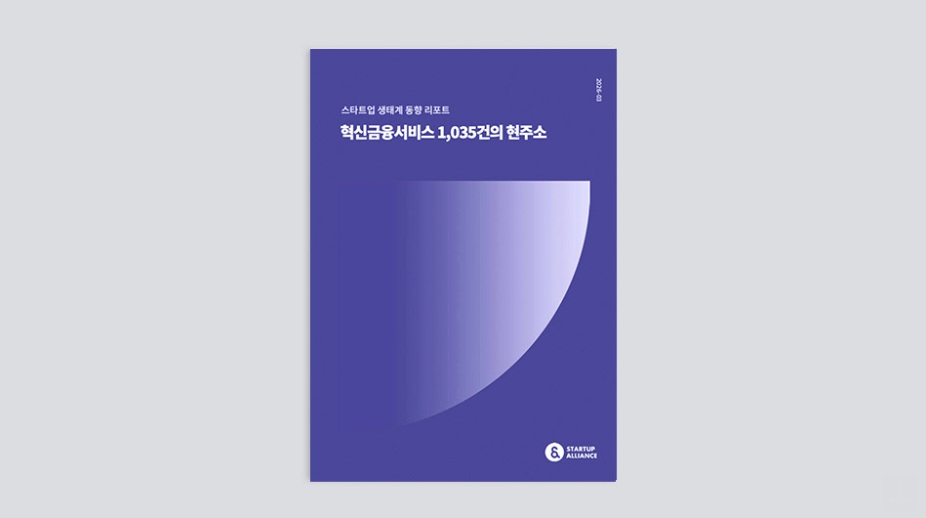
스타트업얼라이언스(대표 이기대·임정욱)는 10일, 스타트업 생태계 동향 리포트 ‘혁신금융서비스 1,035건의 현주소’를 발간했다. 이번 리포트는 2026년 1월 28일 기준 금융위원회 혁신금융서비스 전수 데이터를 분석한 결과를 담았다.
리포트에 따르면 혁신금융서비스 누적 건수는 1,035건으로 양적으로 확대됐지만, 지정 기업 구성은 금융회사 중심으로 나타났다. 누적 기준 지정 기업의 79%(818건)가 금융회사인 반면, 스타트업은 10%(104건), 핀테크사는 4.3%(45건)에 그쳤다. 보고서는 샌드박스 제도의 활용이 기존 금융사에 집중되는 경향이 크다고 분석했다.
또한, 누적 지정 1,035건 중 출시 완료는 39%(404건)로 집계됐지만, 사업 준비 정도와 시장 상황, 규제 이슈 등에 따라 출시가 지연되거나 보류될 수 있다고 설명했다. 보고서는 샌드박스 제도의 실질적 성과는 지정·출시 자체보다 출시 이후 정식 인가·제도화로 이어지는 전환 결과에서 평가돼야 한다고 강조했다.
전환 단계와 관련해 리포트는 전환 기준과 사유의 투명성이 제도 신뢰를 좌우한다고 지적했다. 실증 과정에서 의미 있는 성과를 입증했음에도 제도권 편입에서 제외될 경우, 판단 근거가 명확하고 투명해야 하며, 그렇지 않으면 제도 자체 신뢰가 훼손될 위험이 있다고 덧붙였다.
해외 사례로 영국을 언급하며, 규제 샌드박스가 스타트업이 서비스를 시험할 통로 역할뿐 아니라, 인가 전환 체계, 데이터·시장 인프라 지원, 공공 자본 보완 등으로 혁신을 뒷받침하며 생태계 성장을 촉진했다고 분석했다. 영국의 핀테크 유니콘 18개와 한국 3개를 비교하며, 지정 수 확대에 그치지 않고 실증 이후 제도권 정착 경로를 강화해야 한다고 지적했다.
스타트업얼라이언스 임정욱 공동대표는 “규제 샌드박스는 실증을 거친 혁신이 정식 인가·제도화로 이어지는 전환 경로가 투명하게 작동하는지가 중요하다”며 “정책이 혁신 산업을 지지한다는 신호가 명확할 때 투자 확대와 스타트업 성장 가능성이 높아진다”고 밝혔다.
스타트업얼라이언스 리포트 전문은 홈페이지에서 다운로드 가능하며, 국내 스타트업 생태계와 정책 이슈를 심층 분석하고 전략적 방향성을 제시한다.
- 관련 기사 더 보기
Startup Alliance publishes report analyzing 1,035 innovative financial services… "Startup participation rate is 10%."
On the 10th, Startup Alliance (CEOs Lee Ki-dae and Lim Jeong-wook) published a startup ecosystem trend report titled "Current Status of 1,035 Innovative Financial Services." This report analyzed data on innovative financial services from the Financial Services Commission as of January 28, 2026.
According to the report, while the cumulative number of innovative financial services has increased quantitatively to 1,035, the designated companies are primarily financial institutions. While financial institutions account for 79% (818 cases) of the cumulative number of designated companies, startups account for only 10% (104 cases) and fintech companies account for only 4.3% (45 cases). The report analyzed that the sandbox system's utilization tends to be concentrated among existing financial institutions.
Furthermore, while 39% (404 cases) of the 1,035 cumulatively designated cases have been launched, the report explained that launches may be delayed or put on hold depending on the level of business preparation, market conditions, and regulatory issues. The report emphasized that the actual performance of the sandbox system should be evaluated not on the designation and launch itself, but rather on the transition from launch to formal approval and institutionalization.
Regarding the transition phase, the report pointed out that transparency in the transition criteria and rationale determines institutional trust. It added that if a system is excluded from institutional integration despite demonstrating meaningful results during the pilot phase, the basis for the decision must be clear and transparent. Otherwise, trust in the system itself risks being undermined.
Citing the UK as an example of an international case, the study analyzed that regulatory sandboxes not only serve as a platform for startups to test their services, but also support innovation and ecosystem growth through licensing transition systems, data and market infrastructure support, and supplementary public capital. Comparing the UK's 18 fintech unicorns with Korea's three, the study emphasized the need to go beyond simply expanding the number of designated unicorns and strengthen the pathways for institutional integration after demonstration.
Lim Jeong-wook, co-CEO of Startup Alliance, said, “The regulatory sandbox is important in ensuring that the transition path from proven innovations to official approval and institutionalization operates transparently,” adding, “When there is a clear signal that policies support innovative industries, the possibility of increased investment and startup growth increases.”
The full Startup Alliance Report, available for download on the website, provides an in-depth analysis of the domestic startup ecosystem and policy issues, and presents strategic directions.
- See more related articles
スタートアップアライアンス、イノベーション金融サービス1,035件の分析レポートを発行。「スタートアップ参加率10%」
スタートアップアライアンス(代表イ・ギデ・イム・ジョンウク)は10日、スタートアップ生態系動向レポート「革新金融サービス1,035件の現住所」を発刊した。今回のレポートは2026年1月28日基準金融委員会革新金融サービス専修データを分析した結果を盛り込んだ。
レポートによると、イノベーション金融サービスの累積件数は1,035件に量的に拡大したが、指定企業構成は金融会社中心に現れた。累積基準指定企業の79%(818件)が金融会社であるのに対し、スタートアップは10%(104件)、フィンテック社は4.3%(45件)にとどまった。報告書は、サンドボックス制度の活用が既存の金融会社に集中する傾向が大きいと分析した。
また、累積指定1,035件のうち発売完了は39%(404件)と集計されたが、事業準備程度や市場状況、規制問題などによって発売が遅れたり保留される可能性があると説明した。報告書は、サンドボックス制度の実質的成果は、指定・発売自体よりも発売以後、正式認可・制度化につながる転換結果で評価されるべきだと強調した。
転換段階に関して、報告書は転換基準と理由の透明性が制度の信頼に左右されると指摘した。実証過程で意味のある成果を立証したにもかかわらず、制度権編入から除外される場合、判断根拠が明確かつ透明でなければならず、そうでなければ制度自体の信頼が損なわれる危険があると付け加えた。
海外事例としてイギリスを言及し、規制サンドボックスがスタートアップがサービスを試験する通路の役割だけでなく、認可転換体系、データ・市場インフラ支援、公共資本補完などで革新を支え、生態系成長を促進したと分析した。英国のフィンテックユニコーン18個と韓国3個を比較し、指定数の拡大にとどまらず実証後、制度権定着経路を強化しなければならないと指摘した。
スタートアップアライアンスのイム・ジョンウク共同代表は「規制サンドボックスは実証されたイノベーションが正式な認可・制度化につながる転換経路が透明に動作するかが重要だ」とし「政策がイノベーション産業を支持するという信号が明確なときに投資拡大とスタートアップの成長可能性が高まる」と明らかにした。
スタートアップアライアンスレポート専門はホームページからダウンロード可能で、国内スタートアップエコシステムと政策課題を深く分析し、戦略的方向性を提示する。
- 関連記事をもっと見る
创业联盟发布报告,分析了1035家创新型金融服务公司……“创业公司参与率为10%”。
10日,创业联盟(CEO:李基大、林正旭)发布了一份题为《1035家创新金融服务公司现状》的创业生态系统趋势报告。该报告分析了截至2026年1月28日金融服务委员会提供的创新金融服务数据。
报告显示,虽然创新型金融服务机构的累计数量已增至1035家,但这些机构主要为金融机构。其中,金融机构占累计获批机构总数的79%(818家),初创企业仅占10%(104家),金融科技公司仅占4.3%(45家)。报告分析指出,沙盒系统的使用主要集中在现有金融机构。
此外,报告指出,在累计指定的1035个案例中,已有39%(404个案例)启动,但启动时间可能会因企业准备程度、市场状况和监管问题而延迟或暂停。报告强调,评估沙盒系统的实际效果,不应着眼于指定和启动本身,而应着眼于从启动到正式批准和制度化的过渡阶段。
关于过渡阶段,报告指出,过渡标准和理由的透明度决定了机构信任度。报告还指出,如果一个系统在试点阶段取得了显著成果,却被排除在机构整合之外,那么该决定的依据必须清晰透明。否则,公众对该系统本身的信任度将面临风险。
该研究以英国为例,分析了监管沙盒不仅为初创企业提供测试服务的平台,还能通过许可过渡机制、数据和市场基础设施支持以及补充公共资本,促进创新和生态系统发展。研究对比了英国的18家金融科技独角兽企业和韩国的3家,强调不能仅仅扩大独角兽企业的数量,还应加强示范项目后制度整合的途径。
Startup Alliance 联合首席执行官林正旭表示:“监管沙盒对于确保从成熟的创新到官方批准和制度化的过渡路径透明运作至关重要。”他补充道:“当政策明确表明支持创新产业时,投资增加和初创企业增长的可能性就会增加。”
完整的创业联盟报告可在网站上下载,该报告深入分析了国内创业生态系统和政策问题,并提出了战略方向。
- 查看更多相关文章
Startup Alliance publie un rapport analysant 1 035 services financiers innovants… « Le taux de participation des startups est de 10 %. »
Le 10, Startup Alliance (PDG Lee Ki-dae et Lim Jeong-wook) a publié un rapport sur les tendances de l'écosystème des startups intitulé « Situation actuelle de 1 035 services financiers innovants ». Ce rapport analyse les données sur les services financiers innovants de la Commission des services financiers au 28 janvier 2026.
Selon le rapport, bien que le nombre cumulé de services financiers innovants ait augmenté pour atteindre 1 035, les entreprises concernées sont principalement des institutions financières. Ces dernières représentent 79 % (818 cas) du nombre total d'entreprises concernées, tandis que les startups n'en représentent que 10 % (104 cas) et les fintechs seulement 4,3 % (45 cas). Le rapport analyse que l'utilisation du système de bac à sable technologique tend à se concentrer parmi les institutions financières existantes.
Par ailleurs, bien que 39 % (404 cas) des 1 035 projets désignés au total aient été lancés, le rapport explique que ces lancements pourraient être retardés ou suspendus en fonction du niveau de préparation des entreprises, des conditions du marché et des enjeux réglementaires. Le rapport souligne que la performance réelle du système de bac à sable doit être évaluée non pas en fonction de la désignation et du lancement eux-mêmes, mais plutôt en fonction de la transition entre le lancement et l’approbation formelle et l’institutionnalisation.
Concernant la phase de transition, le rapport souligne que la transparence des critères et de la justification de cette transition est essentielle à la confiance institutionnelle. Il ajoute que si un système est exclu de l'intégration institutionnelle malgré des résultats significatifs lors de la phase pilote, les motifs de cette décision doivent être clairs et transparents. À défaut, la confiance dans le système lui-même risque d'être compromise.
Prenant le Royaume-Uni comme exemple international, l'étude a analysé que les bacs à sable réglementaires servent non seulement de plateforme aux startups pour tester leurs services, mais soutiennent également l'innovation et la croissance de l'écosystème grâce à des systèmes de transition de licences, un soutien aux infrastructures de données et de marché, et des financements publics complémentaires. Comparant les 18 licornes fintech britanniques aux trois coréennes, l'étude a souligné la nécessité d'aller au-delà de la simple augmentation du nombre de licornes reconnues et de renforcer les mécanismes d'intégration institutionnelle après la phase de démonstration.
Lim Jeong-wook, co-PDG de Startup Alliance, a déclaré : « Le bac à sable réglementaire est important pour garantir que le processus de transition des innovations éprouvées à l'approbation officielle et à l'institutionnalisation se déroule de manière transparente », ajoutant : « Lorsqu'il existe un signal clair indiquant que les politiques soutiennent les industries innovantes, la possibilité d'une augmentation des investissements et de la croissance des startups augmente. »
Le rapport complet de Startup Alliance, disponible en téléchargement sur le site web, fournit une analyse approfondie de l'écosystème des startups nationales et des enjeux politiques, et présente des orientations stratégiques.
- Voir plus d'articles connexes
You must be logged in to post a comment.