




-기후위기로 식량 불안정이 심화되는 가운데, 버섯 균사체 기술로 지속가능한 대안 제시
기후변화로 극한 기후가 빈발하면서 전 세계 식량 안보가 위협받고 있다. 기존 농업은 대량의 물과 토지를 필요로 하며, 식물성 단백질만으로 영양 불균형 문제를 해결하기 어렵다. 특히 아프리카 등 개발도상국에서는 안정적인 단백질 공급원 확보가 절실한 과제로 남아있다.
이런 가운데 버섯 균사체를 활용한 솔루션이 등장했다. 전주시 덕진구 연구특구에 위치한 머쉬앤(Mush&)은 적은 자원으로도 고기능성 성분을 생산할 수 있는 균사체 기술을 개발했다. 실제로 케냐에서 진행한 프로젝트에서는 농가 소득이 4배 개선되는 성과를 보였다고 회사 측은 설명한다.
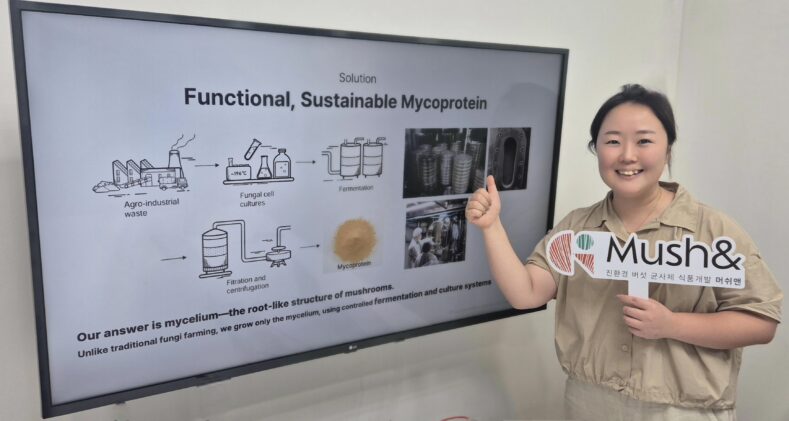
정지현 대표(31)는 “균사체 기반 대체단백질로 인류의 영양 불균형을 해소하고, 기후위기에 대응하는 지속가능한 식량 체계를 만들겠다”며 “노벨평화상에 도전하는 과학기반 식품 기업이 되는 것이 목표”라고 밝혔다.
6명 규모의 이 스타트업은 2024년 3억원에서 올해 15억원으로 5배 성장이 목표이다. 버섯 균사체 기술을 바탕으로 기능성 식품과 코스메틱, 펫푸드 시장에서 입지를 넓히고 있다. 코이카(KOICA) 프로그램을 통한 케냐 진출로 글로벌 시장 확장에도 나서고 있다.
말라위 경험이 만든 사업 아이템
정지현 대표는 각종 배양기와 현미경이 즐비한 연구실에서 버섯 균사체 샘플을 보여주며 인터뷰를 시작했다. “이게 미래 식량의 핵심 소재에요. 기존 식물성 단백과는 차원이 다르죠.”
그의 창업 스토리는 아프리카 말라위에서 시작된다. 국내외 연구기관에서 버섯 연구를 하던 정지현 대표는 2019년 책임연구원으로 말라위에서 ‘버섯을 통한 지역 공동체 식량안보 향상 프로젝트’를 수행했다.
“아이들이 웃으며 양송이를 수확하던 모습이 제 인생을 바꿨죠.” 정지현 대표는 당시를 회상하며 웃었다. “버섯은 적은 자원으로도 재배할 수 있고, 단백질과 기능성 물질을 동시에 공급할 수 있어요. 그때 막연했던 ‘버섯으로 인류의 식량 문제 해결한다’는 생각이 구체적인 사업 아이템으로 연결됐죠.”
2021년 설립된 머쉬앤의 핵심은 기존 버섯 가공과는 다른 접근법이다. “버섯을 기르는 게 아니라 균사체를 직접 배양해 기능성을 설계합니다. 바이오 엔지니어링처럼요.” 현재 자체 확보한 버섯 균주는 25종, 원료는 7종이다.
그가 강조하는 균사체의 강점은 세 가지다. β-글루칸과 에르고티오네인 같은 고기능성 성분을 자연스럽게 함유한다는 점, 생산 과정에서 물과 토지를 거의 사용하지 않는 지속가능성, 그리고 다양한 산업 분야 활용 가능성이다.
“국내외 대학과 농촌진흥청, KAIST 등과의 공동 연구를 통해 기술을 축적해왔어요.” 연구실 한편에는 다양한 균주 샘플들이 정돈되어 있었고, 각 라벨에는 기능성과 활용 분야가 세세하게 기록돼 있었다.
하지만 과제도 있다. 균사체 배양 기술의 상용화와 대량생산 체계 구축이 여전히 숙제로 남았다. 연구 단계에서 상업적 생산으로 넘어가는 과정에서 발생할 수 있는 기술적, 경제적 리스크를 어떻게 관리할지가 관건이다.
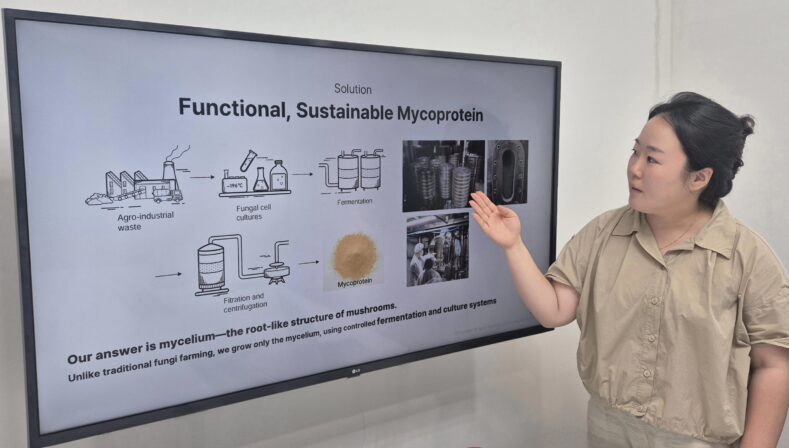
케냐 성과와 글로벌 진출 전략
머쉬앤의 글로벌 역량은 케냐에서 검증받고 있다. KOICA CTS 프로그램을 통해 케냐 JKUAT 대학과 협력해 스마트 버섯 모델팜을 운영 중이다.
“CTS 1단계에서 고온성 양송이 종균을 현지에서 직접 배양해 보급했어요. 일반 농가 테스트 결과 생산성이 크게 증가했고, 200명 이상에게 재배 교육을 실시했습니다.” 정지현 대표는 농가 수익이 4배 개선됐다고 밝혔다.
주목할 점은 기술적 접근법이다. 그는 “Starlink 기반 연결망과 모바일 환경제어 시스템을 접목한 디지털 농업 기술로 코이카와 현지 정부로부터 평가를 받았다”고 덧붙였다. 현재 CTS 2단계 사업에 지원 중이며, 기후 및 농업 문제 해결을 위한 수직형 버섯팜 모델을 제안하고 있다.
“이 사업은 단순한 ODA가 아니에요. 머쉬앤의 기술이 기후와 식량 위기 해결에 실질적으로 기여할 수 있음을 보여주는 기회였습니다.”
글로벌 시장 진출 전략은 ‘로컬 파트너십 중심 모델’이다. 단순한 제품 수출이 아니라 현지 생산과 유통까지 연결되는 생태계 구축을 목표로 한다. “현지 파트너와 함께 지속가능한 비즈니스 모델을 만들고 싶어요.”
올해는 싱가포르와 인도 시장 진출에 집중할 계획이다. 하지만 해외 시장에서의 규제 대응, 현지 파트너 발굴, 문화적 차이 극복 등 해결해야 할 과제가 적지 않다.
전주 지역 기반 조직과 5배 성장 목표
많은 스타트업이 서울로 몰리는 상황에서 전주를 선택한 이유를 묻자, 그는 “전략적 선택”이라고 답했다.
“전라북도는 대한민국 농업과 식품산업의 메카예요. 농생명 산업 인프라와 연구 기반이 탄탄한 지역이죠.” 실제로 머쉬앤은 전북 지역 농생명 특화 기관들과의 협력을 통해 초기 스타트업의 한계를 보완하고 있다.
현재 조직은 R&D, 사업개발, 생산기술, 해외사업 등 4개 축으로 구성됐다. 그리고 6명의 전담 인력과 여러 외부 파트너가 협업하고 있다. 정지현 대표의 리더십 철학은 “맥락을 공유하고 자율성을 존중하는 방식”이다.
“구성원이 각자의 전문성을 최대한 발휘할 수 있도록 전반적 방향성만 설정하고, 실행은 믿고 맡깁니다.” 사무실에서는 직급보다는 역할 중심의 수평적 소통 문화를 엿볼 수 있었다.
숫자로 보는 머쉬앤의 성장 계획은 공격적이다. 2024년 약 3억원의 매출은 원료 ODM 납품, 대체식품 원료 개발, R&D 과제 수주로 이뤄졌다. 올해 목표는 15억원 이상으로, 전년 대비 5배 성장을 계획하고 있다.
“올해 핵심 전략은 세 가지예요. 글로벌 시장 진출과 기능성 원료의 고도화, 그리고 신규 B2B 파트너사 확보입니다.”
가장 집중하고 있는 영역은 기능성 식품이다. 면역 건강, 혈당 조절 등 기능성을 과학적으로 검증한 식품 소재를 중심으로 B2B ODM 납품을 확대하고 있다. 향후에는 코스메틱과 펫푸드에서도 차별화된 제품군을 출시할 계획이며, B2C 브랜드 확장도 준비하고 있다.
다만 작은 규모의 스타트업이 이같은 야심찬 성장 목표를 달성하기 위해서는 충분한 자본 확보와 안정적인 공급망 구축, 품질 관리 시스템 확립 등이 선행되어야 한다는 고민이 있다.
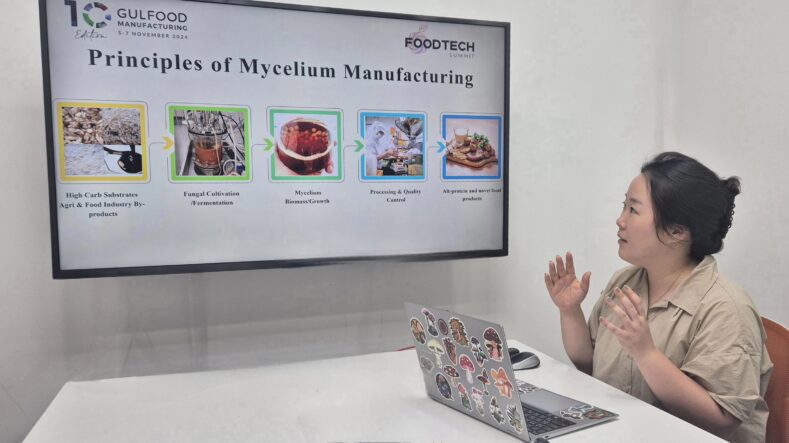
IP 전략에도 공을 들이고 있다. “IP-R&D 전략 수립 사업을 통해 기술 포지셔닝과 IP 매핑을 정교화했어요. 이를 통해 실제 국내외 파트너십 체결과 수출 상담까지 연결됐습니다.”
현재 핀란드 헬싱키대학, 인도 마하자나연구소, 서울대 및 다양한 바이오벤처들과 오픈 이노베이션 협력을 강화하고 있다.
“10년 내로 글로벌 식품 기업들과 어깨를 나란히 하는 균사체 플랫폼 기업으로 성장하고 싶어요. 머쉬앤을 통해 ‘노벨평화상에 도전하는 과학기반 식품 기업’이라는 꿈을 이룰 거에요. 식량 문제 해결이야말로 인류 평화에 기여하는 가장 직접적인 방법이라고 생각합니다.”
정지현 대표의 확신에 찬 비전과 구체적인 해외 진출 성과는 주목할 만하다. 하지만 소규모 스타트업이 글로벌 대기업과 경쟁하며 지속가능한 성장을 이어갈 수 있을지는 앞으로의 실행력과 시장 대응에 달려있을 것으로 보인다. 말라위에서 시작된 작은 도전이 실제 글로벌 식량 체계의 변화로 이어질 수 있을지 지켜볼 필요가 있다.
—
본 인터뷰는 벤처기업협회 설립 30주년을 맞아 협회가 추천한 우수 창업초기기업을 대상으로, 스타트업 전문 미디어 벤처스퀘어와 함께 기획한 시리즈 중 하나입니다. ‘AI·데이터·디지털솔루션’, ‘바이오·식품·로컬브랜드’, ‘콘텐츠·문화·Web3.0’ 3개 분야로 나눠 진행됩니다.
“We will become a global mycelium platform company within 10 years” Mush& CEO Jeong Ji-hyeon
– Presenting a sustainable alternative through mushroom mycelium technology amid worsening food insecurity due to the climate crisis
As extreme weather events become more frequent due to climate change, global food security is threatened. Existing agriculture requires a large amount of water and land, and it is difficult to solve nutritional imbalance problems with plant-based proteins alone. In particular, securing a stable source of protein remains an urgent task in developing countries such as Africa.
In the midst of this, a solution utilizing mushroom mycelia has emerged. Mush&, located in the Jeonju Deokjin-gu Research Special Zone, has developed mycelia technology that can produce highly functional ingredients with limited resources. The company explains that in a project conducted in Kenya, it showed results that improved farm income by four times.
CEO Jeong Ji-hyeon (31) said, “We will solve the nutritional imbalance of humanity with mycelium-based alternative proteins and create a sustainable food system that responds to the climate crisis,” adding, “Our goal is to become a science-based food company that challenges for the Nobel Peace Prize.”
This six-person startup aims to grow fivefold from 300 million won in 2024 to 1.5 billion won this year. Based on mushroom mycelium technology, it is expanding its presence in the functional food, cosmetics, and pet food markets. It is also expanding into the global market by entering Kenya through the KOICA program.
Business items created by Malawi experience
CEO Jeong Ji-hyeon began the interview by showing a mushroom mycelium sample in a laboratory filled with various incubators and microscopes. “This is the core material of the future food. It is on a completely different level from existing plant-based proteins.”
His startup story begins in Malawi, Africa. CEO Jihyun Jeong, who had been conducting mushroom research at domestic and international research institutes, carried out the ‘Project to Improve Local Community Food Security through Mushrooms’ in Malawi as a principal researcher in 2019.
“The sight of children harvesting mushrooms with smiles changed my life,” CEO Jeong Ji-hyeon said with a smile as he recalled the time. “Mushrooms can be grown with limited resources, and they can provide both protein and functional substances. At that time, the vague idea of ‘solving humanity’s food problem with mushrooms’ turned into a specific business idea.”
Founded in 2021, Mush&’s core is a different approach from existing mushroom processing. “Instead of growing mushrooms, we directly cultivate mycelia and design functionality. Like bioengineering.” Currently, we have 25 mushroom strains and 7 raw materials.
He emphasizes three strengths of mycelium: the fact that it naturally contains highly functional ingredients such as β-glucan and ergothioneine, its sustainability as it uses little water and land in the production process, and its potential for use in various industrial fields.
“We have accumulated technology through joint research with domestic and foreign universities, the Rural Development Administration, KAIST, etc.” On one side of the lab, various strain samples were neatly arranged, and each label had its functionality and application fields recorded in detail.
However, there are challenges. Commercialization of mycelial culture technology and establishment of a mass production system are still homework. The key is how to manage the technical and economic risks that may arise in the process of moving from the research stage to commercial production.
Kenya Performance and Global Expansion Strategy
Mush&’s global capabilities are being verified in Kenya. Through the KOICA CTS program, we are operating a smart mushroom model farm in cooperation with Kenya’s JKUAT University.
“In the first stage of CTS, we directly cultivated and distributed high-temperature pine mushroom spawn locally. As a result of tests conducted on general farms, productivity increased significantly, and cultivation training was provided to more than 200 people.” CEO Jeong Ji-hyeon said that farm income improved fourfold.
The technical approach is noteworthy. He added, “We have been evaluated by KOICA and the local government for our digital agricultural technology that combines Starlink-based connectivity and mobile environmental control systems.” We are currently supporting the CTS Phase 2 project and are proposing a vertical mushroom farm model to solve climate and agricultural problems.
“This project is not just ODA. It is an opportunity to demonstrate that Mush&’s technology can make a real contribution to solving the climate and food crises.”
The global market entry strategy is a ‘local partnership-centered model.’ The goal is not simply to export products, but to build an ecosystem that connects local production and distribution. “I want to create a sustainable business model with local partners.”
This year, we plan to focus on entering the Singapore and Indian markets. However, there are many challenges to overcome, such as responding to regulations in overseas markets, finding local partners, and overcoming cultural differences.
Jeonju area-based organization and 5x growth target
When asked why he chose Jeonju when many startups are flocking to Seoul, he answered, “It was a strategic choice.”
“Jeollabuk-do is the Mecca of the agricultural and food industry in Korea. It is a region with a solid agricultural and biotechnology industry infrastructure and research base.” In fact, Mush& is complementing the limitations of early-stage startups through collaboration with specialized agricultural and biotechnology organizations in the Jeollabuk-do region.
The current organization is composed of four axes: R&D, business development, production technology, and overseas business. Six dedicated staff members and several external partners are working together. CEO Jeong Ji-hyun’s leadership philosophy is “sharing context and respecting autonomy.”
“We only set the overall direction so that each member can maximize their expertise, and we trust and leave the execution to them.” In the office, we could see a horizontal communication culture centered on roles rather than job titles.
Mush&'s growth plan in numbers is aggressive. The sales of about 300 million won in 2024 were achieved through raw material ODM supply, alternative food raw material development, and R&D project orders. This year's target is over 1.5 billion won, and the company plans to grow 5 times compared to the previous year.
“This year, we have three key strategies: entering the global market, improving functional raw materials, and securing new B2B partners.”
The area we are focusing on the most is functional foods. We are expanding our B2B ODM supply centered on food ingredients that have been scientifically verified for their functionality, such as immune health and blood sugar control. In the future, we plan to launch differentiated product lines in cosmetics and pet food, and we are also preparing to expand our B2C brand.
However, there are concerns that in order for small-scale startups to achieve such ambitious growth goals, they must first secure sufficient capital, build a stable supply chain, and establish a quality management system.
We are also working on IP strategy. “We refined technology positioning and IP mapping through the IP-R&D strategy establishment project. This has led to actual domestic and international partnerships and export consultations.”
Currently, we are strengthening open innovation cooperation with the University of Helsinki, Finland, the Mahajana Institute of Technology, India, Seoul National University, and various bio ventures.
“Within 10 years, I want to grow into a mycelium platform company that can stand shoulder to shoulder with global food companies. Through Mush&, I will achieve my dream of becoming a ‘science-based food company that challenges for the Nobel Peace Prize.’ I believe that solving the food problem is the most direct way to contribute to world peace.”
CEO Jeong Ji-hyeon's confident vision and specific overseas expansion results are noteworthy. However, whether a small startup can compete with global conglomerates and continue sustainable growth will likely depend on future execution and market response. It remains to be seen whether the small challenge that began in Malawi can actually lead to changes in the global food system.
—
This interview is part of a series planned in collaboration with startup media Venture Square, targeting excellent startups recommended by the Association in celebration of the 30th anniversary of the establishment of the Venture Business Association. It will be divided into three areas: 'AI·Data·Digital Solutions', 'Bio·Food·Local Brands', and 'Content·Culture·Web 3.0'.
「10年以内にグローバル菌糸体プラットフォーム企業になる」マッシュ&チョンヒョン代表
-気候危機で食糧不安定が深化する中、キノコ菌糸体技術で持続可能な代替提示
気候変動で極端な気候が頻発し、世界の食糧安全保障が脅かされている。既存の農業は大量の水と土地を必要とし、植物性タンパク質だけで栄養不均衡問題を解決することは困難です。特にアフリカなどの発展途上国では、安定したタンパク質供給源の確保が切実な課題として残っている。
このような中でキノコ菌糸体を活用したソリューションが登場した。全州市徳津区研究特区に位置するMush&(Mush&)は、少ない資源でも高機能性成分を生産できる菌糸体技術を開発した。実際にケニアで進めたプロジェクトでは農家所得が4倍改善される成果を見せたと会社側は説明する。
チョン・ヒョン代表(31)は「菌糸体ベースの代替タンパク質で人類の栄養不均衡を解消し、気候危機に対応する持続可能な食糧体系を作る」とし「ノーベル平和上に挑戦する科学基盤食品企業になることが目標」と明らかにした。
6人規模のこのスタートアップは2024年3億ウォンから今年15億ウォンで5倍の成長が目標だ。きのこ菌糸体技術をもとに機能性食品やコスメティック、ペットフード市場で立地を広げている。コイカ(KOICA)プログラムを通じたケニア進出でグローバル市場の拡大にも乗り出している。
マラウイ体験が作ったビジネスアイテム
チョン・ヒョン代表は各種培養器と顕微鏡が揃った研究室でキノコ菌糸体サンプルを見せてインタビューを始めた。 「これは未来食糧の核心素材です。既存の植物性タンパクとは次元が異なります」
彼の創設物語はアフリカのマラウイで始まります。国内外の研究機関でキノコ研究をしていたチョン・ヒョン代表は2019年責任研究員としてマラウイで「キノコを通じた地域コミュニティ食糧安全保障プロジェクト」を行った。
「子供たちが笑ってヤンソンを収穫した姿が私の人生を変えました。」チョン・ヒョン代表は当時を思い出して笑った。 「キノコは少ない資源でも栽培でき、たんぱく質と機能性物質を同時に供給することができます。その時漠然とした「キノコで人類の食糧問題解決する」という考えが具体的な事業アイテムにつながりました。」
2021年に設立されたマッシュアンドの核心は、既存のキノコ加工とは異なるアプローチだ。 「キノコを育てるのではなく、菌糸体を直接培養して機能性を設計します。バイオエンジニアリングのようです」現在自己確保したキノコ菌株は25種、原料は7種である。
彼が強調する菌糸体の強みは3つある。 β-グルカンやエルゴチオネインなどの高機能成分を自然に含むという点、生産過程で水や土地をほとんど使用しない持続可能性、そして様々な産業分野の活用可能性である。
「国内外の大学と農村振興庁、KAISTなどとの共同研究を通じて技術を蓄積してきました」研究室一方では様々な菌株サンプルが整えられており、各ラベルには機能性と活用分野が細かく記録されていた。
しかし課題もある。菌糸体培養技術の商用化と大量生産体系の構築が依然として宿題として残った。研究段階で商業生産に移る過程で発生し得る技術的、経済的リスクをどのように管理するかがカギだ。
ケニアのパフォーマンスとグローバル進出戦略
マッシュアンドのグローバル能力はケニアで検証されている。 KOICA CTSプログラムを通じてケニアJKUAT大学と協力してスマートキノコモデルファームを運営中だ。
「CTS 1段階で高温性揚げが種菌を現地で直接培養して普及しました。一般農家テストの結果生産性が大幅に増加し、200人以上に栽培教育を行いました」チョン・ヒョン代表は農家収益が4倍改善されたと明らかにした。
注目すべき点は技術的アプローチです。彼は「Starlinkベースの接続網とモバイル環境制御システムを組み合わせたデジタル農業技術で、小川と現地政府から評価を受けた」と付け加えた。現在、CTS 2段階事業に支援中であり、気候および農業問題解決のための垂直型キノコファームモデルを提案している。
「この事業は単純なODAではありません。マッシュアンドの技術が気候と食料危機の解決に実質的に貢献できることを示す機会でした。」
グローバル市場進出戦略は「ローカルパートナーシップ中心モデル」だ。単純な製品輸出ではなく、現地生産と流通までつながる生態系構築を目指す。 「地元のパートナーと一緒に持続可能なビジネスモデルを作りたい」
今年はシンガポールとインド市場の進出に集中する計画だ。しかし、海外市場での規制対応、現地パートナー発掘、文化的差異克服など解決すべき課題が少なくない。
全州地域ベースの組織と5倍の成長目標
多くのスタートアップがソウルに集まる状況で全州を選んだ理由を尋ねると、彼は「戦略的選択」と答えた。
「全羅北道は大韓民国農業と食品産業のメカです。農生命産業インフラと研究基盤がしっかりとした地域です。」実際、マッシュアンは全北地域農生命特化機関との協力を通じて初期スタートアップの限界を補完している。
現在、組織はR&D、事業開発、生産技術、海外事業など4つの軸で構成された。そして6人の専任人材と複数の外部パートナーが協業している。チョン・ヒョン代表のリーダーシップ哲学は「脈絡を共有し、自律性を尊重する方式」だ。
「メンバーが各自の専門性を最大限に発揮できるように全般的な方向性だけを設定し、実行は信じて任せます。」事務所では、職級よりは役割中心の水平的コミュニケーション文化を垣間見ることができた。
数字で見るマッシュアンの成長計画は積極的だ。 2024年の約3億ウォンの売上は、原料ODM納品、代替食品原料開発、R&D課題受注になった。今年の目標は15億ウォン以上で、前年比5倍の成長を計画している。
「今年の核心戦略は3つあります。グローバル市場進出と機能性原料の高度化、そして新規B2Bパートナー企業の確保です」
最も集中している領域は機能性食品である。免疫健康、血糖調節など機能性を科学的に検証した食品素材を中心に、B2B ODMの納品を拡大している。今後はコスメとペットフードでも差別化された製品群を発売する計画であり、B2Cブランドの拡張も準備している。
ただし、小規模なスタートアップがこのような野心的な成長目標を達成するためには、十分な資本確保と安定的なサプライチェーン構築、品質管理システムの確立などが先行しなければならないという悩みがある。
IP戦略にもボールを入れている。 「IP-R&D戦略樹立事業を通じて技術ポジショニングとIPマッピングを精巧化しました。これを通じて、実際の国内外のパートナーシップ締結と輸出相談まで連結されました。」
現在、フィンランドヘルシンキ大学、インドマハジャナ研究所、ソウル大学、様々なバイオベンチャーとオープンイノベーション協力を強化している。
「10年以内にグローバル食品企業と肩を並べる菌糸体プラットフォーム企業に成長したいです。
チョン・ヒョン代表の確信に満ちたビジョンと具体的な海外進出成果は注目に値する。しかし、小規模スタートアップがグローバル大企業と競争し、持続可能な成長を続けることができるかは、今後の実行力と市場対応にかかっているようだ。マラウイで始まった小さな挑戦が実際のグローバル食糧システムの変化につながるかどうかを見守る必要がある。
—
本インタビューは、ベンチャー企業協会設立30周年を迎え、協会が推薦した優秀創業初期企業を対象に、スタートアップ専門メディアベンチャースクエアと共に企画したシリーズの一つです。 「AI・データ・デジタルソリューション」、「バイオ・食品・ローカルブランド」、「コンテンツ・文化・Web3.0」の3つの分野に分かれて進行されます。
“我们将在10年内成为一家全球菌丝体平台公司” Mush&首席执行官郑智铉
– 在气候危机导致粮食不安全状况恶化的情况下,提出利用蘑菇菌丝体技术的可持续替代方案
随着气候变化导致极端天气事件日益频繁,全球粮食安全面临威胁。现有农业需要大量的水和土地,仅靠植物蛋白难以解决营养失衡问题。尤其对于非洲等发展中国家而言,确保稳定的蛋白质来源仍然是一项紧迫任务。
在此过程中,一种利用蘑菇菌丝体的解决方案应运而生。位于全州德津区研究特区的Mush&公司开发了菌丝体技术,能够利用有限的资源生产出功能性极强的食材。该公司介绍说,在肯尼亚开展的一个项目中,该技术已证明可以使农场收入提高四倍。
郑智贤代表(31岁)表示,“我们将利用菌丝体替代蛋白解决人类营养不平衡问题,打造应对气候危机的可持续食品体系”,并表示,“我们的目标是成为一家向诺贝尔和平奖发起挑战的科学型食品企业”。
这家只有六名员工的初创企业的目标是,从2024年的3亿韩元增长到今年的15亿韩元,增长五倍。该公司以蘑菇菌丝体技术为基础,正在拓展功能性食品、化妆品和宠物食品市场。此外,该公司还通过韩国国际合作署(KOICA)项目进军肯尼亚,进军全球市场。
马拉维经验创造的商业项目
郑智贤首席执行官在采访开始时,展示了摆满各种培养箱和显微镜的实验室里的蘑菇菌丝体样本。“这是未来食品的核心材料。它与现有的植物蛋白完全不同。”
他的创业故事始于非洲马拉维。郑智铉代表曾在国内外研究机构从事蘑菇研究,并于2019年作为首席研究员在马拉维开展了“通过蘑菇改善地区粮食安全项目”。
“看到孩子们笑容满面地采摘蘑菇,我的人生就改变了。”郑智贤代表笑着回忆当时的情景说道。“蘑菇可以用有限的资源种植,而且它们既能提供蛋白质,又能提供功能性物质。当时,‘用蘑菇解决人类的粮食问题’这个模糊的想法,就变成了具体的经营理念。”
Mush& 成立于 2021 年,其核心理念与现有的蘑菇加工方法截然不同。“我们不种植蘑菇,而是直接培养菌丝体,并设计其功能性。就像生物工程一样。”目前,我们拥有 25 个蘑菇菌株和 7 种原材料。
他强调了菌丝体的三大优势:天然含有β-葡聚糖和麦角硫因等高功能性成分;生产过程中用水量和土地量少,具有可持续性;可用于各种工业领域。
“我们通过与国内外大学、农村振兴厅、韩国科学技术研究院等共同研究,积累了技术。”实验室一侧,各种菌株样本整齐地摆放着,每个标签上都详细记录着其功能和应用领域。
然而,挑战依然存在。菌丝培养技术的商业化和规模化生产体系的建立仍需努力。关键在于如何管理从研究阶段走向商业化生产过程中可能出现的技术和经济风险。
肯尼亚业绩及全球扩张战略
Mush& 的全球实力正在肯尼亚得到验证。通过 KOICA CTS 项目,我们正在与肯尼亚 JKUAT 大学合作运营一个智能蘑菇示范农场。
“CTS项目初期,我们在当地直接培育并分发高温松茸菌种。在一般农场进行的试验结果表明,产量大幅提高,并已为200多人提供了栽培培训。”郑智铉代表表示,农场收入增加了4倍。
值得一提的是,他们的技术方案非常出色。他补充道:“我们结合了基于星链的网络连接和移动环境控制系统的数字农业技术,已经通过了韩国国际协力团和当地政府的评估。” 我们目前正在支持CTS二期项目,并正在提出一种垂直蘑菇农场模式,以解决气候和农业问题。
“这个项目不仅仅是官方发展援助。这是一个机会,可以证明Mush&的技术能够为解决气候和粮食危机做出真正的贡献。”
其全球市场进入策略是“以本地合作伙伴为中心”的模式。目标不仅仅是出口产品,而是构建一个连接本地生产和分销的生态系统。“我想与本地合作伙伴共同打造一个可持续发展的商业模式。”
今年我们计划重点进军新加坡和印度市场。然而,我们仍面临诸多挑战,例如如何应对海外市场的监管规定、寻找本地合作伙伴、克服文化差异等。
全州地区组织和 5 倍增长目标
当被问及为什么在众多初创企业涌向首尔的情况下选择全州时,他回答说:“这是一个战略选择。”
全罗北道是韩国农业和食品产业的圣地,拥有雄厚的农业和生物技术产业基础设施和研究基础。事实上,Mush& 正在通过与全罗北道地区的专业农业和生物技术机构合作,弥补早期初创企业的局限性。
目前的组织架构由研发、业务拓展、生产技术和海外业务四大支柱构成。六名专职员工与多家外部合作伙伴携手合作。郑智贤首席执行官的领导理念是“共享环境,尊重自主权”。
“我们只设定总体方向,以便每个成员都能最大限度地发挥他们的专业知识,我们信任他们并把执行交给他们。”在办公室里,我们可以看到一种以角色而非职位为中心的横向沟通文化。
Mush& 的增长计划非常积极。通过原材料 ODM 供应、替代食品原料开发以及研发项目订单,Mush& 预计 2024 年销售额将达到约 3 亿韩元。今年的目标是超过 15 亿韩元,公司计划实现比上一年增长 5 倍的目标。
“今年我们有三个关键战略:进军全球市场、改进功能性原材料、以及获得新的B2B合作伙伴。”
我们最关注的领域是功能性食品。我们正在拓展B2B ODM供应,主要以经过科学验证的食品原料为主,这些原料的功能性,例如免疫健康和血糖控制。未来,我们计划在化妆品和宠物食品领域推出差异化的产品线,同时也在准备拓展我们的B2C品牌。
然而,有人担心,小型初创企业要实现如此雄心勃勃的增长目标,首先必须确保充足的资金,建立稳定的供应链,并建立质量管理体系。
我们也在致力于知识产权战略的制定。“我们通过知识产权研发战略构建项目,完善了技术定位和知识产权布局。这促成了实际的国内外合作和出口磋商。”
目前,我们正在与芬兰赫尔辛基大学、印度玛哈加纳理工学院、首尔国立大学以及各生物企业加强开放式创新合作。
“我希望在10年内成长为一家能够与全球食品公司并肩作战的菌丝平台公司。通过Mush&,我将实现成为‘挑战诺贝尔和平奖的科学食品公司’的梦想。我相信,解决粮食问题是促进世界和平最直接的方式。”
首席执行官郑智铉的自信愿景和具体的海外扩张成果值得关注。然而,一家小型初创公司能否与全球企业集团竞争并保持可持续增长,很可能取决于未来的执行力和市场反应。始于马拉维的这场小挑战能否真正引发全球粮食体系的变革,仍有待观察。
—
本次访谈是为纪念风险投资协会成立30周年,与创业媒体Venture Square合作策划的系列访谈之一,旨在介绍协会推荐的优秀初创企业。访谈内容将分为“AI·数据·数字解决方案”、“生物·食品·本地品牌”和“内容·文化·Web 3.0”三个领域。
« Nous deviendrons une entreprise mondiale de plateforme de mycélium d'ici 10 ans » Jeong Ji-hyeon, PDG de Mush&
– Présentation d'une alternative durable avec la technologie du mycélium de champignon dans un contexte d'aggravation de l'insécurité alimentaire due à la crise climatique
Alors que les phénomènes météorologiques extrêmes se multiplient en raison du changement climatique, la sécurité alimentaire mondiale est menacée. L'agriculture actuelle nécessite de grandes quantités d'eau et de terres, et il est difficile de résoudre les problèmes de déséquilibre nutritionnel avec les seules protéines végétales. En particulier, garantir une source stable de protéines demeure une tâche urgente dans les pays en développement comme l'Afrique.
Dans ce contexte, une solution utilisant le mycélium de champignon a émergé. Mush&, située dans la zone de recherche spéciale de Jeonju Deokjin-gu, a développé une technologie mycélienne permettant de produire des ingrédients hautement fonctionnels avec des ressources limitées. L'entreprise explique qu'un projet mené au Kenya a permis de multiplier par quatre les revenus agricoles.
Le PDG Jeong Ji-hyeon (31 ans) a déclaré : « Nous allons résoudre le déséquilibre nutritionnel de l'humanité avec des protéines alternatives à base de mycélium et créer un système alimentaire durable qui répond à la crise climatique », ajoutant : « Notre objectif est de devenir une entreprise alimentaire basée sur la science qui se bat pour le prix Nobel de la paix. »
Cette start-up de six personnes vise à multiplier par cinq son chiffre d'affaires, passant de 300 millions de wons en 2024 à 1,5 milliard de wons cette année. S'appuyant sur la technologie du mycélium de champignon, elle renforce sa présence sur les marchés des aliments fonctionnels, des cosmétiques et des aliments pour animaux de compagnie. Elle se développe également à l'international en s'implantant au Kenya grâce au programme KOICA.
Articles commerciaux créés par l'expérience du Malawi
Le PDG Jeong Ji-hyeon a commencé l'interview en montrant un échantillon de mycélium de champignon dans un laboratoire équipé de divers incubateurs et microscopes. « C'est le matériau de base de l'alimentation du futur. Il se situe à un niveau totalement différent des protéines végétales existantes. »
L'histoire de sa startup commence au Malawi, en Afrique. Son PDG, Jihyun Jeong, qui menait des recherches sur les champignons dans des instituts de recherche nationaux et internationaux, a mené le « Projet d'amélioration de la sécurité alimentaire des communautés locales grâce aux champignons » au Malawi en tant que chercheur principal en 2019.
« Voir des enfants cueillir des champignons en souriant a changé ma vie », a déclaré le PDG Jeong Ji-hyeon en souriant, se remémorant cette époque. « Les champignons peuvent être cultivés avec des ressources limitées et fournissent à la fois des protéines et des substances fonctionnelles. À cette époque, l'idée vague de “résoudre le problème alimentaire de l'humanité grâce aux champignons” s'est transformée en une idée commerciale concrète. »
Fondée en 2021, Mush& mise sur une approche différente de la transformation des champignons. « Au lieu de cultiver des champignons, nous cultivons directement du mycélium et concevons des fonctionnalités. Une sorte de bio-ingénierie. » Nous disposons actuellement de 25 souches de champignons et de 7 matières premières.
Il souligne trois points forts du mycélium : le fait qu'il contienne naturellement des ingrédients hautement fonctionnels tels que le β-glucane et l'ergothionéine, sa durabilité car il utilise peu d'eau et de terres dans le processus de production, et son potentiel d'utilisation dans divers domaines industriels.
« Nous avons accumulé de la technologie grâce à des recherches conjointes avec des universités nationales et étrangères, l'Administration du développement rural, le KAIST, etc. » D'un côté du laboratoire, divers échantillons de souches étaient soigneusement disposés, et chaque étiquette avait sa fonctionnalité et ses domaines d'application enregistrés en détail.
Cependant, des défis subsistent. La commercialisation de la technologie de culture mycélienne et la mise en place d'un système de production de masse restent à approfondir. L'essentiel est de savoir gérer les risques techniques et économiques qui peuvent survenir lors du passage de la recherche à la production commerciale.
Performance du Kenya et stratégie d'expansion mondiale
Les compétences mondiales de Mush& sont actuellement validées au Kenya. Grâce au programme KOICA CTS, nous exploitons une ferme modèle de champignons intelligents en coopération avec l'Université JKUAT du Kenya.
Lors de la première phase du CTS, nous avons cultivé et distribué directement du mycélium de pin résistant aux hautes températures localement. Grâce à des tests menés dans des exploitations agricoles, la productivité a considérablement augmenté et plus de 200 personnes ont bénéficié d'une formation à la culture. Le PDG, Jeong Ji-hyeon, a déclaré que les revenus agricoles avaient été multipliés par quatre.
L'approche technique est remarquable. Il a ajouté : « Nous avons été évalués par la KOICA et le gouvernement local pour notre technologie agricole numérique qui combine la connectivité Starlink et des systèmes mobiles de contrôle environnemental. » Nous soutenons actuellement la phase 2 du projet CTS et proposons un modèle de champignonnière verticale pour résoudre les problèmes climatiques et agricoles.
« Ce projet ne relève pas seulement de l'APD. C'est l'occasion de démontrer que la technologie de Mush& peut véritablement contribuer à résoudre les crises climatique et alimentaire. »
La stratégie d'entrée sur le marché mondial repose sur un « modèle axé sur les partenariats locaux ». L'objectif n'est pas simplement d'exporter des produits, mais de bâtir un écosystème reliant production et distribution locales. « Je souhaite créer un modèle économique durable avec des partenaires locaux. »
Cette année, nous prévoyons de nous concentrer sur l'entrée sur les marchés singapourien et indien. Cependant, de nombreux défis restent à relever, notamment la conformité aux réglementations des marchés étrangers, la recherche de partenaires locaux et la maîtrise des différences culturelles.
Organisation basée dans la région de Jeonju et objectif de croissance 5x
Lorsqu'on lui a demandé pourquoi il avait choisi Jeonju alors que de nombreuses startups affluent à Séoul, il a répondu : « C'était un choix stratégique. »
Le Jeollabuk-do est la Mecque de l'industrie agricole et agroalimentaire en Corée. C'est une région dotée d'une solide infrastructure et d'un solide réseau de recherche dans le secteur agricole et biotechnologique. Mush& s'attaque aux difficultés des jeunes pousses en collaborant avec des organisations spécialisées dans l'agriculture et les biotechnologies du Jeollabuk-do.
L'organisation actuelle se compose de quatre axes : R&D, développement commercial, technologies de production et activités internationales. Six collaborateurs dédiés et plusieurs partenaires externes travaillent ensemble. La philosophie de leadership du PDG Jeong Ji-hyun est de « partager le contexte et respecter l'autonomie ».
« Nous fixons uniquement l'orientation générale afin que chaque membre puisse optimiser son expertise, et nous leur faisons confiance et leur laissons la responsabilité de l'exécution. » Au bureau, nous avons pu observer une culture de communication horizontale centrée sur les rôles plutôt que sur les intitulés de poste.
Le plan de croissance de Mush& est ambitieux. Un chiffre d'affaires d'environ 300 millions de wons en 2024 a été réalisé grâce à l'approvisionnement en matières premières ODM, au développement de matières premières alimentaires alternatives et aux commandes de projets de R&D. L'objectif pour cette année est de dépasser 1,5 milliard de wons, et l'entreprise prévoit une croissance quintuple par rapport à l'année précédente.
« Cette année, nous avons trois stratégies clés : pénétrer le marché mondial, améliorer les matières premières fonctionnelles et sécuriser de nouveaux partenaires B2B. »
Notre secteur d'activité principal est celui des aliments fonctionnels. Nous développons notre offre B2B ODM axée sur des ingrédients alimentaires dont l'efficacité a été scientifiquement prouvée, notamment pour la santé immunitaire et le contrôle de la glycémie. À l'avenir, nous prévoyons de lancer des gammes de produits différenciées dans les domaines des cosmétiques et de l'alimentation pour animaux de compagnie, et nous préparons également le développement de notre marque B2C.
Cependant, certains craignent que pour que les petites startups puissent atteindre des objectifs de croissance aussi ambitieux, elles doivent d’abord obtenir un capital suffisant, construire une chaîne d’approvisionnement stable et établir un système de gestion de la qualité.
Nous travaillons également sur la stratégie de propriété intellectuelle. « Nous avons affiné notre positionnement technologique et notre cartographie de la propriété intellectuelle grâce au projet d'élaboration d'une stratégie de R&D en propriété intellectuelle. Cela a donné lieu à des partenariats nationaux et internationaux concrets, ainsi qu'à des consultations à l'exportation. »
Actuellement, nous renforçons la coopération en matière d’innovation ouverte avec l’Université d’Helsinki, en Finlande, l’Institut de technologie Mahajana, en Inde, l’Université nationale de Séoul et diverses entreprises biologiques.
D'ici 10 ans, je souhaite devenir une entreprise spécialisée dans le mycélium, capable de rivaliser avec les entreprises agroalimentaires mondiales. Grâce à Mush&, je réaliserai mon rêve : devenir une entreprise agroalimentaire fondée sur la science et qui brigue le prix Nobel de la paix. Je suis convaincu que résoudre le problème alimentaire est le moyen le plus direct de contribuer à la paix mondiale.
La vision confiante du PDG Jeong Ji-hyeon et les résultats concrets de son expansion à l'étranger sont remarquables. Cependant, la capacité d'une petite start-up à concurrencer les conglomérats mondiaux et à poursuivre une croissance durable dépendra probablement de sa mise en œuvre future et de la réaction du marché. Reste à savoir si le petit défi lancé au Malawi pourra réellement transformer le système alimentaire mondial.
—
Cet entretien fait partie d'une série d'entretiens planifiée en collaboration avec Venture Square, média spécialisé dans les startups, et ciblant les startups d'excellence recommandées par l'association à l'occasion du 30e anniversaire de la création de la Venture Business Association. Il sera divisé en trois axes : « IA, données, solutions numériques », « Bio, alimentation, marques locales » et « Contenu, culture, Web 3.0 ».
You must be logged in to post a comment.