



Han Hyo-seung, former CEO of Reverse Lab, jumped into entrepreneurship in 2016 after his first child's school bus accident. He left his stable job (Intel Korea) and, with his wife's conditional permission, embarked on this venture. He nearly lost both his severance pay and technology guarantee funds, but after nine years, he finally exited. From a successful sale to an unexpected breakup with The Swing, his journey vividly illustrates the light and dark sides of the Korean startup ecosystem.
We heard how his philosophy that “entrepreneurship is about raising questions to the world” became reality.
“Ah! I should start before it’s too late.”
In 2015, Han Hyo-seung, who was researching computer vision-based autonomous driving technology at Intel Korea, decided to start a business. This decision stemmed from a practical realization that "with my salary, I can only achieve slow growth" as he entered his mid-30s, coupled with an incident his first child had experienced on the school bus at a sports center.
Nine years later, in 2024, CEO Han completed his exit by selling Yellow Bus, the company he founded, to The Swing. However, the journey was not without its challenges. He nearly lost both his severance pay and technology guarantee funds, his wife's warning to "keep it going until you're forty," and his recent breakup with The Swing. CEO Han Hyo-seung's entrepreneurial journey is a microcosm that vividly illustrates the light and dark sides of the startup ecosystem.
The most difficult IR is 'persuasion of family'
“I think it wasn’t the most difficult IR.”
He cites the most difficult moment in his startup journey as none other than persuading his family. It was understandable that his wife couldn't understand him giving up a stable research position at a global company to jump into entrepreneurship. She was raising two children and couldn't rely on her parents.
My wife finally gave me her consent, but with a condition: "Just try it until you're 40, and if it doesn't work out, try again." It was a stern, yet grateful, condition. Within four years, I had to kill two birds with one stone: "potential" and "growth."
“It was my first time starting a business and I knew nothing about it, so I felt a tremendous amount of pressure to succeed no matter what to protect my family.”
The harsh reality was stark. The first business I launched with my co-founders failed. The decision to develop "BERP," a bus ERP system, rather than Yellow Bus, was the root of the problem. This decision, made by majority vote without sufficient prior research or cross-validation, hit a wall in the market, and development was only completed when funding was running out.
The co-founders suggested winding down the business, but CEO Han Hyo-seung couldn't give up. "I had decided to resign to pursue Yellow Bus, so I was upset, ashamed, and angry about ending it like that." Ultimately, he acquired the shares from his co-founders and restarted as a one-man operation. He was in a precarious position, having to take on a 100 million won loan from the Korea Technology Finance Corporation and the severance pay of retired employees.
Verification started on one bus
In a desperate situation, CEO Han Hyo-seung began working hard to turn his vision into reality. He approached existing notification service providers to pitch his idea. Eventually, he received free software from one company and developed a bus-sharing service structure. He then began testing the market by distributing flyers in the Bundang academy district.
“Fortunately, the market responded, and I was able to borrow money from the bank in my wife’s name, rent a bus, and start testing it out.”
I developed a business plan based on metrics generated from a single bus, and learned how to create investor relations materials by participating in lean startup courses and Google Launchpad events. Furthermore, I was able to secure my first investment from the AI Angel Club thanks to an introduction from my college classmate, Kim Hyun-woo (then CEO of ReWhite).
Yellow Bus' core value was the balance of "safety" and "efficiency." While CEO Han Hyo-seung acknowledged the reality that "complete safety is impossible," he concluded, "Securing resources for safety through efficiency will enable safer transportation."
The strategy aimed to increase on-site and academy work efficiency while securing parent trust through a pre-registration system for parents, route optimization technology, and real-time arrival notifications. This approach went beyond simple technology and sought to transform the entire ecosystem.
Exit and an unexpected breakup
In 2024, amidst the challenges of COVID-19 and the financial crisis, CEO Han Hyo-seung received an acquisition offer from The Swing. Initially, he declined, arguing that the Swing brand was somewhat distant from the safety Yellow Bus pursues. However, he was persuaded by the vision of a "people-centered city" presented by The Swing CEO Kim Hyeong-san.
“We decided it was time for Yellow Bus to expand into a larger market, and we believed our team members would be able to grow further in a different environment.”
Although the sale was successful, CEO Han Hyo-seung's partnership with The Swing didn't last long. After the acquisition, differences arose regarding personnel and roles, and he was diagnosed with sympathetic nervous system disease, citing psychological reasons. Ultimately, he resigned in March of this year and recently terminated his external sales contract.
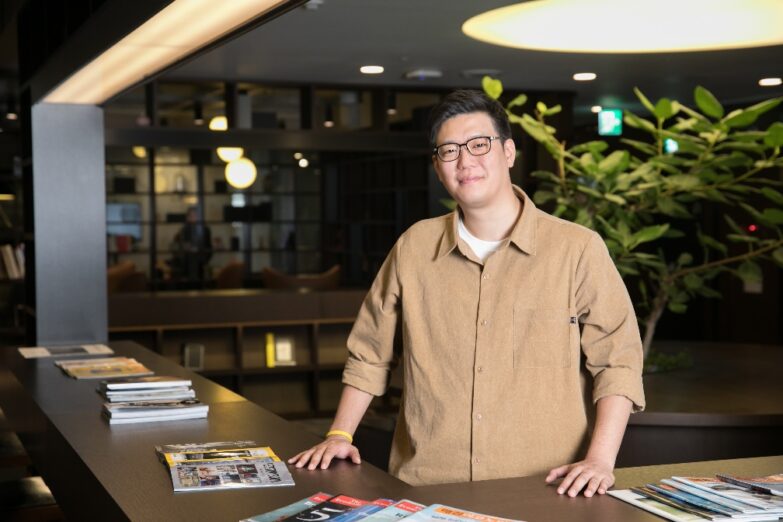
"There may have been differences of opinion about company policy and pace, but those have all been resolved. If the opportunity arises, we can leverage the network we've developed to help each other."
CEO Han Hyo-seung's calm reflections reveal a calm acceptance rather than regret. This passage demonstrates that the journey as an entrepreneur doesn't simply end with an exit.
Having completed his nine-year entrepreneurial journey, he has his own philosophy on entrepreneurship.
"I believe entrepreneurship begins with posing a problem to the world. It's a process of asserting and proving a solution to that problem."
He had two main goals in mind when starting his business. First, he honestly wanted to "make a lot of money." Second, he hoped "the world would become a better place because of me." He believes these two goals are not conflicting, but rather complementary.
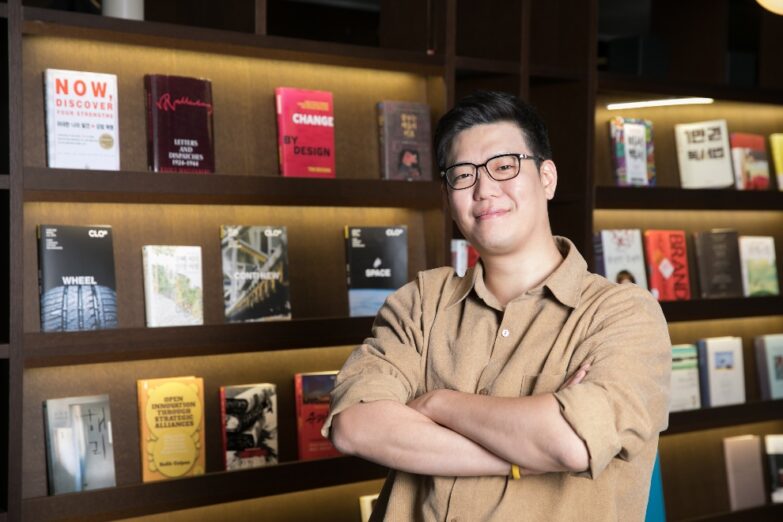
“In the process of pursuing value, the belief that ‘money can be made’ is engraved in my heart.”
But at the same time, he emphasizes the practical aspects of entrepreneurship. "I don't think we can just pursue ideals. Given the responsibilities we face in supporting our families, employees, investors, and government subsidies, shouldn't entrepreneurs be more realistic and idealistic?"
CEO Han Hyo-seung is currently assisting several companies with consulting and preparing for their next steps. Two of the companies he's helped are undergoing M&A, and two others recently secured investment. "I used to think I'd never start a business again. But these days, I'm asking myself, 'If the right opportunity presents itself, wouldn't it be worth it to try again?'"
When the next challenge comes up, I plan to take a different approach.
"Unlike the value-oriented Yellow Bus, we seek to find a blue ocean within the red ocean where money flows." The next move of this entrepreneur, who has found a balance between ideals and reality, value and profitability, is drawing attention.
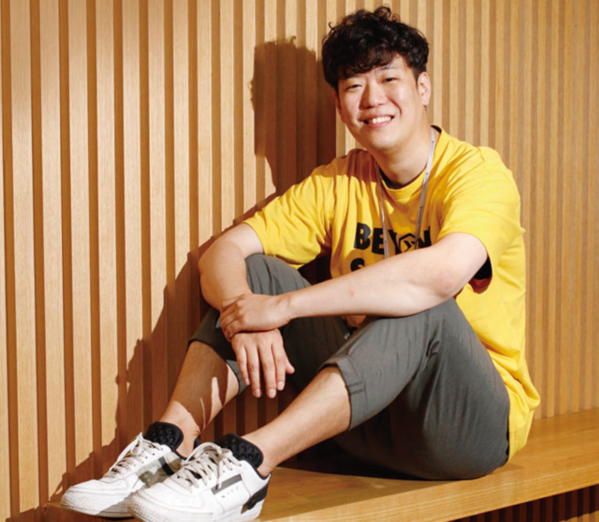
While his journey as the leader of Yellow Bus has ended, entrepreneur Han Hyo-seung's story continues. His journey from a small concern as a father of two daughters to recognition of its value is a living textbook illustrating both the potential and limitations of the Korean startup ecosystem.
You must be logged in to post a comment.