




A portfolio of six digital therapeutics for mental health and stroke treatment, all with a single smartphone.
Just a few years ago, patients with depression had to wait weeks to secure a psychiatric appointment. Speech therapy for stroke patients involved visiting a therapist once or twice a week. Dementia diagnosis required expensive MRIs and complex cognitive testing, and parents of children with ADHD hesitated to seek treatment due to concerns about medication side effects.
But this is what HAII (HAII) has changed. Simply looking at a smartphone camera for 43 seconds can assess mental health, and anxiety disorders can be treated by reading AI-generated scripts in the wearer's own voice. Stroke patients can receive language rehabilitation at home, as if playing a game, and dementia risk can be identified through eye tracking and voice analysis.
Jinwoo Kim, CEO of HAII, a digital therapeutics company, has been a professor of business administration at Yonsei University for 32 years, leading the Human-Computer Interaction (HCI) Lab. Currently, he is developing six digital therapeutics simultaneously, striving toward his goal of becoming a "global digital pharmacist."
A 'digital biomarker' created from 1 million data points: Your smartphone becomes your doctor.
My meeting with CEO Kim Jin-woo began with an experience with the "Mind Garden" app. By looking into my smartphone camera for 43 seconds, my stress level and mental health were measured through heart rate variability (HRV) analysis. This test, which would have required tens of thousands of won in conventional medical equipment, was now performed on a single smartphone.
"A million data points are useless if they're just sitting there. What's special about data is that each piece is carefully labeled by the person who knows it best."
CEO Kim Jin-woo explained the core of digital biomarker technology as follows.
HAII's flagship product, "Enzyrex," is an anxiety disorder treatment that digitalizes the principles of Acceptance and Commitment Therapy (ACT). It utilizes a unique technology called "Self-Talk," which allows users to read an AI-generated treatment script in their own voice, which is then played back to them with a modulated voice. He explained, "In a clinical trial at Gangnam Severance Hospital, it demonstrated two to three times the improvement compared to existing drug treatments."
He then emphasized, "The key factor was making the user experience (UX) simple and convenient." This innovation, which transformed complex cognitive behavioral therapy into a simple, everyday voice activity, led to clinical results.
"Repeach," designed for stroke patients, is even more specialized. It is the world's first commercially available technology that interprets the voice of patients with speech impediment to assess their severity.
"There are currently no digital therapeutics targeting dysarthria in stroke patients. This is because there is no voice AI technology that can accurately measure the speech of dysarthria patients."
This technology, developed in collaboration with Sogang University's Department of Computer Science, is currently undergoing clinical trials at Massachusetts General Hospital (MGH) in the United States. This technology has secured a first-mover advantage in the massive global market of 15 million stroke patients.
From ACT theory to stroke treatment, a green healthcare map with six products.
HAII's portfolio extends beyond mental health to encompass dementia and ADHD. The integrated dementia diagnosis and treatment model, spanning from Alzgard to Samirang, differs significantly from the traditional medical approach.
"It assesses comprehensive cognitive abilities by measuring vision (eye tracking), hearing (speech tasks), and touch (cognitive responses). Another key feature is its accessibility as a smartphone-based digital biomarker."
Multimodal diagnosis, utilizing all three senses simultaneously, goes beyond mere technical achievement and carries significant medical significance. Because dementia is a complex disease that causes damage to multiple brain regions, multi-angle measurements can enhance accuracy.
The ADHD treatment game "Bomi" has undergone an interesting transformation. "Bomi started out as an ADHD treatment, but to benefit more children, we transformed it into a wellness service that helps them develop healthy habits."
It is a choice that focuses on practical assistance rather than regulatory approval.
Regarding the strategy of launching six products simultaneously, CEO Kim Jin-woo explained, “Digital biomarkers allow us to accurately measure the current condition, and because they are highly accessible, we can quickly collect large amounts of data. This allows us to create more effective customized treatments.”
The key is the "digital medicine" model. In this approach, which integrates diagnosis and treatment, he emphasized, "the key to personalized treatment is accurately understanding the patient's condition."
“Accurately and quickly understanding a patient’s condition in real time is the key to personalized treatment.”

"We will become the 'Pfizer' of the global digital therapeutics market"… Innovation created by 30 years of expertise from HCI experts.
CEO Kim Jin-woo maintains his position as a professor at Yonsei University.
"There's about a year and a half left. I believe the field of HCI will have a greater impact when practice and research are conducted together."
He cited the example of current professors at MIT and CMU often running two or more startups, saying, "Research and business must go hand in hand to succeed." He believes his 30 years of HCI research experience provides a unique perspective on the development of digital therapeutics.
Digital Medicine is also actively expanding overseas. "Because the domestic market is too small and closed, we must consider overseas markets."
HAII is pursuing the internationalization of all its products and is seeking global clinical collaborations with institutions like MGH and UMASS in the United States. Furthermore, clinical trials are simultaneously underway in the United States for several products, aiming for FDA approval.
HAII's unique approach to increasing patient compliance is also noteworthy.
“To increase patient compliance, it is essential to provide patients with real-time feedback on their current status through digital biomarkers.”
While incorporating various UX elements, such as gamification and chatbots, he explained that the core element is a "commercialized AI processing pipeline that quickly provides accurate status information." The harmony between technical perfection and user experience is what sets HAII products apart.
CEO Kim Jin-woo's vision for the future is clear. "HAII has a vision of becoming a global digital pharmaceutical company, like Pfizer in the digital therapeutics market. Through this, we aim to achieve HAII's mission of 'One More Healthy Day for Millions.'"
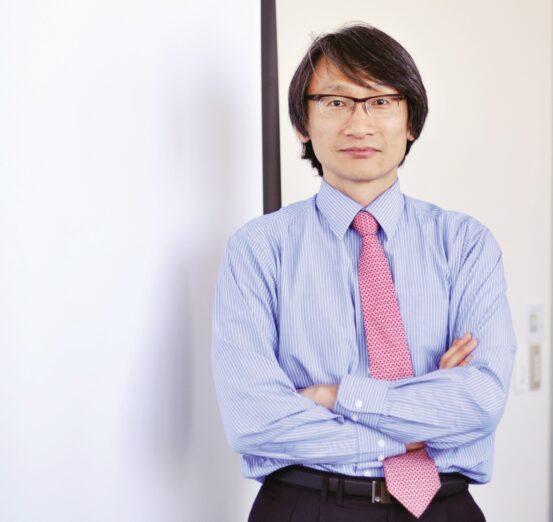
An era where everything from mental health to brain diseases can be diagnosed and treated with a single smartphone. The future of digital healthcare, shaped by CEO Jinwoo Kim, is within reach. His HCI philosophy, honed over 30 years, combined with the medical innovations embodied in six products, will soon bring "a day of better health" to millions of patients worldwide.
*HAII (HAII) is a digital therapeutics company founded in 2016. Currently, it is developing six products: Engyrex (anxiety disorder), Lipichi (stroke), Alzgard·Sammirang (dementia), Pomi (lifestyle habits), Mind Garden·Mind Check (mental health), and Blood Sugar Check (non-invasive blood sugar measurement). It is conducting global clinical trials with institutions such as MGH and UMASS in the U.S. and is aiming for FDA approval.
You must be logged in to post a comment.