



How to allocate limited budgets across multiple channels like Google, Facebook, and Instagram—a constant challenge for marketers.
The Limits of Intuition: Answering with Data
There's a startup that's offering an answer to this age-old dilemma, which relies on experience and intuition, with data and algorithms.
"A marketer's biggest challenge is budget allocation. There's no clear standard for how much to spend on Google and how much on Facebook to achieve optimal results."
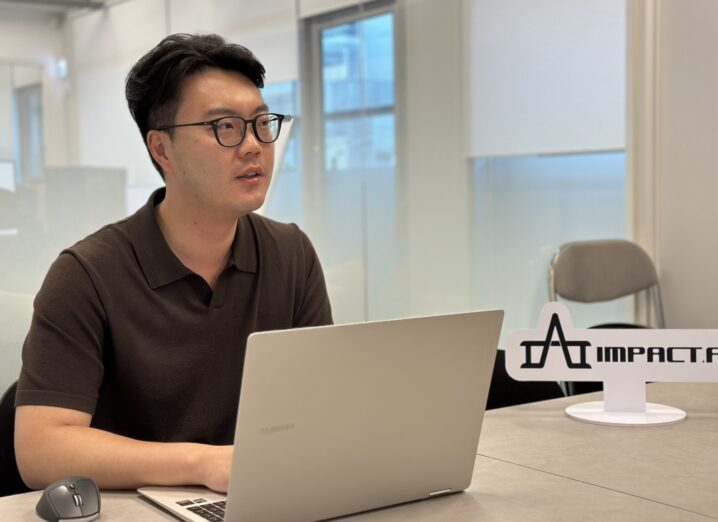
This is a chronic problem in the marketing industry, as identified by CEO Park Sung-hyuk (42). Since founding Recobell, he has worked on the sale of a KOSDAQ-listed company and as an investment analyst at Dunamu & Partners. Appointed an assistant professor at KAIST's School of Management in 2019, Park has re-launched his business, vowing to solve this problem with AI.
The key point is that actual industrial data was obtained through industry-academia cooperation.
"By providing industry-specific challenges and learning data, we were able to simultaneously advance and validate our technology. By applying our lab's technology to industrial data, we created a model that considered realistic requirements."
However, there were practical constraints. "Marketing budget execution had to follow each platform's policies, so there were constraints like minimum budgets for specific media outlets."
CEO Park Sung-hyuk demonstrated the potential of the technology's expansion into the financial sector. He explained, "The budget optimization method is similar to portfolio allocation theory, so it can be applied in the same way."
An AI asset allocation solution, developed in collaboration with a securities firm, demonstrated the importance of methodology by achieving the highest return among all products in the first half of 2025. However, attempts to enter various industries often boil down to selection and focus. He explained, "We had successful proof-of-concept projects in the music industry. However, we decided to focus on the advertising sector, where we can leverage our team's unique characteristics and industry experience. We're currently focusing on determining which videos we should prioritize for YouTube advertising."
The Reality of Entering North America and Competing
Impact AI is currently pursuing expansion into North America by establishing partnerships with companies like UTA and Google. Its target audience includes not only large corporations but also small and medium-sized businesses lacking in-house marketers. "We've partnered with UTA to identify individual marketing channels like influencers, and we're applying the world's most advanced AI model to Google to improve the performance of our multi-media digital marketing."
Cost competitiveness is key to our entry strategy. "Our solution is cheaper than North American SaaS and has a simple UI/UX. Our initial entry strategy is to gain a comparative advantage by making it easy to use and cost-effective."
However, the global marketing solutions market is dominated by companies like HubSpot, Salesforce, and Adobe. Moreover, in the era of generative AI, major platforms like Google and Meta are strengthening their own optimization tools.
CEO Park Sung-hyuk emphasized, "Large platform companies have excellent technology, but complex usability," and added, "Our unique selling point is our UI/UX, which is easy to use even without programming knowledge." The company cited the high initial barrier to entry, as a differentiating factor, as most companies provide their analysis tools in the form of programming libraries.
Regarding the lack of explanatory power, he added, "We aim to accurately answer users' questions through AI-based automatic report generation and chatbot services. For example, we directly select YouTube videos that best match advertisers' needs and provide a summary of the rationale behind our decisions."
CEO Park Sung-hyuk envisions a future where digital marketing is automated across the entire process, from media planning to creative creation and automated reporting. He predicted, "While machines can optimize and adjust existing media and add creatives, humans will be responsible for exploration and value creation in areas where data is scarce, such as discovering new media and advertising products."
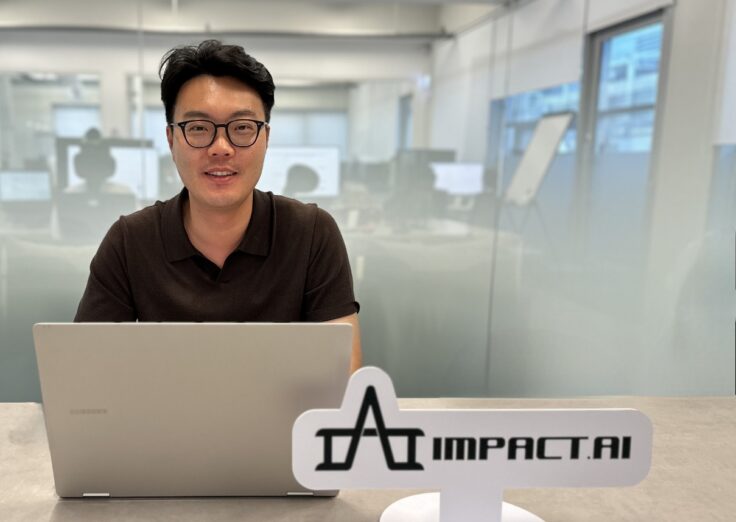
CEO Park Sung-hyuk presented “actual solution-linked advertising handling volume and annual contract retention rate” as future growth indicators.
“Because it will prove that we can create value by continuously using our solutions.”
What he is wary of is the 'growth illusion'.
"I want to avoid expanding the number of big brands that only maintain short-term contracts. Tapping into big brands for reference may seem like growth, but it's meaningless if their technical value isn't recognized in the long term."
This is a realistic and honest approach. In fact, many B2B solution startups struggle because they're so focused on securing initial references that they neglect profitability.

CEO Park Sung-hyuk's confession, "I have the technology, but my biggest concern is which industry to focus on," illustrates a common dilemma faced by many technology entrepreneurs. Just because a proof-of-concept (PoC) is successful in multiple industries doesn't mean commercialization is possible in all areas.
Impact AI, currently with 13 employees in Korea and two in the US, is one example of a KAIST faculty-led startup. Connecting academic achievements to commercial success is a distinct challenge. In the competitive global market, technological superiority alone is not enough. Creating sustainable customer value and adaptability to the market are the true test for Impact AI.
You must be logged in to post a comment.