



"Even when I searched in Korean for where to get visa extension documents, I couldn't figure it out. I ended up asking a friend, but even he didn't know for sure," confessed Nguyen (pseudonym), a Vietnamese student studying at a university in Gwangjin-gu, Seoul. Two years have passed since arriving in Korea, but visa, housing, and employment information remain a black box.
But now, things are different. Ask a question in Vietnamese on your smartphone, and AI will guide you through the "next step" with a personalized answer. This is the app he started using, Costat.
As of 2024, the number of international students in Korea reached a record high of 209,000. The government has outlined a blueprint to increase this number to 300,000 by 2028. However, the post-graduation retention rate remains poor, with most students returning to their home countries. Conversely, manufacturing, shipbuilding, and agriculture industries are suffering from chronic labor shortages. Many companies struggle to operate without E-9 visa foreign workers.
“Foreigners want to stay in Korea but get lost, and Korea needs foreigners but lacks a connection structure.”
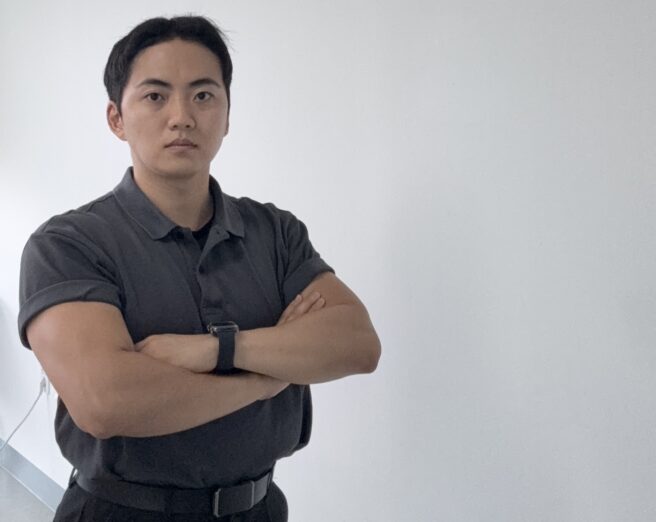
This "settlement paradox," pointed out by Ko-START CEO Park Jeong-geun (31), was a stark reality he witnessed firsthand while operating a local dormitory. The solution he presented was "Korea's first foreign settlement support super app."
CEO Park Jeong-geun stated bluntly, "This isn't a simple app service." He described it as "an ecosystem that designs the entire foreigner's journey with data, predicts it with AI, and executes it through partnerships." His gaze held the conviction that only someone who "saw a problem" could possess.
'Structural gaps' discovered in the dormitory
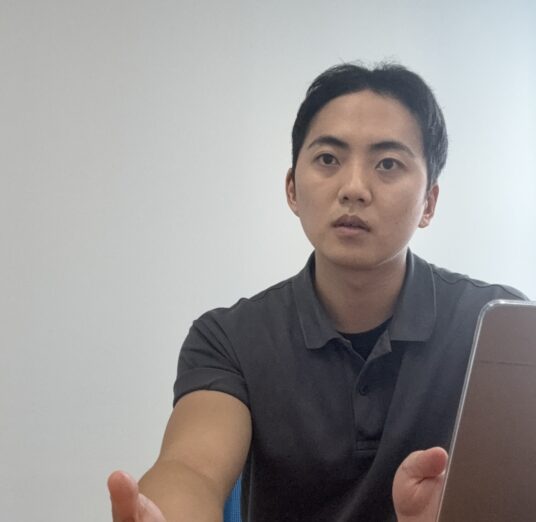
CEO Park Jeong-geun's starting point wasn't glamorous. Rather, it began in an old building in a small provincial town.
"I ran dormitories for long-term foreign residents in Jeju and Jeonju. I saw two realities at once. On one hand, there were local businesses and local governments struggling with a labor shortage. On the other, there were foreigners who wanted to work in Korea but were giving up due to language barriers and a lack of information."
He intuitively sensed that this problem wasn't a simple "mismatch," but a "structural gap." The more he delved into market research, the more his conviction grew. The number of international students was at an all-time high, yet retention rates after graduation were at a low. The number of E-9 workers was increasing every year, but turnover and attrition rates were also rising. Access to information was zero, there was a lack of reliable guidance, and the support system was fragmented. "Costat's mission is to bridge this gap."
CEO Park Jeong-geun's background was sufficient to support this mission. As COO and PO at Buencamino, he oversaw the Korea Financial Telecommunications and Clearings Institute's open banking approval and partnerships with financial institutions such as Shinhan Investment & Securities and Hana Bank. He then ran the "Bucket" project in Jeju and Jeonju, operating O4O camps for foreigners on working holidays and long-term stays, and received the Korea Tourism Organization President's Award. He is a rare entrepreneur with both experience in "partnership design" for financial platforms and "settlement support" in the field.
"What I learned from the financial platform was that 'data equals trust.' What I learned in the field was that 'foreigners need a path, not information.' I thought combining these two would create something."
Settlement scenarios designed by 'AI coaches'
Costat's competitiveness is on a different level than that of general information-providing apps. CEO Park Jeong-geun defines it as "an AI coach that designs settlement paths for foreigners."
Currently, based on the web MVP, the app boasts approximately 4,800 monthly active users (MAU) and 300-400 daily active users (DAU). CEO Park Jeong-geun focuses on user behavior patterns rather than numbers. "The most positive responses were from our multilingual lifestyle Q&A chatbot and visa notification service. We received a flood of feedback saying, 'We can now handle administrative procedures on our own.' Our weekly retention rate is 38%, and data shows that users stay much longer when receiving personalized recommendations than when simply checking information."
The technology stack began as a RAG-based platform, but is now evolving by combining a self-built multilingual knowledge graph with a recommendation pipeline. Beyond simple Q&A, the core feature is the introduction of a machine learning-based "settlement success rate prediction model."
For example, we provide personal scoring, such as, "A D-2 student has a 78% chance of transitioning to an E-7 visa after graduation via a D-10 visa." This isn't just a simple statistic; it's an AI prediction that combines visa status, region of residence, academic background, and desired career path. The more data we accumulate, the more accurate it becomes."
In the long term, this data can be expanded into solutions for managing international students at universities, optimizing the matching of foreign talent for companies, and providing policy insights for local governments to improve settlement rates. CEO Park Jeong-geun emphasized, "Our true competitive edge lies in the combination of data and networks, which become stronger over time."
The revenue model is also multi-layered. For B2C, the strategy involves small commissions for visa agency services, housing matching, and lifestyle services. For B2B, performance-based commissions are used to increase university student recruitment and settlement rates, and to match foreign employees with companies. For B2G, the strategy involves securing funds for local government settlement support centers and the development of integrated foreigner apps.
However, CEO Park Jeong-geun draws the line, saying, "Costart can't do everything alone." "We're an AI-based settlement data hub. Visas, finance, housing, translation, and healthcare require collaboration with specialized partners. We've already created real-world examples of transformation through collaborations with universities, local governments, and housing services, and we need more partnerships going forward."
The "transition" he speaks of goes beyond simple information transfer; it refers to concrete outcomes such as successful visa extensions, job matching, and the signing of housing contracts.
His words, "Our goal is to become an AI hub that connects the entire foreign settlement ecosystem," were filled with pride as a platform operator.
The foreign worker and student market is often viewed as a "support for the vulnerable" or a "government project." However, CEO Park Jeong-geun sees it differently. "The financial sector is expanding its account, remittance, and loan products specifically for foreigners, while the platform, communications, and distribution industries are also strengthening multilingual services and membership programs specifically for foreigners. This isn't welfare; it's a business opportunity."
Indeed, foreign workers are already a key driver of Korea's expansion of the working-age population and revitalization of the local economy. Costat differentiates itself in this trend by offering not just simple living support, but also data-driven settlement management and AI-powered path planning.
When asked about the challenges facing him over the next two to three years, CEO Park Jeong-geun cited two.
Internally, we're working to enhance our AI platform. Beyond a simple Q&A chatbot, our goal is to develop a model that predicts settlement success rates and a personalized matching pipeline. Externally, the uncertainty surrounding visa regulations and policy changes poses a risk. This is something no single company can address on its own. Therefore, we're actively expanding partnerships with universities, local governments, the central government, and financial institutions.
Global expansion is also on the horizon. "We will not just support foreigners coming to Korea, but also develop it into a super app that helps foreigners move and settle globally. We will support global career paths that lead from Vietnam to Korea and then back to Japan."
'New Start in Korea.'
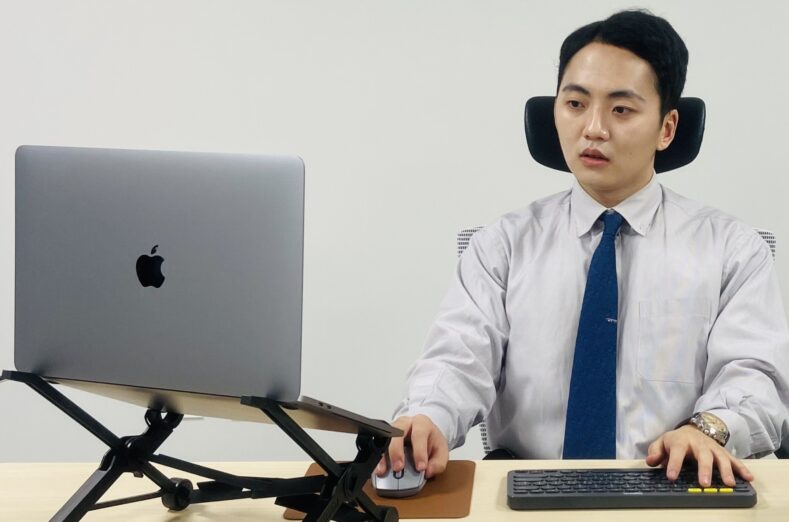
This is Costat's mission statement. For the 200,000 foreigners in Korea, Korea remains an unfamiliar land. However, the startup's AI navigation system guides them step by step, ensuring they don't get lost and can settle down in this land. And the data from this journey is accumulating as a solution to the demographic challenges facing our society.
You must be logged in to post a comment.