



Our smartphones are filled with countless links: group chats, forgotten restaurants, recipes in notepads, shopping pages saved on browsers. However, finding those links when needed is often a challenge. While information abounds, trustworthy evidence is lacking. Users often end up paying unnecessary fees by following ads or sensational reviews.
Linkroot is a service that aims to solve this dilemma. With its automatic classification, summarization, and reliability verification features, it transforms link storage beyond simple saving into a continuous flow of exploration, analysis, and selection. This approach reduces advertising-driven confidence and increases data-driven confidence, empowering users to make faster, safer decisions.
The reason for starting a business and technological differentiation
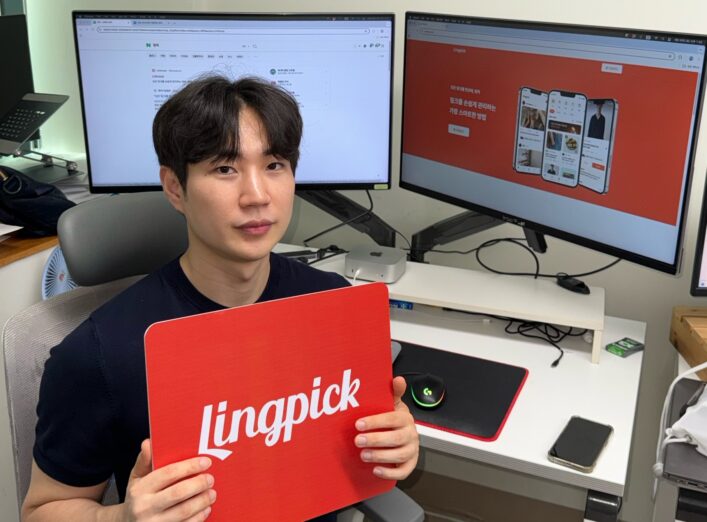
Lee Hyun-ho, CEO of Linkroot, has nine years of experience as a full-stack developer in various fields. He has extensive experience developing government web services, IoT projects, and blockchain smart contracts. As CTO of a top MCN, he further developed the Google CMS system and creator advertising and monetization systems. He also analyzed creator data to assess growth potential and promoted STO projects.
His decision to start a business stemmed from personal experience. CEO Lee Hyun-ho recalled, "I used to receive links to good restaurants, but couldn't find them when I needed them. My parents' generation was repeatedly fooled by advertising links and ended up buying expensive products. This personal inconvenience, coupled with family hardship, led me to decide to create a 'trustworthy curation platform.'"
Linkroot's distinguishing features are twofold. First, its automatic categorization and summary feature organizes saved links into intuitive categories like recipes, travel, and fashion. For recipes, key information like the process, ingredients, and calories are available on the card, while for travel destinations, key information like maps and business hours are available in advance.
The second step is reliability verification. In the health, beauty, and food sectors, where falsehoods and exaggerations are rampant, efficacy, numerical values, and comparative expressions are extracted sentence by sentence. These are then compared against databases from the Ministry of Food and Drug Safety, academic data, and patents. The results are displayed with a "Caution/Reference/Verified" badge and a brief explanation.
CEO Lee Hyun-ho said, “We don’t just show answers generated by generative AI, but only show the relevant context,” and explained, “The key is to help users who are relying on exaggerated advertisements to filter out the information and make choices based on trust.”
Global scene and future vision
Linkroot identified a common problem across messengers—KakaoTalk in Korea, Line in Japan, and WhatsApp in North America—where links were saved but not retrieved, despite the different formats. A Japanese VC requested, "Please convert accumulated links on Line into purchases," while a Canadian partner requested, "Let's localize WhatsApp links, including verification and categorization." Linkroot responded. The company prioritized messenger UX and applied a design that considered local regulations and context. As a result, Linkroot ranked 20th on the App Store Social ranking and 9th on Google Play Social.
The team consists of eight people, all of whom are senior practitioners. They follow a "one-week experimentation cycle" based on rapid hypothesis testing and retrospectives, and even failures are turned into assets. Decisions are based on data indicators, not intuition, and successful outcomes are rewarded with certainty. He defines this as a "culture of light execution, heavy responsibility."

As the service expanded, its social impact also grew. Middle-aged and older people say, "In the past, I just watched ads and made purchases, but now I filter them even further." Influencers and sellers reported improved work efficiency thanks to AI analytics cards, which allow them to easily organize sponsorship information and alternative recommendations. As the accuracy of restaurant and local store information improves, more visits and sales are also occurring.
The future strategy is "Link = Content, Link = Commerce." Linkroot structures users' saved, viewed, and shared data to enhance personalized recommendations and builds a social graph based on curator subscriptions and follows. Based on verified links, it provides price, inventory, and sales information, leading to purchases and visits. Furthermore, the company adheres to the principle of only displaying ads that meet its trustworthiness standards.
"Linkroot's sustainability stems from trust and repeatable execution. The experience of saving, browsing, comparing, and deciding all on one screen resonates across countries and languages. We aim to expand globally while reflecting local regulations and contextual requirements."
He's getting married soon. For him, it's a time of personal growth and family, while for his business, it's a time of global expansion.
CEO Lee Hyeon-ho smiled and said, “Both home and business must maintain trust and principles to last long.”

Beyond being a simple "link organizing app," Linkroot is positioning itself as a platform that brings order to scattered information and enables trust-based choices. It stands alongside users by lowering advertising-driven confidence and increasing data-driven confidence. As CEO Lee Hyun-ho emphasized, there's no right answer, but it's about staying close to users' problems. That's the path Linkroot has chosen.
You must be logged in to post a comment.