



The average cost of a funeral in Korea exceeds 15 million won. Burial sites are crowded and uniform. Remembrance is limited to a visit to the columbarium once or twice a year. As of 2025, 350,000 people die annually. However, by 2050, this number is expected to exceed one million. Land is scarce, and family structures are disintegrating. Faced with the fear of a "multi-death society" for which no one has a solution, one designer has turned to feng shui and generative AI. He plans to create an "afterlife" by collecting the digital footprints of the deceased. This involves custom burial boxes that 3D-model auspicious sites, a locally stored database of the deceased, and AI-enabled conversations with the deceased. His idea of designing death may sound unfamiliar, but listening to his story, it dawns on me that this may be the most realistic solution. Funerals are no longer the domain of convention; they have become an industry in desperate need of innovation.
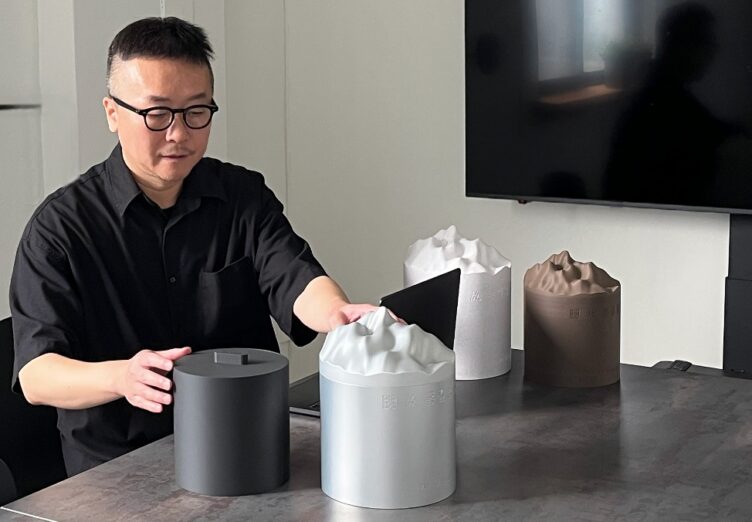
In his mid-50s, he left Samsung and chose death.
Housed in a building in the startup-heavy Yeoksam-dong district of Seoul, the office of Noevery Ordinary, operator of AFTERLIFE, was surprisingly compact. Founded in July 2025, the startup boasts just two employees, including the CEO. However, CEO Yoon Sang-won (55) has a considerable background. He previously worked as a senior designer at Samsung Electronics' Design Center and co-founded the PC hardware manufacturing startup Point2Lab. He currently holds an adjunct professorship at Samsung Design Education Institute and Kyung Hee University. Why would someone with such an impressive resume choose "Funeral"?
“Having lived in the 1970s, I realize that obituaries are no longer someone else’s story.”
CEO Yoon Sang-won began. Over the past few years, he'd received a string of deaths from acquaintances, bringing home the reality of funeral costs. He was shocked to see the average cost exceeding 15 million won, and at the same time, he realized this market was a massive industry, worth over 10 trillion won annually. Crucially, he saw statistics predicting that after 2050, as baby boomers and Generation Xers begin to pass away in large numbers, the annual death toll will exceed one million.
"As of 2025, the annual death toll stands at 350,000. But in 25 years, that number will triple. Is Korean society prepared for this? Just as the 2001 revision of the Funeral Services Act shifted from burial to cremation, this is a time for another paradigm shift."
From a designer's perspective, the funeral market was a blind spot for innovation. Despite being a massive market with potential for the entire nation, products and services had remained stagnant for decades. Columbariums were uniform, columbariums were so densely packed that visitors were forced to visit the facilities of unwanted strangers, and memorial services were limited to physical visits. Having championed design innovation for over 20 years, this market must have seemed like a treasure trove.
"In business, design isn't about decoration; it's about management strategy. Product innovation is achieved through design innovation. But that's not the case in the funeral industry."
CEO Yoon Sang-won decided to apply the "design-led innovation" philosophy he championed in his book "Design X Innovation" directly to the funeral industry. His ambition wasn't simply to create beautiful urns; it was to redesign the entire funeral service.
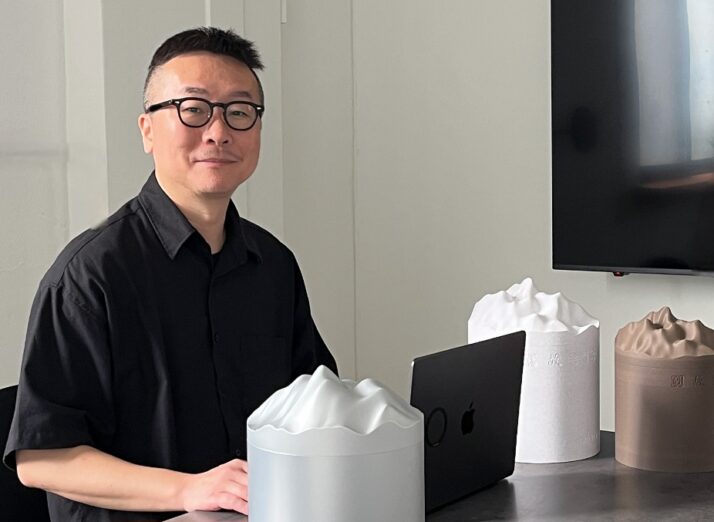
3D printing a geomantic site and storing the deceased in the cloud
Afterlife's first point of differentiation is its "reinterpretation of tradition." CEO Yoon Sang-won focused on the symbolic significance of feng shui in Korean funeral culture. While the "grave site" was central in the past era of burial, with cremation becoming more common, the burial box has replaced it. So, what if we incorporated the concept of auspicious sites into the burial box?
"We used generative AI to create a 3D map of auspicious sites and incorporated it into the design of the burial box. We can also scan the terrain of a specific site a customer desires and create a customized version. For example, we could create a burial box based on the exact terrain next to my grandfather's grave."
The combination of tradition and technology was refreshing. While the existing burial box market is dominated by uniform square boxes, Afterlife seeks to differentiate itself by incorporating eco-friendly materials and personalized terrain designs. This strategy targets the premium market.
The second differentiation is the "digital memorial service." CEO Yoon Sang-won emphasized this point.
"In the past, physical death was the end. But modern people leave behind enormous digital footprints. Social media, photos, videos, documents… This data remains in the digital world forever, even after death. I saw this as a new way to interpret the religious concept of the 'afterlife.'"
Afterlife is developing an app that will store a digital database of the deceased locally, allowing their families to commemorate them at any time. It also includes features that link the deceased's financial and personal information with their families. Going a step further, it will also offer an optional service that allows users to "converse" with the deceased using AI technology.
"We train AI to recreate the deceased's voice, speech, photos, and videos. If the family wishes, they can communicate with the deceased. While this may raise ethical questions, I believe it should be considered a personal choice, much like euthanasia."
When asked if this was a commercial approach, CEO Yoon Sang-won was firm. According to a Ministry of Health and Welfare survey, the most preferred funeral method for those over 80 is "natural burial." This suggests a shift in the concept of dignity. While Korea separates the living and the dead, Japan and the West typically have urban cemeteries and "taekmyo" (home-based burial) at home. He believes that culture changes, and ethical standards evolve along with it.
The third is expansion into the space business. While initially focusing on burial products and app services, the long-term plan is to create a new paradigm of memorial parks. Unlike existing burial halls with densely packed ossuaries, these will be spaces offering privacy in natural surroundings.
"Do you know how uncomfortable it is to see the unwanted facilities of others in a crowded bongandang? We will create a space that is friendly to nature and personalized."
Of course, there are many obstacles. The biggest one is the "perception barrier." Every time CEO Yoon Sang-won explained his idea, he received a similar response: "It's a good idea, but I'm not sure about my parents…" While the MZ generation was receptive, the middle-aged and older generations, who hold the actual purchasing power, were hesitant. This stems from deep-rooted traditional funeral culture.
"Ultimately, we need to change perceptions through continuous promotion. And to break through the closed market structure monopolized by large mutual aid companies, differentiated marketing is essential."
CEO Yoon Sang-won is seeking a breakthrough in the Japanese market. Japan is a massive market, with a 100% cremation rate and an estimated 1.61 million deaths annually as of 2024. With traditional funeral services prevalent, demand for burial products is diverse and digital services are highly accepted. Afterlife is preparing to enter the Japanese market with customized designs, eco-friendly materials, and AI-powered digital burial services.
At the end of the interview, I asked about his funeral plans. CEO Yoon Sang-won said he was installing an Afterlife family grave next to his grandfather's grave and preparing a digital enshrinement. This suggests he plans to use his own services.
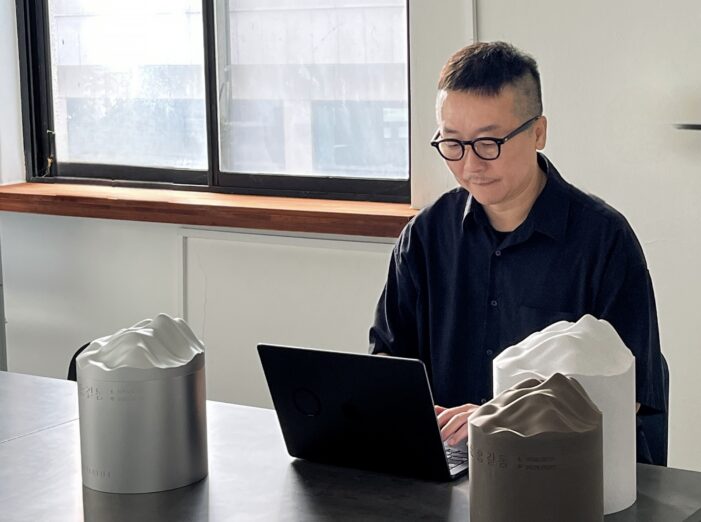
“I hope that within 10 years, Afterlife will become a service representing a new funeral paradigm in Korea.”
Designing death is ultimately about designing life. It's about choosing how you want to be remembered and how you want to be remembered. The future of funerals envisioned by CEO Yoon Sang-won feels unfamiliar, yet inevitably coming. In an era where a million people die each year, are we prepared? To that question, Afterlife offers a single answer.
You must be logged in to post a comment.