



71 investments made over 4 years with KRW 12 billion in operating assets, including 1 IPO and 4 M&As.
Utilizing the KAIST alumni network… Providing education, mentoring, and networking programs necessary for startup growth.
"A Mother's Heart for Startups"… CEO Jeon Yong-deok's Acceleration Secret

"I thought we needed a private-sector-led investment ecosystem like Silicon Valley."
This is the concern that Jeon Yong-deok, CEO of KOC Partners, had before starting his business.
Many accelerators rely heavily on government support for their business structure. Some operate solely on placement programs, without any investment, while repeating the same old formula to achieve performance metrics. Reviewers are consumed by administrative tasks, preventing them from focusing on the truly important aspects of review and mentoring. Some accelerators even claim personnel authority over startups without directly investing.
To address these issues, the former CEO developed a new model based on private funding. This virtuous cycle fosters startup growth through direct investment and acceleration, with the profits then reinvested back into the startup ecosystem.
KOC Partners does not operate a placement program. Instead, through regular monthly investor relations, it focuses its investments on early-stage startups in 10 highly disruptive sectors, including big data, AI, bio and health, and system semiconductors. Over the past four years, it has formed 14 investment funds and invested in 71 companies with a total of KRW 12 billion in assets under management (AUM). Significant results have been achieved in just four years. Through a full-cycle support system, including management strategy consulting, follow-up investment, M&A, and IPO support, KOC Partners has successfully completed four M&As and one IPO. Within three years of its establishment, it was selected as a TIPS operator, demonstrating its exceptional performance, with 62% of its investee companies being selected for TIPS.
What's the secret to achieving these results without a placement program? The answer lies in a private-sector-led startup ecosystem.
Building a private-sector startup ecosystem centered on KAIST alumni.
Former CEO Jeon founded a content company and successfully exited in 2016. After that exit, he felt he could share his experience with younger startups. However, the specifics were vague. However, one thing was certain: he didn't want to simply invest.
While I was pondering these thoughts, I happened to attend the KAIST One Club (KOC), a KAIST alumni group focused on entrepreneurship. At the first meeting in 2019, around 100 alumni gathered, and a consensus emerged regarding the need to create a private-sector-led investment ecosystem. With the goal of creating a voluntary entrepreneurial ecosystem led by KAIST alumni, KOC Partners was founded in May 2020, led by CEO Jeon Yong-deok.
Currently, KOC has approximately 1,300 members, including KAIST alumni entrepreneurs, investors, and advisors. The investor group alone boasts approximately 160 members, comprised of experts from various fields, including accelerators, venture capitalists, securities firms, and private equity firms. KOC Partners leverages this network to discover, invest in, and accelerate startups.
KOC Partners' most distinctive feature is its LP structure. Most of its 250 or so LPs are KAIST alumni, and the startups it invests in are also primarily KAIST alumni. This structure allows senior alumni to participate as LPs and invest in younger entrepreneurs. As the startup grows or the fund liquidates, the LPs receive income tax deductions under the Special Tax Treatment and Limitation Act, and the profits are then used to invest in more startups, creating a virtuous cycle.
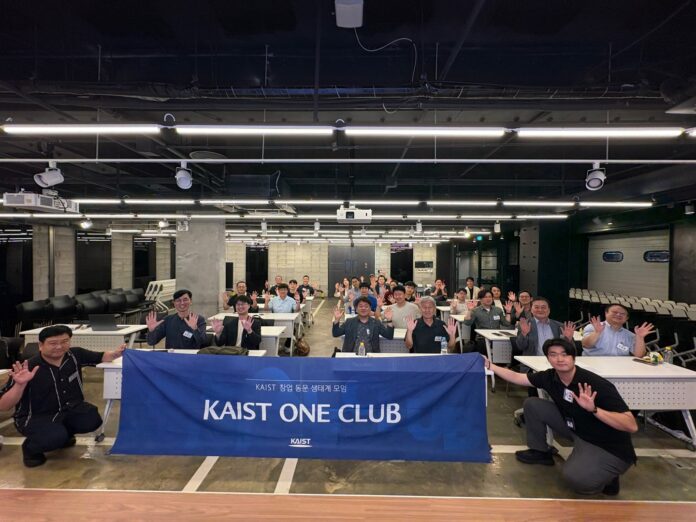
Discover and invest in startups through monthly IR
KOC Partners holds regular monthly investor relations meetings. Through its KAIST alumni network and partner organizations, it identifies startups with high growth potential and directly invests in companies with high investment value. It also supports startups' stable growth by recommending tips and attracting follow-up investments.
Since most KAIST-based startups are technology-based, a deep understanding of technology is essential during investment screening. To this end, the former CEO and the evaluation team actively participate in monthly KOC seminars, learning from insights from startups, policy experts, and technology experts. The former CEO's completion of a doctoral program in AI computing is also part of his efforts to properly evaluate technology-based startups.
His background is interesting: he majored in design in college, earned a master's degree from KAIST Graduate School of Business, and completed a doctorate in AI computing at Dongguk University. I asked the former CEO if this would be helpful for investment and acceleration.
"I majored in art, business, and engineering. I think it's helped me develop a multifaceted perspective when evaluating investments."
Former CEO Jeon's design background allows him to assess user experience and product quality, his business management background allows him to assess business models and financial strategies, and his engineering background allows him to assess the feasibility and differentiation of technologies. This interdisciplinary perspective is a strength in acceleration, as it allows him to solve complex startup challenges and collaborate effectively with founding teams from diverse backgrounds.
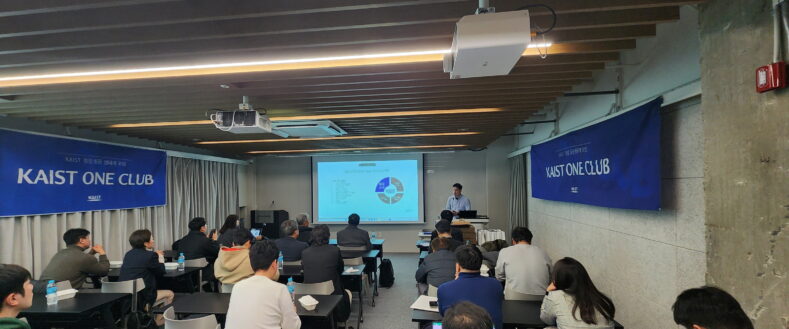
Incubation program for startup growth
"It wasn't until much later in my career that I learned about value-added tax. Now, I tell startup CEOs never to do that. Focusing on your financial story will help your company achieve much higher value."
This experience led to KOC Partners' unique "K-IPO School" training program. "K-IPO School" is a training program for venture companies aimed at improving their survival capabilities and developing mid- to long-term financial plans. The program offers 48 hours of intensive training over 16 weeks, held weekly. The curriculum consists of eight weeks of accounting and finance and eight weeks of IPO practice, covering practical knowledge and strategies ranging from financial accounting, valuation, stock options, and tax strategies to KOSDAQ listings, the IPO process, exits through M&A, and attracting foreign investment. Experts from listing-related organizations, such as the stock exchange, securities firms, and accounting firms, lecture, combining theory and practical case studies tailored to startups. It also provides networking opportunities with a vibrant alumni network, industry professionals, and investors. To date, the program has run five sessions, producing over 100 graduates.
The KAIST Startup Awards is a startup competition jointly run by the Korea Occupational Organization (KOC) and the KAIST Alumni Association. Launched in 2017, the awards have continued steadily, with the ninth edition due in 2025. The awards identify promising startup ideas and provide substantial investment and support. Selected companies receive prize money, as well as various support programs necessary for startup growth, including participation in CES, investment attraction, TIPS recommendations and support, and K-IPO School scholarships.
In addition, we are contributing to the revitalization of the startup ecosystem and the spread of a culture of cooperation through various programs such as the 'KOC-CON Accelerating' program, the IBK CoP program, industry-specific forums, and the 'Startup & Art Festival'.
Link Solution's IPO Success Assistant
In June 2025, just 10 years after its founding, a company successfully listed on the KOSDAQ as a technology growth company. This is Link Solution (CEO Choi Geun-sik), a 3D printer manufacturing and service company.
KOC Partners invested in Link Solution early in its founding as a co-GP with Venture Square and also served as the TIPS operator. As an early investor, KOC Partners supported the company's growth by closely collaborating with the company on everything from HR to technology development and business model development. They also provided follow-up investment support during the company's R&D projects related to materials, components, and equipment investment, and supported the company's IPO preparations, supporting the company's exchange response efforts and accompanying the company throughout the entire process.
Linksolution, which successfully went public, has developed and commercialized SLA, FDM, and MBJ 3D printers, providing 3D printing services to diverse industries, including mobility, aerospace, defense, consumer goods/medical, and robotics/semiconductors. With the completion of its Daejeon factory in 2026, Linksolution is expected to fully launch its foundry-style 3D printing service business, leading the service market.
KOC Partners is preparing for an IPO of a company next year. It has completed four M&As to date and is currently pursuing several more.
“The accelerator is a mother.”
What do startups need most? Funding is essential for growth. Many investors focus on investing in companies with a high probability of exit and then recovering their investments. However, startups require much more than just funding.
"When I look at startup CEOs, they're like my sons. I feel compassion for them."
When asked about the role of an accelerator, CEO Jeon likened it to that of a mother. "Before a child falls, you scold them and teach them a lot, but after they fall, you have to help them up quickly. Most mothers scold their children when they fall and bleed, saying, 'Why did you fall?' That's not how it should be done."
The former CEO then compared the corporation to a baby. "A corporation is a person created by the law, so you should think of it as giving birth to a child. Right now, that baby is drinking milk and wearing diapers, but in two years, it'll be out of diapers, and at four, it'll go to kindergarten, and at seven, it'll be in elementary school. It can't continue to lie down, drink formula, and wear diapers even after four or five years."
So, he's firm on companies that aren't growing. He criticizes companies that are satisfied with their current status after achieving a certain level of success, calling them "arrogant."
"After graduating from college, you need to find a job, but that's the same as continuing to attend college. Companies need to grow."
His stance on M&A is also clear. "I always encourage them to try it. Especially for young entrepreneurs, because they have another chance to start a business. I tell them, 'Go for it, big time.'"
KOC, with its 1,300 members, brings together entrepreneurs, investors, professors, and experts. It's a community that helps those who stumble, provides direction when lost, and celebrates growth together. As success stories accumulate, those successes attract others.
KOC Partners, with a mother's heart, is transforming the investment ecosystem into a "village." Their experiment goes beyond the success of a single accelerator and provides a valuable model for the entire Korean startup ecosystem. Only when more such self-sustaining ecosystems emerge can the Korean startup ecosystem truly mature.
You must be logged in to post a comment.