



Glec , a startup developing an AI-based carbon emissions measurement solution, has embarked on a full-scale expansion targeting the domestic and international logistics markets just three years after its founding. Specifically, Glec is demonstrating both technological prowess and marketability by building a complex business model encompassing hardware (DTG), API, and SaaS, centered around a carbon measurement solution based on the globally adopted ISO 14083 international standard for transport carbon emissions.
Since its founding in 2020, GLECK has developed its own AI-based digital tachograph (DTG) to address the gap in carbon emissions measurement in the transportation sector. While existing tachographs simply record location, GLECK's device uses advanced sensors to analyze factors such as driving distance, fuel consumption, and vehicle speed, enabling real-time carbon emissions estimation. To overcome the computing limitations of existing devices, it features a smartphone-level chipset and supports AI-based feature upgrades via over-the-air (OTA) updates.
The company boasts that it was the first in Korea to independently research and develop an ISO 14083-based emission factor, enabling quantitative carbon calculations aligned with international standards. This development allows the company to move beyond simple equipment delivery to become a platform company that supports logistics companies in developing data-driven strategies to address their environmental, social, and governance (ESG) concerns.
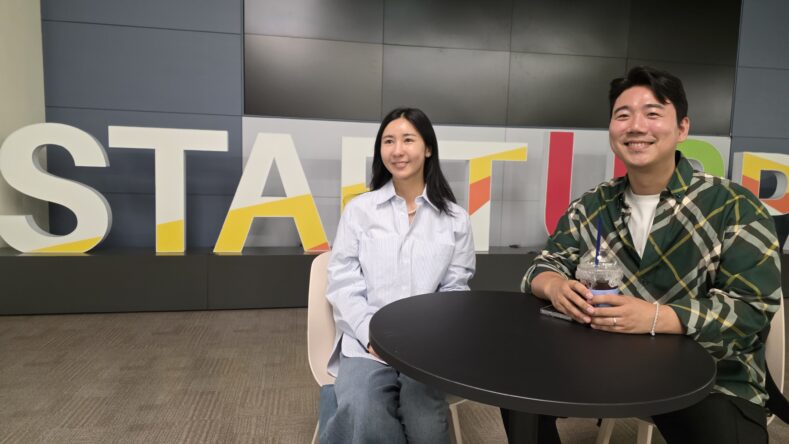
Kang Deok-ho, CEO of GLECK, explained, "Securing international standards is more important than technological prowess. GLECK is pursuing the Korean branch of the European international organization SFC (Smart Freight Centre) to ultimately seize the initiative in certification." Indeed, GLECK is currently in discussions with the SFC to establish "SFC Korea" in Korea, which is likely to become the sole source for carbon emissions verification in the domestic transportation sector.
During this process, Gleck faces concerns about "cherry-picking" by government agencies and large corporations. With the public nature of ISO standards clashing with industrial interests, strategic partnerships are needed to protect technological independence and operational rights. Co-CEO Kim Eun-woo emphasized, "While it's rare for a startup to lead a branch of an international organization, we need to clearly establish our position as a technological leader and practical expert." 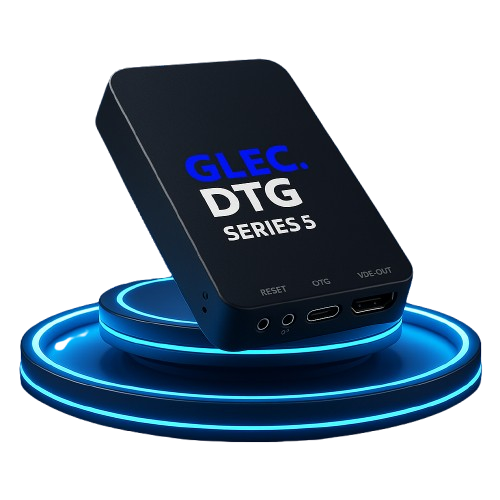
In its early days, Glec leveraged its accumulated technological expertise in diverse fields, including AI, blockchain, and robotics, to advance its DTG hardware. Notably, with the revision of the Truck Traffic Safety Act mandating DTG installation, the company entered the market targeting approximately 70% of nationwide replacement demand.
The company expects annual hardware sales of tens of thousands of units, based on high-performance DTGs priced at around 800,000 won.
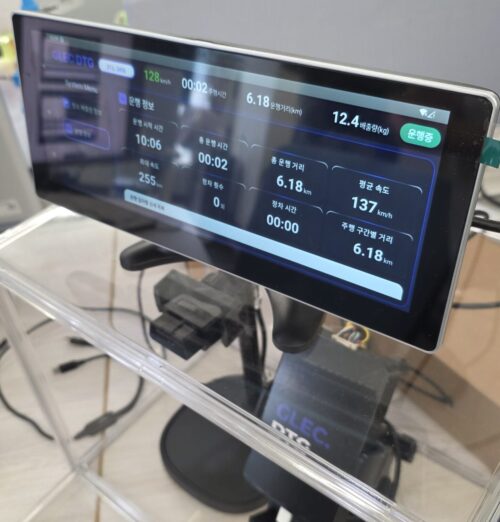
We are also pursuing API provision through collaboration with major logistics companies and are developing a three-tier revenue model through SaaS software provision to sub-agents. Discussions are underway with major domestic logistics companies, and a large IR affiliate has recently expressed interest.
However, regulatory ambiguity and the potential for public intervention remain threats. "Measurement is not legally mandated, and fines are low, so market response is slow," explains CEO Kang. Therefore, Gleck plans to first establish an official certification system through SFC Korea, which will then facilitate integration with carbon taxation and carbon emissions trading.
Gleck's vision is clear: by establishing a "standard framework" for carbon measurement in the transportation sector, he aims to create a barrier to entry for latecomers and simultaneously secure sustainability as a technology provider. His "infrastructure-centric" strategy, which links a product line spanning AI-based DTG, SaaS, and APIs, with a SFC-certified structure, is effective because even large companies will find it difficult to replicate.
CEO Kang Deok-ho, a college student entrepreneur, is also a serial entrepreneur.
He began his entrepreneurial journey in 2013 as a college student, after experiencing the social inconveniences faced by a friend who used an electric wheelchair. He founded the social enterprise ENABL, developing a "wheelchair module that climbs over obstacles" to help people with disabilities navigate obstacles. He later ran the prototype development company "Imagination Factory," accumulating experience in hundreds of robot and device development projects. He continued his career with field-focused, technology-based entrepreneurship, including competing in the Swiss Cyberathlon and developing a shooting robot for Hyundai Motor Company. He then discovered the structural problem of carbon reduction in the transportation sector and founded GLECK.
Glen's experiment, a rare challenge for a startup to the massive structure of international standards and certifications, is noteworthy for its attempt to overcome the structural challenges of the ESG industry head-on. Armed with market-leading technology and international standards, these companies, having entered a "regulation-driven industry," will now focus on the keyword "standards," not regulations.
You must be logged in to post a comment.