



“I’m working overtime again to write the ESG report.”
Just a few years ago, ESG was a regulatory imperative, something companies had to accept. Environmental data was scattered across Excel files, and companies struggled to find the data during audits. Global partnerships were frequently terminated due to ESG noncompliance. Companies viewed ESG as nothing more than a checklist for risk avoidance.
i-ESG has transformed this structure. By building an integrated engine that automatically collects, aligns, and reports ESG data using AI and big data, it has achieved processing speeds six times faster than traditional methods, 95% cost savings, and 80% administrative reduction. It has evolved from a simple report-writing tool to a platform that provides insights for improving management. Having participated in CES for three consecutive years and GITEX for four, i-ESG has earned recognition for its technological prowess in the global market and successfully entered the Middle East market by establishing a local subsidiary in Abu Dhabi, UAE.

Kim Jong-woong, CEO of IESG, is an entrepreneur who came from a large corporate background and spent 15 years working on overseas business and infrastructure projects at the POSCO Group. He founded the company through POSCO International's in-house venture program, successfully spun it off, and completed Series A funding in March of this year. His journey began with the question, "Can we transform ESG into a growth infrastructure, rather than a risk avoidance tool?" He now leads one of the companies with the largest number of ESG-related patents in Korea.
I naturally decided to start a business after seeing cases where contracts were terminated due to ESG non-compliance.
CEO Kim Jong-woong's founding philosophy stems from his field experience. Having worked at POSCO Group for over 15 years developing overseas businesses and executing infrastructure projects, he realized firsthand that ESG is directly linked to a company's survival.
"When working on global partnerships or investment projects, I've personally experienced cases where ESG non-compliance led to contract delays or even suspensions. ESG is no longer simply a good deed or social contribution, but is increasingly becoming a matter of corporate competitiveness."
From then on, one question lingered in my mind: "Rather than companies addressing ESG as a means of risk avoidance, can't they use it as a new growth infrastructure?" The answer to this question was realized in IESG.
He successfully launched and spun off his company through POSCO International's in-house venture program, and completed Series A funding in March of this year. Throughout this relentless process, he contemplated how to simultaneously achieve the systematic governance of a large corporation and the agility of a startup.
"Large corporations' strengths lie in their processes and quality, but ESG regulations change rapidly, making rapid response essential. That's why, from the outset, we adopted a structure of 'small task force → rapid proof of concept → internal consensus → gradual expansion.'"
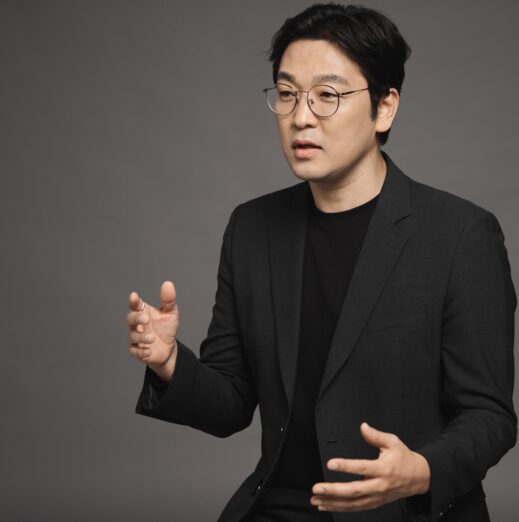
This model remains deeply ingrained in ISG's current organizational culture. All members rapidly create prototypes, validate them based on data, and share the results on a weekly basis. This culture, built on data-first thinking and customer-centric experimentation, is what makes it so unique.
"I always ask: Does this data actually help with decision-making? Does this feature make it easier for customers to implement ESG practices? These two questions are still the starting point for all service design."
Technology that turns ESG into opportunities is being proven on the global stage.
Many companies view ESG as something they must do to comply with regulations. CEO Kim Jong-woong once found himself in this same mindset. However, through working with data in the field, he realized that ESG compliance goes beyond simply reducing risk and can lead to operational efficiency and improved profitability.
During my time at POSCO International, I witnessed how our partners' ESG compliance directly impacted their ability to sustain and expand their businesses, regardless of regulatory requirements. Since our founding, we've focused on building a structure that accelerates decision-making, reduces costs, and improves access to capital, rather than simply evaluating companies. As a result, we've refined our implementation modules, including ESG risk simulation, scenario analysis, and improvement suggestions, to drive tangible business results. We maintain the view that ESG is not a cost item, but rather an infrastructure for growth, and that proactive responses directly translate into financial benefits.
When he founded ISG, he set out to prove this hypothesis. Initially, he focused on creating a structure that enabled companies to achieve tangible management results through ESG, rather than simply developing a simple evaluation system.
Many companies perceive ESG as something they must do to comply with regulations. However, ESG goes beyond regulatory compliance and is now a fundamental element of attracting investment, raising funds, and maintaining and expanding B2B transactions. When we examine data from the field, we see that companies that proactively identify and manage ESG risks and opportunities for improvement tend to gain advantages in terms of transaction expansion, financing rates, and valuation.
IESG's technological competitiveness is clear. As one of the companies with the largest number of ESG-related patents in Korea, it has built an integrated engine that automatically collects, integrates, and reports ESG data using AI and big data technologies. The algorithms that connect diverse data sources, such as ERP, IoT, and external APIs, and process unstructured data are IESG's core technologies.
This system achieves processing speeds six times faster than traditional spreadsheet methods, 95% cost savings, and 80% administrative reduction. Its data lineage, model version management, change history recording, and log extraction capabilities help companies maintain reliable ESG data, even during audits and external verification processes.
"Because data is recorded transparently, auditors and investment firms can easily verify the reliability of ESG data. Some clients have already proven this system by undergoing external audits and third-party verification."
Participating in CES for three consecutive years has been a stage for ISG to prove its technological credibility in the global market and expand its network.
“CES is not just a global trade show; it's a place where you can experience how ESG is no longer a non-financial factor, but rather a data-driven industry.”
IESG's global roadmap is clear. Phase 1 is the Proof-of-Construction (PoC) phase, where ESG diagnosis and simulation proposals are provided to mid-sized and large companies to secure overseas corporations and partner clients. Phase 2 is the Commercialization phase, where customized modules for specific regions like Asia and the Middle East are launched and a revenue model focused on regulatory response and supply chain management is established. Finally, Phase 3 is the Integrated Platform phase, where a global ESG data hub is established and expanded with AI prediction modules and ESG-finance-linked models.
GITEX, held in Dubai, is the world's largest ICT exhibition and a key pillar of ISG's strategy to enter the Middle East market. Having participated for four consecutive years, we are moving beyond mere exhibition to create real business opportunities.
Since establishing our UAE corporation, we have been discussing cooperation with local government agencies such as MOCCAE (Ministry of Climate and Environment) and GGGI (Green Growth Institute) on building an ESG data infrastructure, and we are finalizing pilot project agreements with some organizations.
The Middle East is a market experiencing rapid policy-driven change, driven by carbon neutrality goals, industrial diversification, and strengthened supply chain ESG. At the same time, demand for technologies that can transparently manage and verify ESG data is rapidly increasing.
"In the Middle East, authenticity and execution are more important than technology. We are building trust by continuously improving our localized ESG metrics, multilingual dashboards, and reporting structures tailored to government requirements."
Collaboration with the Korea Artificial Intelligence and Software Industry Association (KOSA) is also significant. Because the software industry has a different indicator structure than the manufacturing industry, this was the first attempt in Korea to incorporate this into its ESG assessment system.
"We've focused on data center power efficiency, cloud usage, and emissions quantification as key metrics, and have included developer well-being and diversity, privacy, AI ethics, and algorithmic bias. Companies won't simply receive a score; they'll be able to intuitively identify where their weaknesses lie and what improvements could be effective."
The collaboration with KOSA is evolving beyond a "diagnosis/certification program" into an ecosystem strategy, including awards and financial support tracks. ESG is complex and broad, making it difficult for a single solution provider to cover all areas. Furthermore, data and AI are essential for this area. Therefore, CEO Kim Jong-woong is expanding the scope of his strategic collaboration with KOSA beyond simply supporting IT companies to improve their ESG practices. This includes joint research on integrating data and AI technologies and expanding public-private ESG data platforms.
Recently, we signed a strategic cooperation agreement with KOSA that encompasses these areas. Through this agreement, we jointly designed a standardized data schema, AI-based diagnostic and predictive models, and public reporting standards. We are also pursuing collaborations with government and local government projects and expanding our reach to large private clients. From an investor's perspective, this platform-based partnership leverages the power of CAC to simultaneously improve efficiency, product scalability, and accelerate reference acquisition.
“Ultimately, our greatest achievement was making ESG a business performance indicator, not just a reporting indicator.”
Execution over Perfection: Designing the Future of ESG with Data
IESG is expanding into the Asian market, starting with the Middle East. In the UAE, it established a local subsidiary in Abu Dhabi and is collaborating with the government and state-owned enterprises. It is also developing a localized modular platform that responds to national regulations, including the EU's CSRD, CSDDD, and SFDR.
While ESG compliance is important domestically, global supply chains and financial markets have brought ESG to the forefront of trading and investment decision-making, and i-ESG is focusing on this movement. i-ESG's vision is to help global supply chain companies reduce transaction interruption risks and achieve tangible results through data- and AI-driven improvements.
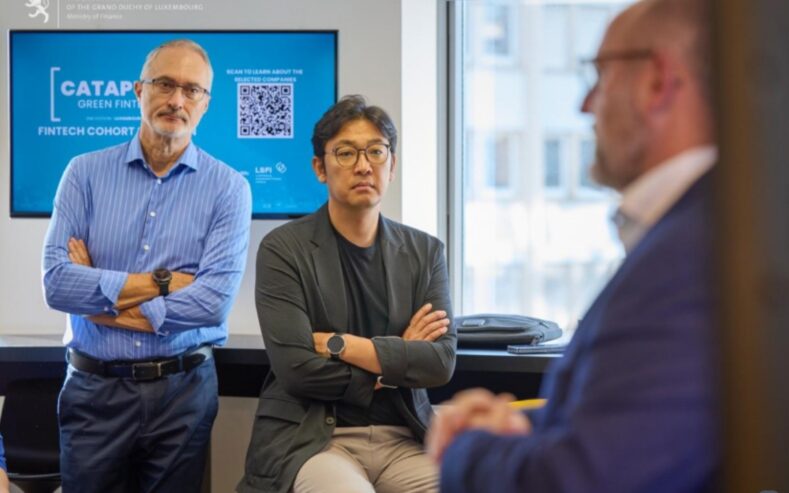
To this end, we are focusing on continuous verification and securing traction overseas. Recently, we were the only Asian company selected for the Luxembourg Ministry of Finance's Catapult Green Fintech program among ten companies, and we are currently working on projects as an official partner of the UN Global Impact. Furthermore, we are proving our scalability by co-developing ESG indicators for Asian SMEs with the Korea Legislation Research Institute (KLRI) and winning the grand prize at the Forbes Korea CSR Awards, the only ESG solutions company to do so.
From a platform perspective, our architecture builds on a global common core with add-on modules that reflect country-specific regulations and industry-specific needs. This allows us to quickly reflect local regulatory updates and allows customers to selectively apply only the features they need. Furthermore, we are enhancing distribution efficiency through channel and delivery alliances with accounting firms, consulting firms, and technology partners. Ultimately, i-ESG will transform into a data infrastructure company that "capitalizes" objective ESG data and, through reliable verification, connects it to finance and transactions.
While it's true that ESG fatigue has increased, CEO Kim Jong-woong believes that now is a crucial time.
"This is because ESG is evolving from a show-off campaign to a tool for designing a sustainable competitive structure for companies. I emphasize execution over perfection. It's impossible to create a perfect system in one go. We need to start small, experiment quickly, verify the effectiveness with data, and then internalize the results within the organization. This is a realistic and sustainable way to achieve ESG innovation."
Finally, we asked what message we would like to convey to our companies.
"First, ESG is not a choice, but a language for corporate survival. Second, we must build a system centered on data and insights, not simply producing reports. Third, small actions and continuous improvements create greater change than perfect plans."
CEO Kim Jong-woong stated that he would make IESG “a practical partner that simplifies the complexities of ESG through technology and helps companies design their own growth through data.”
"We will continue to walk that path, centered on our belief that we are a company that transforms ESG from a cost to an infrastructure for growth."
You must be logged in to post a comment.