



"Are you an investor? Or a fraud?" This was the cynical mood in Busan's startup scene in the early 2010s.
Local startups were initially suspicious of investors who came from far away. Talent was sent to Seoul, and even growing companies relocated their headquarters to the metropolitan area. In this closed ecosystem, where locals banded together, change seemed distant.
Founded in 2013, CallsDynamics is changing the game. Starting as the first accelerator in Busan and Gyeongnam, over the past 13 years, it has expanded its footprint to Seoul, Jeonju, Gwangju, and Gangwon, establishing itself as a specialized local startup investment firm.
Kang Jong-soo (45), CEO of Calls Dynamics, is a serial entrepreneur who began his own business in his second year of high school and experienced two exits in his twenties. At age 24, he sold a logistics company for 8 billion won, only to realize it was worth 30 billion won. This painful experience led him to become an investor. Recently, he received the Minister of SMEs and Startups Award in the "Commercial District and Small Business Revitalization" category, drawing attention in the venture capital industry as an investor who transcends the boundaries between startups and small businesses.
"I made 8 billion won after taxes, but it was actually worth more than 30 billion won."
At 18, a sophomore in high school, and 21 and 24 in college, CEO Kang Jong-su has experienced three startups and two exits.
"I had my first drink after college, and soju, beer, and makgeolli were tasteless. After the CSAT, I traveled around the country and discovered that the local liquors I encountered were truly delicious. I wanted to share that with others."
He started a liquor distribution business. However, the real lesson wasn't the product itself. It was the business model—logistics, distribution, and target markets—that mattered most. This realization led him to launch a logistics efficiency solution business based on RFID technology. Three years later, with annual sales approaching 3 billion won, he received an acquisition offer from an accounting firm. He was exhausted. He sold the company for 8 billion won, far exceeding its sales before taxes.
"I learned this while working as an investor. The company I sold was worth 30 billion won at the time. I needed the ability to present the company's future value and even strategize the acquisition's business plan."
This experience became the foundation of his investment philosophy. Kang Jong-soo, CEO of Calls Dynamics, rarely discusses ideas or technology with the companies he nurtures, focusing instead on the market. While some VCs advise against considering a sale from the outset, he takes the opposite approach.
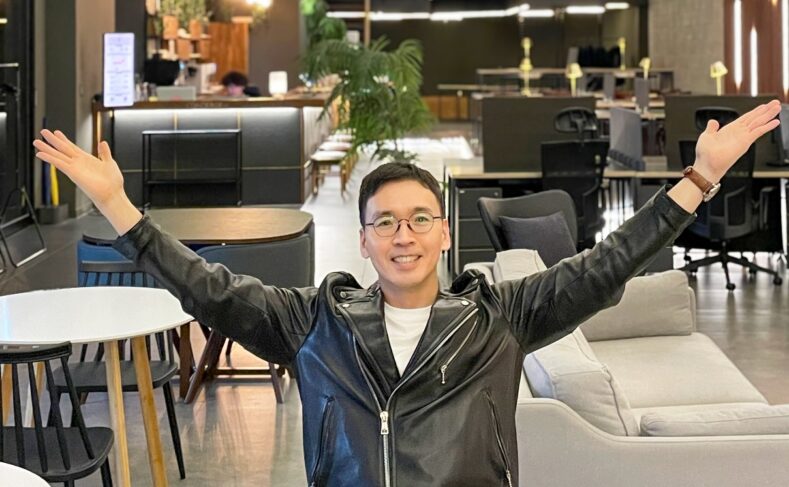
"They also recommend considering turning your company into a product and selling it. With the ease of starting a business as a solopreneur, it's just as meaningful to start a business where the company itself becomes the product, as it is to create a product."
CEO Kang Jong-soo's investment criteria are clear. He prioritizes "the founding team's perspective on the market" over product or technology. Over 90% of investment discussions with partners with exit experience involve market discussions.
"Items and technologies can change at any time, depending on how you update your market analysis perspective. Therefore, industry doesn't matter. If the market changes, manufacturing can shift to services."
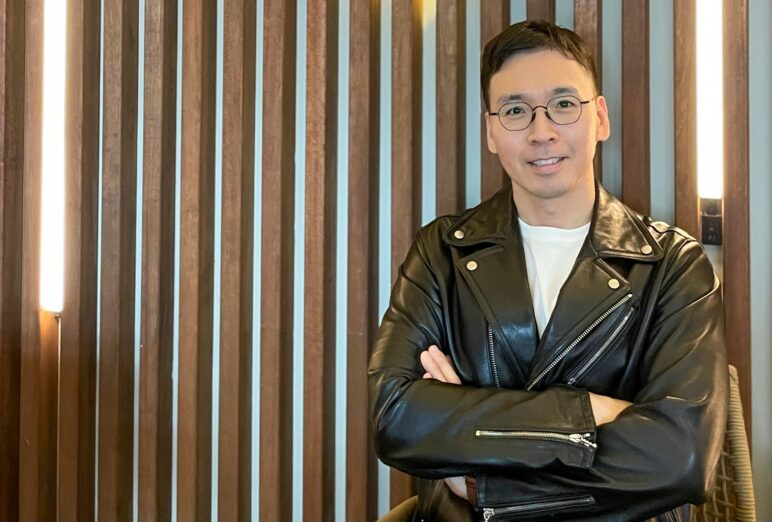
The second criterion is humility. We look for "founders who fear failure and are hypocritically optimistic about the market." This is because cautious and humble founders attract many people.
"Busan-Gyeongnam's first title, honestly, wasn't very pleasant."
Founded in 2013, ColzDynamics's mission is a combination of Colleague, Collaboration, Collage, and Dynamics. At the time, there were only three accelerators. The accelerators defined by CEO Kang Jong-soo were closer to company builders, operating with extreme freedom in the areas of startups and investment.
"Initially, I wasn't interested in raising institutional funds or registering with accelerators. I invested as a shareholder in startups that quickly grasped the market and took steps forward. For those that struggled to make headway in the capital market, I invested in internal ventures. VCs also invested in startups, viewing them as startups."
When establishing Urban Creators Unit, we partnered with various proptech entrepreneurs to launch our business. Throughout this process, all the entrepreneurs we collaborated with were colleagues, and we offered diverse perspectives and pioneered unprecedented investment methods. However, the title "Busan and Gyeongnam's first accelerator" wasn't a pleasant one.
"It wasn't anything special that we started in Busan and Gyeongnam, but they treated us with special consideration. Thirteen years ago, investors were seen as fraudsters, and there was a league of their own, where only locals banded together. I experienced that firsthand."
This experience actually became a differentiating factor. Having expanded our base from Busan to Jeonju, Gwangju, and Gangwon Province, and witnessed the revitalization of the local ecosystem from beginning to end over a decade, was an asset no other investment firm possessed.
CEO Kang Jong-soo identified three problems with the local startup ecosystem. First, a culture fearing change still persists. Second, the real reason growing companies are leaving for the metropolitan area is not attracting investment, but recruiting. For startups to thrive, they need talent with experience at large corporations or unicorns, and this talent is precisely what's most lacking in the region. Third, investment managers who move to the region focus on attracting investment rather than nurturing, on traveling rather than staying in, and on investing less than 50% of their funds in local companies.
“I want to experience the local area by working with local businesses and experiencing all aspects of life together.”
Our global strategy is also practical. Since 2013, we've established a global services partnership with Alibaba.com. We've supported annual visits to the Alibaba.com Hangzhou campus and online store integration. This partnership has now led to the emergence of agencies. We're also collaborating with China U+, Amazon AWS Tier 2 Partnership, and global companies in Singapore, Vietnam, and Taiwan.
The BBC in the UK featured Beijing Cheoku Cafe and Coles Dynamics as private venture capital firms in Asia. While interacting with Cheoku Cafe founder Sudi, Coles Dynamics received a merger offer when Cheoku Cafe merged with U+, but they remained good partners. They currently work with startups seeking to expand into other countries as a food, clothing, and shelter hub.
"We kept our partnership under wraps to preserve our extremely liberal values. We focused on practical cooperation rather than formality."
The Minister of SMEs and Startups Award recently received by CEO Kang Jong-soo was in the category of revitalizing commercial districts and small businesses. While he has received numerous awards for his contributions to the venture ecosystem, this is the first time in the venture capital industry that he has received such an award.
"Around 2016, I talked about the need for a legal basis and system for small business investment. Having started my own business as a child and experienced its exit, it was a natural interest."
He worked with the Ministry of SMEs and Startups on projects to revitalize local commercial districts, traditional markets, and neighborhood businesses, laying the foundation for the Strong Small Business Support Project and the LIPS program.
"When technology startups create services that revolutionize the self-employed market, local commercial districts in need of revitalization serve as excellent test beds. Conversely, for small business owners, they provide valuable firsthand experience in digital transformation beyond payments and marketing. The physical space of a commercial district becomes a place of synergy and chemical bonding."
Not leaving, but returning to contribute
"We're not stopping local startups from moving to Seoul. We need to provide remote support."
CEO Kang Jong-soo's perspective is clear: establishing headquarters in a local area and expanding into the metropolitan area through various branch offices is essential. Growth requires members with extensive experience, a skill the region lacks. Therefore, he established the Urban Creators Unit in Sinchon, Seoul. It provides housing, workspaces, and dining facilities for local companies seeking to establish metropolitan branch offices during their growth phase.
"Promising startups from various regions, including Busan and Gyeongnam, the Honam region, Gangwon, and Chungcheong, are utilizing our platform. Successful startups show affection for their hometowns in some way. It's not a logical reason, but I've observed that most promising startups are thinking of their hometowns."
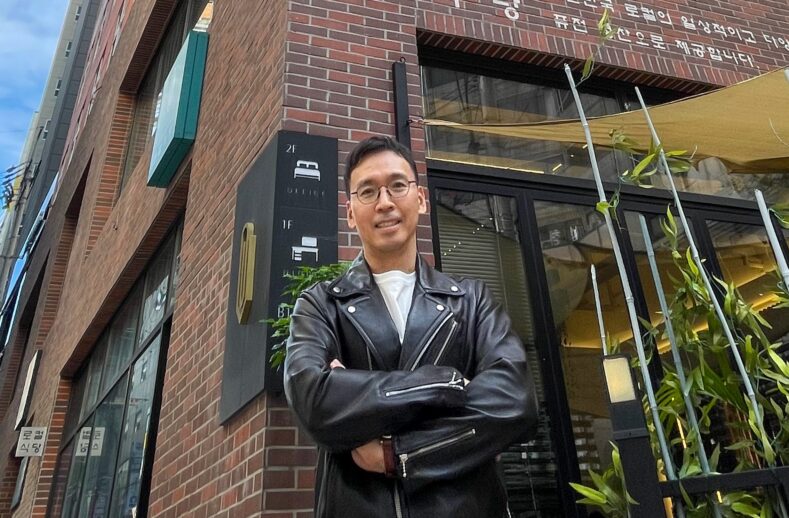
He stressed that the local government's "perspective of trying to keep people from leaving" must change.
“I hope you understand that this isn’t a departure, but a return to contribute.”
The future plans are clear. While maintaining its original focus as an extremely liberal investment firm, the scope of its exploration will expand from the southeastern region to the entire country. The partner participation fund will be used for strategic investments, in-house ventures, and company building investments. The private and large corporate investment fund will be further expanded to include investors who understand the importance of databases in the self-employed market, such as entrepreneurial small business owners and the DX sector of the self-employed market. The Urban Creators Unit will also shift its operations to a residential-commercial complex for overseas startups seeking to expand globally or enter the domestic market.
"The company is my playground. Every moment I spend here is enjoyable."
This is the answer CEO Kang Jong-su gave when asked about his vision. He said his goal is to maintain the vision Coles Dynamics pursues for a long time and gradually fill in any gaps.
We asked local young entrepreneurs for advice.
"If you divide entrepreneurship into three phases, the goals you achieve in Phase 1 are entirely achievable in your initial location. You may lack colleagues and feel lonely, but I hope you'll prove yourself and re-establish your vision. As your perspective and experiences change, so will your perspective and willpower. You'll be living in a tense time, but even within that, find joy in breaking down your goals into smaller pieces and achieving them one by one. Being an entrepreneur will be fun."
A journey that began 13 years ago in Busan, with the dream of creating an extremely free-spirited investment firm, CEO Kang Jong-soo continues to build on that playground, envisioning a larger picture of the local startup ecosystem in South Korea.
You must be logged in to post a comment.