



A battleground for three major technologies in the beauty industry: AI formulations, biotechnology, and the skin microbiome.
– AI, from a marketing tool to the heart of R&D
StemOn, JNC Microchem, and DS Tech: Korean Deep Tech Startups Ushering in the Era of Hyper-Personalization
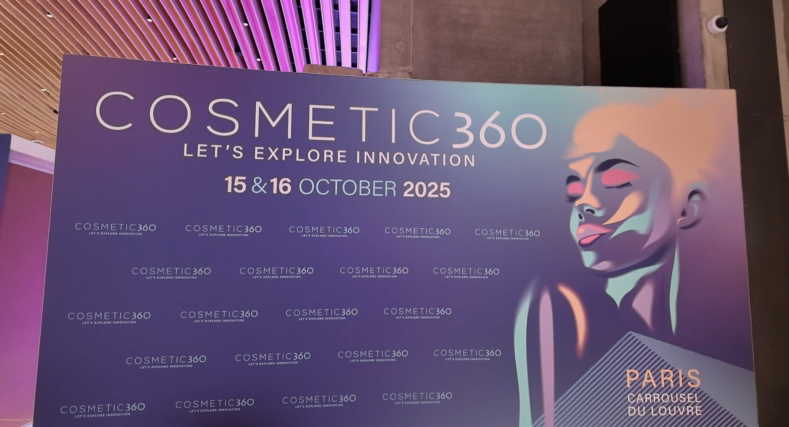
The 11th Cosmetics 360, held at the Carrousel du Louvre in Paris from October 15 to 16, 2025, was a bold response from the beauty industry amidst uncertainty. This year's slogan, "Predictions," presented a blueprint for how AI-driven formulations, biotech-driven sustainability, and a return to the fundamentals of skin science will converge to shape the future. Above all, the event solidified K-beauty startups' position as core technology leaders, not just trend followers.
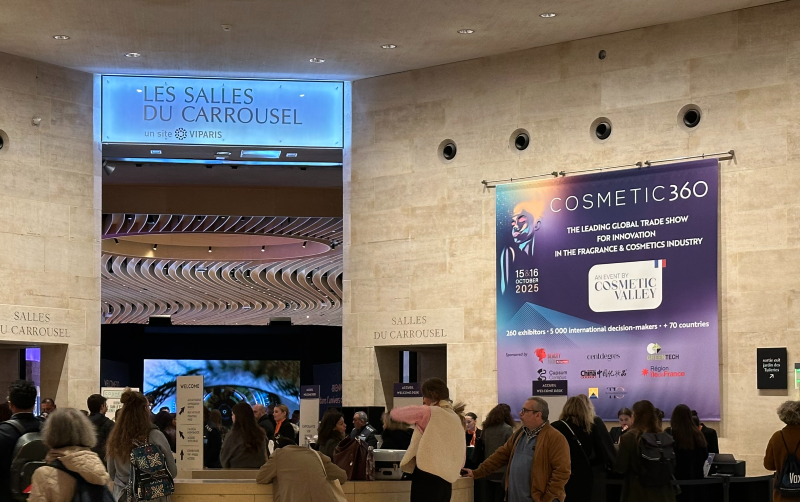
A View from the Louvre: How 'Prediction' Is Redefining the Beauty Industry
This year's Cosmetics 360 event was filled with optimism for the future and technological confidence. Franckie Béchereau, Director of Cosmetics 360, said, "We chose this theme because we live in an uncertain world. We want to show how technological tools can help us imagine tomorrow's innovations."
The theme of "Anticipation" represented the industry's strategic response to a "world undergoing dramatic change," a declaration that it would not rely on past success formulas or short-term trends, but would instead create future demand and manage risks through technology. This vision was clearly expressed in Greentech's "Anticipation Capsule." This project, in which anthropologists, scientists, and designers imagined cosmetics technology and consumer behavior in 2045, symbolically demonstrated the profound insight the event aimed to achieve.
Three key technologies are shaping the future landscape of the beauty industry.
AI Formulator: From Marketing Tool to R&D Core
While AI's role in the beauty industry has traditionally been limited to consumer data analysis, marketing automation, and retail inventory management, it's now finding its way deep into the heart of research and development (R&D).
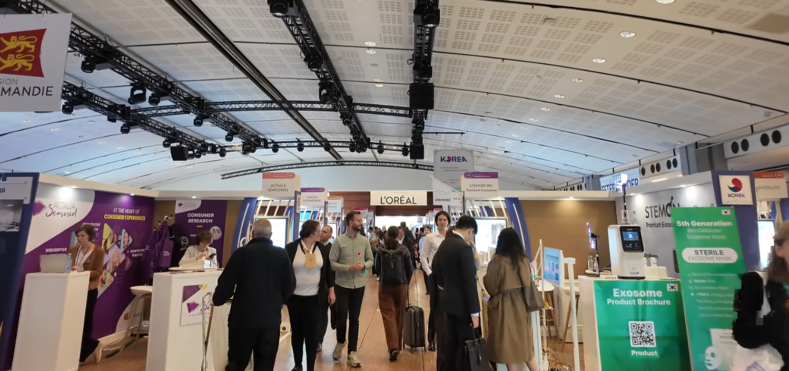
The event's special zone, "Design the Desire," focused on how AI and data analytics, combined with human creativity, can design future hit products. This led to specific methodologies for developing novel, high-performance, customized product formulations using generative AI and deep learning technologies.
China's Proya Cosmetics' collaboration with an AI platform company accelerates raw material testing and develops optimal formulations that deliver synergy, proving that this trend is already being implemented commercially.
These changes, coupled with the pace of innovation, are emerging as a key strategy for enhancing corporate survival in uncertain times. With global supply chains becoming increasingly unstable and raw material prices becoming increasingly volatile, companies face the need to reduce the enormous time and cost associated with new product development, as well as the risk of failure. AI offers a powerful solution to this challenge.
By simulating the interactions of numerous ingredient combinations in a virtual environment, predicting consumer reactions, and optimizing formulations digitally, companies can dramatically reduce the number of physical trials. This also directly translates to sustainability benefits, such as reducing experimental waste. In other words, AI is now positioned as a key asset for "de-risking," going beyond a tool for innovation to predict and manage uncertainty, thereby building corporate resilience.
The Biotech Boom: Designing Sustainable Effectiveness
While AI is revolutionizing the "method" of development, biotechnology is providing answers to the question of "what" to create. Biotechnology has firmly established itself as a key driving force in creating sustainable, high-performance raw materials. The past "anti-aging" discourse is evolving into "well-aging," focusing on skin longevity and functional restoration. Biotechnology is at the heart of this paradigm shift.
For example, Givaudan's DandErase™, an anti-dandruff active ingredient made from upcycled discarded saffron petals, has garnered attention as a prime example of "circular beauty" success. Furthermore, Mibelle Group and LanzaTech's pioneering research into developing a palm oil alternative using captured carbon dioxide has been a significant milestone, demonstrating how the beauty industry can contribute to climate change response.
This trend clearly demonstrates that "sustainability" and "efficacy" are not mutually exclusive. In the past, "natural" or "eco-friendly" ingredients were often seen as compromises in terms of efficacy and user experience. However, biotechnology in 2025 has completely overturned this conventional wisdom. Highly effective active ingredients are being created from upcycled raw materials, and unique ceramides that resemble the structure of the skin are being created through biofermentation technology. This means that sustainability is no longer a marketing slogan or regulatory compliance, but a key driver of competitive advantage through exclusive, superior, and highly effective ingredients. The shift among companies away from traditional "spend-based" environmental impact assessments to "activity-based" measurement methods based on product life cycle assessments (LCA) clearly demonstrates a shift toward managing sustainability as a core operational strategy.
The absolute proposition of the skin barrier: the foundation of all health.
At the foundation of these two major technological trends—AI and biotechnology—lies the scientific topic of “skin microbiome and skin barrier function.”
As consumers demand science-based solutions, there's a growing recognition that maintaining a healthy skin ecosystem is a prerequisite for all skincare. The rise of prebiotics, probiotics, postbiotics, and key skin barrier components like ceramides and niacinamide reflects this trend. The "skinimalism" trend, which avoids excessive exfoliation and unnecessary products, and instead focuses on protecting the skin barrier with a small number of high-quality products, is also understandable in this context.
These three megatrends—AI, biotechnology, and microbiome science—do not operate independently, but are converging into a single, powerful system, making the beauty industry's ultimate goal of "hyper-personalization" a reality. The process is predicted to unfold as follows:
First, advanced sensors and imaging technologies precisely diagnose an individual's unique skin microbiome and barrier function. Next, AI analyzes this vast data to design an optimal, personalized formula to address specific microbial imbalances or barrier damage. Finally, biotechnology precisely produces the highly specific, sustainable, and microbiome-friendly ingredients needed for these formulas (e.g., customized prebiotics, specific peptides). This marks a shift from mass-market products like "for dry skin" to a truly personalized beauty era that responds to an individual's biological needs in real time. This is the future ultimately envisioned by the event's theme, "Predictive."
A New Chapter for K-Beauty: From Trendsetter to Tech Powerhouse
This year's Cosmetics 360 showcased that K-beauty has reached a significant turning point. Having previously dominated the world with "fast beauty" and innovative product ideas, it is now evolving into a technological powerhouse, targeting the global market based on "deep tech," a core technology that cannot be easily replicated. This strategic move goes beyond simply exporting finished products and positions itself as a fundamental technology and raw material partner for the global beauty industry.
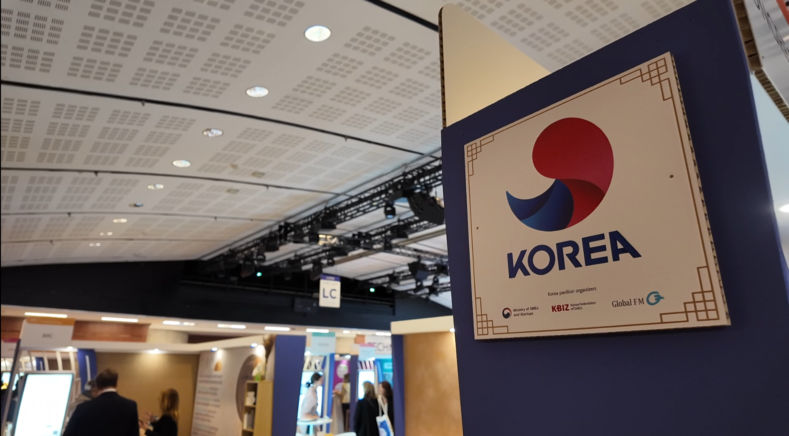
Stemon Inc. has been selected as a finalist in the Research and Innovation category of L'Oréal's open innovation program, "BIG BANG." This represents official recognition from industry leaders for the world-class innovation potential of their core technology.
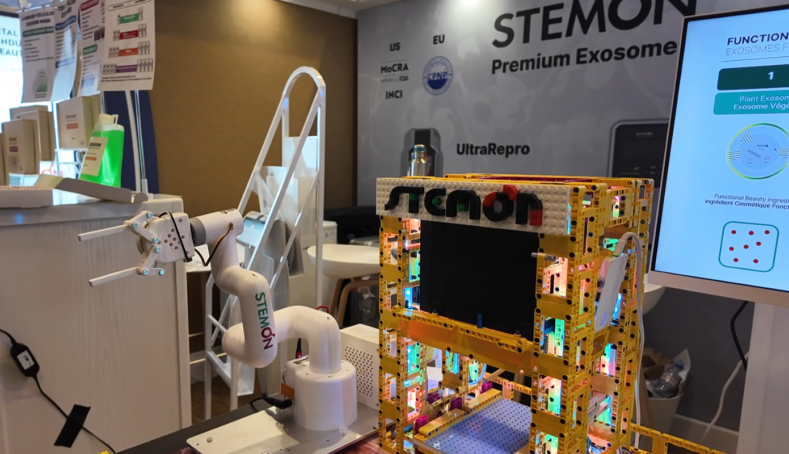
StemOn's technological prowess lies in its proprietary exosome platform. The "Drug Delivery System (DDDS™)" uses plant-derived exosomes as carriers to reliably deliver active ingredients deep into the skin, garnering attention as a key technology for solving the delivery problem that determines the efficacy of cosmetics. StemOn's case clearly demonstrates how K-beauty startups are evolving beyond the red ocean of finished product competition to embrace business models that generate higher added value through technology partnerships.
J&C microchem, Inc. has attracted attention with its "Oil Bubble Capsule" technology. This technology, called "DazzlingDew®," encapsulates active ingredients in oil at a concentration of over 70%, encapsulating them in a soft, biodegradable gel film. It is a perfect alternative to microplastics, a recent environmental concern, and has been highly praised for its high-performance solution that protects potentially unstable active ingredients from the external environment and effectively delivers them to the skin.
DS TECH unveiled its patented "Dissolving Micro Structure (DMS)" technology. This innovative transdermal drug delivery system creates effective ingredients, such as hyaluronic acid, in the form of microscopic needles that penetrate the stratum corneum, where they dissolve and are absorbed naturally within the body. This needle-free delivery of effective ingredients deep into the skin presents a new possibility for non-invasive and effective home care solutions.
Additionally, the technological prowess of companies that scientifically verify natural ingredients to prove their efficacy, such as Unijeju's Dalish, which has proven its wrinkle-improving and whitening effects from Jeju Island's Agaricus mushroom extract, also stands out.
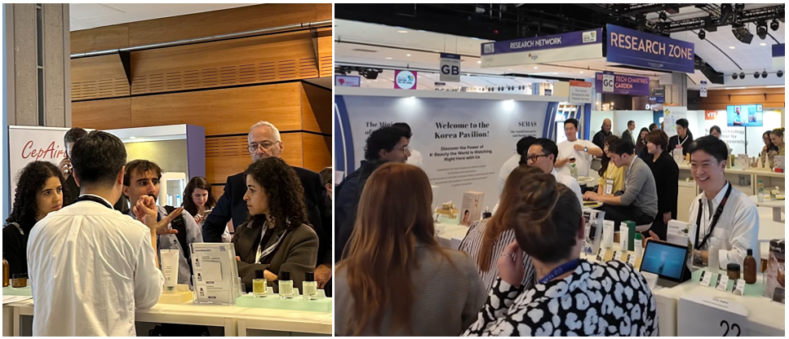
A spectacle unfolded in front of the booths of Lunacell's Dr. Gentle, Illutine's Vita-Shot, and RM Science's O'labs, with locals lining up to hear product descriptions. This was a striking sight, demonstrating that K-beauty has transcended sentimental trends and is now knocking on the doors of the European market with new weapons: scientific efficacy and technological prowess.
The Paris Agenda: An Intelligent, Sustainable, and Personalized Future
The future of the beauty industry, as depicted in Cosmetics 360 in 2025, is clear. At its core is not a single ingredient or a fleeting trend, but an integrated system converging AI, biotechnology, and dermatology. AI drives precise personalization, biotechnology drives sustainable efficacy, and dermatology drives understanding of fundamental health. These three fields are closely interconnected, forming a new industry paradigm.
The rapid growth of deep-tech startups demonstrates that Korea is now poised to play a key role in setting the technological agenda and driving innovation in the global beauty industry. This is why we anticipate a new chapter unfolding for agile and innovative Korean deep-tech startups at the heart of the future predicted by Paris.
You must be logged in to post a comment.