



“One letter can change a child’s world.”
The number of children in need of speech therapy is increasing, but many are unable to receive it due to regional accessibility and financial constraints. Waiting times are long, and treatment opportunities are limited. In this vacuum, children's golden opportunity slips away.
However, AI-powered speech therapy solutions are filling this gap. This change is being driven by "AI Speech Therapy Solution Haidongdong," developed by Kang Yeseul (30), CEO of Waukiki. In the long term, these booths will be installed in health centers and welfare centers in areas with limited access, providing more children with much-needed treatment opportunities.
Questions Discovered at an Art Museum, Answered Through Entrepreneurship
“I’ve seen children with developmental delays express themselves freely through art, even if they have language or other difficulties.”
Director Kang Ye-seul majored in art and has taught cognitive classes using art with children. Working at various art museums and welfare centers, she observed the growth and expression of children with developmental delays. Taking classes alongside students with disabilities in an inclusive education environment taught her to understand and respect differences.
A turning point came during the COVID-19 pandemic in 2020. He says, "I decided to start a business after seeing the reality of not being able to meet my children and children with developmental delays not receiving the education they needed."
Kang Ye-seul, 26, founded the company that year. "I believe it's crucial to provide children with the education they need, tailored to their developmental stages."
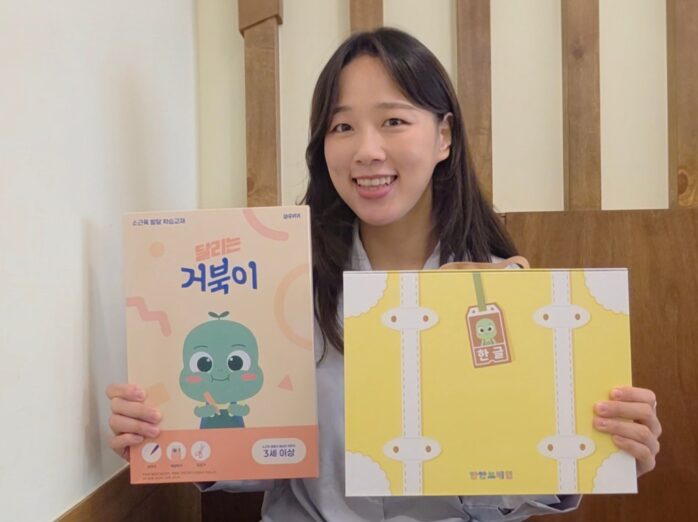
After many attempts, CEO Kang Ye-seul realized that language is the foundation of all development. "I believed that supporting children's language development was the most fundamental support." Waukiki's vision of "helping children with delayed development become independent and adapt to society through education" stemmed from this concern.
'Tantan Brain', a Korean language parish that teaches you to see, touch, and connect.
In the early days of the company, CEO Kang Ye-seul developed the first solution: a teaching aid called "Tantan Brain," designed for children learning Korean for the first time and those with developmental delays.
“While existing parishes simply taught children to copy and write letters, Tantan Brain was designed around a process of learning through seeing, touching, and connecting, based on cognitive development stages.”
Learning is facilitated naturally through color, shape, and hand movements, and the design allows children to take charge of their own learning. Meticulous consideration was given to size, weight, materials, and durability, ensuring it can be used both at home and on the go.
“It is characterized by being an interactive educational tool that parents and children use together.”
During the development process, we ran a parent experience group. "They all participated enthusiastically. Thanks to their active participation for their children, we were able to hear honest and clear feedback, which we used to improve the product."
Filling the Gap in Speech Therapy with AI
"The number of children in need of speech therapy in Korea is increasing, but many are unable to receive it due to regional accessibility and financial burden. I thought AI technology could help fill this gap."
CEO Kang Ye-seul collaborated with medical professionals and speech therapists to launch "Haidongdong," an AI language therapy solution. She is currently preparing for clinical and digital therapeutic certification and is developing the solution into something that can be used effectively in real-world settings.
“Experts are also working together to conduct research, and satisfaction is increasing.”
The principles of collaboration are clear. "I believe the most important thing in collaboration is delivering truly needed solutions to those who need them. We collaborate based on trust, allowing each person to leverage their expertise."
The principle is to allow each individual—medical staff, speech therapists, developers, and designers—to shine in their respective roles. Waukiki is currently undergoing clinical trials for digital therapeutics certification. "We're receiving many questions from investors about the effectiveness and reliability of our solutions."
CEO Kang Ye-seul focuses on fundamental values over short-term performance. "Haidongdong will grow into a reliable solution that helps children receive effective treatment at hospitals and public health centers. Rather than focusing on short-term results, we aim to create a sustainable model based on medical evidence and public service."
CEO Kang Ye-seul founded the company at the age of 26 and is now 30. "As a young entrepreneur, I believe my strength lies in my ability to flexibly combine technology and art, and to create services that consider both aesthetics and practicality."
Another strength is that it can empathize with parents of the same generation and naturally incorporates a perspective of designing services from the child's perspective.
The office is located in Seongbuk-gu, Seoul. It's housed in a shared space shared by multiple companies, allowing us to interact with a variety of startups. "Although we haven't been here long, we hope to continue to collaborate and engage with local organizations, schools, and welfare facilities in the future."
Four years into the company, the most challenging moment was the pivot process. "As society rapidly digitized due to COVID-19, we had to change direction. During that time, I spent more than four hours a day meeting with my team to discuss the issue together."
“It was a difficult time, but we overcame it by working together to find what we needed and solve it.”
CEO Kang Ye-seul's goal is clear: "Waukiki aims to be a partner in children's growth. We collaborate on education and treatment to help children grow at their own pace, and we aim to develop solutions that provide practical help."
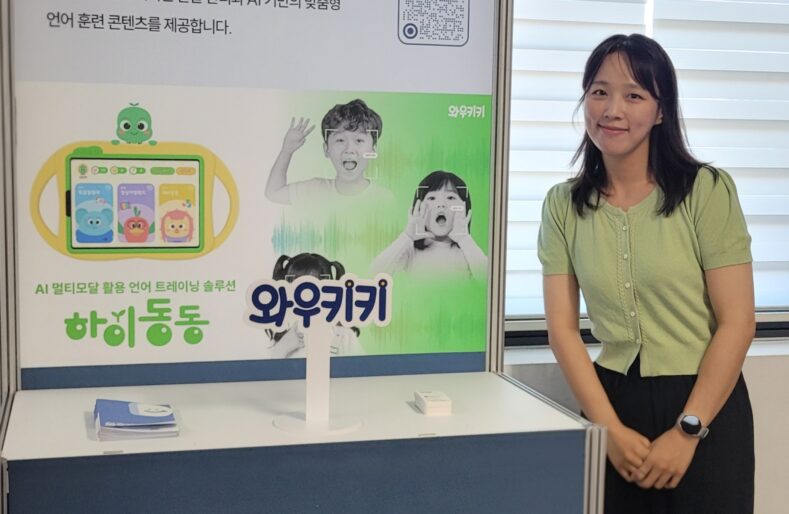
In the mid- to long-term, we aim to develop Haidongdong into a speech therapy consultation booth, installing it in public health centers and welfare centers in areas with limited access. We are also planning to expand overseas.
"Because speech therapy is a field in demand worldwide, we are also planning to expand globally by developing an English version."
"Going forward, I want to combine technology and education to help children adapt to society at their own pace, and create an environment where they can connect with the world through language."
The voice of 30-year-old CEO Kang Ye-seul was firm. The questions that began in the art museum are now, through AI technology, providing answers to thousands, even tens of thousands, of children.
You must be logged in to post a comment.