



Frequency is crucial in rehabilitation therapy. To fully utilize neuroplasticity and regain lost functions, training volume is essential. However, the reality is challenging. The burden of a single rehabilitation session leads patients to reduce frequency and fail to achieve optimal training volume. Elderly people who struggle to speak after a stroke, children teased for their inaccurate pronunciation, and those with hearing loss who struggle to distinguish consonants even with hearing aids—the barrier to "speech" is high, and many find themselves frustrated by it.
"NeuroTalk" and "Phonohear," AI language therapy solutions developed by Lee Yoon-jin, CEO of Malhak Science Playground, utilize digital automation to deliver one-tenth the cost of face-to-face, one-on-one therapy. They enable patients to practice at home, every day, on their own.
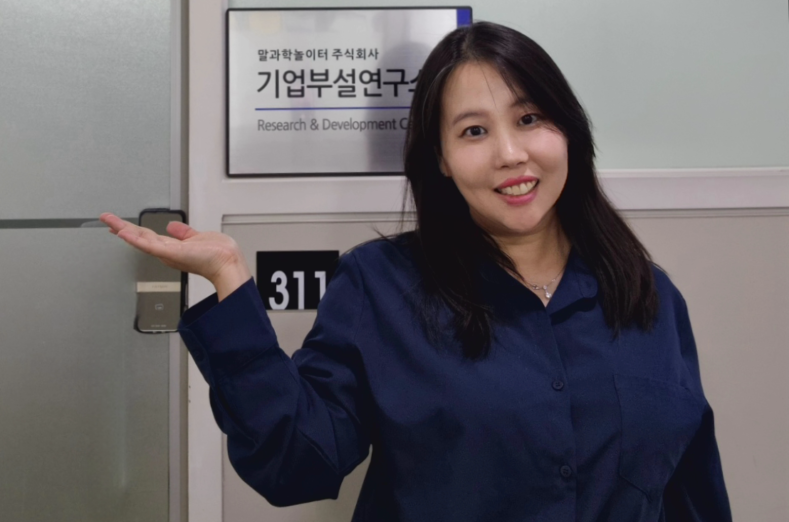
“While my child was unable to speak, I went to the hospital for six years.”
CEO Lee Yoon-jin is a practicing Korean medicine doctor. She double-majored in speech therapy and behavioral therapy, but her real learning began in the hospital waiting room. Her six years of experience raising a child with a developmental disability and receiving rehabilitation treatment inspired her to start her own business.
"To fully utilize neuroplasticity to regain lost functions and learn new ones, a sufficient amount of training is essential. However, in the rehabilitation market, patients often find the cost of a single session burdensome. Consequently, they often fail to increase the frequency of their sessions and achieve the optimal training volume for the best prognosis."
The direction for solving the problem was clear: improving accessibility to language rehabilitation and addressing its cost burden. CEO Lee Yoon-jin found the answer in digital automation.
The challenge was collecting speech data from people with disabilities and developing accurate recognition technology. The speech characteristics of stroke and dementia patients differ from those of the general population. Existing speech recognition technology had clear limitations.
"Existing technology wasn't enough. So, we're developing technology that trains AI on its own to accurately recognize the voices of people with disabilities and detect errors, making it suitable for digital medical devices."
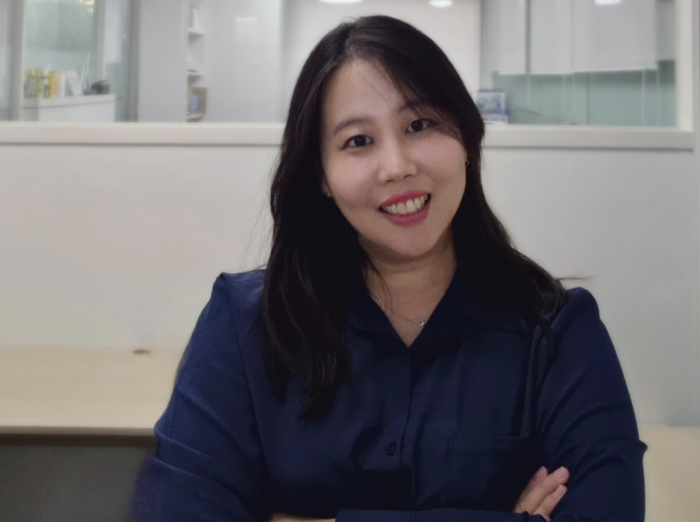
Beyond STT, integrating the entire process of "listening, recognition, and articulation."
The key differentiator of the Speech Science Playground is that it goes beyond simple speech recognition (STT).
He has developed a system that integrates the entire process of "listening, recognition, and articulation." He is currently applying for a patent related to speech recognition technology for the disabled and has developed a proprietary algorithm that analyzes the atypical speech patterns of patients with developmental disabilities and brain lesions.
“We can provide users with only the pronunciation rehabilitation materials they need, in a selective and focused manner.”
Initially, we targeted a broad market. We aimed to help everyone, from those with developmental disabilities and hearing impairments to seniors. However, we realized on the ground that each target group had completely different needs.
"I felt bad for everyone because I tried to do everything right all at once. So I broke it down into smaller pieces and redesigned it. For hearing, we started with consonant recognition through STT. For developmental disabilities, we started with short, repeatable speech routines. For seniors, we started with cognitive and language routines that can be maintained at home for 10 to 20 minutes."
Another lesson learned: the people using the app (patients and guardians) and the customers paying the fees (hospitals, local governments, and institutions) may be different.
"While actual users are concerned about 'what they should practice today,' organizations are concerned about 'how will it be measured and managed?' This gap made it difficult to align strategies. So, we divided the focus to users, focusing on easy-to-follow routines, complimentary feedback, and individual records, while providing organizations with progress reports, safety measures, privacy protections, and implementation effectiveness indicators."
From B2G to B2B2C, to insurance coverage
The revenue model for the Mal Science Playground is evolving in stages. Currently, we are pursuing medical device certification while implementing a business-to-government (B2G) model, providing services through programs linked to government and local health centers.
Once medical device certification is complete, we plan to evolve into a B2B2C model, offering hospital prescriptions or linking with development and rehabilitation centers. We will also offer separate edutech-style services that can be offered individually to customers.
The ultimate goal is insurance coverage through digital therapeutic device certification.
“I hope our service will be covered by insurance so that it can help more people.”
Wonkwang University's Department of Neurology plans to conduct an exploratory clinical trial under the Ministry of Food and Drug Safety's approval. Furthermore, to expand B2G, the company has signed a business agreement with the Gachon University Infrastructure Development Center and the Incheon Michuhol-gu Senior Human Resources Development Center. Furthermore, the company plans to provide services to individuals with mild cognitive impairment and age-related hearing loss and calculate clinical indicators.
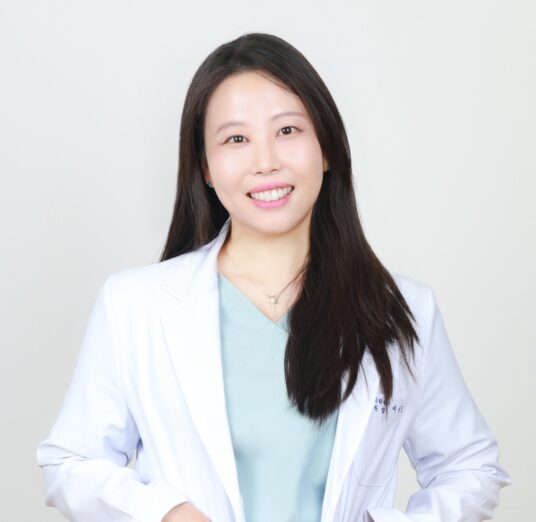
At first I thought I had to help everyone, but now I go for each target precisely.
CEO Lee Yoon-jin's management philosophy is clear: "Technology born from empathy changes the world." With a dual perspective as both a medical professional and a parent, he prioritizes the user's perspective when developing technology. His leadership style is field-oriented, prioritizing meeting actual users with his team and hearing their voices firsthand.
"The process wasn't smooth, but we persevered by incorporating one user feedback item each week. Rather than making grand promises, we quickly iterated on small improvements that resonated with the field, and the path gradually opened up." These experiences shaped the organizational culture.
"The entire team shares the belief that technology is merely a means to an end, and that our success lies in the transformation of our users' lives."
The English version of "Phonohear," a home care app for the hearing impaired and hard of hearing, is scheduled to be released this year. The primary target country is the United States, where SLP teletherapy is actively developing. To tailor content to local needs, the company plans to collaborate with speech therapists in each country to develop content that reflects local language characteristics.
“The key challenge is designing services that take into account each country's medical regulations and cultural differences.”
As a new business, we are focusing on the senior care market. The COVID-19 pandemic has highlighted the need for non-face-to-face rehabilitation services, and Malgwahak Playground is strengthening its home care-focused services while developing a hybrid model that connects with experts.
"We aim to offer a new solution for our aging society through 'NeuroTalk,' which helps seniors with impaired language skills due to stroke, dementia, and other causes."
The goal is a 30% domestic market share.
We are not a teaching team, we are a passing team.
We are preparing for MFDS certification for the digital medical device version of Neurotalk. We are conducting clinical trials with IRB approval and accumulating data proving its medical efficacy.
"The challenge lies in the costs required for efficacy verification and clinical trials. To achieve this, we are actively participating in government-supported projects. We are also securing clinical data through collaboration with medical institutions."
At the end of the interview, CEO Lee Yoon-jin offered some advice to aspiring entrepreneurs.
"At first, I aimed for a broad market. I wanted to help everyone, from people with developmental disabilities and hearing impairments to seniors. However, what I realized on the ground was that each target group had completely different needs. Trying to do everything right at once made me feel bad for everyone, so I broke it down into smaller pieces and redesigned it."
He emphasized, "We're not a teaching team. We're a team that listens closely, goes through difficult moments together, and works to improve ourselves to create frequent moments of re-telling. We started broadly, but now we'll move slowly and precisely, tailoring our approach to each target."
One-tenth the price. Lowering that barrier isn't simply about cost savings. It's about enabling people to practice at home, every day, on their own. The algorithm, born from six years of silence, is an innovation where technology and empathy meet, restoring the fundamental human right to "speech." CEO Lee Yoon-jin's journey is ongoing. It started broadly, but now it's being tailored to each target. Slowly, accurately.
You must be logged in to post a comment.