


– Presenting global HR trends and insights based on analysis of 1.2 million recruitment data cases.
-Calculating the "match rate" between companies and applicants through comprehensive analysis of document, interview, and reputation data.
– Prediction accuracy: 93.7%… Data-driven hiring decision-making aims to reduce hiring failure costs.
HR tech startup Specter (CEO Kyungwook Yoon) has unveiled a new AI solution, TEO, that will revolutionize the hiring decision-making process.
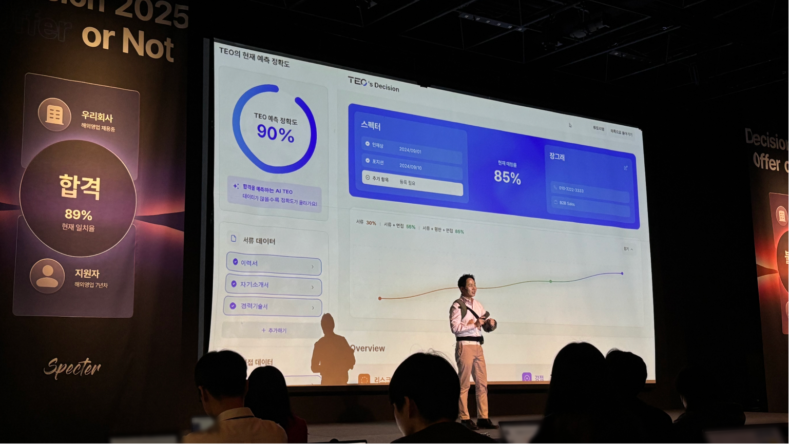
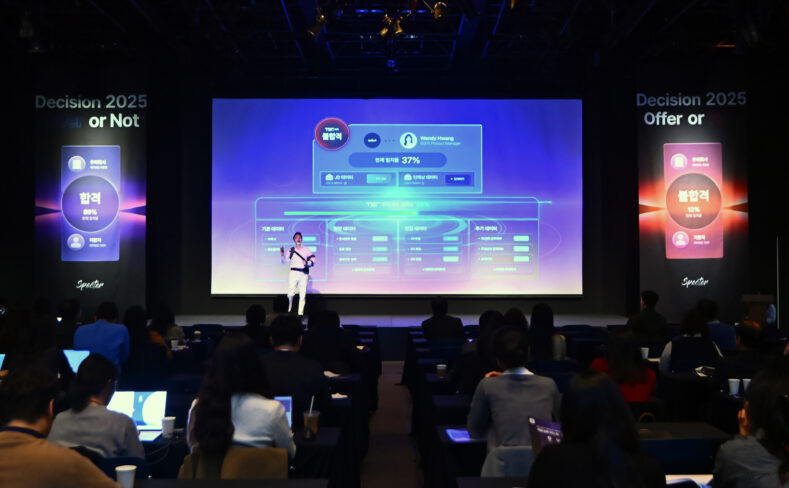
On October 28th, Specter held an HR trend seminar titled "Decision 2025" at the Texpa Hall of the Textile Center Building in Samseong-dong, Seoul, where it presented the global HR market's "recruitment trends and data-driven recruitment innovation direction." The seminar was attended by approximately 200 HR managers and industry insiders from major domestic companies, and speakers included Specter CEO (founder) Kyungwook Yoon, COO (head of product) Yongyeon Yoo, and HR Analytics Director Hyungwoo Kim.
In Part 1, we shared insights from our own analysis of global HR industry trends and the costs associated with failed hiring. In Part 2, we presented "TEO," an AI-powered hiring decision-making solution, as a solution to prevent hiring failures. "TEO" quantifies the fit between a candidate and the organization based on complex data, including documents, interviews, and reputations, enabling fast and fair hiring decisions.
Specter has launched a series of solutions that address challenges at each stage of the hiring process, including a reputation verification platform and an interview recording analysis app. To date, it supports the hiring process for over 5,800 companies, both domestically and internationally, in a smarter and more efficient manner. Since launching its reputation verification platform in 2021, Specter has amassed 1.2 million reputation and interview data points for 320,000 applicants over the past five years. Combining AI and data analysis capabilities, Specter is driving innovation in the HR market.
◼︎ Failure to Hire: A Critical Risk That Hinders Corporate Growth
According to Specter, the five most common types of hiring failures* are: ▲Low performers ▲Early attribution ▲Culture misfit ▲Toxic hires (members whose attitudes, words, and actions harm the organizational atmosphere and the engagement of colleagues) ▲Neutral performers (members who neither cause problems nor achieve significant results). Of these, the neutral performer type causes the greatest loss, as it accounts for a high proportion of new hires (20-30%) and has a large ripple effect of causing stagnation in growth within the organization.
*Recruitment failure: When a new employee fails to meet expectations in terms of job performance, behavioral characteristics, or organizational culture, resulting in decreased productivity, decreased engagement, and loss of organizational costs.
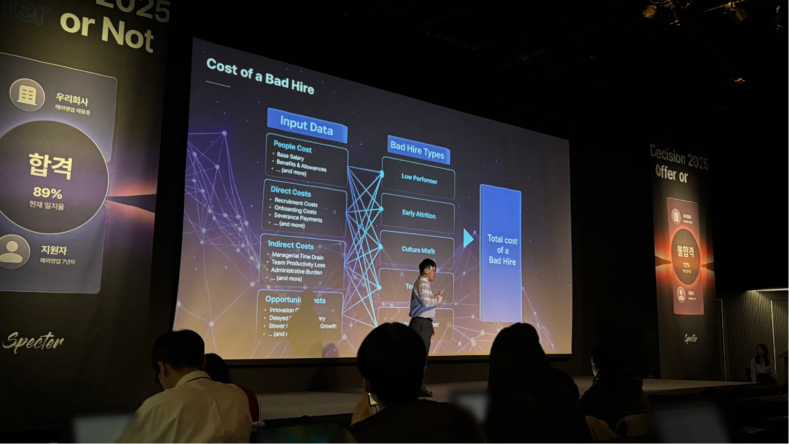
Hiring failures don't just result in lost labor costs; they can have a significant impact on business profitability. Kim Hyung-woo, General Manager of Specter, explained, "According to our analysis of hiring failure cost data, a single failed hire costs 210.7 million won. A single poor hire can halt the growth of an entire organization." The bigger problem is that these costs accumulate, continually increasing the financial burden.
This is why reducing hiring failures and reducing costs is directly linked to a company's business performance. CEO Yoon emphasized, "To reduce the cost of hiring failures, it's crucial to improve the quality of hiring through an accurate and systematic talent verification system."
◼︎ 'TEO', a solution that helps with hiring decisions… Preventing hiring failures with data
To reduce the cost risks of these hiring failures, Specter developed 'TEO', a data-driven AI hiring decision-making solution.
Theo's core function is to support hiring decisions by calculating the match (fit) between an organization and an applicant. It analyzes the similarity between the applicant and the behavioral and attitudinal characteristics of high-performing individuals within the company and predicts the candidate's suitability based on various factors, including job competency, values, and attitude. Based on these results, hiring decisions can be made, reducing the likelihood of hiring failure.
It also analyzes match rate trends and risk factors for each typical stage and suggests criteria to be verified in the next round. Interviewers can use this data to supplement any missing information about applicants and make more impartial decisions.
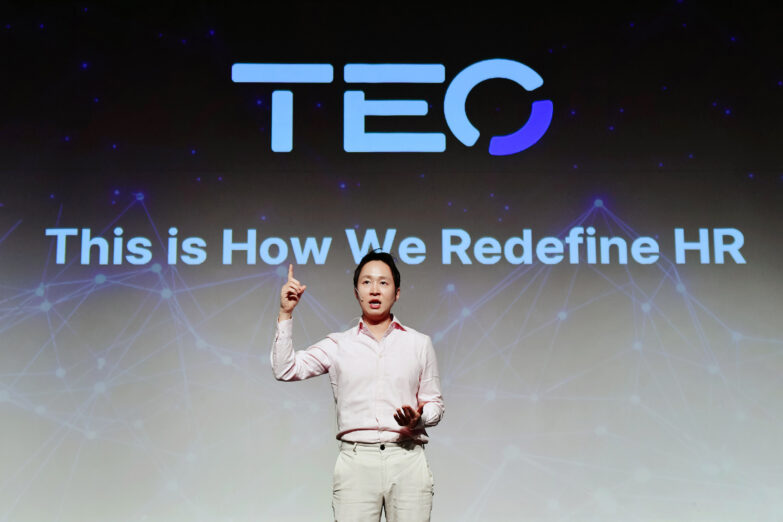
CEO Yoon explained, "In the past, hiring decisions were made based on the interviewer's intuition, but now hiring decisions can be made based on data." He added, "The era when hiring was called a 'comprehensive art' with no right answer is over, and it has been replaced by a scientific approach."
◼︎ Improved accuracy through multi-layered data linkage, including interviews and reputation checks.
"TEO" integrates and analyzes diverse data, including resumes, interview records, and reputation checks, to predict the suitability of candidates for organizations. It utilizes data from the interview record app, launched in March of this year, and existing reputation check services. The recruitment process is continuously progressed through stages—document review, interview, and reputation check—and as more applicant data accumulates, the accuracy of predictions improves.
COO Yoo Yong-yeon said, "TEO's role is to provide HR managers with more confidence in their decisions." While the final decision is made by a human, the analytical results provided by TEO serve as an objective basis, increasing the reliability of those decisions.
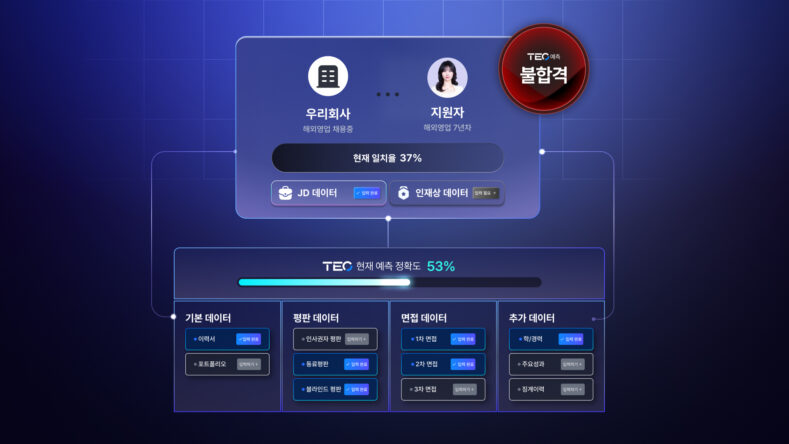
Another key to improving TEO's prediction accuracy is securing data on distinct talent profiles for each company. Specter redefines client talent profiles through a four-week onboarding process and refines job postings by analyzing the profiles of top internal talent. This data is used to train predictive models, and the more distinct the talent profiles, the more accurate the prediction of the organization-applicant match rate.
CEO Yoon explained, "As we continue to recruit new candidates using the 'TEO' solution, we also continuously accumulate profile data on successful candidates. The more we use the solution, the more accurate it becomes."
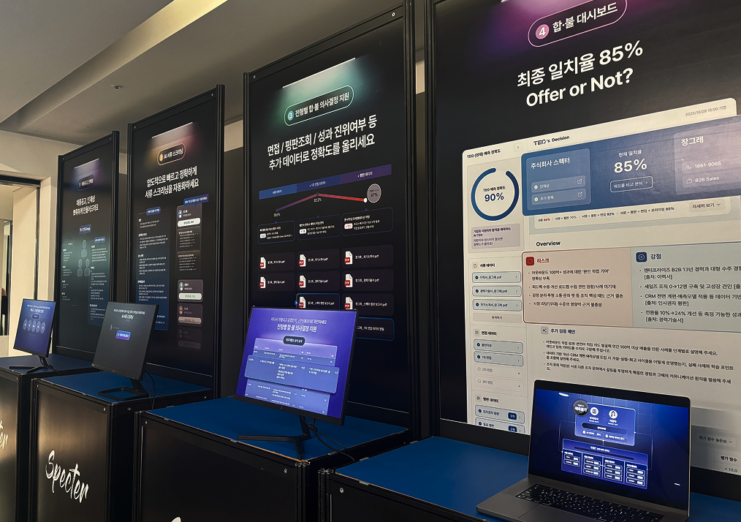
◼︎ 93.7% accuracy in hiring pass/fail predictions… Continuing the "world's first" innovation journey.
Specter developed the "TEO" AI prediction model based on hundreds of thousands of recruitment data sets, including applicants' competencies, reputations, organizational fit, and job performance. Currently, testing with five companies has resulted in a prediction accuracy of 93.7%. This is over 20 percentage points higher than the accuracy of Google's talent screening algorithm (approximately 70%).
Specter plans to continue its research and development efforts, collaborating with partners to improve model accuracy. Multilingual support is also planned for the global market. CEO Yoon stated, "We will continue to forge uncharted paths and solve pressing problems in the HR market," expressing his ambition to become a leader in innovation in the global HR industry.
You must be logged in to post a comment.