



"How do I get started?" Mr. A, a prospective homeowner dreaming of owning a country home, researched dozens of architectural firms and construction companies, but had no idea who to meet with first or what the appropriate construction cost would be. Despite the difficult task of selecting a firm, he couldn't assess the quality of the blueprints, and during construction, he struggled to even grasp the on-site situation. Ultimately, the construction process took 14 months, and during that time, he faced constant friction, both big and small, with the construction company.
Mr. B, who completed a similar-sized house through Buildhada, had a different experience. After registering his project on the platform, verified architectural firms and construction companies participated in a competitive bidding process. Furthermore, he was able to directly demonstrate each firm's capabilities through planning presentations in offline meetings. During construction, a professional project manager led site tours and meetings, ensuring transparency throughout the process. The construction process took 11 months to complete. Mr. B said, "It was the first time I realized architecture could be so transparent and systematic."
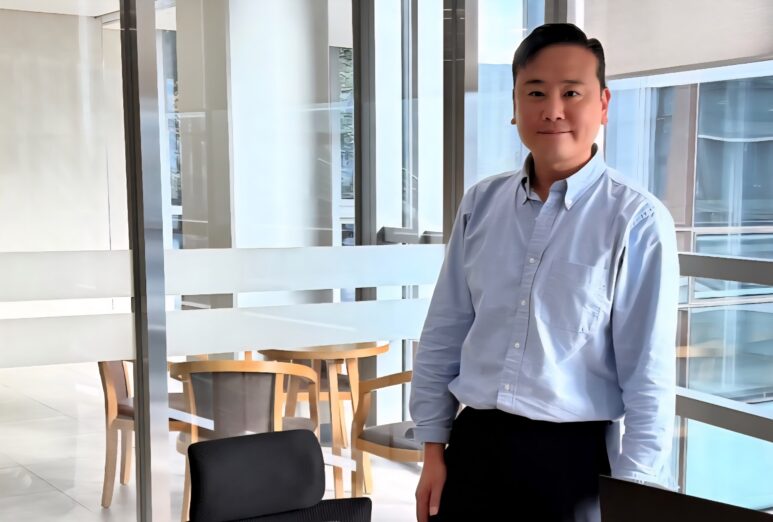
What made the difference between these two cases was the "managed construction platform" of Kim Seok-hee (46), CEO of Buildhada. He created it to address problems he personally witnessed on construction sites over the past decade.
You must know fear to survive.
CEO Kim Seok-hee's entrepreneurial story is unique. He began his career selling egg bread in high school. After working in the UK in branding and design, he returned to Korea and served as a director in real estate development and construction for 11 years, witnessing the harsh realities of the construction industry.
"I was in charge of a hotel project in the heart of an entertainment district. People around me scoffed, saying, 'Attracting foreign tourists is impossible.' However, analysis of inbound travel agencies revealed that reasonably priced hotels near Seoul were attractive to foreign groups traveling by tour bus. Through direct travel agency listings and sales, I secured two years' worth of room reservations."
But behind his success came bitter experiences. He confessed, "I learned 'fear' firsthand through the tyranny and intimidation of construction companies and the pain of construction disputes. It was a fear of money and people. But paradoxically, this experience became a valuable asset."
"I've developed the habit of anticipating adverse conditions and overcoming hurdles. Only entrepreneurs who know how to face challenges can survive in the harsh startup market."
A "project fee" strategy rather than a subscription model
At Demo Day in November 2024, investors asked about "differentiation from existing solutions and profitability." A year later, CEO Seokhee Kim's answer is clear.
"Buildhada is not a monthly subscription-based SaaS. It operates on a per-project fee model. We match building owners and construction companies, and upon signing a construction contract, we receive a percentage of the construction cost as a commission. We then manage the entire process, quality, cost, and risk from start to finish."
Results were rapid. By July 2025, just seven months after launching the service, the company had achieved cumulative construction orders of 10 billion won. The target for 2025 is 20 billion won, and for 2026, 50 billion won. Currently, 12 projects are underway simultaneously. A system has been established that allows a single project manager to manage 10 to 12 projects (valued at 10 to 15 billion won).
"The average project time is 10 to 12 months," he said, adding, "That's more than two months shorter than the industry average of 14 months. This is thanks to optimized management based on a digital platform."
The construction management market is already dominated by solutions from major companies like Hyundai Engineering & Construction's "HighFrame" and POSCO ICT's "PF-PMIS." Can a startup with 10 years of experience compete?
"Our 'Buildwork' solution is a collaborative platform used by building owners and construction companies. While other solutions are complex and require specialized personnel, Buildwork is intuitive enough for field workers to use right away. We focused on process monitoring and document automation."
A more important difference is how it is used.
"If we simply sold software, construction companies wouldn't have any reason to use it. However, Buildwork wins projects directly, providing opportunities for companies and working with them to manage them. This structure makes solution use a necessity, not an obligation. Currently, all stakeholders in all ongoing projects are naturally utilizing Buildwork."
The collaborative network features prominent names like Harvard and MIT graduates, Young Architects Award winners, and master architects. But what's the actual level of participation?
"Currently, all 12 projects are underway with verified professionals. For each project, leading domestic architectural firms and construction companies are participating in the bidding, and competition is fierce."
CEO Kim Seok-hee explained, “Because Build thoroughly verifies and registers clients’ projects in advance, both participating architects and construction companies work in a trustworthy environment.” He added, “Within the platform, each member company can transparently verify each other’s capabilities and performance, allowing projects to be prepared in a healthy competitive environment.”
As a result, every customer who uses Buildhada will work directly with these top-tier experts. This isn't a matter of chance; it's a structural necessity.
An expansion model utilizing retired construction professionals
As projects grow, so too must the workforce. CEO Kim Seok-hee's solution is unique.
"We signed MOUs with two supervisory firms. We're actively leveraging silver construction site experts from large corporations who are seeking re-employment after retirement. We've completed proof-of-concepts (PoCs) at two sites, deploying silver PMs, and have proven their cost-effectiveness and expertise."
This strategy simultaneously addresses the labor shortage and realizes social value. Build has completed two welfare facility projects, including the establishment of a home care center, and has also entered the silver town and nursing home markets through an MOU with Seoho Impact.
"The energy generated by space transforms individual lives and communities. Wherever assistance is needed, we plan to continue our social value-creating projects, regardless of environmental constraints."
It's fascinating that AI can automatically generate drawings. How practical is it?
We're currently developing technology that uses AI to automatically recognize and scan 2D drawings and convert them into 3D models. The drawing recognition rate has reached approximately 40%, and we're further developing technologies to improve the accuracy of plane and elevation recognition and automatically calculate quantities through AI analysis of material information.
In the short term, we plan to introduce AI agents to Buildwork to provide services for detecting abnormalities in construction sites and monitoring progress in real time.
“Our goal is to minimize construction risks and maximize project management efficiency.”
Some argue that it's premature to talk about the global market just one year after founding the company. However, his plans are concrete.
"Recently, the number of foreign architects operating in Korea has been increasing. However, to operate in the Korean market, collaboration with a domestic architectural firm holding a license is essential. Buildhada serves as this bridge."

Buildda is currently in detailed discussions with Japanese architectural firms and associations and is in seed investment discussions with several investors. The company's achievements in government support programs, including winning the Ministry of Land, Infrastructure and Transport Award, being selected as a Gyeonggi Province technology startup, and participating in the Kibo Venture Camp, are attracting investor interest.
The immediate goal is clear: secure construction orders worth 20 billion won this year and 50 billion won next year. "Our goal is to increase Buildhada's brand awareness among customers and establish ourselves as an all-in-one solution that addresses the opacity and inefficiency issues in the small-scale construction market."
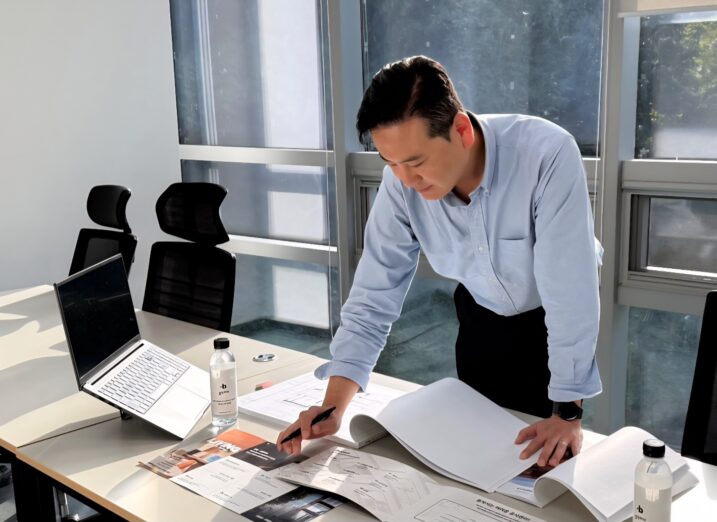
Are we truly solving the problems we've witnessed in the field over the past decade? CEO Kim Seok-hee recalled a recent project site tour.
"It was a moment when the building owner, designer, and construction company toured the site together, checking the progress. In the past, each person would visit the site separately and have different information. But that day, everyone shared the same information, at the same time, and transparently. That's when I realized, 'We're truly changing the architecture ecosystem.'"
The boy who realized the importance of "key customers" while selling egg bread in high school learned the power of "strategic sales" through a hotel project. Having learned "fear" in the "jungle" of the construction site, he has become an entrepreneur who is now creating transparent glass windows within that jungle. The future he is creating through building is one where architecture is no longer a stressful experience, but rather a joyful and creative one.
You must be logged in to post a comment.