



– To commemorate the 140th anniversary of Korea-France diplomatic relations, the Korea Sino-France Cooperation Foundation (KSC) Paris hosted…
The triangular collaboration between Jungjin, Station F, and HEC Paris is building a global expansion model through "ecosystem connectivity."
From AI to aerospace, K-Tech presents a bold vision for the European market.
Rediscovering the "Ppalli Ppalli" culture: The opportunities and appeal of the Korean market as seen by French entrepreneurs.
A two-way ecosystem exchange platform that crosses both 'outbound' and 'inbound' channels.
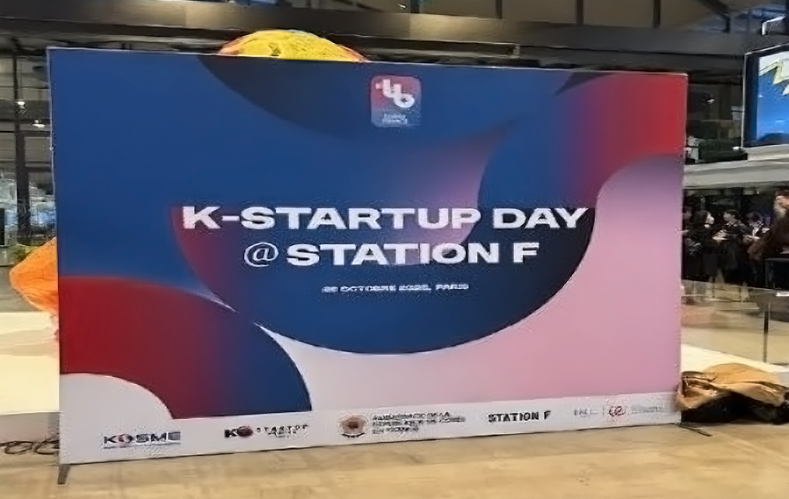
On October 29, 2025, Station F, the world's largest startup campus located in the 13th arrondissement of Paris, France, was buzzing with unusual energy. Inside the massive building, a converted 1920s freight train station, fluent Korean and French mingled, creating a language of innovation. Here, "K-Startup Day at Station F," a special event commemorating the 140th anniversary of diplomatic relations between Korea and France, kicked off.
Hosted by the K-Startup Center Paris (KSC Paris), operated by the Korea SMEs and Startups Agency (KOSME), this event served as a platform for Korean startups to expand into Europe (outbound) and attract French startups to Korea (inbound). Eleven innovative Korean companies across various fields, including AI, mobility, aerospace, and food tech, presented their challenging visions to European investors and partners. This was followed in the afternoon by a fervent interest from French entrepreneurs, who recognized the potential of the Korean market. The enthusiasm of the two countries' innovators gathered at Station F marked the beginning of a partnership that will usher in a new century of technology and ideas, building on 140 years of diplomatic history between Korea and France.
Europe's Largest Innovation Hub Opens Doors to K-Startups
KSC Paris Director Yang Ji-ae, who opened the event, emphasized that this event would serve as a bridgehead for building sustainable global cooperation through exchanges between the two countries' startup ecosystems. True to her words, the venue was bustling with entrepreneurs, investors, and government officials from both countries even before the event began.
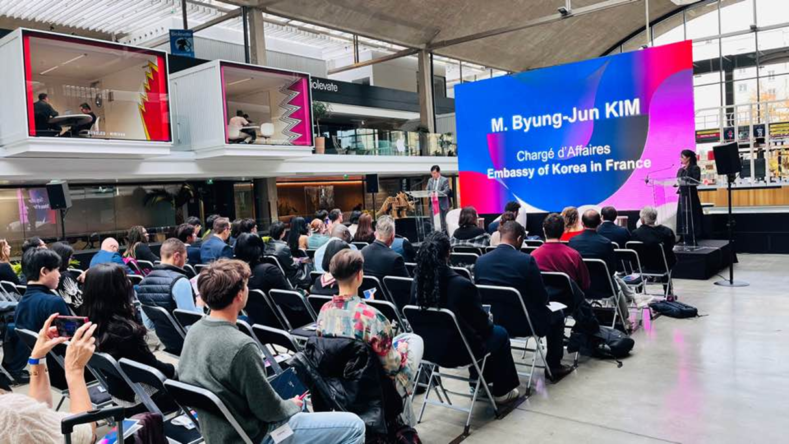
Despite being the French autumn break, the participation of French visitors, driven by curiosity about Korea's innovative technologies, was particularly notable. In recent years, the Korean Wave, represented by K-pop, K-dramas, and K-food, has expanded into the technology and business sectors, naturally lowering the barriers to technological cooperation and investment.
Founded by French telecoms tycoon Xavier Niel, Station F is the world's largest innovation hub, home to over 1,000 startups across 34,000 square meters.
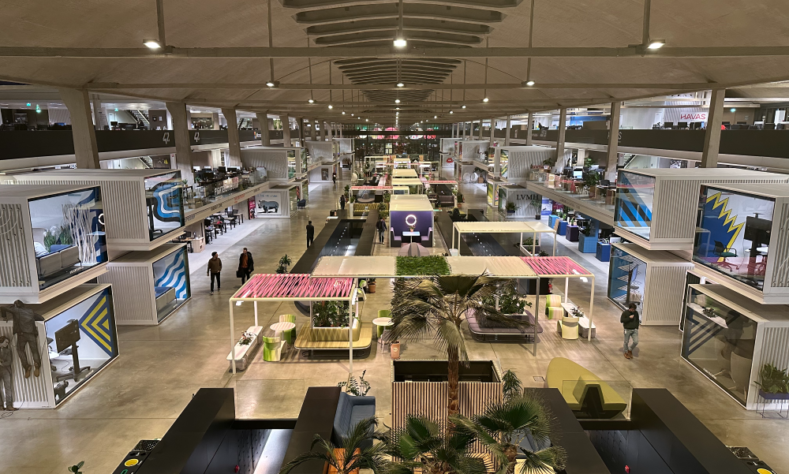
From President Emmanuel Macron to OpenAI CEO Sam Altman and Snoop Dogg, this venue, visited by global leaders in politics, business, and culture, serves as a symbol of global innovation. The fact that KSC Paris chose this location as its base and the venue for "K-Startup Day" is a declaration that Korean startups are worthy of competing on the global innovation stage, where global companies like Google, Meta, and LVMH are partners. This provides participating companies with a powerful "intangible asset," granting them a world-class network and credibility.
From AI to space, K-Tech's bold challenge to the world
The "Outbound" session, held in the morning, was an ambitious launch for K-startups into the European market. KSC Paris's carefully selected resident and prospective resident companies pitched their core technologies and visions to local experts, including Station F's investment team and the Asia investment manager for the Île-de-France region, knocking on the door of the European market.
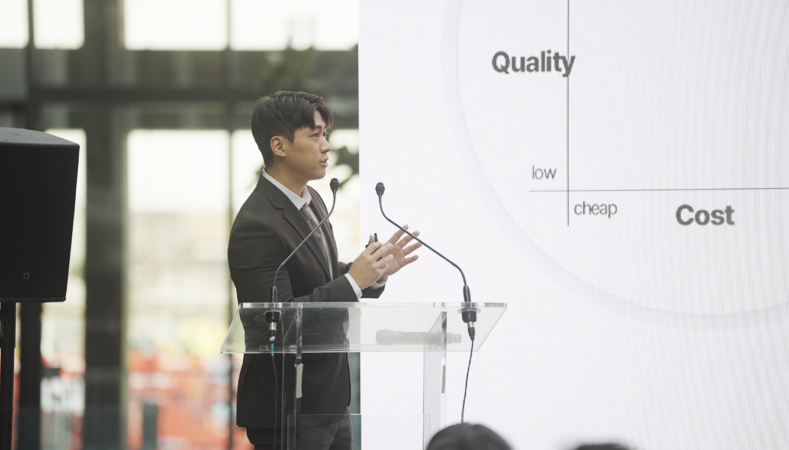
The portfolios of the 11 companies introduced that day clearly demonstrated the depth and multi-layered technological capabilities accumulated by the Korean startup ecosystem. These can be broadly divided into two streams. One is "deep tech," which requires advanced R&D capabilities in fields like AI, mobility, and aerospace. The other is "culture and lifestyle tech," which leverages Korea's globally recognized cultural assets to create business models.
In the deep tech sector, the advancement of companies leading the era of software-defined vehicles (SDVs) was notable.
Dream Ace presented the future of personalized mobility experiences by introducing an IVI (In-Vehicle Infotainment) platform that integrates and controls in-vehicle seating, air conditioning, and lighting based on on-device AI.
Based in Changwon, Gyeongnam, iFlow presented a solution encompassing both hardware and infrastructure for eco-friendly mobility, unveiling a hydrogen fuel cell powertrain for micromobility based on high-efficiency axial flux motor (AFPM) technology and a small facility called 'HOASIS' that produces and charges green hydrogen using solar energy.
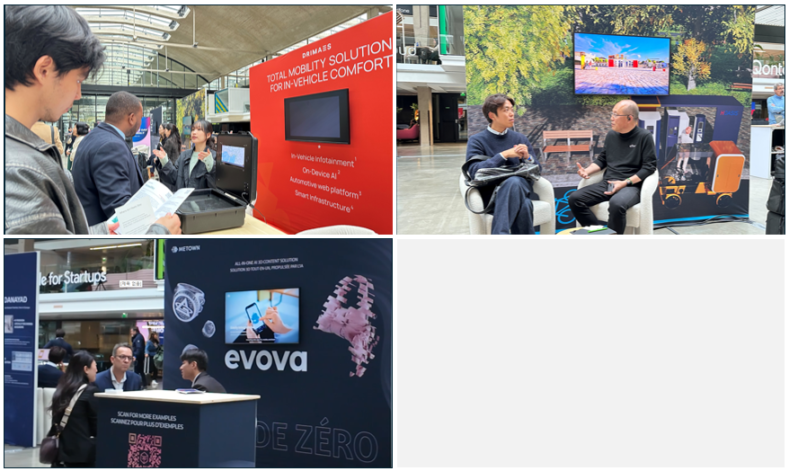
MiTown demonstrated its service 'EVOVA', which automatically converts real objects into ultra-light (approximately 3MB) high-quality 3D models in just a few minutes using its self-developed Gaussian Splatting technology, showing its potential to change the paradigm of e-commerce and VFX content production.
DSW has implemented sustainability in everyday life through technology through 'SONNET', an AI solution that is applied to home appliances such as washing machines to drastically reduce energy, water, and detergent usage.
The most ambitious vision was presented by Dallo Aerospace in the aerospace sector. Having completed verification of their MVP model within a year of their founding, they aim to commercialize small satellite launch services by 2027, and have already garnered attention for their concrete achievements, including signing a contract with Japanese universities for CubeSat test launches.
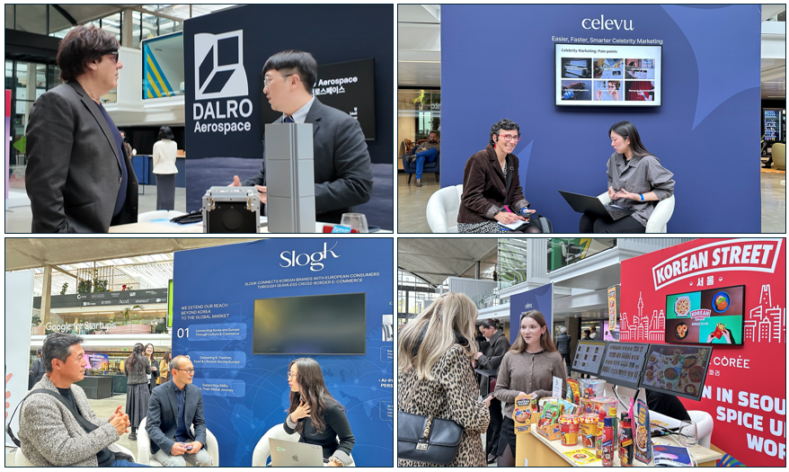
Culture and lifestyle tech companies have leveraged Korea's soft power to create sophisticated business models.
AligoAI's 'Celevu' is an innovative celebrity IP platform that leverages the global popularity of K-pop and K-dramas to match the optimal celebrity for an advertising campaign using AI and generate high-quality advertising content without additional filming using 'digital twin' technology.
Slok is pioneering a new market by analyzing European consumer preference data through its AI-based O2O platform 'DANAYAD' and curating customized fashion from emerging Korean designers.
Luelang, selected as the 'Baby Unicorn' in 2025, is a K-food total solution company that has successfully established frozen dumplings, fried chicken, etc. in local French retail channels under its own brand 'Maison de Corée'. It proved the competitiveness of its products by directly providing catering at this event.
Startups designing new experiences also attracted attention. Paris Class's "TiP (Travel in your Pocket)" is a concierge platform that uses AI to analyze users' emotions and preferences to design customized luxury trips.
Divein Group collaborates with artists to transform rooms in 2-4 star hotels into immersive art rooms through its "Artstay" platform, simultaneously creating hotel revitalization and innovative travel experiences. Paris-based Nomadhull is a community app connecting over 400,000 female travelers in 190 countries worldwide. Through its core values of "safety" and "solidarity," it supports independent travel for women.
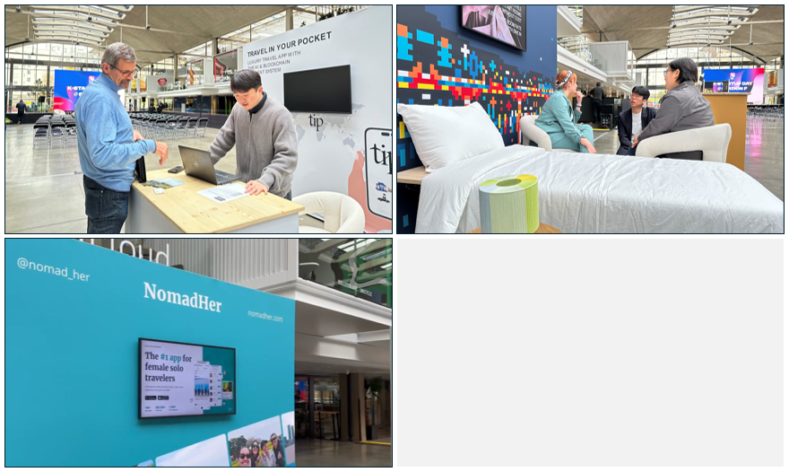
Many of them already have incorporated or headquartered in Paris, making it clear that this event is not just a vague exploration of the European market, but a strategic move to accelerate efforts already underway.
Connecting Ecosystems – The Triangle of KSC Paris, Station F, and HEC Paris
What truly sets "K-Startup Day" apart is its transparent disclosure of a sophisticated support system designed to help promising companies successfully establish themselves in the local market. The triangular structure—KSC Paris (government), Station F (private infrastructure), and HEC Paris Business School (academic)—proposed a sophisticated "soft landing" model that systematically eliminates nearly all the factors that startups face in overseas markets.
The first axis, Station F, is a global stage in itself. "This is more than just a space to provide desks," the Station F presenter emphasized, emphasizing that it is a unique networking hub where entrepreneurs from over 70 countries can gather, network, and connect with top investors and corporate partners. Station F, in particular, demonstrates its systematic commitment to attracting international startups by operating dedicated programs for specific countries like Korea, Japan, and India. For Korean startups, a spot at Station F is like securing a ticket to the heart of the global market.
The second pillar is HEC Paris, Europe's most prestigious business school. Antoine Leprêtre, director of the HEC incubator, defines HEC's role as "designing serendipity." He explains that HEC leverages its 45-plus years of experience in entrepreneurship education, an alumni network that has produced 16 unicorns, and a pool of over 1,000 expert mentors to support the strategic growth of startups. Beyond one-sided education, HEC's programs aim to create an "engaged ecosystem" where the entrepreneurial community supports and grows together. This is crucial for foreign startups lacking market intelligence and strategic wisdom.
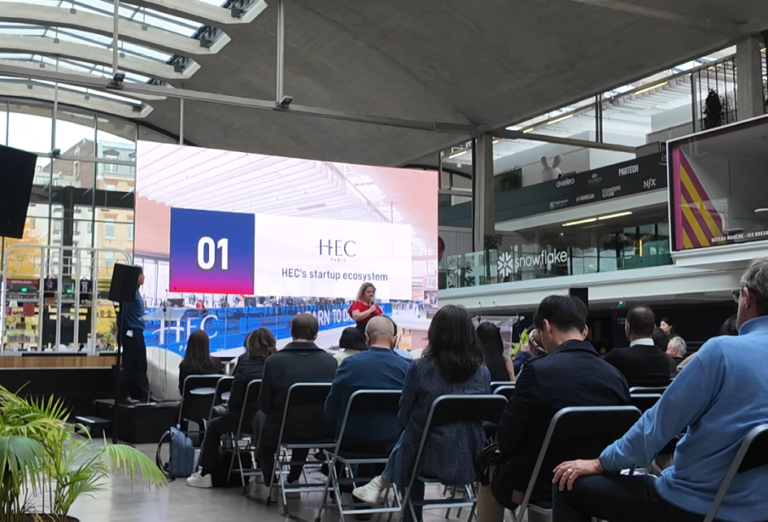
Connecting these two powerful partners and designing customized programs for Korean startups is the role of KSC Paris, the third pillar. Director Yang Ji-ae stated, "KSC Paris designed the program in collaboration with top-tier partners like Station F and HEC Paris." By collaborating with Station F, which provides hardware and networking, and HEC, which provides software programs, the structure provides Korean startups with the easiest access to the local ecosystem. This model, which combines government financial support, the private sector's global network, and the strategic depth of academia, is the optimal formula for dramatically reducing the uncertainty of overseas expansion and maximizing the chances of success.
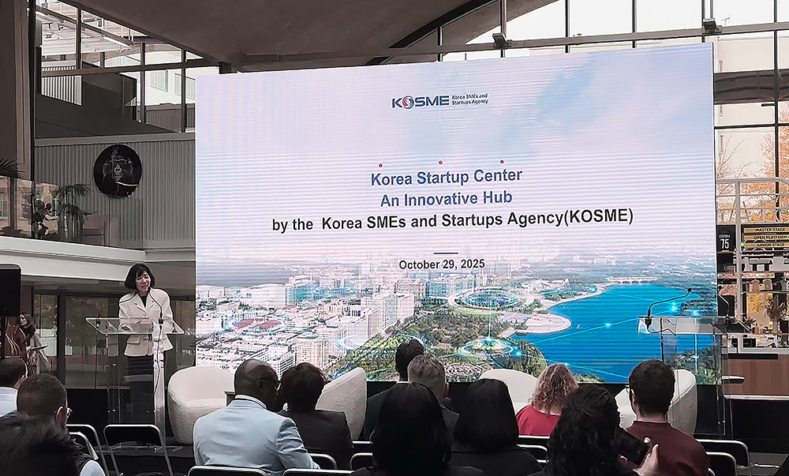
"Korea's 'Ppalli Ppalli' Culture Is an Opportunity" – The K-Ecosystem as Seen by French Entrepreneurs
The afternoon's "Inbound" session, "Gateway to Korea," was the highlight of the event. It provided a vivid insight into the Korean government's efforts to attract French startups and the insights of French entrepreneurs who have actually experienced the Korean market.
First, the Korean government's proactive "love call" was introduced. From the "Global Startup Center," which offers free consulting on administrative procedures that foreigners often find complex, such as opening bank accounts and taxation, to the "K-Startup Grand Challenge (KSGC)," which offers substantial prize money and follow-up support to the top five teams, to the "K-Scouter" program, which identifies high-potential foreign technology companies and provides close support throughout the entire process of entering the Korean market, to dedicated visas for entrepreneurs, various policies were presented, proving that Korea is moving toward an "open" market.
The practical impact of these government efforts was demonstrated in the presentations given by French entrepreneurs. Jean-Marc Druesne, CEO of healthcare startup Bbalance, captivated the audience by sharing his experience in Korea. He revealed that after participating in a Korean accelerator program, he successfully completed proof-of-concept (PoC) projects with top medical institutions in Korea, including Seoul National University Hospital and Konkuk University Hospital. He also revealed that he has established a Korean subsidiary and is currently partnering with a healthcare company founded by former Samsung Electronics engineers to produce hardware.
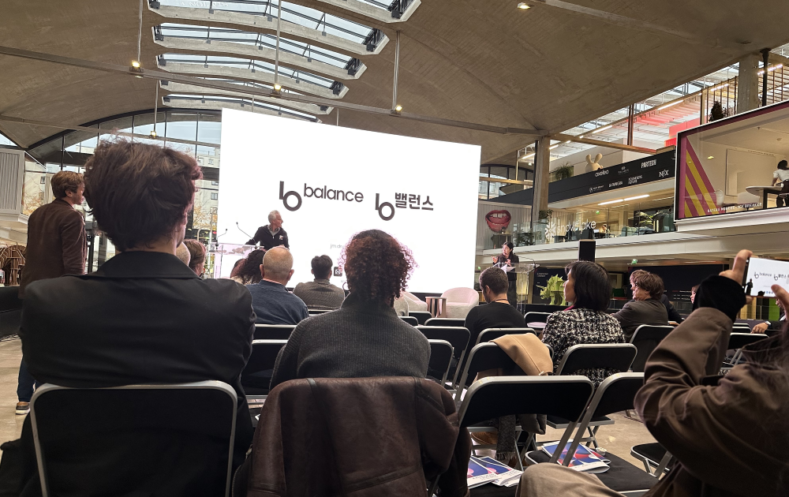
In particular, he highlighted the Korean word "PaliPali" (hurry, hurry, hurry) on his presentation slides, highlighting it as the Korean market's greatest strength. He stated, "Thanks to Korea's 'hurry, hurry' culture, we can form deep business relationships and achieve rapid results in as little as six months." This reinterpretation of Korea's culture of speed, often perceived negatively in the West, as a "factor of opportunity," was a powerful testament to the attractiveness of the Korean market for startups, where speed is everything.
Melissa, CEO of K-Beauty brand K-Brown, offered more practical advice. She emphasized, "In Korea, there's a strong tendency to invest in 'people' before the business idea itself, so building long-term trust is paramount." While positively assessing the startup visa process, saying it was "surprisingly easy," she candidly shared her experience of the significant challenges she faced as a foreigner, such as opening a bank account and integrating with global payment systems like Shopify. This transparent disclosure of the backstory and practical challenges of success stories has actually boosted trust in the Korean startup ecosystem. This is because it conveys a genuine message that the Korean government and support organizations are clearly aware of the real-world challenges faced by foreign entrepreneurs and are working to address them.
A Korea-France Partnership that Continues Innovation for Over 140 Years
Marking the historic milestone of the 140th anniversary of Korea-France diplomatic relations, "K-Startup Day at Station F" was an event that clearly outlined the future direction of economic cooperation between the two countries. The event organically linked "outbound" efforts, showcasing Korea's innovative technologies to Europe, with "inbound" efforts, attracting France's innovative capabilities to Korea. This successfully implemented a model of mutually beneficial "ecosystem exchange" that transcended unilateral expansion.
What we witnessed at Station F that day was evidence that Korea is evolving from a passive "rule-taker" in the global startup landscape to a "rule-maker," designing its own incubation programs like K-Scouter and presenting a vision of becoming a "hub for Asian expansion."
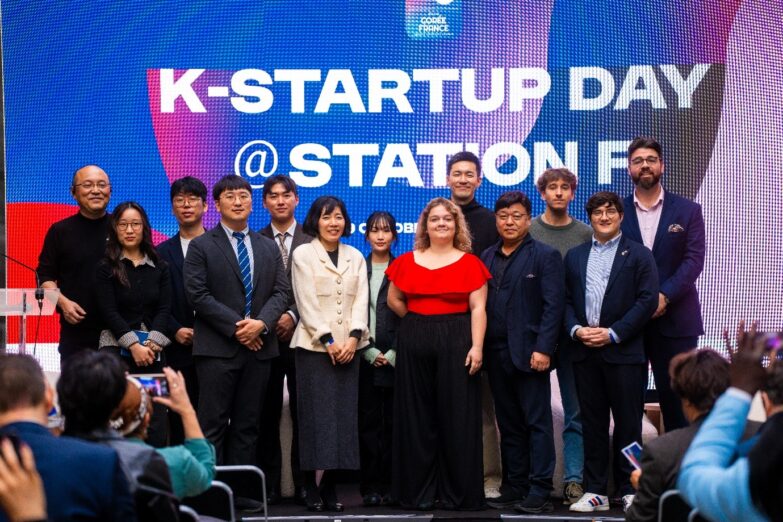
This powerful collaboration model, combining systematic government support centered around KSC Paris, world-class infrastructure provided by Station F, and strategic acumen from HEC Paris, will create a virtuous cycle in which more K-startups will successfully establish themselves in the European market and, at the same time, attract more global talent to Korea as a land of opportunity. The relationship between our two countries, which began with diplomacy 140 years ago, is now evolving into a deeper and more dynamic partnership through the new language of innovation and technology. "K-Startup Day" served as a powerful signal to mark the beginning of this new era.
You must be logged in to post a comment.