



A golden time for securing AI sovereignty and shifting the industrial paradigm.
-AI infrastructure as Korea's next-generation key industry
Star Ventures is building an AI unicorn ecosystem through technology startups and talent development.
인공지능(AI)이 문명 전환의 핵심 축으로 자리 잡은 지금, 산업의 경쟁력은 기술이 아니라 '지능'을 얼마나 확보했는가로 결정된다. 하지만 대한민국은 여전히 데이터센터 인프라와 에너지 기반, 그리고 창업 생태계의 디지털 전환 속도에서 뒤처져 있다. 스타벤처스 문지은 대표는 이 상황을 “AI 문맹국으로 추락할 수도 있는 골든타임”이라 진단한다. 그의 메시지는 단순한 경고가 아니다. AI 산업의 주권을 지키기 위한 '국가적 실행전략'을 촉구하는 절박한 제언이다.
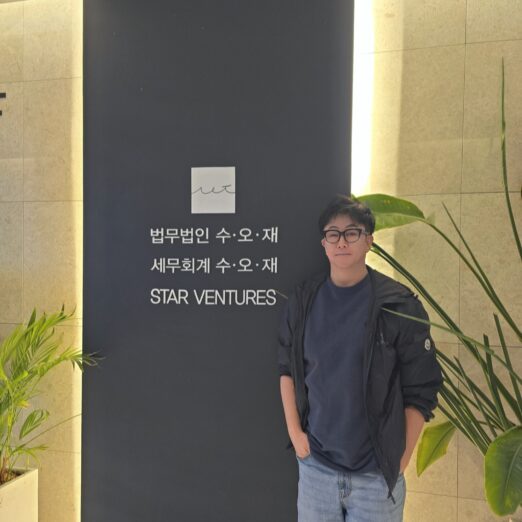
AI is not a technology, it's intelligence.
Professor Moon Ji-eun, a futurist and CEO of Star Ventures, doesn't view artificial intelligence (AI) as simply the result of technological evolution. Throughout the interview, he emphasized the urgency of building AI infrastructure. "If we view AI solely as a technology, we're already falling behind," he said. "AI is intelligence, and who owns that intelligence determines a nation's competitiveness."
The AI he speaks of isn't simply an extension of technological advancement, but a "revolution of intelligence" that will transform the very grammar of industry. Citing the example of GPT-4, he explained that AI is no longer a tool for software engineers, but rather serves as the brain of industry. However, operating this intelligence requires enormous energy. The electricity consumed in training GPT-4 alone is equivalent to the annual electricity consumption of Ireland. Ultimately, AI is both an energy and infrastructure issue.
President Moon soberly assessed the current state of affairs in Korea. Without data centers, AI cannot be trained, and without hardware, no algorithms can run. He warned that Korea currently lacks these "intelligence factories," ultimately leading to a structure where intelligence must be imported. He described the current competition as "a battle over who can secure the most GPUs and energy," describing this phenomenon as "the rich get richer and the poor get poorer in AI."
He defined AI infrastructure not as a simple technological foundation, but as an "industrial ecosystem of intelligence" connecting all industries. He predicted that all industries, including manufacturing, logistics, finance, and media, must access this intelligence, and that if Korea fails to design this connection now, it will lose its presence on the map of future industries.
Star Ventures, the "Unicorn Academy" for Technology Startups
Star Ventures is a technology startup accelerator that collaborates with over 50 domestic universities, local governments, and venture capital firms to foster startups in the AI, bio, energy, and robotics sectors. CEO Moon Ji-eun calls it more than just an investment firm; it's an "AI Unicorn Academy."
"Entrepreneurs must dream. But dreams without results don't last long. We help companies find the growth stages that lead to becoming unicorns—the "core" (the core growth engine) and the "kick" (the force that attracts innovation)."
He views investment as an investment in people rather than technology. He values an entrepreneur's receptiveness and execution ability more than a company's technological prowess, and emphasizes that entrepreneurs who quickly absorb feedback and respond sensitively to change ultimately determine the pace of growth.
“What entrepreneurs who grow into unicorns have in common is that they are already practicing what they preach.”
Based on its "Complete Build" accelerator model, Star Ventures provides full-cycle support from startup inception through the pre-IPO stage. It has invested in over 30 companies and continues to support them through technology validation, market entry, and follow-up investment.
"Without startups, there's no youth."
Mr. Moon, a former professor at Hanyang University's Industry-Academic Cooperation Foundation, emphasizes the need for entrepreneurship education more strongly than anyone else. He says, "Today's youth aren't a generation that's given jobs. They have to create their own. Startups aren't simply a choice; they're a way of survival in this day and age."
The core of his educational philosophy is "chutzpah entrepreneurship." He advocates fostering a culture of learning through experimentation, without fear of failure. He emphasizes the need to strengthen entrepreneurship education, which encourages challenge and experimentation, from elementary and secondary levels.
He believes that even if AI technology replaces half of all jobs, it will simultaneously create new industries and occupations. The key is to cultivate people who are not afraid of AI and who treat it as a tool. In this sense, he argues that startups are the training grounds for future talent and the foundation of national competitiveness.
Currently, Star Ventures operates a university-linked startup mentoring program, nurturing hundreds of aspiring entrepreneurs each year. This ecosystem, which combines education, investment, and networking, helps technology-based startups experience the entire growth process. CEO Moon calls this "a laboratory for a Korean-style unicorn ecosystem," and he is developing it beyond simple startup support into a structural system that cultivates new industry talent.
AI infrastructure is a key industry.
Moon Ji-eun, a futurist, asserts that AI is "a next-generation key industry that South Korea must build." He emphasizes that, because South Korea is not a reserve currency country, it must at least establish a key industry-level structure. While semiconductors have played this role, AI infrastructure must now take its place.
The AI President Moon speaks of isn't simply a technology; it's the central axis and network of national industry. He defines the AI industry as "an ecosystem where chips, data, power, energy, robots, and humans are organically intertwined." He points out that if any one of these elements is disrupted, the entire industry will grind to a halt, and that competitiveness cannot be secured with just superior hardware or software alone. Therefore, he emphasized the need for a strategic approach to comprehensively designing and managing AI infrastructure at the national level.
In particular, he argues that data centers should be recognized as a national strategic asset. Since AI is not a single technology but a foundational industry connecting all industries, he argues that securing data centers, improving energy efficiency, and integrating the GPU and semiconductor ecosystems are crucial. He predicted, "AI must now be at the very top of national infrastructure. The country that first secures this structure will secure industrial hegemony for the next 100 years."
Ultimately, President Moon's message is clear: whether to view AI as a simple technology or as a cornerstone of the nation—this choice is a turning point that will fundamentally alter the industrial landscape of South Korea.
"It's not too late for Korea in the AGI era."
Futurist Moon Ji-eun predicts that "AGI (Artificial General Intelligence) will become a reality within five years." To her, the emergence of AGI is not simply a technological advancement, but a period of "reassembly" in which the entire industrial structure is being restructured. She believes this is the moment when a new industrial order is being created, one in which humans and intelligence coexist.
President Moon defines the AGI era as "a transitional period where intelligence will lead industry." He predicts that once AGI is realized, numerous "AI agents" will emerge within companies, performing human roles such as advertising planning, sales management, and customer data analysis. He explains that humans will become central to industrial operations as "AGI masters," providing guidance on decision-making.
His analysis points to a structural shift in industry. While humans have controlled machines until now, he argues, an era will dawn where intelligence will drive industry. Therefore, the key is not how quickly AI is adopted, but who designs the structure of intelligence.
President Moon asserts that it's not too late for Korea. Korea possesses semiconductor technology, an AI startup ecosystem, and data capabilities. He emphasizes that "if we organically connect these ecosystems, we can grow faster than the US or China," emphasizing that now is the last golden opportunity to set course.
He believes the essence of the AI competition is shifting from a technology war between companies to a national industrial design competition. Whoever first utilizes intelligence as the engine of their industry will determine future hegemony, and Korea remains well-positioned to seize the opportunity. However, he added, "Now is the time for action, not words."
Startups are the engine of the nation.
Representative Moon added quietly as the interview concluded.
"Without startups, there's no future for our country. Creating an environment where young people can take on challenges, a structure that allows them to bounce back even after failure—that's where true innovation begins."
He is currently focusing on investing in AI startups, expanding the ecosystem, and building a global AI testbed.
"We invest in dreamers. We invest not in technology, but in people, and in the tomorrow they will change."
In the midst of the AI revolution, Moon Ji-eun, as a futurist, still asks:
“Will we consume AI, or will we create it?”
That question is also a question for the future of the Republic of Korea.
You must be logged in to post a comment.