



Social finance is shrinking, and young people are leaving the nonprofit sector. While policy recommendations pile up, bills remain dormant in the National Assembly. A researcher has stepped forward to help overcome the "crisis of trust" facing the social sector.
Ji-Hoon Ahn (46), CEO of Social Venture Korea, has 20 years of venture startup experience, social innovation research, and even completed the operation of Understand Avenue. He declared that he would design change from a position of policymaking authority.

At the Understand Avenue office in Seongdong-gu, Seoul, CEO Ahn Ji-hoon leaned back in his chair throughout the interview, answering questions without hesitation.
“I can confidently say that there is none.”
The question was, "With the decline in support for private social finance institutions, the ecosystem is shrinking. Isn't there a risk that this will lead to policy failures for the entire social sector?" His voice was clear.
"The crisis in social finance is more about trust than money. People don't trust social sector players, so they don't provide sufficient funding, and yet they worry about policy failure."
He started a venture as a college student in his 20s and went through a period of success and failure.
"If the Kim Dae-jung administration hadn't pursued a venture-nurturing policy, I wouldn't have been able to start a business. That's when I realized how crucial the power of institutions is."
Social Korea, led by CEO Ahn Ji-hoon, specializes in consulting, research, and education for fostering a social economy ecosystem and fostering social ventures. He stated, "We have accumulated a mountain of academic conferences and reports from running research institutes like Impact Research Lab," and added, "The design of a system to revitalize the social sector has already been completed."
So why isn't the gap between the field and policy narrowing?
"Policy isn't a matter of technology, it's a matter of will. The role of leadership is to connect the language of policy with the field, but it's sorely lacking."
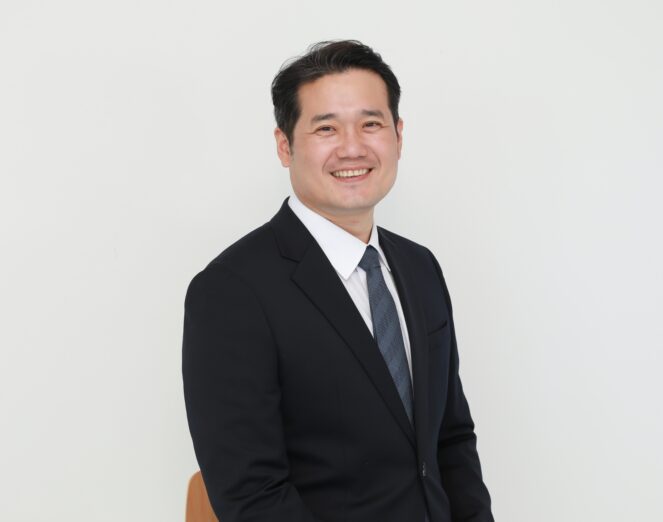
The absurdity of demanding results without faith
"Some high-ranking officials are even embezzling public funds for personal gain. Shouldn't social sector players be taking action to realize social value?"
CEO Ahn Ji-hoon's voice gained strength. His argument was that instead of worrying about the shrinking social finance ecosystem, we should "push it forward."
"If policymakers have a firm belief and boldly invest, the social finance and impact investment ecosystem will never be undermined."
The field is moving. Even without government support, social sector leaders continue to take steps to realize social value.
"Some people worry about failures that don't even exist. I wonder if they have an impure motive to grab the share of the social sector that belongs to them."
The issue of youth non-profit employment is similar. "The saying, 'It's okay if you don't make money while doing good work,' is no longer true."
He sees this problem not as a matter of employment, but rather as an inequality of opportunity. "A sustainable structure is created when non-profits can continue their careers and secure a stable livelihood."
Institutionalizing impact career paths, performance-based compensation structures, and hybrid non-profit-for-profit models—the solutions are here. "With the will, scholars can quickly create great policies."
He offered a historical perspective on the debate over the reliability of social value measurement systems. "Accounting methods used worldwide were developed over hundreds of years. To say a system only a few years old is completely reliable? That's absurd. But to say it's meaningless and shouldn't be used? That's even more absurd."
Seoul Forest Understand Avenue, a Circulation Experimental Site
CEO Ahn Ji-hoon didn't remain a theorist. He created Seoul Forest Understand Avenue as an "experiment in publicness." It was an attempt to transform idle space into a social asset, bridging the gap between the city's youth, artists, and residents.

“Our pride in being Asia’s largest ESG platform doesn’t just come from nowhere.”
Operating costs, institutional constraints, and limitations in cooperation were daunting. I realized that for this experiment to continue, support from policies and institutions was essential.
This is a microcosm of social innovation. It strives to balance economic returns with social value, reinvesting a portion of its profits in youth entrepreneurship and local programs.
"It's a circular structure. Money circulates, nurturing people, and those people, in turn, revitalize the region. It's a truly inclusive growth model."
Artists move slowly, businesses move quickly, and residents move with the flow of life. Coordinating these entities, each with their own pace, is the task. "It's exactly what a leader must do."
Through endless dialogue, shared goals and trust were built, creating a collaborative ecosystem.
"Social change begins with relationships, not institutions. The role of leadership is to design and maintain those relationships."
The coronavirus pandemic was both a crisis and an opportunity. While initially a devastating blow to field-based social enterprises, it also opened up "equal access." Those living in rural areas, with disabilities, those with caregiving needs, and those with mobility constraints were now able to participate online.
"The problem is that these opportunities don't reach all social sector players equally. This is where systems really need to play a role."
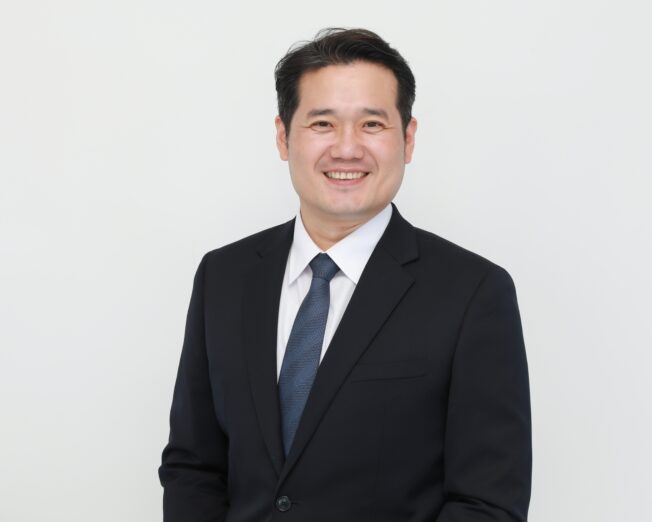
From Researcher to Implementer, Designing Change
The reason the Basic Social Economy Act failed to pass the National Assembly is also a matter of will.
"The Democratic Party is currently pushing for a social solidarity economy bill, but the opposition is talking about activist groups. The view that the social economy is only framed by outdated ideologies persists."
What he believes is needed is not partisan logic, but the voices of those on the ground. He emphasized, "We need a citizen-led legislative process," and "On-site organizations and regional networks must communicate directly with the National Assembly and amplify the voices of citizens."
The same holds true for cooperation between government and public institutions. "Administration follows procedures, and the field follows change. If elected officials act with a civil servant mentality, barriers and conflicts will only increase. Leaders must have the courage, will, and conviction to embrace change."
Their perspective on global competitiveness is also clear. "The power of our social innovation lies in its 'community foundation.' Unlike the capital-centered model of the West, Korea's development has been centered on relationships and trust."
For decades, our country has fully supported corporate exports. "Why is there so much talk about strengthening the global competitiveness of social ventures? We should also support the export of social value. Isn't that obvious?"
At the end of the interview, CEO Ahn Ji-hoon stood up and looked out the window. Beyond the view overlooking Seoul Forest, he seemed to see the future he envisions.
"I often hear in the field that policies don't keep up with reality. The gap isn't a problem of administrative speed, but a lack of leadership." His guiding principle is that policy is a matter of will, not technology.
After 20 years of venture work, social innovation research, and Understand Avenue experiments, this individual has now decided to take matters into his own hands. To change a system that has been pushing for fruit without watering the seeds, a structure that demands results without trust. The changes he will bring will be a catalyst for change in the social sector.
You must be logged in to post a comment.