



Applying AI to EIS to usher in an era of comprehensive inspection… Full-scale conquest of OEMs for finished vehicles begins.
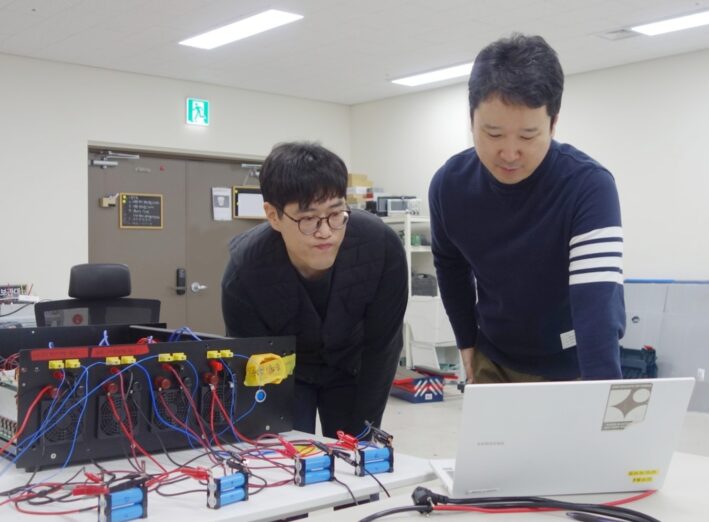
Electric vehicle fires, auxiliary battery explosions, electric scooter battery accidents—the series of battery safety incidents has left manufacturers facing a dilemma. Electrochemical Impedance Spectroscopy (EIS) is a powerful technology that can precisely detect internal battery defects. However, its measurement time of several minutes makes it unusable for mass production. Sampling inspections cannot completely eliminate defects, and 100% inspections cannot keep up with production speeds, a contradiction.
Mona Corporation has achieved a breakthrough by compressing this time to a matter of seconds. Using AI and hardware optimization, they have made "full inspection of mass production lines" a reality. This is the backdrop against which automakers are lining up to complete proof-of-concept (PoC) trials and review their adoption.
Awareness of the problems created by the mass production site
After receiving his doctorate in 2015, CEO Jang Ik-Hwang worked as a postdoctoral researcher in the field of electrolysis and fuel cells at Georgia Tech in the United States and McGill University in Canada.
He firmly believed that "the ultimate fruit of research is industrial application," and he experienced the gap between the laboratory and the field while serving as CTO at a startup called Greenvale for two years starting in 2012.
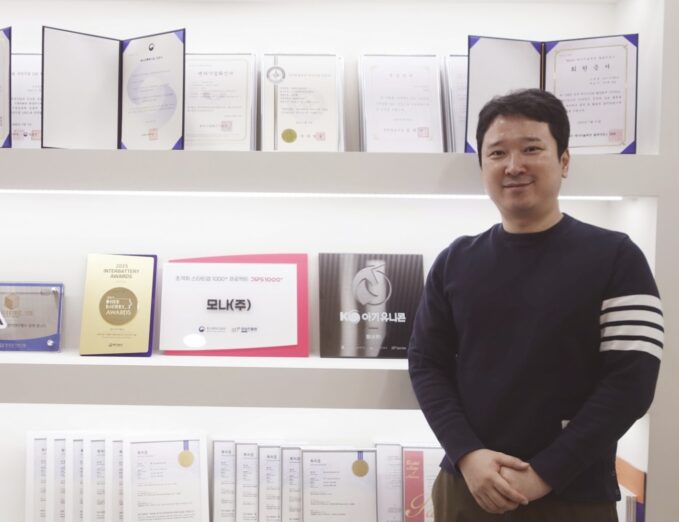
"Source research and scale-up and mass production technology research are completely different fields. Many researchers neglect mass production technology, but the ripple effect is actually greater."
This experience led to the creation of a startup by faculty members of the Department of Mechanical Engineering at Wonkwang University in 2019. While analyzing the battery industry, CEO Jang Ik-hwang realized that an "extremely powerful technology" called EIS was not being applied to mass production.
The measurement time was too long to meet the tact time requirements of the mass production line. "We've been considering combining EIS with AI for a long time, and we believe it's entirely feasible."
Mona's differentiation was clear. One client commented, "While there are many companies globally that manufacture EIS equipment, Mona is the only one that can freely create solutions."
This is possible because it is a 'diagnostic solution' that integrates hardware design, software optimization, and AI algorithms.
A strategic choice that targets finished vehicles
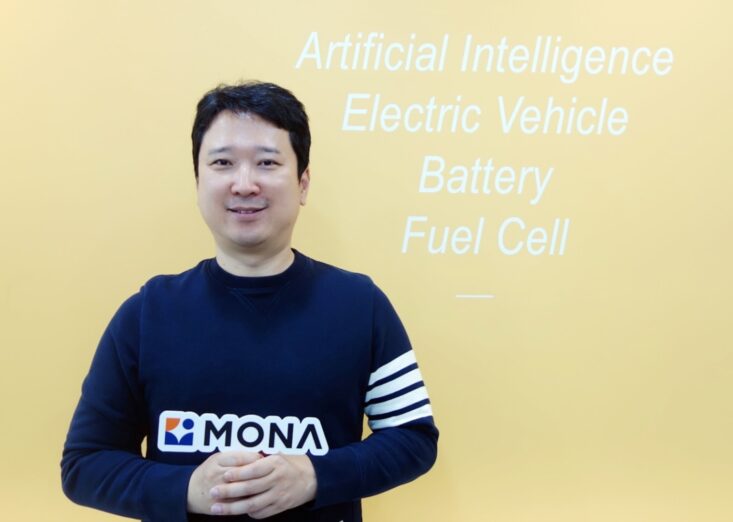
Mona targeted OEMs, not cell manufacturers, first. This strategy is the polar opposite of typical equipment manufacturers. He explained, "Given the structure of the automotive industry, ultimately, finished vehicles have no choice but to control all quality and technology. That's why we targeted the automotive market first." However, this strategy requires patience.
“The auto industry cycle is very slow and conservative, so the ability to endure is crucial.”
We are currently collaborating with domestic auto OEMs and negotiating with North American and European OEMs. Multiple clients have completed mass production proofs of concept (PoC), and "only key decisions remain." We are also receiving inquiries from cell manufacturers, but we are approaching this with caution. However, we plan to "aggressively expand" in the all-solid-state battery sector.
Mona's business model is also unique. Rather than simply selling equipment, it provides diagnostic algorithms and tuning data optimized for specific battery models. CEO Jang Ik-hwang stated, "This is a technology where equipment is used, but software costs are higher. We are considering a SaaS model."
"While B2B SaaS is practically non-existent in Korea, I believe it's possible for overseas OEMs. We're working to expand into a subscription model."
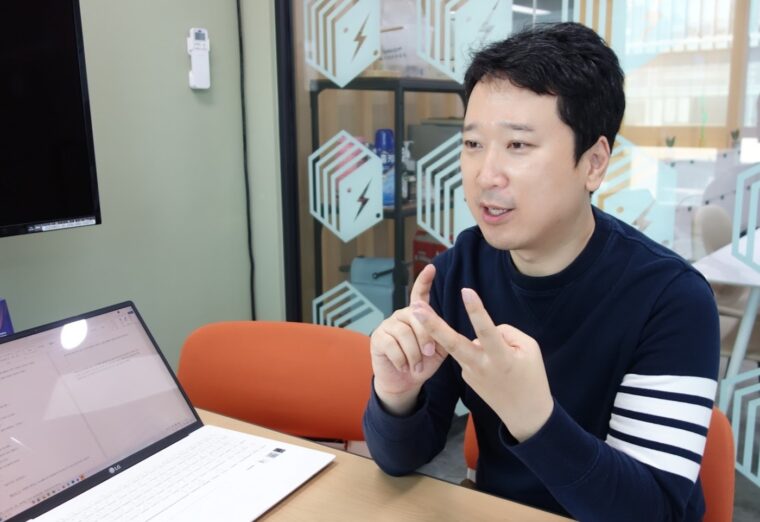
Mona's technology isn't limited to batteries. It's expanding into hydrogen fuel cells and has confirmed its applicability to solar power. However, he believes that "solar power is dominated by Chinese companies, with low quality perceptions, making it difficult to generate significant profits."
Mona, which has attracted a total of approximately 4 billion won in investment, aims to achieve 10 billion won in sales this year.
He added, "There's no guarantee that things will go as planned, as the battery industry as a whole is slowing down," but added, "We are continuously working to secure new customers." Investors were drawn to Mona's potential solutions to global battery safety issues and its track record of success.
In operating the organization, the company emphasizes a sense of purpose: "Let's achieve world-class standards and strive to achieve our goals." By recruiting graduates from Wonkwang University's research lab, the company secured a workforce that would lead to education and employment. "We spent considerable time developing them to the level of field engineers, and their mass production experience has become a technological strength."
“Convergence capabilities are at the core of our technology,” as we need a balanced mix of experience in artificial intelligence, batteries, system design, software, and mass production.
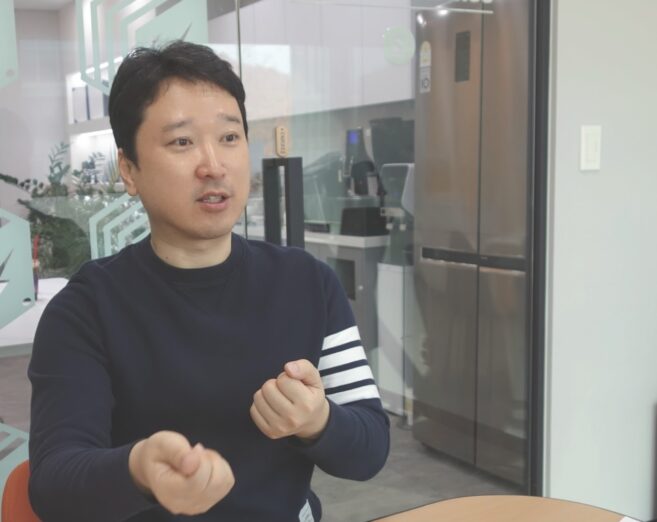
CEO Jang Ik-hwang predicts that in three years, Mona will be preparing for an IPO. In addition to battery diagnostics, the company plans to complete its application in hydrogen fuel cells and water electrolysis, and also expand into the B2C sector.
The company's name also reflects this evolution. Initially called "Mona Electric," the name was changed to "Mona" to "expand our capabilities beyond a single focus." Recently, BYD's electric vehicle brand and a European AI company began using similar names, prompting a rethink of the company's positioning. However, the direction remains clear.
"What I've learned through starting a business is that 'dreams grow as big as you dream.' While we're still small, we're broadly exploring batteries, hydrogen, and other fields with innovative technologies. Our ultimate dream is to change the world."
A small team that started in a professor's lab is now solving problems in mass production and competing with global automakers. As diagnostics, once slow, accelerate, the paradigm of battery safety is shifting. It remains to be seen how far Mona's dream will go.
You must be logged in to post a comment.