



Whenever it was time to move into a new apartment, controversies over defects would recur. Residents lacking construction knowledge often found it difficult to accurately identify defects, and construction companies often failed to point them out on their behalf. Even when defects were discovered, the complex reporting process forced residents to endure the inconvenience in silence.
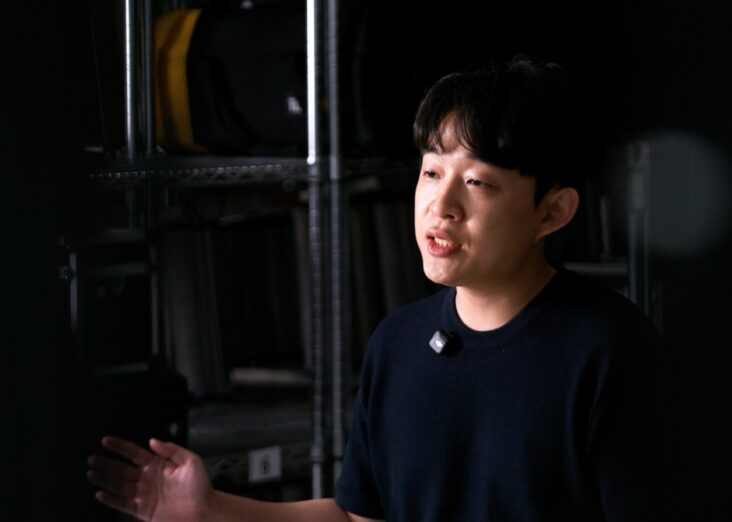
To address this structural imbalance, 'Home Check' emerged and is evolving beyond a simple inspection service into a comprehensive platform encompassing the entire building life cycle.
Launched in 2018, the company has grown from initial sales of 400 million won to 12.3 billion won by 2024. Based on the data accumulated through its 110,000-unit inspection service, the company is preparing to expand into the B2B market and enter the defect repair industry. CEO Lee Gil-won stated his goal: "We will create a culture where housing transactions are based on objective data, not 'feelings.'"
Market opportunities found in structural irrationality
“The process of establishing a new service that had never been seen before in the market was not easy.”
CEO Lee Gil-won's founding inspiration for HomeCheck stemmed from a controversy surrounding apartment defects he witnessed during his college years. He realized that the problems, which he initially dismissed as simply the negligence of construction companies, actually stemmed from structural imbalances.
CEO Lee Gil-won continuously improved services based on on-site resident feedback. As a result, the company achieved rapid growth, reaching over 10 billion won in sales by 2024. Currently, the company is expanding its service offerings to provide equal customer value to not only residents, but also building owners and facility managers.
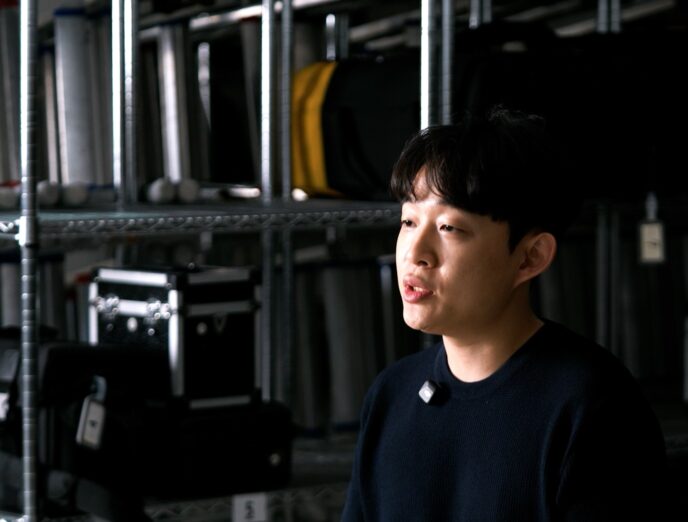
HomeCheck's key differentiator is its "digital diagnostic" technology. CEO Lee Gil-won explained, "It's not about technology completely replacing humans in diagnosis, but rather about digitizing and quantifying the human judgment process."
Construction sites vary in structure and environment, and face numerous variables. Therefore, equipment alone cannot automatically detect all defects. For example, thermal imaging equipment can detect temperature differences, but it's difficult to determine whether the cause is insulation issues, water leaks, or environmental factors.
HomeCheck uses specialized equipment to collect defect values and record them by linking them to coordinates on images and drawings. The collected data is automatically refined and converted into reports and technical documentation, clearly displaying key information that engineers need to assess.
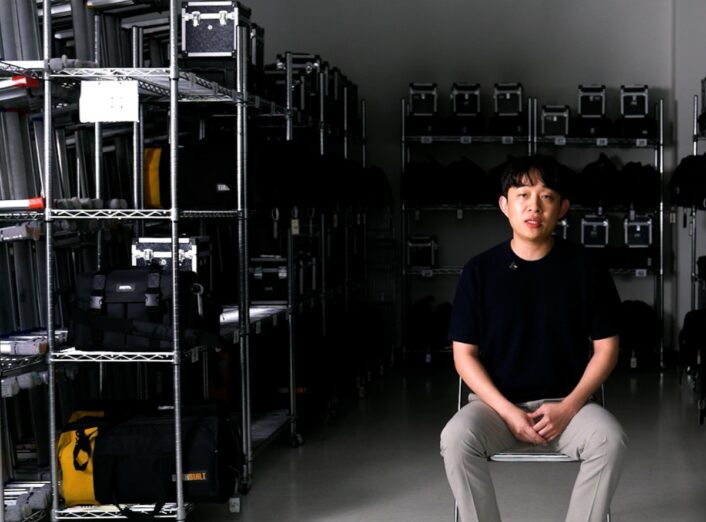
"Human experience and judgment remain important. However, digital diagnosis standardizes and records the data obtained during the process into precise numerical values, images, and location information." This increases the consistency and reliability of inspections, enabling technicians to make faster and more accurate judgments.
HomeCheck is expanding its business beyond home inspections to include safety diagnosis, structural inspection, and defect diagnosis. He explains that most of this expansion "started from customer requests."
"Customers satisfied with our home inspection service naturally expanded our business, requesting services like building safety inspections, structural safety certificates, and defect litigation support. The Zentrix model, which can quickly adapt to similar inspection business models, and our pool of construction experts have become the driving force behind our ability to flexibly respond to a variety of customer needs."
HomeCheck currently serves a market worth approximately 7 trillion won. Like Nasdaq-listed FirstService, it aims to expand into various areas of building inspection and maintenance.
Clarifying legal status is an urgent task
The institutional challenge facing HomeCheck is the unclear legal status of professional inspection services. Housing law only specifies the rights of residents, not the rights of the professionals they choose. This has led some construction companies to restrict access for inspection personnel, or to restrict photography and documentation. This lack of clarity in the system has led to repeated disputes, with unqualified individuals conducting inspections.
He emphasized, "Unnecessary conflicts with construction companies should be reduced by institutionally recognizing the qualifications and authority of professionals who perform inspections commissioned by residents. This will allow consumers to utilize services in a safer and more transparent manner."
Fortunately, the Ministry of Land, Infrastructure and Transport is currently discussing ways to improve the housing inspection system. CEO Lee Gil-won expressed his hope, saying, "Once the system is established, housing inspections will no longer be an optional service, but rather a resident's right and a standard market procedure."
Leaping forward to a data-driven platform
Homecheck is developing a new business model based on its accumulated inspection data. The construction market is large, but its digital transformation is slow. Many companies and sites manage data on paper, manually, and in PDF files, leading to information fragmentation. Recently, Homecheck developed the "zentrix" system, which enables efficient defect and safety assessments, and is now connecting data generated across each project.
CEO Lee Gil-won stated, "Going forward, we plan to leverage our accumulated data to enter the defect repair industry and create a structure that connects diagnostic results with repair plans and repair companies." He added, "We plan to develop a data-driven vision recognition AI model and utilize it for inspections and diagnosis, maximizing the efficiency of the overall building inspection process."
HomeCheck currently provides services to approximately 10% of new apartment units (approximately 30,000 households) each year. The goal is to expand this market share to 40% within the next three years, establishing itself as the de facto standard in the pre-housing inspection market.
"Based on this, it will establish itself as a powerful transactional document that can prove the condition of a home during lease contracts or sales negotiations."
In countries like the US and Canada, home inspections are a mandatory part of the home buying and selling process. HomeCheck aims to foster a similar culture in Korea. He emphasized, "Our goal is not to increase the number of inspections. It's to rapidly evolve into a platform that connects post-inspection decision-making and execution—a service that connects the customer experience throughout the entire construction lifecycle."
You must be logged in to post a comment.