



– 28 psychological tests completed in a 10-minute conversation… Natural and accurate psychological testing by connecting the child's speech with the psychological test.
– This year, we signed agreements with 1,200 kindergartens in Vietnam… We plan to expand into Asia, Europe, and Africa next year.
– Development of digital therapeutics and Korean-style psychological tests using speech data
According to 2021 data from the Ministry of Health and Welfare and the National Health Insurance Service, the number of patients seeking medical services for mental illness increased by an average of 4.2% annually from 2009 to 2019. A survey conducted by the National Center for Mental Health in the same year revealed that 27.8% of people aged 18 and older experienced at least one mental illness in their lifetime, yet only 13.9% of those diagnosed actually received mental health services. While the number of people struggling with mental illness is increasing, the majority remain untreated.
A significant number of adults who use mental health services have psychological problems that have persisted since childhood. Many people miss the opportunity for treatment due to certain issues with mental health services.
The first problem is the imbalance in diagnosis. Because psychiatric resources are concentrated in Seoul and the surrounding metropolitan area, there is a shortage of specialists capable of diagnosing and treating psychological issues in rural areas. The second problem is the barrier to accessing diagnosis. Social stigma still exists regarding mental health. In particular, simply receiving a diagnosis of conditions like ADHD or depression often places a psychological burden on the individual and their family.
The fundamental problem lies in the diagnostic method. Most psychological tests rely on one-time observations and multiple-choice questions. For children, a diagnosis is made by a guardian checking each of the 300 questions on a psychological test, or by a medical professional observing a single moment of behavior for a limited time of 15 to 30 minutes. The testing process is time-consuming and expensive. Furthermore, it relies on the subjective judgment of parents, which limits the effectiveness of these tests. However, a child's psychological state is constantly changing, and their truest emotions are revealed most clearly during natural conversation. Current diagnostic systems fail to capture this dynamic nature.
"By creating a system that allows for objective psychological diagnosis simply through the natural conversations children engage in in their daily lives, parents can receive professional help at an earlier stage, ultimately preventing mental illness in adulthood."
Yoon Soon-il, CEO of Flex, focused on measuring psychological states through natural speech. This approach captures the speech patterns, pace, tone, and emotional nuances naturally revealed when a child interacts with a character, and cross-validates these with standardized psychological assessment tools.
"Before a psychiatric visit, we need to provide an opportunity at home to objectively understand the child's psychological state. Just like blood tests or blood pressure monitoring, I believe children's mental health should be monitored on a regular basis. This will allow parents to assess the situation more objectively and seek professional help only when truly necessary."
We met with Flex CEO Yoon Soon-il to learn how various psychological tests can be conducted using only speech data, the background to Flex's recent advancement into the Vietnamese market thanks to its recognized technology, and how it plans to develop a Korean-style psychological test using speech data in the future.
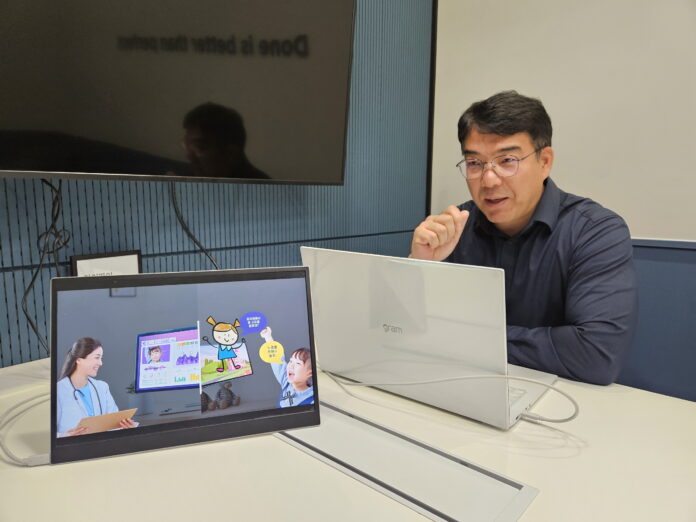
Reading a child's psychological state through his or her voice
Flex analyzes three types of data simultaneously.
The first is voice data. When a child converses with a Flex counselor or AI chatbot for 10 to 30 minutes, the system extracts acoustic characteristics such as speech rate, prosody, and the length and frequency of silence. Children with ADHD tend to speak faster, with sharp and irregular frequency changes, and with more frequent mid-sentence pauses. Children with depression tend to speak in a lower tone, slower, and with lower volume.
The second is language patterns. Natural language processing (NLP) technology analyzes the child's speech. Children with ADHD tend to respond in fragmented and disjointed ways, while children with normal speech patterns speak in more structured and connected narratives. Children with depression frequently use negative words and express negative thoughts about the future. The AI model weights these linguistic patterns to produce a "psychological risk score."
Cross-validation with a third standardized test is performed. Voice and language data are compared with standardized tools such as the ADHD Screening Test (K-SNAP-II), the PHQ-9 Depression Rating Scale, and the GAD-7 Anxiety Scale. When all three data points in the same direction, the diagnostic reliability is very high.
More importantly, how to interpret discrepancies when they occur. If a child's voice analysis strongly suggests ADHD but standardized test scores are normal, it could indicate a condition that parents and teachers have not yet recognized, or that the symptoms are "situational," occurring only in certain environments. This presents an opportunity for early intervention. Conversely, if a child is at risk for depression on standardized tests but has only weak depression signals on voice analysis, it could indicate a child's unwillingness to express emotions or the early stages of depression.
Dr. Yoon described this as "multilayered clinical information." "Previously, diagnoses were based on information from parents, schools, and limited observations. However, Flex allows us to capture the continuous, subtle signals that accompany a child's natural conversation."
Beyond voice and language data, contextual factors such as cultural background, family structure, and school environment significantly alter the meaning of a diagnosis. Flex also collects contextual data, such as the child's age, gender, family structure, and recent lifestyle changes, to provide more accurate interpretations.
"Just because a child who experienced parental divorce and a child from a stable home both sound sad doesn't mean they can be diagnosed with the same level of depression. The former is a situational response, while the latter could be a clinical concern."
Finally, the time dimension is crucial. By tracking changes in a child's psychological state through continuous monitoring, we can more accurately identify the moment when clinical intervention is truly necessary.
The child's speech data is accumulated through conversations with a counselor (character). The counselor's questions are crucial here. Tailoring the questions to the child's characteristics ensures a natural conversation. The counselor's questions are automatically generated using only words extracted from the child's speech database, using natural language processing (NLP), natural language generation (NLG), data vectors, and deep learning.
When a child interacts naturally with a chatbot, the content is automatically matched to psychological assessment questions, allowing up to 28 tests to be completed simultaneously. Currently, Flex has developed a matching algorithm based on 20 million conversational data points. Reliability increases with a larger dataset, and Flex is currently developing its technology with the goal of achieving a 95% reliability level.
Psychological diagnosis by life cycle
Flex's technological strength lies in its ability to scale a single, basic solution to various generations. While the core technologies of speech and language analysis and automatic question generation remain the same, each service applies psychological assessment tools tailored to the target age group, thereby building a life-cycle-specific psychological health management ecosystem.
"Kids Diary" is aimed at kindergarteners and young children. This period is crucial for language development, emotional stability, and social development. Instead of requiring parents to fill out complex checklists, Flex automatically conducts standardized child psychological tests while children naturally interact with characters. While traditional methods required parents to manually check 300 questions on a test sheet, each test costing 100,000 won, Flex's Kids Diary automatically completes up to 28 tests simultaneously, simply through daily conversations.
Flex is currently collaborating with insurance companies to apply its technology to early intervention systems for children with developmental delays, and is also preparing business agreements with educational companies to support child development. This year, the company demonstrated the potential of the Vietnamese market with its Kids Diary app. In June, the company signed an agreement to supply Kids Diary to 1,200 kindergartens in Vietnam, and plans to launch official services in early 2026.
"Teen's Diary" is a service for teenagers facing academic stress. Using the same AI technology, it diagnoses common mental health issues in adolescence, such as ADHD, depression, and anxiety disorders, and focuses on academic stress, peer relationship issues, and emotional stability.
"Ribbon Mate" is a service that manages both the psychological health of employees and organizational culture, extending Flex technology to the corporate realm. It offers customized conversation structures tailored to each position, primarily utilizing the Employee Assistance Program (EAP). By asking questions appropriate to each position—for example, "How are you doing these days?" for managers and "What challenges are you facing as an assistant manager?" for assistant managers—it encourages employees to naturally share their inner thoughts. The collected responses are then aggregated by position and department, after removing any personally identifiable information, to identify the organization's real issues and psychological states, thereby simultaneously managing employee stress and improving organizational culture. It can also manage the psychological health of high-risk occupations like firefighters.
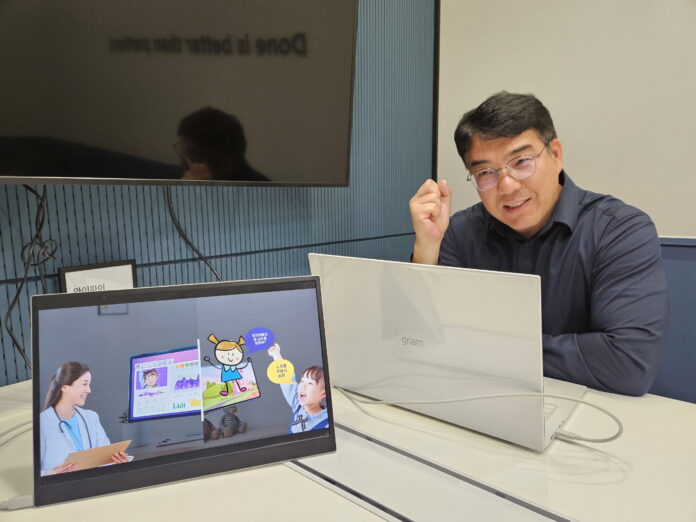
Recognized in Vietnam
The platform has already received significant response overseas. Testing was conducted in Vietnam in June of this year at 1,200 kindergartens, 40 psychological counseling centers, and university psychology departments, with official service scheduled to launch in January 2026. Assuming an average of 100 users per kindergarten, the platform is expected to reach an average of 100,000 monthly users.
As of April 1, 2024, Vietnam's population was 101,112,656, making it the 9th most populous country in Asia and the 16th most populous in the world. It is projected to reach approximately 115,985,270 by mid-2025. However, Vietnam's psychological services infrastructure is severely lacking, with only 40 psychological counseling centers and fewer than 10 psychology departments. Flex is expected to fill this gap in psychological counseling services in Vietnam. Furthermore, Vietnamese universities and the government are interested in developing psychological assessment tools, which is expected to further strengthen cooperation with Flex.
After establishing a successful case in Vietnam, Flex plans to accelerate its global expansion. Starting next year, it plans to expand into France, Sri Lanka, and Africa.
Development of data-driven digital therapeutics and Korean-style psychological assessment tools
Speech data isn't simply diagnostic information. For example, let's say a child exhibits the following pattern over several conversations:
“What do you usually do when you’re sad?” -> “I listen to music.”
“Then what kind of music do you like?” -> “Quiet music”
These conversations can help us understand your musical preferences. Beyond simply liking music, we can also learn about what music you seek out in certain situations and what helps you feel more at ease.
As all this data accumulates, Flex can identify each individual's unique psychological stability patterns and develop digital therapeutics based on these patterns.
Currently, Korea uses a child psychological assessment tool developed based on American standards, but this has limitations due to cultural differences. Furthermore, the foundation for developing a unique assessment tool is lacking. The data accumulated by Flex can be used as valuable input for developing a unique Korean psychological assessment tool.
I want to create a world where everyone can receive mental health.
“I want to create a world where everyone has access to mental health services.”
To this end, CEO Yoon stated, "In five years, we hope to have Flex implemented in all schools in Korea, establishing a system to screen children's mental health every semester. In ten years, we aim to make it the global standard for child mental health services."
Flex aims to go beyond a simple diagnostic tool and become a "companion on the treatment journey." "Even after a child begins treatment, Flex's monitoring allows us to objectively measure the effectiveness of treatment. Parents, teachers, and medical staff can all view the same data and participate in the child's recovery process."
In an era where mental health is no longer an individual issue but a societal responsibility, Flex's role will become even more crucial. This is because voice-based mind-reading technology can go beyond simply improving diagnostic accuracy and serve as a first step toward addressing mental health inequalities in our society. Flex's mission will continue until its vision of "a world where everyone has access to mental health" becomes a reality.
You must be logged in to post a comment.