



Bpifrance has invested €10 billion in the creative industries over the past five years, supporting 20,000 companies.
– Announcement of a plan to supply an additional 20 billion euros by 2030
French soft power strategy: finding balance between digital powerhouses and "culture"
The rise of a hybrid creative economy model driven by tech-culture convergence.
– 'La French Touch' seeks to become a global creative industry finance platform.
The "French Touch" that has engulfed the Palais Bronnier, the heart of cultural capital.
At 8:30 a.m. on the 26th, a large crowd gathered at the Palais Brongniart, the former stock exchange in Paris's 2nd arrondissement, despite the early hour. Completed in 1826, this neoclassical building has long been a symbol of French finance, but on this day, it held a different meaning. This place, once a place for discussing capital flows, was now, 200 years later, being re-evaluated as a venue for the future of France's creative industries.
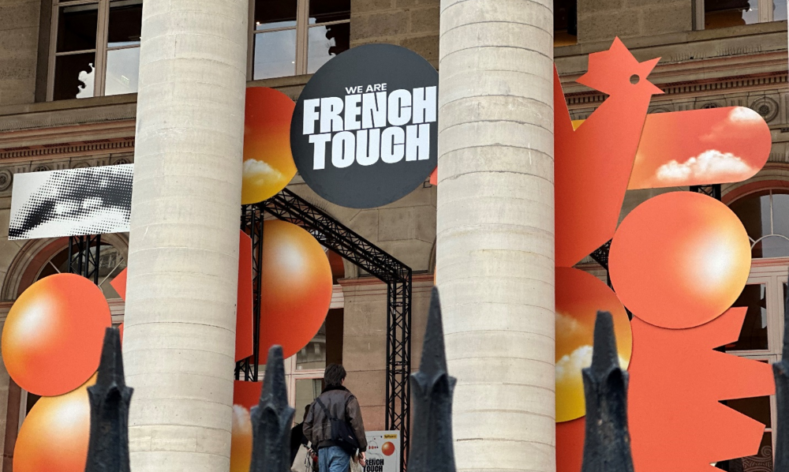
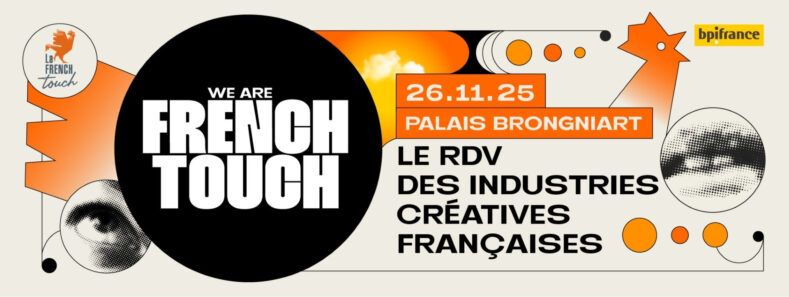
'We Are French Touch 2025 (WAFT2025)' is an event commemorating the 5th anniversary of the 'La French Touch' project launched in 2020 by the French public investment bank Bpifrance. WAFT is an annual business platform jointly organized by Bpifrance and the 'La French Touch' platform, and plays a key role in bringing together all the players in the French Industries Culturelles et Créatives (ICC) ecosystem. The choice of the Palais Bronnier, a historic financial center, as the center of the cultural industry signifies France's official declaration of cultural assets as a core economic capital axis alongside traditional financial capital. France's strong policy will to structure cultural content not as a supporting industry, but as a strategic industry that will drive the country's future growth is expressed through this symbolic space.
On this day, 'WAFT 2025' gathered more than 5,000 ICC experts from various fields such as fashion, film, music, games, publishing, and art, and the number of event registrants exceeded 10,000 for the first time ever.
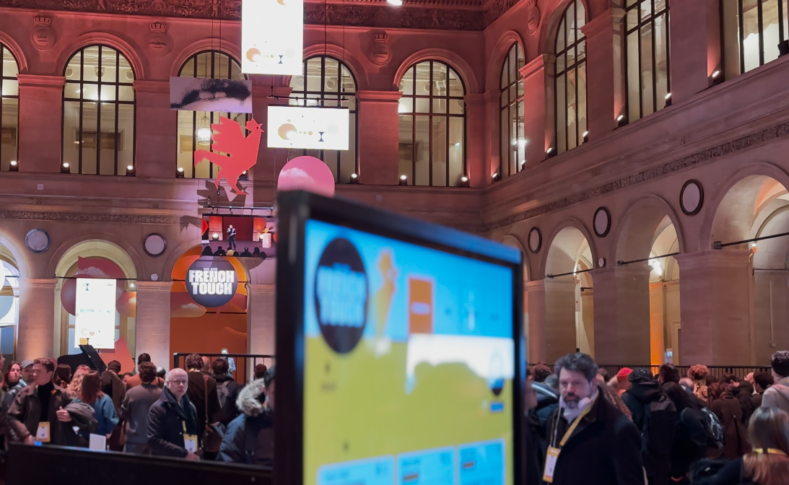
The event's program was also comprehensive and professional. Around 150 speakers presented key topics in their respective industries through keynote speeches, panel discussions, masterclasses, and other sessions. Around 30 companies and art school teams participated in exhibition booths, showcasing cutting-edge technologies and creative content. Notably, the event expanded its scope to include international collaboration, with the first-ever invitation of international delegations from Taiwan (TAICCA), Europe (EIT), Canada (Hub Montréal), and the United Arab Emirates. This clearly demonstrates the commitment of the French creative industries to fulfilling their role as a global hub.
Five years of Bpifrance: Cumulative investments of €10 billion and a blueprint for €20 billion by 2030.
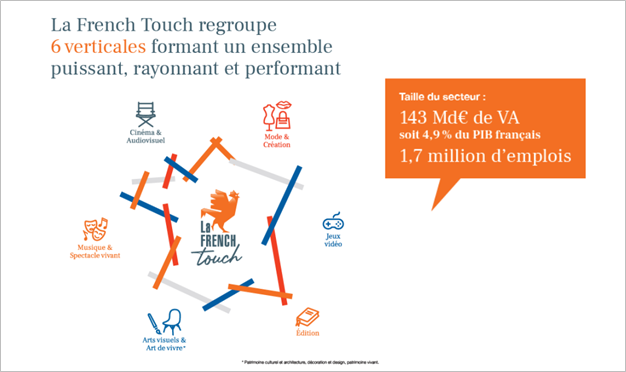
Bpifrance has released the interim results of its "French Touch" initiative over the past five years. Launched in 2020, the initiative has so far invested a cumulative €10 billion (approximately 14 trillion won) across all creative industries, supporting approximately 20,000 companies. This national support has solidified the French cultural industry as a key economic sector, generating approximately €143 billion in added value, equivalent to 5% of France's GDP, and supporting 1.7 million jobs.
A look at the financial execution over the past five years clearly reveals the characteristics of the French support strategy. Of the cumulative investment of €10 billion, approximately 73% (€5.5 billion in bank co-loans and €1.8 billion in loan guarantees) focused on strengthening financial access for traditional companies and stabilizing the industry. The remaining funds were concentrated on equity investments (€1.3 billion), export support (€726 million), and innovation project support (€716 million), all of which supported high-growth companies' expansion, R&D, and global expansion capabilities. Furthermore, nine acceleration programs for creative industries and eight overseas missions provided close support for global capabilities.
Building on its successful interim financial results, Bpifrance has set a goal of providing an additional €2 billion annually to the cultural industries by 2030, for a total of €20 billion. This continued, massive national investment demonstrates that the creative industries have become a core sector of the national economy, and that the country is pursuing a risk-reduction strategy. In close collaboration with government ministries such as the Ministry of Culture and the Ministry of Finance, as well as specialized agencies such as the CNC and CNM, a support system is being structured in line with France 2030.
The Philosophical Foundation of French Soft Power: Courage and Balance
▪ The 'courage' to preserve cultural identity
The keywords for this year's French Touch event are "Courage," "Innovation," and "Inclusion." The organizers explained that in preparing for this fifth edition, they focused on "the courage to create, act, lead projects, and preserve cultural identity." The unique atmosphere of art and business, nestled beneath the historic Palais Bronnniard, further highlighted these values.
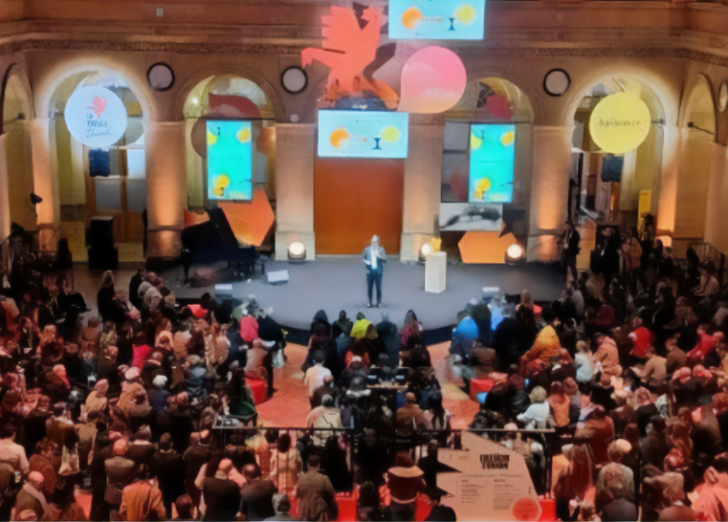
In his opening address, Nicolas Dufourc, President of Bpifrance, emphasized that what is ultimately needed is "courage to overcome fear." He emphasized that France is building an innovative and inclusive growth model on the global stage through its creative industries, and made it clear that courage is the driving force behind this challenge.
▪ The moment culture becomes a weapon of geopolitical competition
President Dufourc's speech made it clear that investment in France's creative industries transcends economic logic and is a national strategy. He identified the cultural and creative industries as "strategic industries embodying France's unique creativity and worldview." He specifically addressed the geopolitical landscape, emphasizing, "Caught between the digital powerhouses from across the Atlantic and the manufacturing powerhouses of Asia, we must bridge the gap through culture."
This statement reveals that France has adopted creative industries as a core strategy to counter the cultural hegemony of digital economic powerhouses. Furthermore, the massive investment can be understood as the cost of building a "cultural breakwater" to preserve French cultural identity and diversity. France is deploying a meticulous strategy to find its balance in the global competitive environment through cultural differentiation and to structure its unique soft power as a competitive weapon.
The Front Line of Tech-Culture Convergence: The Future of the Creative Economy Reshaped by AI, VR/AR
▪ In-depth discussion of industry-specific convergence issues resulting from technological advancements
The event featured in-depth discussions on the changes in creative industries brought about by technological advancements. The film industry session focused on concerns about declining theater attendance due to the rise of OTT platforms and explored complementary survival strategies. In the media sector, participants examined cultural consumption patterns in an era of content overload and highlighted the potential of hybrid content formats to ensure cultural diversity. In the live entertainment sector, participants shared strategies for maintaining the authenticity of performances while harmonizing online viral effects.
▪ Innovation cases and demonstrations based on AI and immersive technologies (VR/AR)
Examples of the convergence of technology and art were demonstrated throughout the event. French startup Kinetix presented a case study on the use of generative AI in 3D animation production, and students from the digital arts school ARTFX and the national film school La Fémis screened an AI short film they had collaborated on. Furthermore, in the creative exhibition zone, the works of emerging fashion designers were showcased in a VR/AR fashion show, and the Opera x Backlight team presented immersive performance content, demonstrating the practical potential of the convergence of technology and art.
▪ Building a responsible innovation model
While embracing AI, France also took the lead in establishing a model for "responsible innovation" by discussing ethical challenges in innovation sessions. Bpifrance shared its experience operating a dedicated investment fund for creative companies and emphasized the importance of intellectual property (IP). Specialized organizations such as CNC and CNM introduced industry-specific support programs and pledged to foster collaboration between startups and traditional companies.
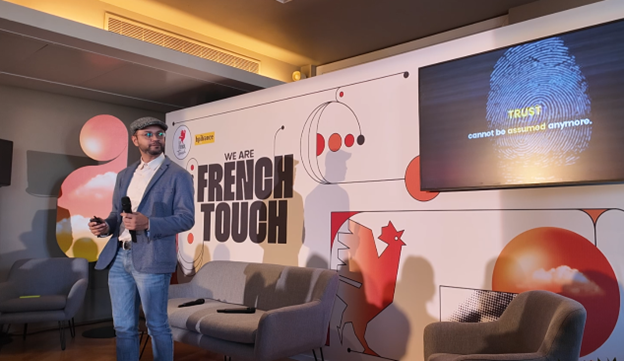
French Touch: A Global Creative Industry Finance Platform
A key topic was the internationalization strategy for France's creative industries. Bpifrance, working to build a global network with investment institutions worldwide, signed its first partnerships with the Taiwan Creative Content Agency (TAICCA) and the European Union's EIT Culture & Creativity. The international exchange corner, attended by a large number of international delegates, showcased active on-site collaboration, with the Canadian hub Montreal introducing its North American market access program and the United Arab Emirates association introducing its content co-production fund.
A Vision for a "Global Financial Platform" and Exploration of Emerging Markets
With the clear goal of elevating French Touch to a "financial platform for the global creative industries," Bpifrance is promoting the creation of joint investment funds and information exchange platforms through its alliance network. This strategy focuses on establishing a foothold for French companies to expand beyond Europe into emerging markets like Asia and North America, while simultaneously fostering a mutually beneficial ecosystem that attracts international startups to France. French Touch has identified Korea as a key exchange partner and announced plans to explore the Korean market through its Startup Overseas Emergence Program.
'Systemization of Courage' on the Global Stage
The French Touch project is a concrete achievement of France's strategy to establish a national system that rewards "courageous creation and innovation." This comprehensive support system encompasses everything from loan guarantees to venture investment, export support, and overseas expansion programs. Designed as a robust safety net, it empowers creators and startups to take on new challenges even amidst significant uncertainty.
The Korean startup ecosystem should closely analyze France's "structured soft power strategy," which preserves its cultural identity while expanding its global influence. For Korea, which has expanded its global influence through K-culture, the French Touch model presents a strategic opportunity to leverage France as a bridgehead for European expansion and concretize multilateral cooperation. Ultimately, this systemic approach to the French Touch will serve as a significant precedent for how a nation can transform soft power into hard economic power in an era where culture and technology converge.
You must be logged in to post a comment.