



Accidents in industrial settings strike without warning. Chemical exposure and work-related stress are managed separately, and warning signs are buried in postmortem reports. They are measured but not predicted, recorded but not addressed.
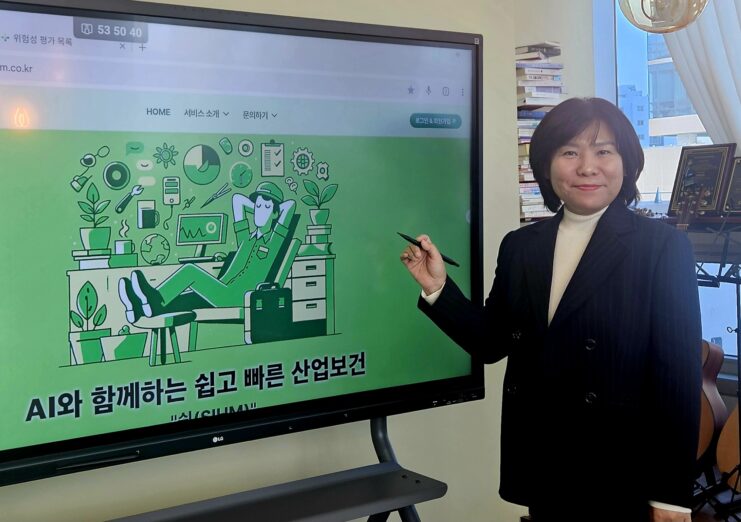
Occupational health is evolving from post-event response to proactive prediction. And at the center of this shift is Lee Jeong-hwa (54), director of the Human and Environment Research Institute.
“Some sites detect risks before accidents occur,” says CEO Lee Jeong-hwa. “In construction and manufacturing sites where our ‘SIHM (Smart Industrial Hygiene Management)’ platform has been introduced, the early detection rate for high-risk musculoskeletal disorders has increased by more than 40%.”
Questions from 30 Years of Field Experience
CEO Lee Jeong-hwa began his career as a hospital work environment measurement practitioner. As a young researcher, what he encountered in the field wasn't "equipment," but "human faces."
"The pain hidden under my overalls, the coughing that was getting worse, the pain in my wrists. And then I was faced with the reality of having to go back to work the next day."
After working in labor unions, government agencies, policy committees, and large-scale workplaces, he witnessed the structural contradictions in occupational health. Laws and regulations were strengthened, but enforcement was weak. Changes in the field were rapid, but response systems were slow. Responsibility was not shared, but passed on. People were obscured by shame.
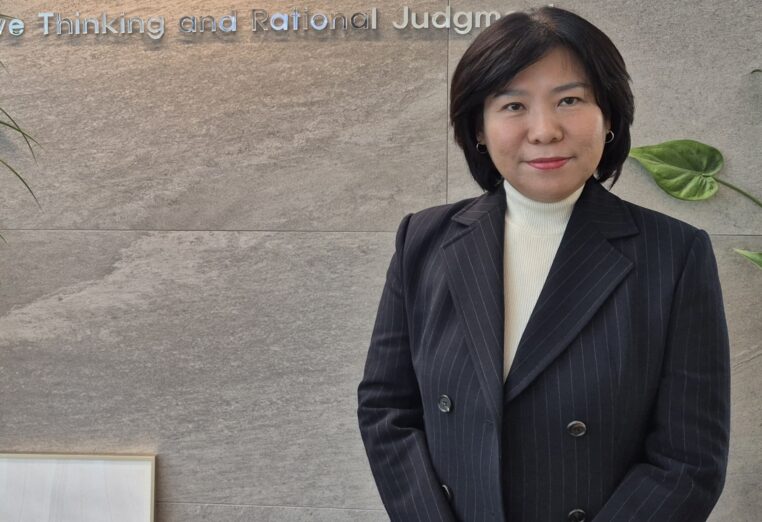
"Occupational health cannot function without bridging the gap between the field and the system. More important than good equipment is human trust."
In July 2008, he decided to abandon all his stable circumstances and establish a research institute. Initially, the company lacked equipment, personnel, and funding. However, the principle was clear: if you dedicate yourself to even the smallest data and measurement, trust will follow.
The turning point came while overseeing the implementation of the domestic asbestos investigation agency system. This established trust in the system and laid the foundation for technology-based growth. Subsequently, the organization gained confidence by conducting a series of large-scale workplace environment assessments.
"The trust we've built isn't about scores or certifications. It's about the sincerity of every moment, the responsibility for every line of data."
Over the past 17 years, he has personally experienced over 1,000 workplaces annually, including electronics, construction, medical, railway, and power plants. The problems he identified during this process were clear.
The existing occupational health system was centered on "reaction after the fact." When an accident occurred, reports were written, blame was assigned, and the next incident awaited. Risk factors were categorized and managed into chemicals, musculoskeletal issues, and stress, while complex risks were overlooked. Data was recorded manually, and analysis was conducted after the fact. Reliance was placed on a few experts, and the capabilities of field workers were weak.
"The field always knows. The problem isn't that we don't know, but that we can't change it. Accidents don't come without warning. We just can't see them."
'SIHM': Making Invisible Risks Visible
The core of industrial health innovation lies in establishing a predictive-based prevention system. To address this, the institute developed the "SIHM" platform.
SIHM integrates and manages all occupational health risk factors in a single platform. It tracks chemical exposure, musculoskeletal strain, work-related stress, and cerebrovascular risks in real time, and AI analyzes complex risk patterns to predict accidents. Reports are automatically generated, enabling management to make data-driven decisions.
Currently, SIHM is in operation at major construction and manufacturing sites, including Ilsung Construction, Lotte Construction, Hyundai Asan, Bucheon City Corporation, and Hwaseong City Corporation. He emphasized, "If risks are visible, they can be reduced. If they are invisible, all decisions are left to chance." He added, "Occupational health has now entered the realm of prevention."
A collaborative ecosystem created by unfamiliar combinations
CEO Lee Jeong-hwa has built a rare career in the occupational health industry. She has built a collaborative ecosystem by connecting experts in occupational and environmental medicine, industrial psychology, exercise therapy, and AI data.
"New solutions come from unfamiliar combinations. Familiar methods only produce familiar results."
Female leaders in the occupational health field remain rare. However, she cautions against the label "first woman." She advises, "Leadership isn't about gender," but rather, "the ability to listen to both sides of a conflict, connect, and maintain a sense of purpose." It's about transforming arguments into consensus and division into cooperation—a skill she's honed over many years in the field.
CEO Lee Jeong-hwa clearly outlines her goals for the next five years: nationwide expansion of SIHM, industrial standardization, establishment of a field-based data ecosystem, training of female experts, and innovation in the occupational health workforce.
He emphasizes that "change isn't something you wait for, it's something you create," and emphasizes that occupational health should be viewed from the perspective of a corporate survival strategy. He emphasizes a shift from cost to investment, from regulatory compliance to management competitiveness, from measurement and reporting to prediction and prevention, and from reliance on external experts to a focus on the capabilities of field workers.
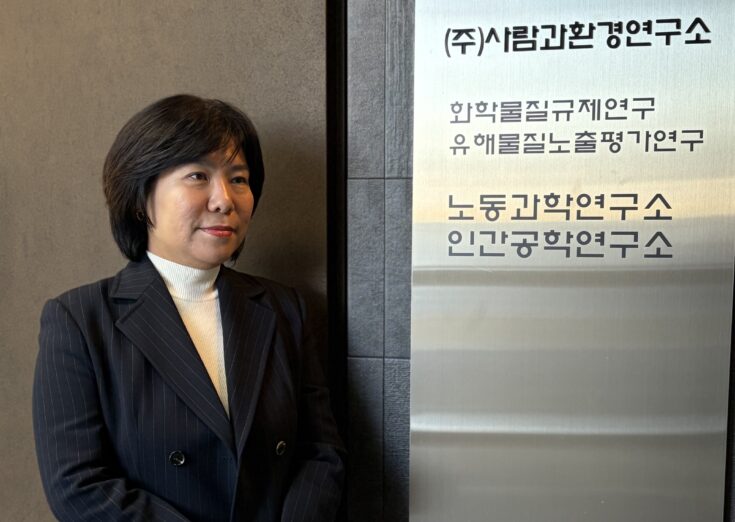
He asked the final question: "What keeps you going?" After a moment of silence, he said,
"It's a compass that never loses its purpose. Ultimately, what occupational health must protect is people. The health and life of each individual—that's the whole reason."
The young researcher who heard workers coughing in the hospital hallway 30 years ago has now become a technology leader, analyzing data from over 1,000 sites annually. But the question remains unchanged: How can we protect people? Unseen dangers are beginning to surface. At the center of this path stands a man, unwavering in his purpose.
You must be logged in to post a comment.