



RA has secured 7,000 asset databases and 150 clients over the past year , and has used its data for over 100,000 on -site decision-making cases .
– Introduction to asset management, securities firms, banks, overseas investment firms, universities, and the media … Multipurpose use including investment analysis, risk management, sales development, and research .
– AI- based automated valuation and price prediction, along with a residential database , will be fully implemented in the future… Leaping forward as Asia's leading real estate data solution.
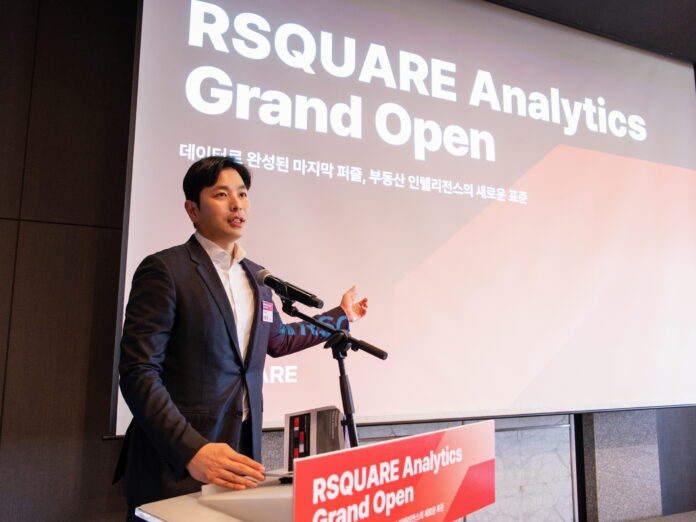
Rsquare (CEO Yong-Kyun Lee), Korea's leading commercial real estate comprehensive service company, held a grand opening event for 'RA (Rsquare Analytics)' and unveiled the test operation results of its commercial real estate data solution and its AI-based expansion strategy.
RA is a solution born to address the chronic information asymmetry problem in the domestic commercial real estate market. It has achieved remarkable results over the past year, emphasizing its core values of live, on-site primary data and time-series analysis.
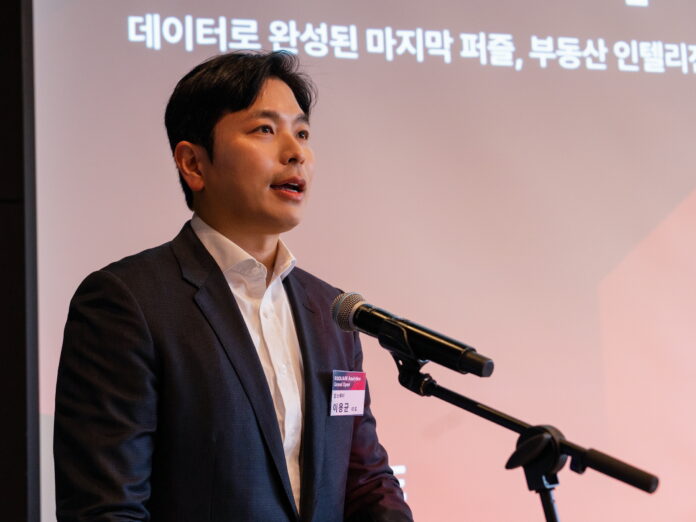
CEO Lee Yong-gyun stated, “With the advent of RA, the commercial real estate market, which had previously relied on personal networks, has entered a new era based on data infrastructure. Based on the accumulated insights, we will move forward with enhancing our services by incorporating AI.”
▶ Structural problems in the commercial real estate market and the background to the emergence of RA
The domestic commercial real estate market has long suffered from structural limitations: information asymmetry, opacity, and a lack of systematic information management. Even basic information necessary for large-scale building investment—such as rents, vacancy rates, and lease structures—has been difficult to obtain systematically, forcing investors to rely solely on personal networks and informal information channels.
Fragmented offline information required enormous time and expense to collect. Even basic data like transaction cases, rental prices, vacancy rates, and tenant composition had to be sourced from disparate sources, requiring time to ensure accuracy. Even the information collected with great effort was often fragmented and inconsistent. Consequently, investment decisions worth hundreds of billions of won were often made based on limited information, and missed investment timing often resulted in lower returns.
While global standard solutions like Real Capital Analytics (RCA) and CoStar existed overseas, solutions specialized for the Korean commercial real estate market were virtually nonexistent. Global platforms, which failed to reflect the micro-level characteristics of the real estate market, were inadequate for the Korean market. Furthermore, the closed transaction structure, which hindered access for new investors and developers, hindered market expansion and competition.
CEO Lee Yong-gyun pointed out, “In the Korean commercial real estate market, there is no objective and quantifiable indicator, so decision-making has to rely solely on intuition and experience. This has led to an undervaluation of the market and has also made it difficult to attract foreign investment.”
Since its founding in 2009, Rsquare has been collecting field-based data since 2012 to address these structural issues in the commercial real estate market. Its initial 30 employees collected offline data from over 50 cities nationwide over five years, achieving innovations similar to those achieved by Baedal Minjok and Remember, which digitized offline data. Along with developing an RTB solution to manage this data, Rsquare has been commercializing its business since 2016 and has achieved rapid growth of 65% annually over the past decade. Furthermore, Rsquare has attracted approximately 115 billion won in cumulative investment from SoftBank and Sticky, and has grown into a comprehensive solution provider for all areas of real estate, including interior design and architecture, as well as real estate data and solution services.
The launch of RA is considered a milestone in data-driven digital innovation in the domestic commercial real estate industry. It laid the foundation for attracting large-scale global investments worth billions of dollars, all based on reliable data. Information previously obtained through personal connections or individual consulting is now provided in an instantaneous and consistent format. Rsquare stated, "This is accelerating the fundamental shift in the domestic market from network-centric transactions to relationship-based transactions, and now to data-driven decision-making."
▶ 7,000 asset databases, 150 clients , and over 100,000 cumulative cases utilized
RA, which celebrated its first anniversary, has achieved significant results in both quantitative and qualitative terms. Currently, it provides data on over 7,000 commercial real estate properties nationwide, with detailed data from an average of 10,000 transactions per month and a cumulative total of over 100,000 transactions utilized in transaction and appraisal practices.
The pace of client expansion is even more remarkable. Within eight months of its launch, RA achieved exceptional initial success, being adopted by over 50 institutions, including Singapore's GIC, Germany's DWS, and PAG. Given that its primary client base consists of large financial institutions and global investors with strict verification standards, the initial acquisition of over 50 references attests to the completeness and reliability of RA data.
A year after its launch, the number of clients has grown to 150. This includes Woori Bank, the first of Korea's four major commercial banks to adopt RA, as well as Samsung Securities, Aegis Asset Management, Koramco Asset Trust, and Hyundai Commercial, representing a wide range of financial institutions, asset management companies, and investment institutions.
Alsquare stated, “The fact that large domestic and international investment institutions are referencing RA data for investment evaluations and utilizing it in important decision-making is proof that it has achieved global-level consistency and completeness,” and “Based on the trust that it is ‘a solution used by top-tier financial and investment firms,’ major companies in various fields are actively introducing it.”
▶ RA 's Differences from Global Platforms
Before the advent of RA, the domestic commercial real estate data market lacked an optimized infrastructure. Overseas services like RCA (Real Capital Analytics) and CoStar focused on transaction statistics and country-level data, limiting their ability to reflect the micro-level characteristics of the domestic market. In contrast, RA fills this gap with precise, domestically-focused data.
CEO Lee Yong-gyun explained, "RA is the only tool that provides such comprehensive and detailed information for large-scale building transactions. This is why financial institutions and institutional investors, which value reliability and accuracy, are continuously adopting it."
RA solutions provide real-time micro- and macro-level comparative information, including individual property rental status and profitability indicators, long-term market trends, and regional benchmark data. This makes it easy to access information previously only available through personal networks or separate services. Furthermore, they incorporate on-site inspection data, including lease terms and building operation information not available with existing third-party solutions.
▶ RA is applied for various purposes , from real estate investment and management to securing business opportunities .
RA's accurate and in-depth data serves as a practical insight tool in financial and real estate decision-making.
When assessing creditworthiness and making lending decisions, financial institutions, including banks, review the collateral's rental status, recent transaction history, and market fluctuations. Securities analysts and investment management firms cite the rental history and market indicators provided by RAs to prepare investment reports and research materials and develop portfolio strategies. Asset management firms use RAs' extensive market price database to verify that the cap rate of an office building under consideration for purchase is appropriate compared to the market average. Furthermore, during the investment review process, RAs can use the rental rates and vacancy trends of comparable properties as benchmarks.
The introduction of RA by a commercial bank exemplifies the integrated use of RA across asset management (WM), private banking (PB), and corporate finance. This demonstrates how RA data is becoming the foundation for decision-making across all aspects of bank strategy, from loan approval to building sales strategies. Construction companies and real estate developers also actively utilize RA. They utilize RA for feasibility studies and site analysis of business sites, referencing local rental market data and demand forecasts. This allows them to objectively assess the profitability of development projects.
Real estate, financial, and appraisal firms use RA data to create large-scale real estate valuation reports and refine risk analyses. The PM (asset management) industry also references RA's market average rent trends when renegotiating tenants and developing leasing strategies.
RAs are being utilized in a variety of fields, beyond basic real estate investment and management, including securing business opportunities and university research. These include development, construction, and the public sector, as well as B2B service companies requiring deal sourcing and retail sectors like F&B, which require strategies for opening and operating stores.
▶ Strengthening AI- based future predictions and expanding industrial domains
RA plans to sequentially introduce next-generation AI-integrated features based on the vast amount of accumulated data, thereby increasing the value of its solutions.
First, we are developing an automated valuation (AVM) function and a rent prediction model to prepare an AI service that automatically calculates the current value and future rent growth rate of individual properties. This will allow users to more easily assess the future profitability and appropriate purchase price of a target property. Through this, RA goes beyond historical data analysis to provide predictive value that aids future decision-making.
Furthermore, the geographic information-based location analysis function already built into RA will be enhanced, with AI algorithms providing investment suitability indicators based on comprehensive analysis of location conditions and surrounding commercial district data. This feature automatically captures patterns and variables that humans might otherwise overlook when selecting a location or formulating a development strategy. It is expected to provide new insights into real estate development and investment decision-making.
Additionally, Alsquare continues to enhance its services, including RA's customized report automation feature and an enhanced English interface. AI generates customized reports based on investor needs, and provides authoritative English services with terminology explanations and real-time translation for easy access by global investors.
Finally, RA will expand its data coverage beyond its focus on logistics and office space to encompass diverse industry domains, such as residential and retail, where institutional investors are seeking expansion. Through this, RA plans to evolve into a comprehensive data solution spanning the entire real estate asset class.
▶ RA 's core values: Field -based primary data , time-series structure, and triple verification
RA's strengths are data accuracy and depth of perspective.
Currently, RA has a time-series database of information on over 7,000 commercial real estate properties nationwide. A dedicated research team of over 60 people visits and verifies approximately 1,600 major office buildings and 1,100 logistics centers monthly, ensuring up-to-date information on rents, tenants, and vacancies. This on-site data enhances accuracy by directly verifying and reflecting details that are difficult to grasp solely from official documents like building registers—such as actual rent levels, current vacancy status, temperature ranges at logistics facilities, and truck docking availability.
RA operates a triple-verification system that cross-analyzes "Rsquare's unique on-site survey information" with public data such as existing vacancy rates and transaction history, and, when necessary, reconfirms the facts through interviews with building management companies and tenants. CEO Lee Yong-gyun explained RA's source information as "a systematic data management method that rigorously verifies and accumulates primary data obtained from the field."
Data is accumulated in a time-series structure. Users can view real-time transaction price trends, rental fluctuations, vacancy rates, and tenant composition by floor for individual buildings at a glance, over a 10-year period, on the RA platform. The company explained, "You can comprehensively view real-time rental prices and vacancy rates, building specifications, lease expiration information, as well as regional market comparisons and historical indicators. This allows for a three-dimensional analysis, from microscopic market details to macroscopic trends."
Through this event, Alsquare presented RA's operational performance and vision for the past year, and emphasized the strategic significance of data solutions in the domestic real estate market.
CEO Lee Yong-gyun stated, "RA is a precision commercial real estate analytics solution that dramatically lowers the information barrier in the domestic market. Through continuous improvements in data quality and usability, we will establish ourselves as a data solution that will establish a unique position, like Bloomberg, in the real estate industry. Furthermore, we anticipate that it will rival global real estate analytics services like CoStar and RCA."
You must be logged in to post a comment.