



Unconventional AI, an AI hardware startup in Silicon Valley, is making headlines by raising $475 million (approximately 630 billion won) in a seed round just two months after its founding.
On the 8th (local time), founder Naveen Rao secured seed funding, valuing the company at approximately $4.5 billion (approximately 6 trillion won). This figure significantly exceeds the typical funding scale for early-stage startups and is interpreted as a signal of a tectonic shift in the AI infrastructure market, currently dominated by NVIDIA.
This seed round was co-led by leading Silicon Valley venture capital firms Andreessen Horowitz (a16z) and Lightspeed Venture Partners, with participation from Lux Capital, DCVC, Databricks, and Amazon founder Jeff Bezos, among other prominent investors. Navin Rao also invested $10 million of his own money on the same terms as other investors, demonstrating his commitment to responsible management. Rao, who founded Nervana Systems, acquired by Intel in 2016, and MosaicML, sold to Databricks for $1.3 billion in 2023, is making his third foray into the AI infrastructure field.
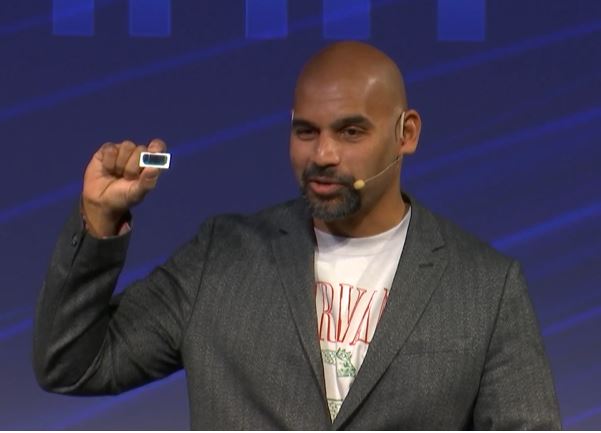
Unconventional AI goes beyond simple semiconductor chip development, pursuing integrated solutions that combine custom silicon chips with server infrastructure. Rao stated his mission: "We will rethink the fundamentals of computing to build a new foundation for intelligence as efficient as biology." This can be interpreted as a commitment to fundamentally addressing the massive power consumption currently occurring during AI model training and inference. With the recent proliferation of generative AI leading to a surge in data center power consumption, "energy efficiency" has emerged as a key topic in the AI semiconductor market.
Currently, NVIDIA holds a virtual monopoly in the AI accelerator market, commanding an 80-90% market share. Even NVIDIA's latest chip, Blackwell, is facing a severe supply-demand imbalance, with a year's supply expected to sell out. The industry is focusing on whether Unconventional AI's "energy-efficient AI computer" can alleviate this supply shortage and the soaring costs of AI operations. In particular, its integrated architecture approach, encompassing both chips and servers, is expected to offer performance optimized for specific AI workloads, offering a competitive edge over NVIDIA's general-purpose GPUs.
“We will create new, more energy-efficient computers for artificial intelligence applications.”
Navin Lao, founder of the company, revealed the company's vision through social media X last September. He indicated that this funding is the beginning of a larger project that could expand to up to $1 billion in the future, adding that he plans to flexibly adjust the amount of additional capital raised depending on market conditions.
Experts predict that the emergence of unconventional AI will diversify the competitive landscape of the AI hardware market. With major international media outlets like MIT Technology Review warning that AI-related power consumption will approach 22% of all US households by 2028, the need for hardware that maximizes performance per watt is growing. The speed with which unconventional AI can unveil actual products and secure partnerships with major cloud companies will likely be key to overcoming NVIDIA's stronghold. This investment goes beyond mere funding; it is a symbolic event demonstrating that the leadership in next-generation AI computing is shifting from "speed" to "sustainable efficiency."
You must be logged in to post a comment.