



Recruiting was a gamble. Resumes were polished, interviews were staged. Companies were seduced by "smooth talkers" and missed out on "talented workers." The annual cost of failed hiring was 300 trillion won. Unmeasured, it was neglected and repeated. But now, companies are reading a candidate's "long history." The data-driven AI recruiting solution, TEO, boasts a 93.7% prediction accuracy rate. Recruiting is shifting from guesswork to verification. At the center of this shift is Spector CEO Yoon Kyung-wook.
The question posed by failure
CEO Yoon Kyung-wook's first venture ended in failure, even leading to personal bankruptcy. However, it was a different experience that shook him. He had to witness the departure of over 300 employees.
"I realized that you can't truly understand a person's true nature through 'packaged data' like interviews and resumes. Ultimately, it's the colleagues I've worked with who truly know me. That was the beginning of Specter."
After graduating from Korea University's Department of Physics, he worked as a consultant at Accenture. He also served on a cheerleading squad. His background was unique, but his direction remained consistent.
"Just as physics seeks to understand the principles of complex phenomena, I wanted to explore the essence of human nature in HR. I believed that was my calling: to elucidate complex human relationships through data."
Specter began as a reputation check service. Applicants' current and former colleagues, personally recommended by the applicant, wrote their reviews. This raised questions: wouldn't those recommended only offer positive feedback?
“The power of data lies in interpreting even ‘bias’ as ‘patterns.’”
Specter holds over 1.2 million reputation and interview data records. These are not anonymous gossip, but records verified through real-name verification. Even within positive comments, nuances like "passive attitude" and "difficulty in collaboration" are revealed. It has an "objectification filter" that even discerns the hidden intentions behind the text.
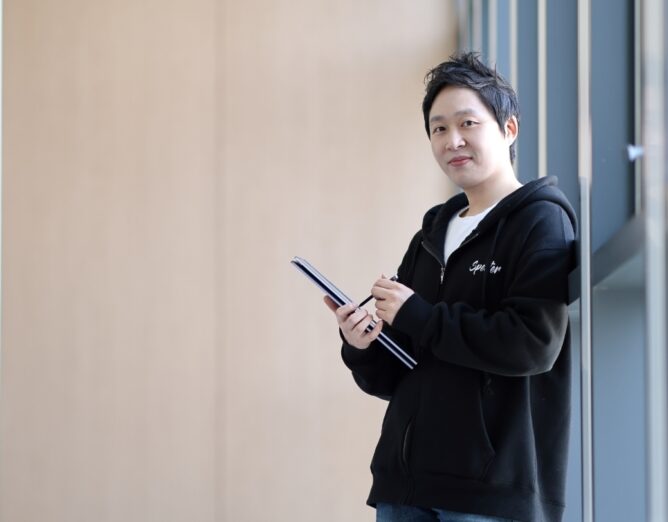
"What we've built is a dense 'talent verification database.' It's naturally updated based on job transition cycles, and industry- and job-specific variations are standardized as the vast data sets accumulate."
Theo, an AI that reads 'long history'
The core of the recruitment innovation he speaks of is one thing: looking not at "short delays," but at "long history." To answer this, Spector developed TEO, an AI recruitment solution. Existing AI interview solutions analyze facial expressions, voice tone, and eye contact—factors that can be trained. TEO is different. It comprehensively analyzes past performances in resumes and portfolios, reputation data from colleagues, and actual interview records.
"While existing AI screens out 'good talkers,' Theo identifies 'good workers.' It sees through the flowery rhetoric to discern the true work style and collaborative skills hidden behind the words."
The 93.7% prediction accuracy was verified by comparing Theo's predictions with actual data from high-performing individuals. Reputation checks and AI recruitment inevitably raise privacy concerns. He makes his principles clear.
"No unauthorized access is permitted. This is our ironclad rule."
All reputation checks on Specter are conducted with the applicant's prior consent. Rather than sharing a blacklist, the platform aims to enable applicants to leverage their reputation as an asset.
"It's a tool for 'proof,' not surveillance. It's setting a new standard for HR ethics."
Specter currently has approximately 5,800 clients, including major corporations like Samsung, Kia, and LG. Expanding its client base from startups to large corporations wasn't easy. He explains, "We offered speed to startups and security to large corporations." Initially, the company targeted startups in need of rapid hiring. Later, it expanded by meeting the rigorous security standards and fair processes demanded by large corporations. It also met institutional requirements, such as ISO certification. Specter provides its clients with a "Recruitment Failure Cost and Resource Calculator." Rather than simply providing software, it provides consulting services to identify cost leaks.
"The cost of failed hiring isn't a vague estimate. It's a proven loss, proven through sophisticated calculations. Specter isn't just a recruiting tool; it's a management solution that eliminates hidden costs."
Beyond Recruitment, to Organizational Culture
CEO Yoon Kyung-wook clearly outlines the next step: evolving from a recruitment platform to an organizational culture management platform.
"Recruiting is not an end, but a beginning. Our next goal is to go beyond who we hire and to inform how we'll work together."
Theo is moving forward with providing onboarding guides that guide leaders on how to give feedback tailored to new hires' personalities and how to integrate them into the team.
"If LinkedIn is your 'resume,' Spectre is your 'reputation.' While global HR giants focus on showcasing your credentials, Spectre is the only one that quantifies soft skills and reputation. Our goal is to become the global standard for 'trust verification,' going beyond just verifying credentials."
We are also exploring global expansion, with Southeast Asian markets, including Vietnam, as our first target.
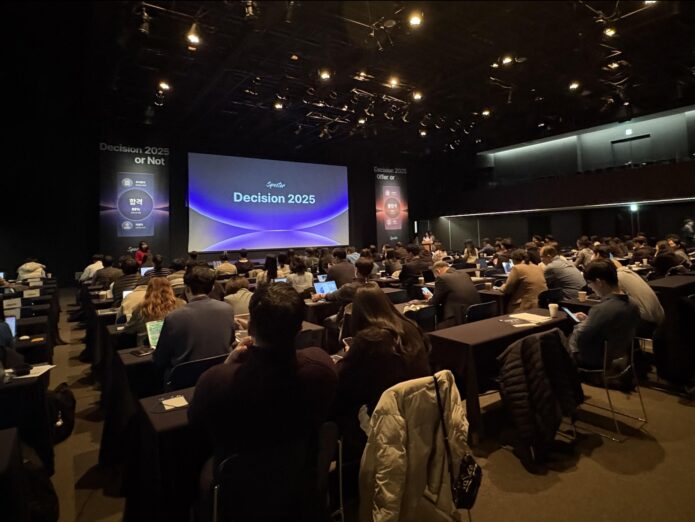
I posed the final question: How can a physics student lead HR tech?
"Just as physics explains the complexity of the world with simple laws, I wanted to elucidate the complexities of human relationships with data. Spectre is the company that uses technology to understand people at their most profound level."
The young entrepreneur, who witnessed 300 people change jobs after his first failed startup, became a technology leader who transformed the hiring processes of thousands of companies. But the question remained the same: How can we truly understand the true nature of a person?
Beyond the packaged resume, reputation began to speak. At the center of that data stands a physics student.
You must be logged in to post a comment.