



Development of a 'Korean-style notebook LM' that accurately finds and generates necessary knowledge.
Quantus Note, a multimodal AI and quantum algorithm combination, will be released next year… increasing consistency and eliminating hallucinations.
An increasing number of companies are adopting generative AI based on Large Language Models (LLMs) to generate and analyze diverse content, including text and images. However, current LLMs have several limitations. LLMs, designed primarily for text, cannot effectively process complex data such as PDFs containing images and diagrams, scanned documents, audio recordings, and videos. Furthermore, they cannot learn from users' internal data, and when using cloud-based services, sensitive information is transmitted to external servers, posing an unavoidable risk of information leakage. The most serious problem is the "AI hallucination phenomenon." This phenomenon, in which false information is generated as if it were true, is fatal in fields where trust is paramount, such as finance, law, and medicine.
There is a company solving these problems. Nextits, leveraging its multimodal AI technology, has developed a service that integrates and manages all forms of data—text, images, voice, and video—on a single platform and generates personalized knowledge. By supporting on-premise installation, nextits allows companies and organizations to build the system directly on their own servers, eliminating the risk of sensitive information being leaked. It also aims to overcome the illusionary phenomenon inherent in current generative AI by incorporating quantum-inspired algorithms into its AI.
Nextits aims to be a Korean version of "NotebookLM." NotebookLM is an AI-powered research and investigation assistant developed by Google. It analyzes user-uploaded data and helps summarize, organize, answer questions, and generate diverse content. It excels at efficiently processing vast amounts of information and extracting key insights.
Nextits CEO Jongbin Na has led technology sales and solutions businesses at IT companies for 24 years. Vice President and CTO Sanghoon Ryu is a technology leader with 34 years of experience, having spearheaded enterprise system development at companies such as LG-CNS and Hyundai. Ten AI experts are driving NestITS' technological innovation.
Nextits was selected for the Seoul Economic Promotion Agency's "Quantum Technology Development Support Project" this year and is currently working on implementing a quantum computing-AI integrated development platform. Furthermore, it was selected for SKT ESG KOREA 2025, and is developing on-device AI technology to reduce energy consumption and make AI accessible to all segments of society in a cost-effective manner.
We met with Jongbin Na, CEO of Nextits, which aims to become a global AI company by 2030, and talked about the multimodal engine and platform developed by Nextits, and the goals it hopes to achieve by incorporating quantum computing technology in the future.
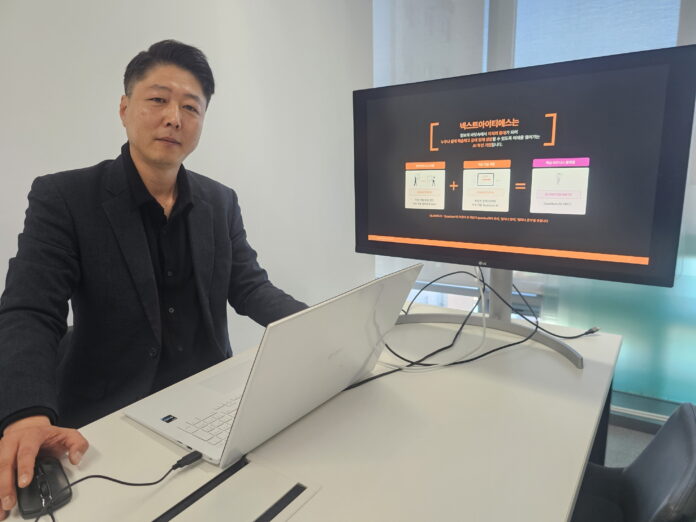
Read all data and display it in the desired format
"We will become a beacon of knowledge in a sea of information, opening the door to a future where anyone can easily and deeply learn and grow as an AI innovation company."
Nextits has developed a proprietary multimodal RAG (Retrieval-Augmented Generation) engine called QUANTUS R. QUANTUS R is a multimodal engine that simultaneously processes and understands various forms of unstructured data, including text, images, charts, and SQL queries.
There are three core technologies that make this possible. The first is high-performance OCR technology. It accurately converts scanned paper documents, handwritten notes, and text within complex diagrams into text. What makes it unique is its specialized processing of Korean characters. Existing foreign OCR technologies have struggled to properly recognize the complex character structure of Korean. Nextits, through years of research into processing Korean image data, has achieved an accuracy rate of over 95%. This high accuracy is also achieved in practical documents such as receipts, medical records, architectural drawings, and contracts. Nextits' OCR technology goes beyond simply recognizing text to understand the structure of the document. It distinguishes rows and columns in tables and converts graphs and charts within images to text. As a result, even paper documents are digitized, making them searchable and analysisable.
The second core technology is high-quality STT. It converts recorded meeting audio or YouTube video audio into text. It goes beyond simply transcribing speech to text. It accurately identifies who spoke what, when, and in a multi-person meeting. Simultaneously, it appropriately segments the speech into sentences. This structured data is later integrated into the RAG system's "knowledge indexing" stage, significantly improving search quality and answer accuracy. For example, asking, "Who opposed this motion in the meeting?" can identify the exact speaker and the content of the speech.
"Sales" and "sales" have the same meaning, but existing RAG systems recognize them as different words and fail to find documents. Furthermore, Korean has a wide range of particles. Different expressions like "branch in," "branch of," and "branch to" can result in incomprehensible meaning. The third key element is the lightweight "Rewriter model," based on reinforcement learning. The Rewriter model automatically expands users' queries with a variety of synonyms and expressions. This dramatically increases search coverage.
"Quantus R goes beyond a simple document search engine to become a 'knowledge platform' that comprehensively understands all the knowledge assets of companies and individuals and provides customized answers whenever needed."
The platform that applies these three technologies is QUANTUS S. Users can upload virtually any type of data, including text files, web documents, PDFs, images, audio recordings, YouTube videos, scanned documents, and business cards, to a single platform. The system converts these data into text and structured data and stores them in a vector database. Based on this, users can create customized knowledge, write papers or reports, or create study notes and lecture plans.
Nextits is proving the value of these technologies through real-world projects. With Hospital A, it developed a patient journey management system that integrates complex, unstructured medical data—such as medical records, medical images, test results, and prescriptions—with a multimodal RAG. With University C, it developed an intelligent, integrated learning outcomes management system that comprehensively analyzes student learning materials, lecture materials, test results, and feedback to suggest personalized learning paths. With Agricultural Research and Extension Services C, it developed a system that uses AI to integrate and analyze technical information from agricultural fields, including soil analysis data, crop growth stage-specific management methods, climate data, and case studies, providing real-time advice to farmers. All three projects demonstrate how Nextits' multimodal technology can effectively handle complex data across the vastly different industries of healthcare, education, and agriculture.
Overcoming AI's Weaknesses with Quantum Algorithms
When existing RAG systems search dozens of documents, it's difficult to determine which combination provides the most accurate answer to a user's query. Finding the best information among conflicting information is particularly challenging in fields where accuracy is crucial, such as finance or law. Existing algorithms either take too long or are inaccurate.
To address this, nextits is developing "QUANTUS A," a quantum-inspired algorithm. By incorporating "quantum feature mapping" technology into specific modules of an AI model, QUANTUS A identifies the most accurate and reliable combination of information when conflicting information is retrieved by a multimodal RAG system. By leveraging quantum mathematical principles, QUANTUS A can improve response accuracy by over 50% compared to existing RAG systems and learn high-dimensional correlations with less data.
QUANTUS NOTE is a platform that integrates QUANTUS R (multimodal data processing) and QUANTUS A (quantum algorithm-based optimization). This combination of multimodal and quantum algorithms enables the generation of accurate answers from unstructured data.
For example, “What is the main argument of this material?”, “How does the method used in this material differ from other methods?”, “Can I apply this method to this project?” These questions and answers accumulate over time, and over time, Quantus Note gradually learns about the user’s research process, areas of interest, and way of thinking. Eventually, when a new question is asked on the same topic, the system can provide a much more accurate and customized answer by taking into account the student’s previous question and answer history.
Quantus Note can operate at high performance even on low-capacity GPUs. Because it developed lightweight models based on reinforcement learning, Quantus Note can operate on standard, low-performance GPUs or even CPUs. This means that even organizations with limited IT resources, such as small and medium-sized businesses and public institutions, can adopt cutting-edge AI technologies.
"We call this 'quantum-inspired algorithm,' which implements quantum mathematical principles in a GPU environment. This technology can solve the problems of hallucinations and low inference accuracy inherent in current AI."
The Quantus Note is scheduled to be released in the second half of next year.
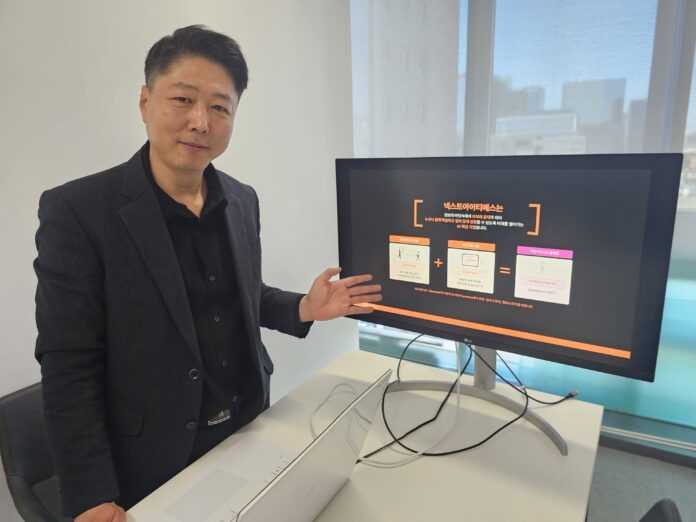
Will Nest IT's vision of becoming a "lighthouse of knowledge in a sea of information" come true? And can Quantus Notebook become a popular tool like Google NotebookLM in the Korean market?
Nextits has developed technology focused on the accuracy of Korean character processing in multimodal RAG. They have also incorporated quantum algorithms to address AI hallucinations and accuracy issues. If quantum-AI convergence technology can address AI reliability issues, this seems feasible.
You must be logged in to post a comment.