



“We could no longer tolerate a system that allowed honest brokers to leave the market.”
Kim Seong-chan, CEO of Jatchi Encyclopedia, had a clear motivation for starting his own business. He had witnessed the reality of the real estate market for over a decade: Only posting false listings would get customers, and honesty would result in losses. Platforms either ignored or encouraged false listings, and the punishment system failed to work. People were repeatedly wasting their time, and honest real estate agents left the market one by one.
To address this issue, CEO Kim Seong-chan designed a completely new structure. By adopting the "one property, one brokerage" principle, he created a platform where fraud was structurally impossible. He built a map of actual properties for sale, unit by unit, and transformed information asymmetry into symmetry. This was the starting point for the Real Estate Encyclopedia Map.
CEO Kim Seong-chan's career is unique. He started as a developer, then worked in human resources at Nike, then in retail sales, and then, after a chance encounter learning about auctions, he entered the real estate brokerage business. While studying brokerage at a real estate agency near a university, he learned something: the power of real estate lies in the information about properties.
“It was important to know how much good information I had and how many properties I could secure through that information.”
CEO Kim Seong-chan has experience in a variety of fields, including commercial, office, and apartment sales management.
He learned real estate valuation at the Korea Appraisal Institute and expanded his apartment brokerage business at Zigbang. At each stage, his learnings were clear: information is the key to brokerage, but information alone isn't enough.
"I thought I could dominate the market with a 'discount model,' but I was wrong. What matters to customers isn't commission discounts, but finding good listings that fit their needs."
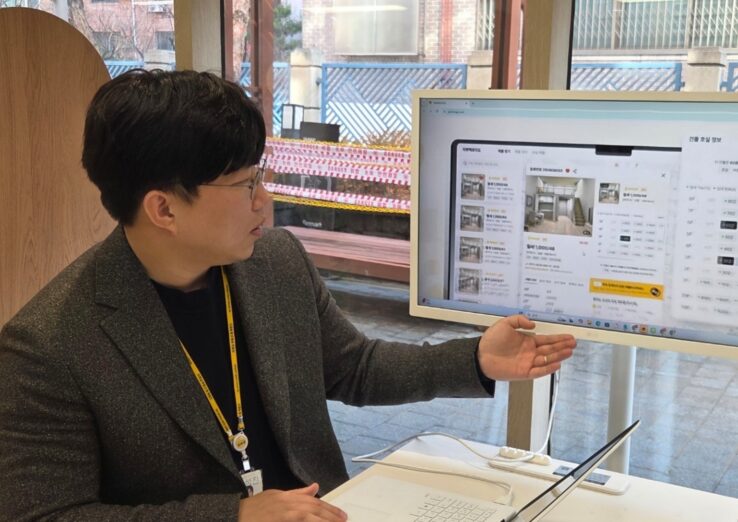
Meeting a single man, a YouTuber with 1 million subscribers, and the shock
The turning point came when I launched a direct real estate business in Gwanak-gu with a million-subscriber YouTuber named Jachunam. Many customers visited Jachunam's website, but even with 500 listings advertised on existing platforms, I wasn't getting even 20 to 30 contacts a month.
"I happened to find out that a place listing 500 fake listings on a certain platform was receiving 5,000 inquiries a month. After conducting a thorough investigation of all listings on each platform, I found that 60-80% of them were fake or duplicate listings. It was disheartening."
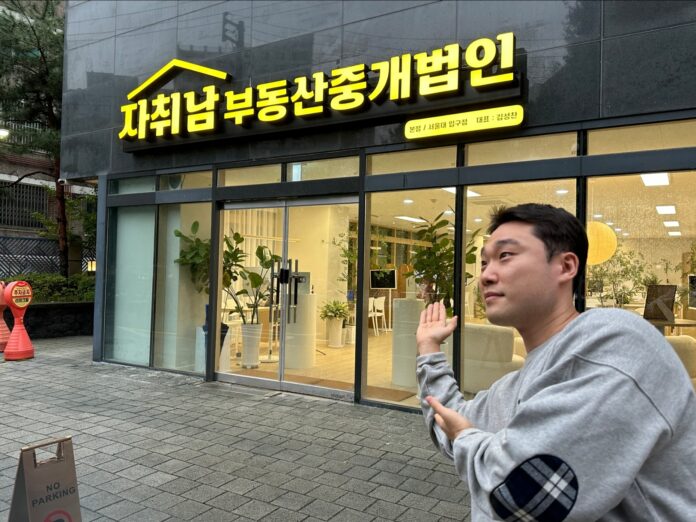
CEO Kim Seong-chan even visited a company that was actually operating fake listings. More than 80% of its 30 employees employed real estate agent assistants, operating through these fake listings. The conclusion was clear: In this system, honest real estate agents had only two options: infinitely increasing the amount of advertising or continuing to post fake listings.
"It was a structure where it was absolutely impossible to compete with accurate information alone. The problem wasn't a lack of information, but a lack of standards."
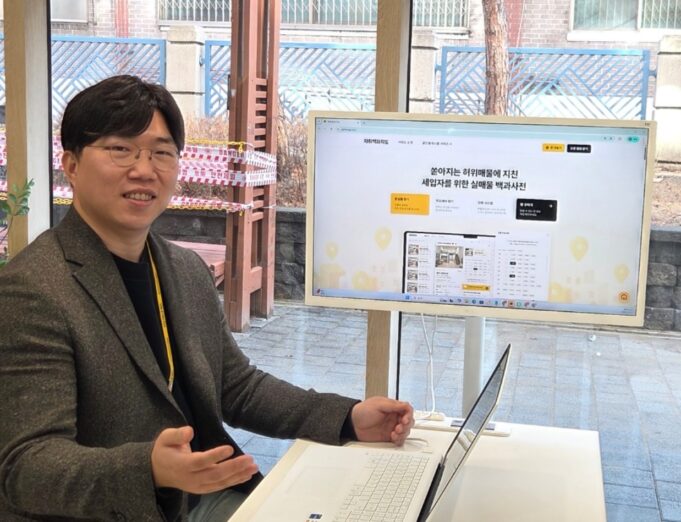
The mechanism by which falsehood pushes out the truth
CEO Kim Seong-chan accurately analyzed the mechanism by which false listings arise.
"Existing platforms are structured so that one property is advertised by N brokers. If the information is identical, the probability of receiving an inquiry is 1/N. However, if someone lists a property with a deposit of 1,000 won/500,000 won as 5 million won/300,000 won, inquiries will flow to the broker who made the false posting."
This is how falsehood drives out the real. Honest brokers fail to receive inquiries, and only those who post false information survive. Because each listing is directly linked to profit, platforms neglect false listings. The punishment system was also problematic. Whether one false listing or a hundred false listings, they were all punished together, leading to a pervasive logic: "If you're going to lie, do it more, and do it more severely."
The one-property-one-broker principle is overturning the structure.
CEO Kim Seong-chan decided to fundamentally change this structure. He introduced the principle of "one property, one broker, exclusive sales rights."
"Each unit is registered and managed by a single broker. By introducing the concept of exclusivity, we eliminate any possibility of information distortion. This creates a new game where honestly secured properties alone are sufficiently competitive."
The response from brokers was surprisingly positive. They welcomed the relief from the pressure to survive without lying. In the one-room market, a broker only needs 50 inquiries per month to operate stably, but honest brokers rarely receive even 10.
Disclosure of occupancy, updates, and lease completion: overcoming information asymmetry.
The core of the Real Estate Encyclopedia map operates through three functions. First, there is the occupancy request, which is a declaration that a broker represents the property. Only one registration exists for each unit, and the occupied broker becomes the official representative of that unit.
Second, there's the requirement for updating. The broker in possession is required to update within 30 days. Failure to update will result in automatic revocation of the right to possession. If another broker requests updating, the right to possession will be transferred.
"Honest brokers secure more market share, while negligent brokers lose it. This is a mechanism that eliminates information asymmetry and automates brokers' fulfillment of their responsibilities."
Third, it discloses completed rentals. While existing platforms delete completed listings, Jakchi Encyclopedia Map takes the opposite approach. It records all information, including photos, layout, past prices, real estate agent, and contract date.
"Once this record is compiled, false listings will be immediately identified by comparison with past records, making re-entry impossible. Disclosure of completed leases is a structural mechanism to eliminate false listings and a key design element that transforms the Real Estate Encyclopedia into a genuine map."
1 year of direct operation, verification completed
CEO Kim Seong-chan tested the model by operating a direct real estate business for a year, starting in August 2024. The results were clear: average monthly sales per agent of approximately 8 million won, cumulative visits of 140,000, and offline visits of approximately 5,000. These figures were achieved despite operating without existing platform advertising.
"This was a significant market validation that a structure of real estate listings, without any deception, actually yielded results. We confirmed that 'information reliability' itself has a greater impact. When I asked students looking for a home why they came here, most of them responded this way.
'I don't think they'll lie here.'
"I believe this is precisely the public's thirst for trust. The fact that so many clients have come forward demonstrates the strong market demand for genuine properties and reliable brokerage services."
The team currently consists of five people, and development is conducted in collaboration with external partners. The company has secured angel investment and is preparing for a full-scale seed round in early 2026.
Transforming the Tenant Experience: Resolving Anxiety with Data
The Encyclopedia of Living Alone is also fundamentally changing the tenant experience.
The first question renters often ask when viewing a home is, "Is this place really here?" CEO Kim Seong-chan says his goal is to alleviate this anxiety before even seeing the property.
Tenants face three anxieties: Does this room really exist? Is the condition genuine? Is this property a safe choice? We address these anxieties by providing past photos, layout, and rental history for each unit, actual transaction prices and price fluctuations in the neighborhood, and information on mortgages, delinquencies, and risks based on the real estate registry.
Building a map of each unit and creating an era where home decisions are made through data analysis, not just by looking. This is the direction that the Self-Trip Encyclopedia Map aims to achieve. It creates standards in a market where none existed before.
CEO Kim Seong-chan's vision for the future is clear: to create the first unit-by-unit standard and listing map for the Korean one-room apartment market. This standard will serve as the foundation for all future technological expansions, including AI verification, pricing, and transaction stability.
"The problem in the current market isn't a lack of information, but a lack of standards. The technology and data structure developed by the Real Estate Encyclopedia Map is the work of embedding these standards in the Korean real estate market."
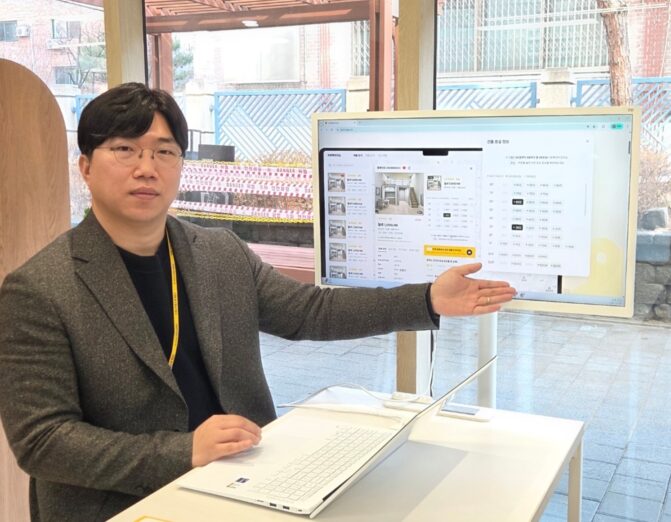
With information standards in place, single-person households won't make wasted trips. For brokers, sales that were previously hampered by false information can now become opportunities. Reducing information asymmetry will also reduce structural crimes like jeonse (lease fraud).
"Once standards are established, single-person households will be able to find precise directions when searching for a home, just like turning on a navigation system, and a new market will open up where real estate agents can compete honestly."
What CEO Kim Seong-chan is creating is a market where authenticity, not deception, wins. The principle of one property per agent, a system for disclosing occupancy, updates, and leased status, and a map of actual properties for sale by unit. This is the new map of the real estate market drawn by the Jatchi Encyclopedia Map. The structure where deception pushed out the real is now shifting to one where the real is pushing out the deception. The era of honest real estate agents leaving the market is over. Now, an era has arrived where honest real estate agents will seize the most opportunities.
You must be logged in to post a comment.