



"The biggest problem with hiring is uncertainty. Resumes pile up, interviews are repeated, but it's only after the job is hired that we learn who will actually do the job."
This is the diagnosis of Choi Jae-woong, CEO of Supercoder. Recruitment has long been a matter of "feel." Successful candidates often varied depending on the interviewer's experience and memory, the order of questions, and the mood of the day. Recruiting international talent, in particular, was fraught with uncertainty. The moment a candidate crossed the border, the verification process slowed, costs escalated, and no interview records were kept.
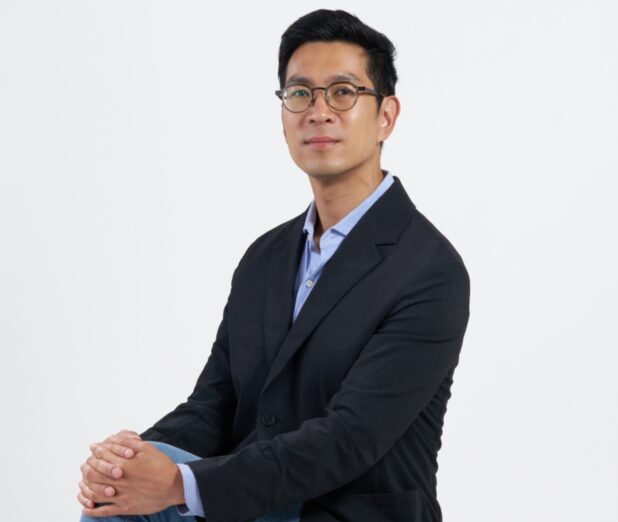
SuperCoder, which launched in 2021 as an overseas developer recruitment platform, has achieved rapid growth, averaging 127% annually. However, CEO Choi Jae-woong recognized structural limitations behind this growth.
While basic verification was performed at the platform level, its limitations were clear. Verifying numerous applicants with consistent criteria, scaling this process on a large scale, and evaluating them according to each company's unique job postings was impossible with a human-centric system. The burden of sophisticated, customized verification remained on the companies.
The next step he chose wasn't simply platform expansion. It was an evolution into an "AI Recruiter" that integrates the entire recruitment process. CEO Choi Jae-woong emphasized, "If existing platforms are 'gateways' connecting global talent, our AI Recruiter is an engine that automates screening and evaluation. Our goal is to connect everything from sourcing to screening, recommendation, and final decision-making in a single, end-to-end flow."
What AI asks isn't a question, but a "structure."
Supercoder's AI interview isn't simply an automated tool that asks predefined questions. It's an algorithm that replicates the "persistence" of a human-led in-person interview.
"There are skills that are difficult to detect with traditional coding tests. SuperCoder's AI analyzes the context of applicants' responses in real time. If the answers lack sufficient basis, it asks deeper follow-up questions, such as, 'What was your specific role at the time?' or 'Were there any other alternatives?'"
This method enabled the verification of the logical thinking and problem-solving skills of not only developers but also product planners, marketers, and salespeople, who are difficult to quantitatively assess. It transformed assessments previously swayed by the interviewer's subjective opinions or physical condition into structured, data-driven records. He described it as "the process of transforming the unstructured act of an interview into comparable data."
The Secret to Five Times the Accuracy: A Different 'Hit Rate'
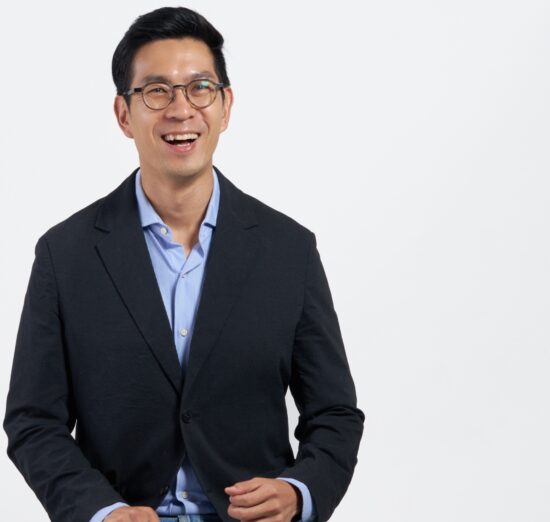
Supercoder's claim of "5x AI accuracy" isn't just a marketing slogan. It's a metric that proves its effectiveness in real-world recruiting. He cited ten recent global recruiting cases as evidence.
"In the past, with resume keyword-based recommendation methods, an average of 15 candidates needed to be recommended before two were interviewed. However, with AI interview data incorporated, only three candidates needed to be recommended before two were interviewed. This means the interview conversion rate (hit rate) has increased by approximately five times."
Even more encouraging is the final result. Previously, one in five candidates interviewed was hired, but now, the hiring success rate has more than doubled, reaching one in two. He added, "This isn't about AI replacing people; it's about companies gaining clearer information needed to make decisions."
While global unicorn Turing pursued aggressive expansion, SuperCoder focused on "trust" and "detail." In particular, they are significantly strengthening security and compliance standards to ensure that even large domestic corporations and financial institutions can use SuperCoder with confidence.
"It's not just about showcasing talent. We're seamlessly integrating with the company's internal recruitment system (ATS) and adopting international security standards like ISO 27001 to eliminate privacy issues at the source."
Based on this, he plans to first establish "Korea's strongest global recruitment infrastructure." Building on his success formula in the Korean market, he presented a roadmap for gradual expansion into Japan, Southeast Asia, and the Middle East (2026), Europe (2027), and the United States (2028).
A growth plan built on "two engines," not numbers.
Supercoder aims to achieve annual sales of 20 billion won and a corporate value of 40 billion won by 2027. This isn't some vague wishful thinking; it's built on two solid business engines.
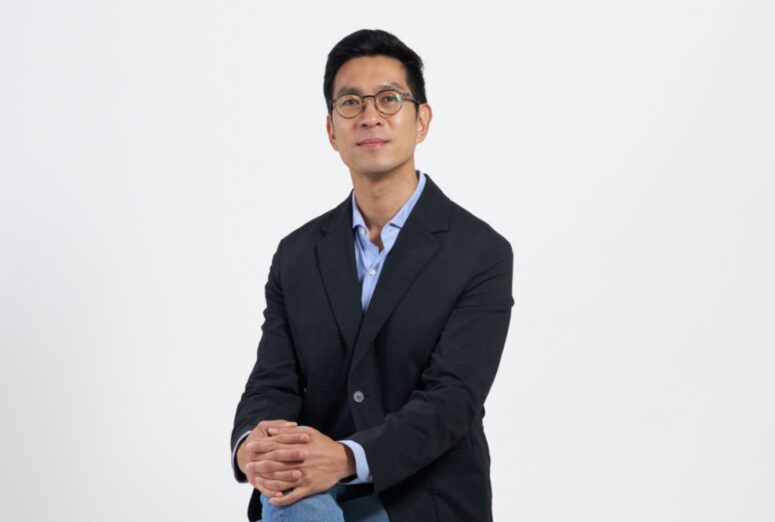
"The first engine is connecting and managing overseas talent. This is the 'cash cow' generated by stably managing over 1,000 global talents. The second engine is a highly scalable AI interview solution. We will drive explosive growth by accumulating references, focusing on large corporations and big tech companies."
At the end of the interview, CEO Choi Jae-woong emphasized ‘data’ once again.
"Resumes are a thing of the past, and interviews have long been shrouded in fog. Our goal is to clear that fog and transform it into explainable data. When recruiting teams are freed from repetitive tasks and focus on strategic thinking, companies can connect with talented individuals."
The moment when recruiting becomes a system, not a matter of luck. At the center of this change, CEO Choi Jae-woong and Super Coder are charting a new course for global talent recruitment.
You must be logged in to post a comment.