


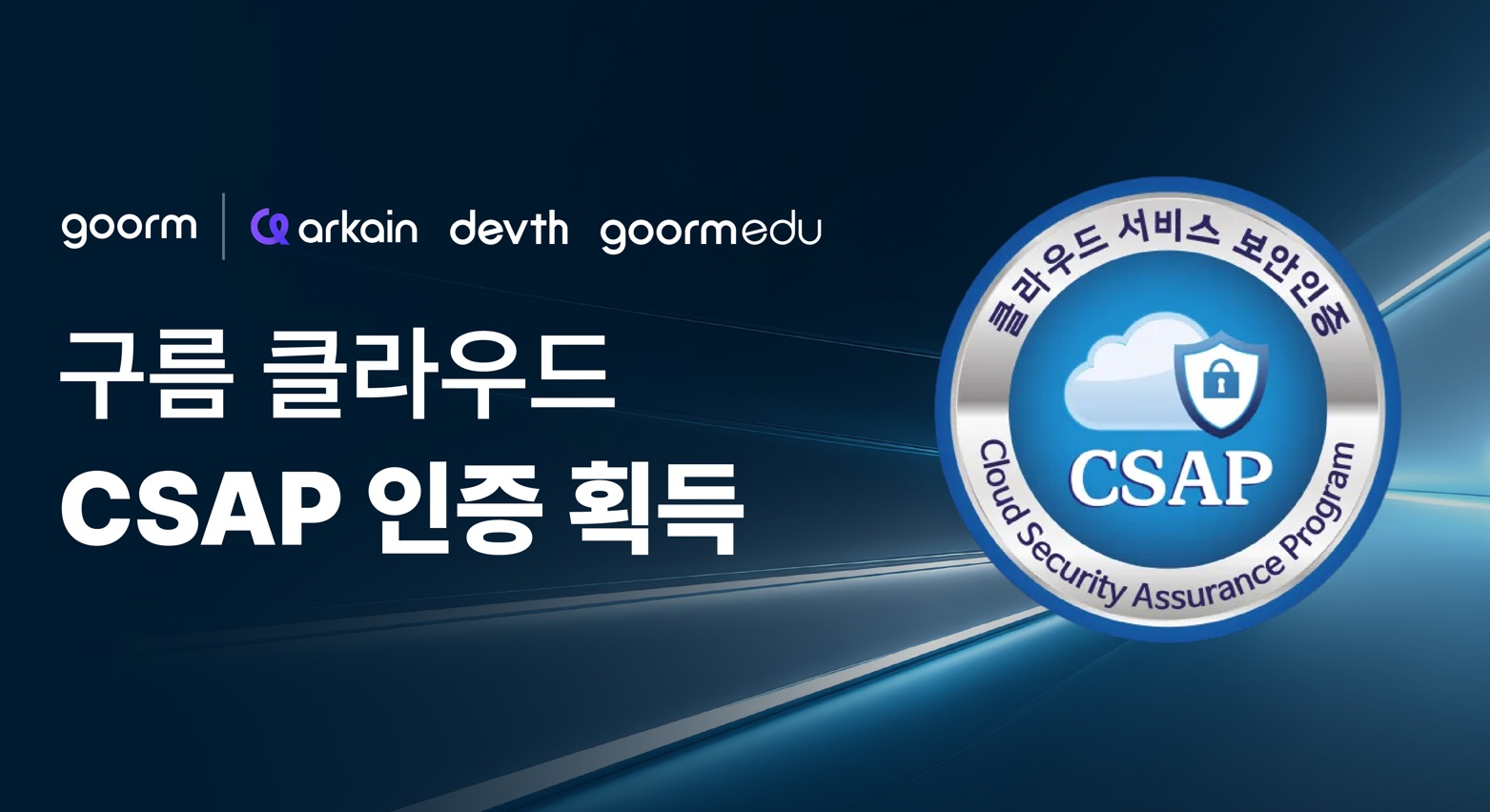
Cloud (CEO Ryu Seong-tae), an AI and software edutech company, announced on the 14th that it has received SaaS (Software as a Service) standard level certification from the Ministry of Science and ICT's (MSIT) Cloud Security Assurance Program (CSAP), a nationally recognized cloud security certification system. This certification qualifies Cloud to provide cloud services to public institutions and lays the foundation for its entry into the public sector.
CSAP is a certification system designed to ensure the safe adoption of private cloud services by public institutions. Without this certification, cloud services cannot be offered or provided to public institutions. Certification evaluation criteria include physical and technical security, operational management and disaster recovery, personal information protection, and service availability, and must pass a rigorous, multi-stage review process.
Through this certification, Cloud not only expands its scope of participation in public sector projects, but also demonstrates to the public that its cloud-based software training platform is competitive in terms of security and stability. Furthermore, it will serve as a credible certification for various sales activities, including sales materials, proposals, and promotional content.
The company anticipates that this certification will positively impact the expansion of its services beyond the public sector to include private companies, educational institutions, and research institutes. In particular, it is believed to have established a foundation of trust for entry into industries requiring sophisticated security requirements, such as finance and healthcare.
Ryu Seong-tae, CEO of Cloud, said, “The CSAP SaaS standard grade certification means that Cloud’s technology and security system have passed national verification,” and added, “With this certification as an opportunity, we will further strengthen our position as a trusted service provider not only in public institutions but also in the private sector where security is important.”
- See more related articles
You must be logged in to post a comment.