


[Silicon Valley, USA] “When it develops into a startup ecosystem with a distinct identity like Israel”
“It’s time for Korean startups to create global success stories like Australia’s Canva or Atlassian.”
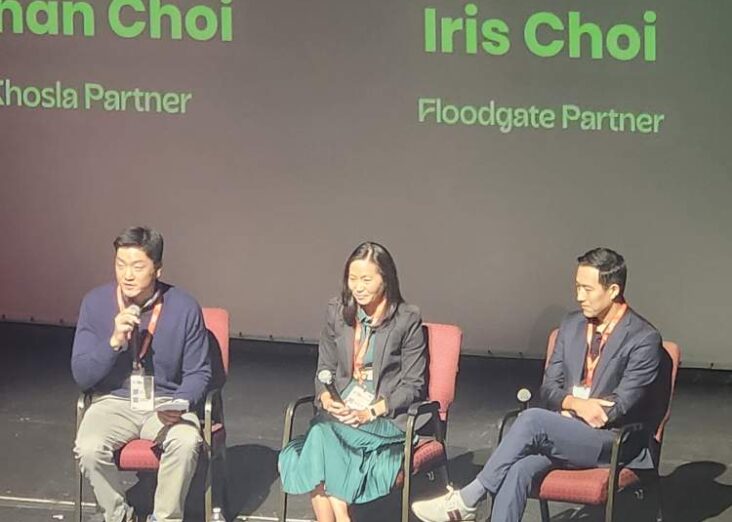
On the 10th, at the UKF 2025 Startup Summit, Leesun Choi, a partner at Khosla Ventures, a leading Silicon Valley VC, and Iris Choi, a partner at Floodgate, presented the future of the Korean startup ecosystem. Known as early investors in OpenAI, Twitter, Lyft, etc., they offered specific advice for the leap forward of Korean startups.
Partner Choi said, “Korea has excellent AI talent and has the potential to develop into a strong startup ecosystem like Israel.” However, he pointed out that “the challenge is that many Korean entrepreneurs still do not fully understand the American way of doing business, especially the B2B software market.”
In particular, he emphasized the differences in how software is sold in Korea and the U.S. He added, “In Korea, it is still sold in the license maintenance method instead of SaaS, and on-premise deployment is preferred due to data security concerns.” He added, “It is key to understand and overcome these differences.”
Partner Iris Choi emphasized the importance of overcoming cultural differences. “There is a gap between Korea’s hierarchical culture and Silicon Valley’s challenging culture,” she said. “Rather than a top-down structure led by the CEO, we need a merit-based culture where the best ideas are adopted.”
The two partners also mentioned the strengths of Korean startups. “Koreans’ diligence is already recognized worldwide,” they said. “Now is the time to demonstrate leadership based on this and actively brand our identity as Koreans.”
In particular, Israel's startup ecosystem was presented as a best practice.
“Israel has established a unique position in cybersecurity. It has established a culture where founders support each other closely. Korea also needs to create an ecosystem like this.”
Regarding the future outlook for the AI market, attention was paid to applications in specialized fields such as medicine and law. Partner Lee Seon said, “Humanoid robots will be introduced to most households within 10 years,” and “Medical innovation through AI will be able to dramatically extend human lifespan.”
“AI companies are growing rapidly, but going forward, companies with high customer retention rates and scalable revenue models will be the ones to receive attention,” said Iris Choi, a partner.
Lastly, the two partners emphasized that “language barriers are being resolved with AI translation technology,” and that “now, business understanding and cultural adaptability are key.” They also suggested the growth potential of the Korean startup ecosystem, saying, “If meaningful global success stories emerge, the floodgates will open.”
You must be logged in to post a comment.