

“Accidents repeat themselves, yet education remains centered on documents and lectures.”
This is the reality that Ahn Hee-deok, CEO of M-Line Studio, encountered while working with the Korea Occupational Safety and Health Agency (KOSHA) to produce industrial accident prevention content in the early 2010s. While caution is constantly reiterated in the field, the moment an accident actually occurs is a fleeting moment of decision-making, with no time to even recall the manual.
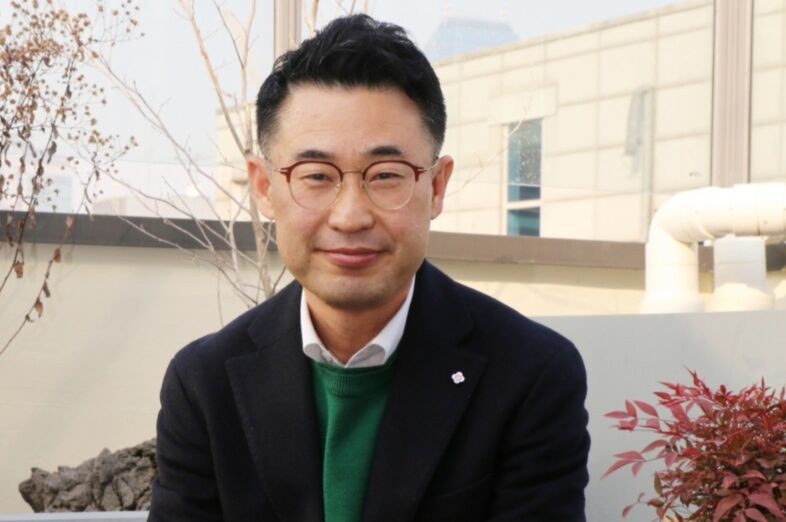
CEO Ahn Hee-deok said, "The essence of VR is immersion and experience. That experience has the power to make people make real choices and take action." He added, "I believed that rather than simply explaining safety accidents, we could provide training that allows people to directly experience and assess the situation immediately before an accident."
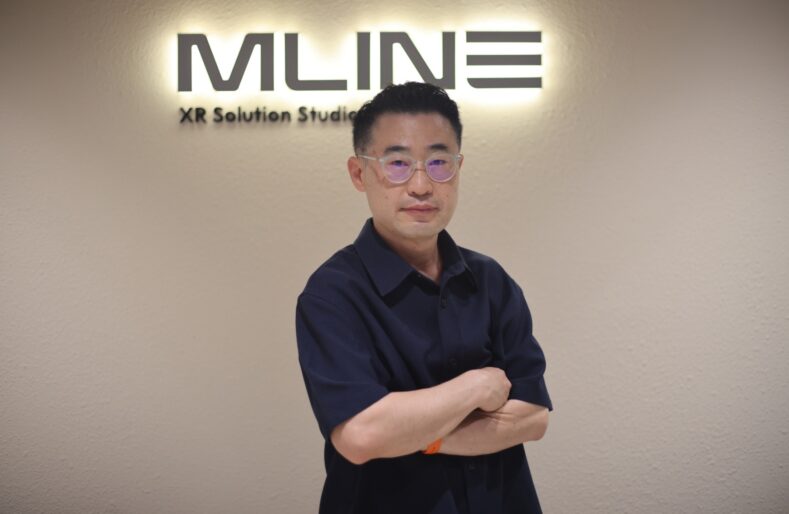
M-Line Studio, the first company in Korea to introduce VR safety training in 2015, has set its sights on industrial safety and job training, rather than games or entertainment.
CPR Master is an MR-based CPR training system that visualizes the depth, speed, and angle of compression in real time on an actual mannequin, and the M4D simulator is a device designed for training purposes with sensory elements such as falls and electric shocks.
CEO Ahn Hee-deok assesses the current situation as follows: "It's not a time when technology has improved, but a time when society as a whole has shifted its standards for safety." What matters now is not how realistically accidents can be recreated, but what we actually do to reduce them. The one value M-Line Studio wants to leave behind is "not a company that simply shows accidents, but a company that actually trains and takes responsibility to reduce them."
Accidents repeat themselves, but education remains unchanged.
M-Line Studio launched in 2005 as a company developing 2D and 3D animation and immersive media content. From the outset, the company differentiated itself by not simply presenting content, but rather by creating interactive content that engages users and elicits responses. CEO Ahn Hee-deok explained, "Our starting point was to consider how content can influence people's perceptions and behavior." Since the early 2010s, he has worked with public institutions, including the Korea Occupational Safety and Health Agency, on the production of industrial accident prevention content and animation, gaining firsthand experience with the educational methods and structures of industrial settings.
“Accidents are recurring, and I've become acutely aware of the limitations of education, which remains centered on documents and lectures.”
When VR technology began to become fully visible around 2016, the trend was not unfamiliar to M-Line Studio.
"While creating safety training content, I experienced real-world challenges and became convinced that VR's immersive and experiential nature could be an effective solution for safety training and job training in industrial settings."
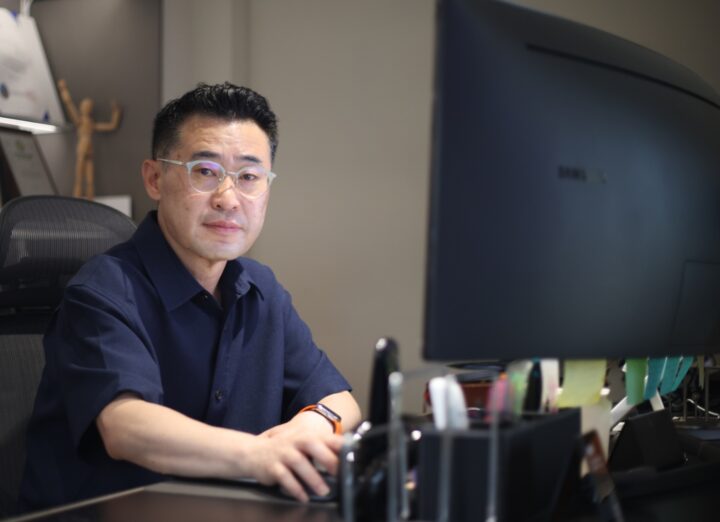
Since most accidents are caused by momentary judgments and actions, this means that education that allows people to experience the moment of judgment is necessary.
Why I chose industrial safety
Back in 2015, when VR technology was just beginning to gain traction, there was considerable internal discussion about moving into the gaming and entertainment markets. CEO Ahn Hee-deok continually asked himself one question: "Where is this technology most desperately needed?"
The answer was on the spot.
"When I first encountered VR, the most powerful thing I realized was that this technology wasn't simply a tool for displaying new images. The essence of VR was immersion and experience, and those experiences had the power to inspire people to make choices and take action."
CEO Ahn Hee-deok saw this point as perfectly aligned with industrial safety training. Rather than simply explaining accidents, he believed it would be possible to provide training that allowed participants to experience and assess the immediate aftermath of an accident.
"While the gaming and entertainment markets were certainly attractive, there were already many companies excelling in these areas, and in many cases, technology itself was the goal. In contrast, industrial safety training was a field where structural issues—why it didn't change—were far more significant than technological advancements."
Around 2015-2016, after much internal discussion and deliberation, M-Line Studio decided to apply VR not for gaming but for industrial safety and job training.
Education that learns with the body, not the head
The starting point for developing CPR MASTER was a simple question.
“Will the CPR training we are currently providing be helpful in real-world situations?”
Traditional group CPR training typically involves gathering a large group of people in one space, listening to an instructor's explanations, and then repeatedly practicing with mannequins. After completing the training, most participants share a similar story: they understand the technique intellectually, but lack the confidence to perform it in a real-life situation.
“Since CPR is a training method that relies on real-world physical sensations, such as the feel of the hands and the depth and speed of compressions, I felt that simply creating a completely virtual environment using VR would have limitations.”
Rather than focusing on virtual environments, M-Line Studio focused on MR technology, which can combine virtual information and feedback while utilizing actual mannequins and equipment. CPR Master visualizes key indicators like compression depth, rate, and angle in real time over actual CPR movements, allowing users to immediately recognize whether they are performing correctly.
“These features weren’t built because they were technically feasible, but because I wanted to answer a question I’ve heard repeatedly in medical and emergency medical training: can’t you tell right away if the pressure is right?”
The M4D simulator incorporates sensory elements such as falls, electric shocks, cold winds, and hot air. CEO Ahn Hee-deok explained, "When incorporating these sensory elements, we clearly established three criteria."
"All sensory elements must be based on actual incident data and educational objectives. The experiencer must be able to stop at any time, and the result should be judgment training, not surprise. M4D is not a device for stimulating the senses, but an educational tool that helps the subject understand, through their own body, why certain choices should not be made in that moment."
From planning to space construction, everything is done in-house.
M-Line Studio operates with a team of about 30 people. A key characteristic of the team is that all stages of production, from planning and content creation to hardware development and final space construction, are handled in-house.
"Having worked in the field of XR safety training for a long time, I've experienced that even one step outsourcing can have a significant impact on the overall quality and effectiveness of the training."
In the field, cases where content is well-made but does not match the hardware, or where the equipment is good but does not match the training scenario, occur more often than you might think.
"At M-Line Studio, we first design safety scenarios and training objectives from the planning stage, then produce content tailored to those needs, and even build hardware and simulators if necessary. Finally, we've established a structure that takes responsibility for building spaces that take actual operating environments into account."
M-Line Studio wasn't founded with the goal of going public from the beginning. CEO Ahn Hee-deok explained, "Rather than rapidly growing the company, we've always prioritized how we can grow steadily on our own."
"I believed that XR safety training itself is a field where value is created not through short-term results, but through accumulated field experience and trust. Even if we create a single piece of content or piece of equipment, it takes time to verify its long-term usability in the field and the sustained effectiveness of the training."
Rather than relying on investment, M-Line Studio has built a revenue structure through project execution and the accumulation of its own IP.
"Rather than focusing on short-term external expansion, we've focused on gradually building an internal structure where content, platforms, and hardware all work together. While the process wasn't quick, we were able to create a financial structure that's not overly swayed by market changes or specific customer segments."
Having worked in this field for over 20 years, CEO Ahn Hee-deok feels that this isn't simply a time of technological advancement, but rather a shift in society's overall approach to safety. He explained, "In the past, responding after an accident was the norm, but now, what we did to prevent accidents from occurring is far more important." Since the strengthening of the system related to major accidents, safety is no longer the concern of field managers or specific departments, but has become a core element of overall corporate management.
"We've reached a point where formal education or one-time inspections are no longer sufficient. What's needed is an education and training system that actually works in the field."
The one line of value that M-Line Studio wants to leave behind is clear.
“We want to be a company that doesn't just show accidents, but actually conducts training and takes responsibility to reduce accidents.”
In a time when accidents were repetitive, education relied solely on documents and lectures. M-Line Studio, founded by CEO Ahn Hee-deok, chose to teach students to experience the moments immediately before an accident instead of explaining it, to learn through experience instead of intellectual understanding, and to change behavior instead of demonstrating techniques.
The future envisioned by this company, which has been providing VR safety training for 20 years, is one where training is actually conducted and taken responsibility, as society's standards for safety have changed.
You must be logged in to post a comment.