



Producing hydrogen is a waste. "Green hydrogen," which is produced by splitting water with electricity, costs over 20,000 won per kilogram. For hydrogen buses to compete with diesel buses, they need to cost less than 9,000 won, and for use in steel and power plants, they need to cost less than 4,400 won ($4). However, this reality is far from reality.
Enclyan CEO Lee Yong-hee (33) splits methane with plasma at thousands of degrees Celsius, producing "black gold" along with hydrogen. Each kilogram of hydrogen also produces 3 kilograms of solid carbon. Selling this carbon as an electromagnetic shielding material reduces the cost of hydrogen production to around $1. Founded while pursuing a doctorate at Jeju National University, he and two employees are currently developing technology to convert 60,000 cubic meters of waste biogas annually into 6,000 tons of blue-green hydrogen.
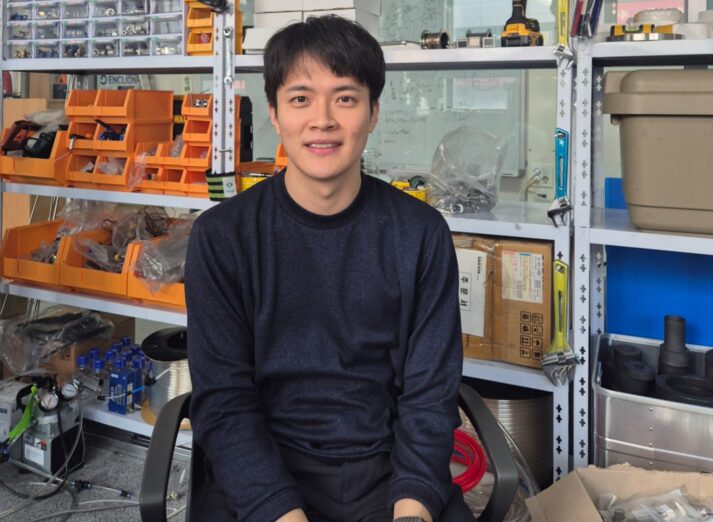
"Rather than a hydrogen production company, we'll become a carbon materials company. Solid carbon will be our primary product, with hydrogen as a byproduct."
The moment a lump of methane splits into hydrogen and black gold, the hydrogen economy changes.
Gray hydrogen emits CO2, and green hydrogen is too expensive.
Hydrogen sounds like a clean energy source, but the reality is different. Most of the hydrogen produced today is "gray hydrogen." It's produced by reacting methane (CH4) and water (H2O), releasing carbon dioxide (CO2) into the atmosphere during the process. Ironically, the more hydrogen produced, the more global warming intensifies.
"Green hydrogen," produced by splitting water with electricity, has emerged as an alternative, but its cost is a problem. Green hydrogen produced in Jeju costs over 20,000 won per kilogram. Another problem arises: 1.7 million tons of methane, a byproduct of petrochemical plants, are wasted annually. Originally burned as fuel, the industry faced a crisis due to oversupply from China, prompting a shift to eco-friendly processes. Consequently, combustion is no longer feasible. Methane is 25 times more potent as a greenhouse gas than carbon dioxide, making it undesirable to simply emit.
CEO Lee Yong-hee discovered a solution to this problem while researching plasma technology during his doctoral program at Jeju National University. "I was convinced that plasma pyrolysis technology would become the core of the next-generation energy industry. I decided to start a business to change the world through technology." Having embarked on long-term research and development since 2020, he now runs a company at the Jeju National University Startup Incubation Center, generating annual sales of 50 to 70 million won. However, he sees a market worth 80 trillion won.
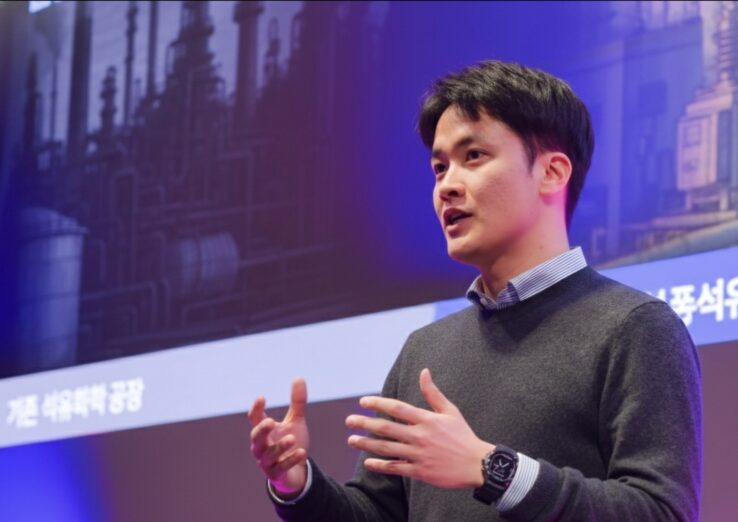
Splitting methane to produce hydrogen and carbon simultaneously
Enclient's core technology is "pyrolysis," which splits methane using intense heat without water. This process separates methane (CH4) into hydrogen (H2) and solid carbon (C), without emitting any carbon dioxide. The hydrogen produced this way is called "green hydrogen." The electricity used in this process is also renewable energy like solar and wind power, making the entire production process environmentally friendly.
The core of the technology he developed is "thermal plasma." Plasma is a hot gaseous state reaching temperatures of thousands of degrees, and this heat splits methane. "Plasma can reach temperatures of thousands of degrees in seconds, enabling rapid hydrogen production. Because it undergoes thermal decomposition without a catalyst, it also offers advantages in terms of purity and recovery of solid carbon."
The crucial point here is the "dual revenue structure." Producing 1 kg of hydrogen theoretically yields 3 kg of solid carbon. This carbon is a high-value-added material that can be used in battery conductors, tires, and electromagnetic shielding materials. "Even if we sell solid carbon for just $1.50 per kg, the unit cost of hydrogen production drops to around $1. The solid carbon produced by Enclient is highly conductive, allowing it to be sold for $3 to $5 or more as an electromagnetic shielding material. Ultimately, solid carbon, not hydrogen, will become the primary revenue source."
Hundreds of DC plasma modules can be connected in parallel, enabling large-scale plants.
He chose DC (direct current) as his plasma method. "RF (radio frequency) plasma is suitable for high-value-added industries requiring precision, such as semiconductor processing, but its power supply is expensive. In the energy industry, unit equipment cost and operating costs directly determine competitiveness." DC plasma has a low power supply cost and creates a high-speed jet-like flow, quickly and evenly mixing methane and plasma. This is crucial for maintaining consistent quality of solid carbon.
Even when scaling to large-scale plants, the strategy is clear. "It's a modular structure that deploys hundreds of DC plasma units in parallel, each in the tens of kilowatts. Since hundreds of these units are already operating reliably in semiconductor factories, this approach minimizes scale-up risks."
The technical challenge was continuous operation. "Solid carbon, decomposed from methane, accumulated on the reactor walls, making it difficult to maintain its integrity. Accurately monitoring the reactor's interior, which exceeds 1,500 degrees Celsius, was also challenging." This problem was solved using thermofluid simulation technology. "Controlling the turbulent flow inside the reactor was key. We verified this through simulation and optimized the process."
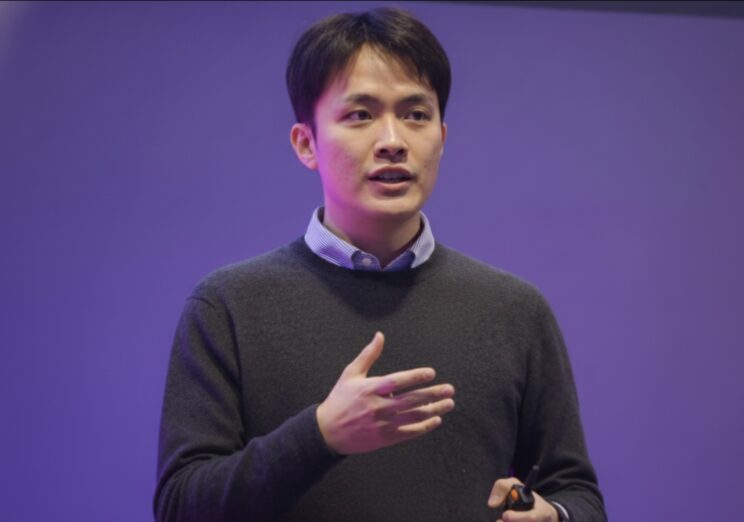
Starting with Jeju biogas, expanding into a petrochemical plant.
Enclient's first target market is unused domestic biogas facilities. 60,000 cubic meters of biogas are combusted and discharged into the atmosphere annually, but this can be converted into 6,000 tons of blue-green hydrogen. "The biogas market continues to grow, allowing us to procure methane at very low prices. Since the process for extracting hydrogen from biogas is already commercialized, we can simply use the existing infrastructure and convert the gray hydrogen process, which emits CO2, to our technology."
Jeju, in particular, is an ideal testing ground. He explained, "Because Jeju is an island, transporting hydrogen from the mainland is expensive. Self-production is essential, but Jeju has abundant renewable energy resources and a Plus DR policy that allows surplus electricity to be used at half price." He added, "If the technology to produce green hydrogen from surplus renewable energy and biogas is successful, it will become the most profitable model."
The roadmap is to expand into petrochemical facilities. While biogas plants (SOM) are capable of hundreds of kilowatts, petrochemical plants (SAM) are capable of tens of megawatts. He emphasized, "We will secure short-term revenue and validate our technology in the SOM market, and then flexibly scale up the system when the SAM market arrives." Plans are currently underway to begin with a 60kW module and expand to a 200kW pilot and 500kW demonstration system.
The most important indicators for this representative are the yield and performance of solid carbon. "In our process, hydrogen is a byproduct, and solid carbon will be the main product. Our goal is to increase production by increasing the yield of solid carbon and to develop it into a high-value-added material." The company is already collaborating with several research institutes to explore the potential applications in other industries, and starting in 2026, it plans to increase the number of solid carbon evaluation samples and sales volume to verify its market potential.
The market size was also specified. "The total market (TAM) is approximately 80 trillion won, and the target market (SAM) is approximately 4 trillion won. This represents the projected revenue from converting byproduct methane and biogas into hydrogen and solid carbon and selling them. The biogas market continues to grow due to increasing demand for waste-to-energy conversion, creating an even larger potential market."
This CEO envisions a future for Enclyan, not as a hydrogen production company. "Our vision is to provide a platform that converts fossil fuels into eco-friendly resources (hydrogen, solid carbon) based on renewable energy. Ten years from now, oil-producing countries like the Middle East will use the Enclyan platform to export eco-friendly, high-value-added resources utilizing fossil fuels and renewable energy. We will create a world where sustainable human development is possible even while using fossil fuels."
You must be logged in to post a comment.