



The forklift's rear sensors sounded alarms regardless of whether it was a person or a pallet, but the workers, desensitized to the alarms, ignored them. When an actual accident occurred, a single collision with a steel guardrail resulted in millions of won in repair costs and an average of six hours of work stoppage.
After implementing Egotech's AI safety system, worker response rates increased, as only meaningful warnings were sounded. Furthermore, the flexible safety bar cut repair costs by half and recovery time by 80%.
“Most industrial accidents occur due to poorly designed relationships between equipment and workers.”
This is the conclusion reached by CEO Jo Gwang-hyung of Egotech, drawing on his 25 years of experience in the industrial safety field. Egotech is an industrial safety solutions startup. It offers integrated safety systems that combine hardware, AI, and sensor technology, from shock-absorbing flexible safety bars to AI-powered human recognition systems for forklifts and smart crane safety solutions.
CEO Cho Kwang-hyung is shifting the industrial safety paradigm from "compensation after an accident" to "preventive" technology. He has secured references from major manufacturing sites like Hyundai Motor Company and Samsung Electronics, and with a significant R&D and technology planning workforce, he focuses on designing field-focused solutions.
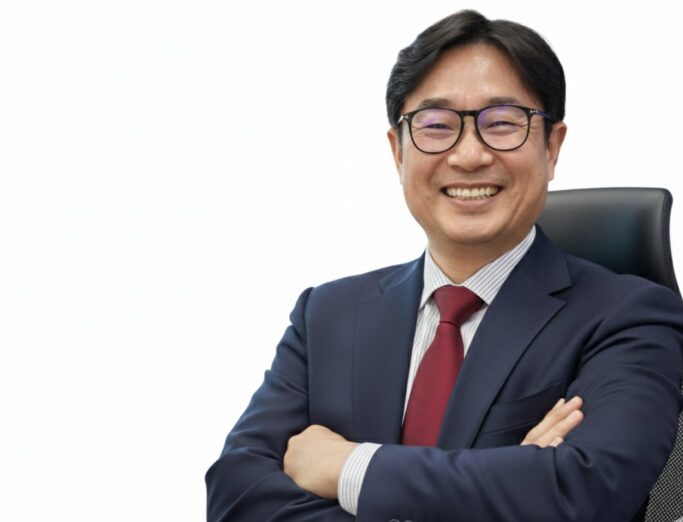
"The mindset created by the 'that's just how it is' custom is the key to preventing this from happening. We need to change the environment first."
The reason CEO Jo Gwang-hyung started Egotech was the 'small inconveniences' and 'familiar risks' he repeatedly encountered in industrial settings.
"People working in the field accept the inconvenience and risks by saying, 'This is just how it is.' However, accidents occur within these practices, and some people get injured or lose their jobs."
CEO Cho Gwang-hyung cited tasks requiring repeated bending, environments requiring the forced dragging of heavy equipment, and work areas with overlapping radii but without clear control standards as challenges. However, these issues were not properly recognized in the field.
"If no accidents occur, they're treated as if nothing happened. When accidents do occur, they're often attributed to individual negligence. Unless this structure changes, the same accidents are bound to happen again."
Egotech's starting point was clear: "Let's change the environment, not the people."
The goal was to create an environment where anyone could work safely, rather than relying on the worker's skill or attention.
"Workers always do their best, but if the height, weight, operating method, and movement path of the equipment don't match the human body, fatigue and mistakes are bound to accumulate. Safety and efficiency aren't mutually exclusive. When the environment adapts to the human body, both improve."
“A well-designed work environment improves not only safety but also productivity,” he added.
Shock-absorbing safety bars reduce repair costs by 30-50% and shorten recovery times by 80%.
Egotech's flagship product, the flexible safety bar, has overcome the fundamental limitations of existing steel guardrails.
"Existing steel guardrails are designed with yield strength and rigidity in mind. Rather than absorbing impact energy within the structure, they redirect it back toward the vehicle and workers. Field accident analyses have shown that even low-speed collisions of 6 to 10 km/h repeatedly result in vehicle frame damage and driver injuries."
The flexible safety bar is designed to effectively absorb impact energy. The elastic polymer and flexible post dissipate kinetic energy through progressive deformation upon impact, returning to a near-original shape after maximum deformation. "In comparable tests under identical conditions, peak impact loads were reduced by approximately 40-60% compared to steel guardrails. This is based on a vehicle mass of 1.5-2.5 tons and an impact speed of 8-12 km/h."
The actual on-site effectiveness has been proven numerically. While damage to bumpers, fork carriers, and body frames was common in collisions with steel guardrails, the rate of vehicle operation resumption without functional impairment increased in areas where flexible safety bars were applied.
“In some cases, vehicle repair costs for the same type of collision have been reduced by an average of 30 to 50 percent.”
Maintenance times have also changed significantly. Steel guardrails required an average of 4-8 hours of downtime after a collision, requiring cutting, welding, and repainting. In contrast, flexible guardrails can be repaired immediately, requiring only partial replacement of the post or rail, or without replacement, reducing repair times by 60-80%.
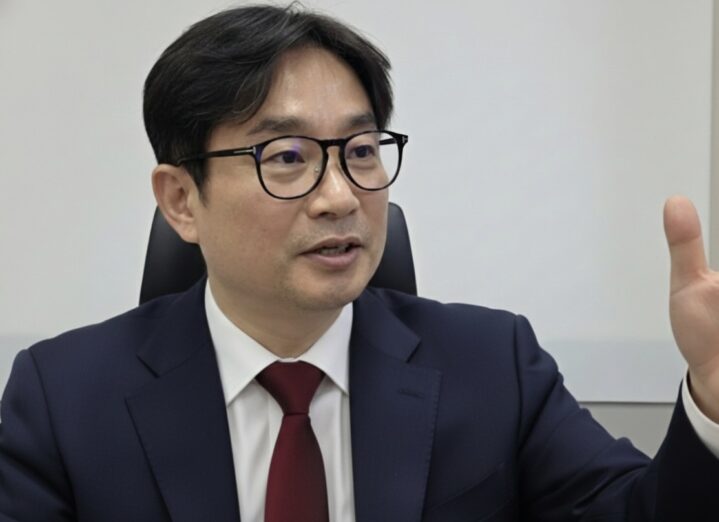
From smoking booths to AI safety systems, "25 years of evolution has been driven by the field."
Egotech's business expansion wasn't a roadmap designed from the beginning. As we solved one problem, the next naturally emerged, and these developments accumulated over time. Our initial business was the distributorship of indoor smoking booths called "Smoke Cabins."
"At the time, smoking areas in industrial settings weren't just a convenience; they were a simultaneous issue of work flow, air quality, and safety management. With clearly separated smoking areas and streamlined work flow, unauthorized smoking, fire risks, and decreased concentration were all reduced. It was a valuable experience that showed how a single facility could impact the entire work environment."
The topic then expanded to include safety bars, guardrails, and work assistance devices, addressing the relationship between "people, space, and structures." The next turning point was "moving hazards." Mobile equipment like forklifts were difficult to predict and caused significant damage when accidents occurred. Existing warning lights and warning sounds had the problem of "alarm fatigue," where workers became desensitized to warnings because they could not distinguish between dangerous and non-dangerous situations.
The rear sensor also only detected the presence of obstacles and could not distinguish between people and equipment.
"Because the same thing happens to pallets, racks, and walls, workers tend to turn off or ignore the alarm. Safety equipment becomes a mere formality."
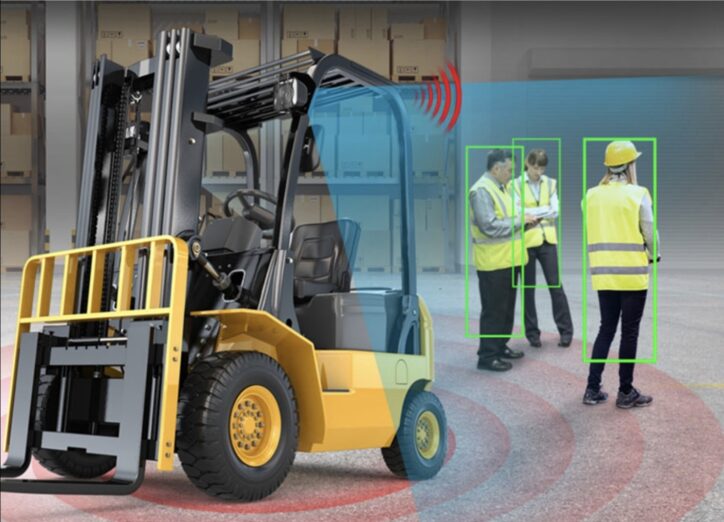
According to CEO Cho Kwang-hyung, the "Forklift AI Human Recognition 4-Channel Solution" uses four cameras—front, rear, left, and right—to perceive the forklift's surroundings in three dimensions. Among them, it prioritizes identifying "people." It then considers distance, direction, and approach speed, intervening only in situations with a high risk of accidents.
"It's designed to deliver meaningful warnings, not to warn in every situation. The risk is assessed differently when a person is rapidly approaching the forklift's direction of travel than when they're stationary and maintaining a certain distance."
Cranes, a key risk factor for major accidents, are prevented in advance with near-miss data.
Large crane operating areas are at a high risk of serious accidents. Because cranes operate in a wide radius and carry heavy loads, even a small misjudgment can lead to immediate, fatal consequences. Reference data from major manufacturing sites reveals a recurring pattern of near-misses occurring before actual accidents.
In the field of industrial safety, this is called "hiyari-hot" data. Hiyari-hot, meaning "a close call" in Japanese, is data that records near-misses, situations that did not result in an accident but were dangerous. In the crane field, recurring hiyari-hot patterns are clear. These include the risk of interference between cranes, personnel entering the crane's operating radius, signaling system errors, swaying of the lifting object, and poor sling attachment.
"There have been repeated instances of overlapping travel ranges or of the hook and trolley approaching columns, pipes, and equipment frames. While no collisions have yet occurred, from the worker's perspective, these are classic near-misses, prompting the operator to think, 'If only we had gone a little further, we could have done it.'"
He explained that this data has transformed the entire spectrum of education, process, and facility investment.
"We've moved beyond legal or theory-based training and strengthened our scenario training, focusing on real-world near-miss incidents. By understanding the specific situations that occur immediately before an accident occurs, workers gain a realistic sense of risk that goes beyond regulations."
From a process improvement perspective, the risk of recurring interference has led to process redesigns, such as adjusting work sequences or limiting simultaneous operations. Equipment investment decisions are also based on Hiyari-Hot data.
If interference risks recur, the introduction of crane interference prevention systems or operating range detection sensors will be considered. This represents a shift from safety management that relied on "human attention" to one where "risks are absorbed by the system."
Field-Based Problem Definition: The Key to Global Competitiveness
Egotech has grown by reinvesting its revenue in field testing and product improvement rather than attracting external capital. Initially, sales were stable, centered on products for improving work environments and safety hardware. After the hardware business achieved stability, it expanded into AI- and sensor-based smart safety systems, shifting its revenue structure from one-off deliveries to project- and system-based offerings. Egotech's greatest strength in the global market is its ability to define problems directly in the field.
"Many global competitors focus on standardized products and platforms to conquer the market. In contrast, we design solutions by analyzing specific industries, processes, and even worker behaviors. While this may not be feasible for mass-market sales, it leads to a high level of trust in terms of reducing accidents and improving operations."
Our experience in designing both hardware and operational logic, along with our ability to customize and provide rapid feedback, are also key competitive advantages. Our overseas strategy is a step-by-step approach, combining direct exports with local partnerships.
He envisions Egotech's future as a company that proactively identifies and designs structures to mitigate on-site risks. Egotech aims to safely collect data generated from physical sites, such as forklifts, cranes, and workspaces, and then return it to the field.
"Rather than reacting to single incidents or events, it's crucial to proactively detect danger signals by analyzing repetitive behaviors and environmental conditions. Near-miss data like 'Hiyari-Hot' is a key asset in this process."
CEO Jo Gwang-hyung offered clear advice to junior safety startups.
"The safety industry struggles to achieve rapid results. It takes time to not only achieve technological perfection but also gain the trust of the field. Therefore, accurately defining problems and consistently addressing them is more important than rapid growth."
You must be logged in to post a comment.