



Companies pour significant budgets into organizational culture and team-building workshops. However, once the event is over, there's nothing left. The entire process, from recruiting speakers to organizing the event itself, ends up being a one-time event. This structure, which has persisted for 20 to 30 years, makes it difficult for HR managers to determine whether the event is a good fit for their organization, and instructors often lack context for why the request was made.
Innertrip began at this point. Redefining workshops from "consumption events" to "design solutions," we've conducted over 8,000 programs.
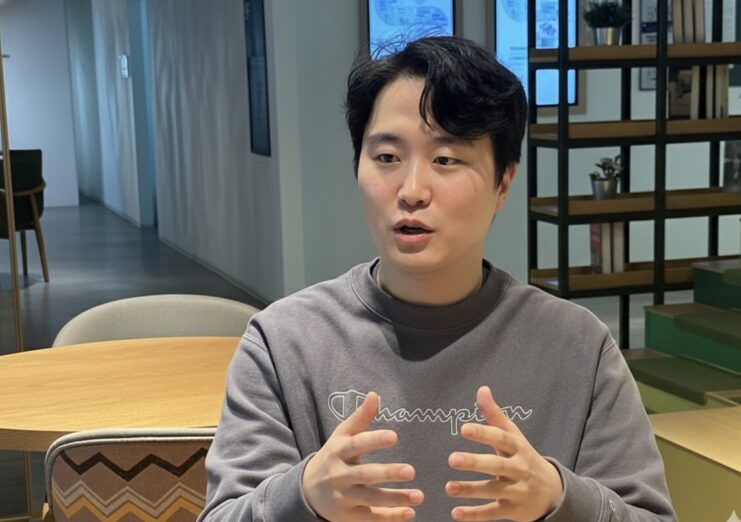
"I served as department representative for four years during college. I personally planned everything from orientation to MT and graduation ceremonies."
Kim Du-hyeon, CEO of Innertrip, began by recounting his time at Inha University. He explained that his role wasn't simply to select locations and arrange programs.
“It was a place where we had to constantly think about why we were holding this event and what should remain for people after it was over.”
He realized one thing along the way: the success or failure of an event hinges more on its design than its content itself. Even within the same program, a clear purpose and context significantly impacted participant engagement. After graduation, that experience resurfaced in a different way.
"Hearing the stories of friends who've gone to companies, I had this thought: Companies clearly spend money, but why aren't workshops memorable?"
It turns out that many workshops operate without any regard for organizational context or purpose. They hire a speaker, run the program for the day, and then end the event. This simple structure has been repeating itself for decades.
CEO Kim Du-hyeon continued, "This wasn't a problem with individual programs, but rather a problem with market structure. I wanted to apply the 'importance of design' I experienced firsthand as a student to the corporate workshop market."
That's how the startup got its start in July 2018. However, the market didn't move easily. He recalled, "The hardest part was the inertia of 'this is how we've always done it.'" Companies still sought instructors by phone and email, and instructors managed their schedules using personal messengers and Excel. So, he took a different approach. He boldly disclosed prices and implemented an IT system.
"HR managers aren't just buyers. They're the ones who persuade internal stakeholders and take responsibility for the results. I believe they need to be able to explain why a certain price is offered and make comparisons possible."
This transparency played a role in building initial customer trust. In particular, clarity of pricing structures and operational processes became key criteria during internal review processes within large companies. CEO Kim Du-hyeon stated, "A system is not simply a convenient feature; it's a language that enables trust."
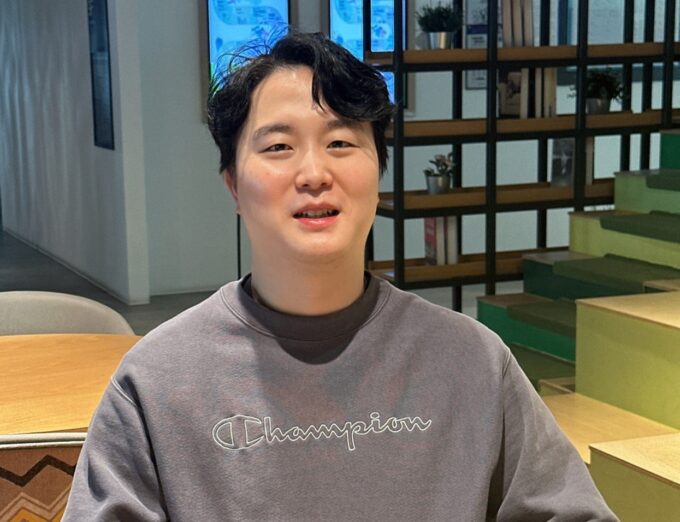
The trust built in this way began to show in numbers. Innertrip, which recorded annual sales of 1.2 billion won upon incorporation in 2022, has continued its steady growth since then. Sales are expected to reach approximately 2.15 billion won in 2024, and the target for 2025 is 3 billion won. This achievement was achieved solely through sales, without any external investment.
"Rather than simply external growth, we prioritize repeat customer rates and annual spending growth per customer as key indicators. Rather than being a one-time event company, we aim to be an ongoing partner."
Indeed, his statement is no exaggeration when you look at our client base. Innertrip has conducted over 8,000 workshops. We collaborate with some companies on dozens to hundreds of programs annually. Rather than one-off events, our structure encompasses quarterly workshops, leadership and organizational culture training, and annual program design. We have secured over 4,000 corporate clients and a network of over 1,000 instructors and partners. Starting out primarily with large corporations, our client base has now expanded to include mid-sized companies and startups.
I asked CEO Kim Du-hyeon about his "turning point." After a moment of reflection, he chose Dale Carnegie sales training.
"My perspective on sales has completely changed. It's no longer about explaining the program well, but about understanding what burdens this customer is currently facing."
So, they changed their approach. Before explaining the program, they began analyzing why the workshop was necessary, who was struggling internally, and what problems would arise if the workshop failed. Since then, they say, their sales flow and consulting methods have noticeably changed.
“Even now, internally, we ask ourselves, ‘Do we understand this customer’s problem accurately?’ before asking, ‘This program looks good.’”
The conversation naturally turned to Innertrip's signature programs. The Neon Sign and Squid Game programs played a significant role in introducing Innertrip to the market. The Vision Neon Sign is a process for teams to interpret and visualize the company's vision and slogan. The Squid Game is designed to foster collaboration, communication, and decision-making, rather than competition.
“The reason it gained popularity was because it was structured to convey the organization’s message through play, rather than simply being an experience.”
But he said the atmosphere is a little different these days.
"These days, educational and experiential content connected to AI is receiving a better response. Rather than simply explaining AI as a technology, programs that allow people to experience how it's used in practice and how it can transform the way our organizations work are rapidly spreading."
He viewed this not as a simple trend shift, but as a fundamental transformation. CEO Kim Du-hyeon emphasized, "If neon signs and squid games were the gateway to organizational culture, AI programs are being embraced as content that changes the very way organizations operate."
The company continued its expansion efforts. CEO Kim Du-hyeon cited the support from the Incheon Tourism Enterprise Support Center as a turning point, expanding from a "workshop company" to a "MICE-based planning company." Through this project, the company gained access to accommodations, workshop and event spaces, experiential content, and operational partners in the Incheon and Gyeonggi regions, enabling it to operate residential workshop and event packages.
"We didn't simply 'add' tourism resources. We designed a structure that naturally flows from morning educational and organizational programs, afternoon local experiences, to evening networking and lodging."
He added, "Our experience working with public institutions has become a benchmark for trust with corporate clients." While our current focus is on workshops, we're expanding into areas like space, corporate event management, and incentive tours. We're also fleshing out our overseas expansion plans, initially targeting the Central Asian market and later moving into the US market. We're already accumulating operational experience and data through team retreats and incentive tour projects for global clients in Kazakhstan, Uzbekistan, Indonesia, and Taiwan.
"Starting a business isn't about romance. It's about meeting customers every day. A word from an actual customer can change more than an idea in your head. In the beginning, a program I created solely on the assumption that it would be good was completely ignored. If I were to start a business again today, I would reach customers sooner and build the system more slowly."
What is Innertrip's ultimate goal? CEO Kim Du-hyeon stated, "Rather than simply driving sales growth, we aim to become 'the platform that comes to mind first when companies consider workshops and organizational events.'"
You must be logged in to post a comment.