



“If you can’t measure it, you can never solve the pollution problem.”
This is the conclusion reached by HSE CEO Jeong Jong-hyeon after 30 years of research in environmental engineering, public health, and preventive medicine.
International environmental regulations, which will go into full effect starting in 2024, all demand one thing: proof of greenhouse gas reductions.
For example, starting this year, the EU Carbon Border Adjustment Mechanism (CBAM) began requiring companies to provide data on the actual greenhouse gases emitted when manufacturing exported products.
Led by CEO Jeong Jong-hyeon, HSE has developed equipment that removes greenhouse gases and toxic substances using plasma technology, over 100 special catalysts, and AI systems. This technology provides an integrated solution that enables real-time measurement, recording, reporting, and verification.
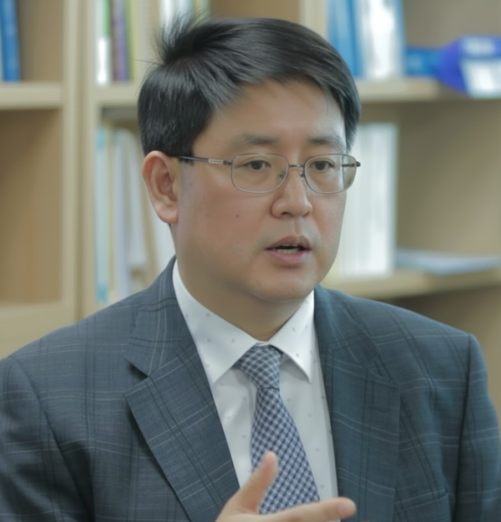
If you can't prove it, it's hard to solve
CEO Jeong Jong-hyeon has been researching the health of local residents and workers, improving the work environment, and preventing occupational diseases in the field of greenhouse gas reduction. He also tracked the health of residents near the Pohang Iron and Steel Complex and analyzed the distribution of environmental disease patients in industrial complexes nationwide, realizing the importance of a measurement, reporting, and verification system.
But the reality wasn't easy. Existing equipment only treated one pollutant, and toxic substances continued to accumulate in the bodies of residents and workers. It was like administering cold medicine to a patient suffering from multiple illnesses simultaneously. An integrated system was needed to remove toxic substances, greenhouse gases, and hazardous air pollutants, and to accurately measure, report, and verify them.
Lowering the operating temperature by 400℃ and achieving a removal rate of 74-99%
HSE has developed greenhouse gas reduction equipment based on plasma technology, over 100 special catalysts, and AI systems.
Key Achievements of the HSE System
– Operating temperature lowered by 400℃ compared to existing combustion equipment
– Removal of toxic substances, greenhouse gases, and hazardous air pollutants using over 100 types of special catalysts.
– Removes 74-99% of methane, nitrous oxide, perfluorocarbons, carbon dioxide, and PFAS
– Application of high-temperature and low-temperature plasma, hybrid technology, heat recycling, low-carbon, and energy-saving technology
"Their biggest advantage is that they burn less, break down less, and stop less, all while meeting environmental regulations with greater ease. Lowering the operating temperature by 400°C means they don't need to burn as much fuel. This significantly reduces fuel costs and reduces greenhouse gas emissions."
While existing high-temperature combustion equipment requires continuous fuel injection to preheat and maintain temperature, the HSE system drastically reduces fuel usage from the start.
He explained, "Refractors, burners, valves, and piping can crack and deform due to heat, leading to leaks of contaminants. High temperatures make control difficult, resulting in frequent unexpected downtime." He added, "When operating temperatures drop below 400°C, equipment lifespan is affected. The HSE system significantly extends component life and reduces thermal shock through low-temperature operation."
"Unplanned downtime is drastically reduced, maintenance cycles are increased, and emergency calls at night and weekends are reduced. The operations team no longer has to worry about being left on guard."
International environmental regulations require proof of reduction.
CEO Jeong Jong-hyeon defined HSE as a "2050 Carbon Neutrality Reduction System Specialist" because international environmental regulations will begin in earnest between 2024 and 2035. All major environmental regulations require measurement-based evidence.
Major international environmental regulations
– EU Carbon Border Adjustment Scheme: Requires actual greenhouse gas emissions data from the production of exported products starting in 2026.
– IFRS S2: Requires corporate climate risks and emissions to be disclosed at the financial statement level starting in fiscal year 2024.
– Korean Sustainability Standards: Reporting of actual or adjusted direct, indirect, and supply chain emissions
– European vehicle emissions standards: Requirements for nanomaterial reduction devices and real-world driving data
– U.S. Methane Regulations: Mandatory Methane Measurement, Reporting, and Verification in the Oil and Gas Sector
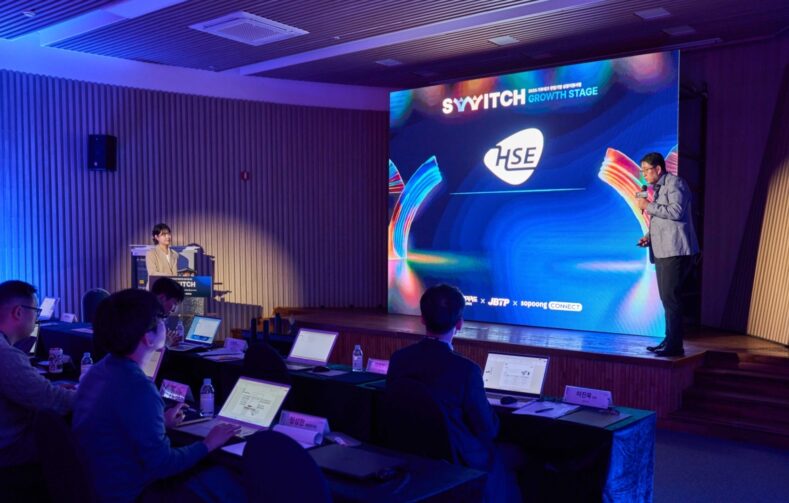
HSE is developing not only greenhouse gas reduction equipment but also an AI-integrated measurement, reporting, and verification platform that enables environmental regulation enforcement. Its headquarters and factory are located in Daechang-myeon, Yeongcheon-si, Gyeongsangbuk-do. It also has a branch in Wanju-gun, Jeollabuk-do. Its staff consists of three full-time employees and a collaborative research team of 15. It is expected to achieve annual sales of 379 million won by 2024. It possesses a world-class greenhouse gas reduction system that has received new technology certification from the Ministry of Trade, Industry and Energy and a success rating from the Ministry of SMEs and Startups and the Korea Environmental Industry & Technology Institute.
"The HSE system has now signed a contract for a petrochemical process and a waste plastic hydrogen production process, and we look forward to this contract."
The HSE system operates at temperatures between 800 and 1,000°C. It's significantly cheaper than existing combustion equipment, which sells for between 1 and 3 billion won. HSE holds over 90 patents and numerous certifications. HSE aims to supply approximately 600 systems by 2033. CEO Jeong Jong-hyun believes the most important factors are a "verification system" and "standardization."
"While technological improvements are important, standardized production, installation, and verification systems are even more crucial. Regulators and global customers want to measure, report, and verify products in a unified manner."
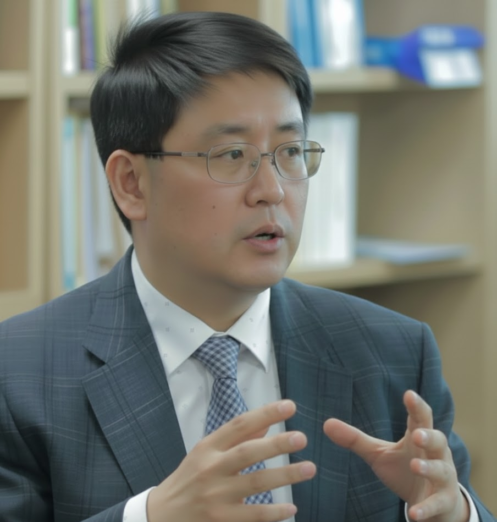
HSE's business model extends beyond equipment sales to include maintenance, consumables, and carbon credits. He doesn't want HSE to be remembered as a generic greenhouse gas reduction equipment company.
"Carbon markets and emissions trading require verification data to create value, and the platform's role is to connect that connection. We want to be remembered as an integrated measurement, reporting, and verification platform infrastructure company that proves 'reductions' and ensures regulations actually work."
You must be logged in to post a comment.