



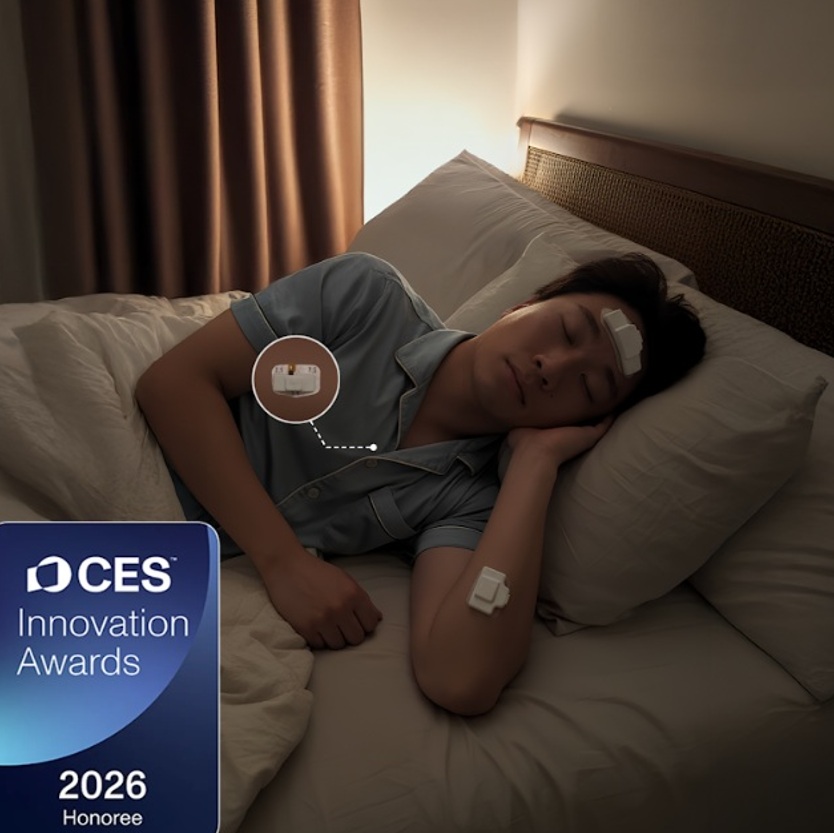
Wismedical, an AI-based wearable medical device company, announced that it won the Innovation Award in the Accessibility & Longevity category at CES 2026, the world's largest IT and electronics exhibition. This recognition marks the international recognition of its technological competitiveness for its sleep diagnostic solution, which combines wearable medical devices with AI technology.
At this exhibition, Wismedical unveiled Tedrim, a wireless, wearable sleep diagnostic patch based on soft electronics that attaches to the skin. Designed to measure a variety of bioelectrical signals, including brain waves, electrocardiograms, electromyograms, and respiratory signals, with three ultra-small devices, the device was developed to enable long-term, repeated measurements in everyday life, rather than in a hospital setting.
During CES 2026, the Wismedical booth was visited by medical device companies, hospital officials, and digital healthcare investors from North America and Europe. Discussions focused on technological collaboration and commercialization opportunities, focusing on design considerations for wearability and medical accessibility, as well as AI-based signal analysis technology.
Conventional sleep studies have limited accessibility due to the in-hospital testing environment, cost burden, and difficulty with repeated measurements. Wismedical's wearable sleep diagnostic technology is gaining attention as an alternative that overcomes these limitations and allows for more convenient monitoring of various sleep disorders, including sleep apnea.
Wismedical, founded based on core technology from the Georgia Institute of Technology, possesses wearable hardware design and AI technology for bioelectrical signal analysis. Its unique ability to integrate development across the entire process, from sensor design to signal collection and AI interpretation, is a key feature.
Currently, Wismedical is conducting a national research and development project to advance the universal bioelectrical signal AI model, and is expanding the scope of technology application to various disease areas, including sleep disorders, based on data accumulated through wearable devices.
Meanwhile, Wismedical, a Seoul Bio Hub resident company, is strengthening its R&D and commercialization capabilities while gradually expanding its market presence through participation in global exhibitions and overseas collaborations.
You must be logged in to post a comment.