



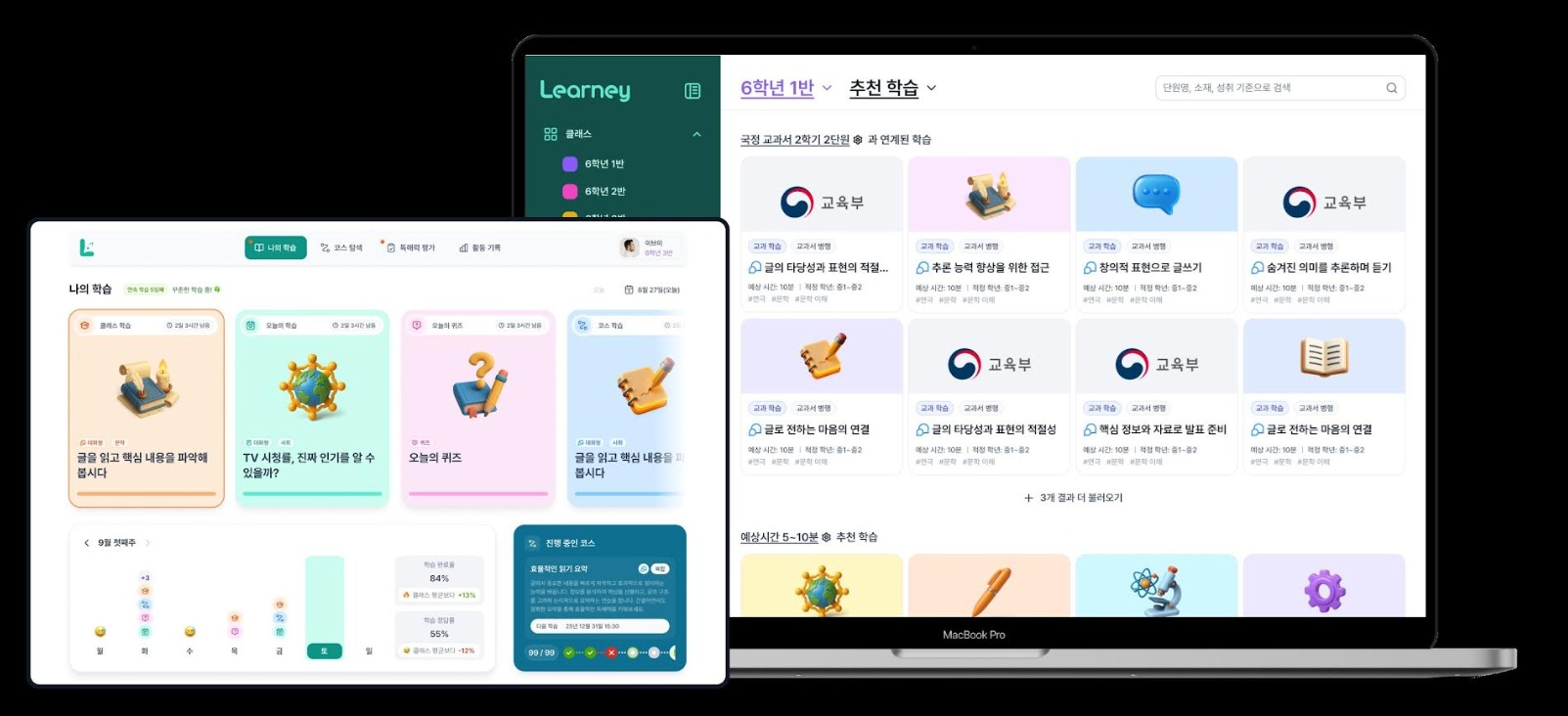
Learney, an AI-based Korean language and literacy education platform, has been selected as a finalist for the 'Advancing Language Literacy with Innovation' special track at the '2025 Global EdTech Startups Awards (GESA Awards).'
The Artificial Society, which operates Runy, announced that this selection demonstrates Runy's recognition as a meaningful example of a Korean language and literacy instructional tool that supports basic academic skills, both in domestic classrooms and in global educational settings. The track focuses on innovative and scalable educational technologies that strengthen core language skills such as reading, writing, speaking, and comprehension, and that embrace learners from diverse linguistic and cultural backgrounds.
Runy is a platform specialized in Korean language and literacy learning, providing an integrated approach to core language skills, including reading, writing, speaking, and listening. Rather than focusing on problem-solving, it provides explanations and feedback tailored to the student's understanding process, aiming to simultaneously reinforce basic academic skills and support academic instruction.
Another strength is its ability to integrate with classroom instruction. Teachers can manage the learning process before, during, and after class, and students can learn at their own pace, contributing to bridging the learning gap. Accordingly, Runy is expanding its use as a teaching tool that can be linked to the Basic Academic Ability Guarantee policy.
Lunny is expanding its presence in overseas markets by interacting with the National Council of Teachers of English (NCTE) in the United States and participating in the Dohe program, a global edtech accelerator in the United Kingdom. It has also been selected for two consecutive years by HolonIQ's "2025 East Asia EdTech 150" and has obtained domestic GS Software quality certification, ISO 27001 information security certification, and US ESSA Tier 4 certification.
Kim Ki-young, CEO of Artificial Society, said, “Runny was developed with the goal of supporting basic academic skills and utilizing it in the classroom rather than focusing on the technology itself,” and added, “We plan to continue to enhance the service so that it can contribute to reducing the learning gap in educational settings both domestically and internationally.”
You must be logged in to post a comment.