



-Even providing daily care for the elderly who do not qualify for nursing care… The role of private life care is drawing attention in an era of low birth rates and an aging population.
Created 200,000 jobs for women over nine years, expanding economic participation among women with an average age of 56 who have taken a career break.
Standardizing housekeeping services through a thorough manager training system… Why 2 million households chose us.
– As the first president of the Korea Home Care Platform Association, he led the way in resolving industry issues.
The Living Research Institute is changing its corporate name to "Cheongyeon." Previously, it was known by various names, including the corporate name "Living Research Institute," the service name "Cleaning Research Institute," and the abbreviated name "Cheongyeon." With this name change, Cheongyeon will clarify its brand identity.
The reason for this change in corporate name is that as the business expanded to include ‘Cheongyeon Hansang (home meal service)’, ‘Cheongyeon Care (daily care for seniors)’, and Cheongyeon Plus Shop (daily necessities commerce curation mall), it became difficult to represent the entire company with a single service name. Going forward, new services will be unified under the form ‘Cheongyeon OO’. Through this corporate name change, Cheongyeon is aiming to establish its identity as a life care platform that connects people with the help they need in daily life in a rapidly increasing number of single-person households, dual-income families, and an aging society.
Cheongyeon's flagship service, "Cleaning Lab," stems from CEO Yeon Hyun-ju's own experience. Having personally experienced the inefficiencies of housekeeping services, CEO Yeon became convinced of the need to apply Kakao Taxi's innovative model to the housekeeping service market, leading her to found Cheongyeon in 2017.
In just nine years, Cheongyeon has created jobs for 200,000 housekeeping managers nationwide. Starting with housekeeping, the service has expanded to include office cleaning, move-in and move-out cleaning, and air conditioner and washing machine cleaning. The cumulative number of registered households has surpassed two million, and last year's sales increased by 40% year-on-year. Nine years after launching its cleaning service, Cheongyeon is taking on a new challenge with the launch of "Cheongyeon Care," a senior care service.
We met with CEO Yeon Hyeon-ju at the Cheongyeon office in Pangyo, Gyeonggi Province, to hear about Cheongyeon's evolution from a housekeeping service to a comprehensive life care platform, including the achievements of the cleaning research center over the past nine years and new businesses such as Cheongyeon Care.
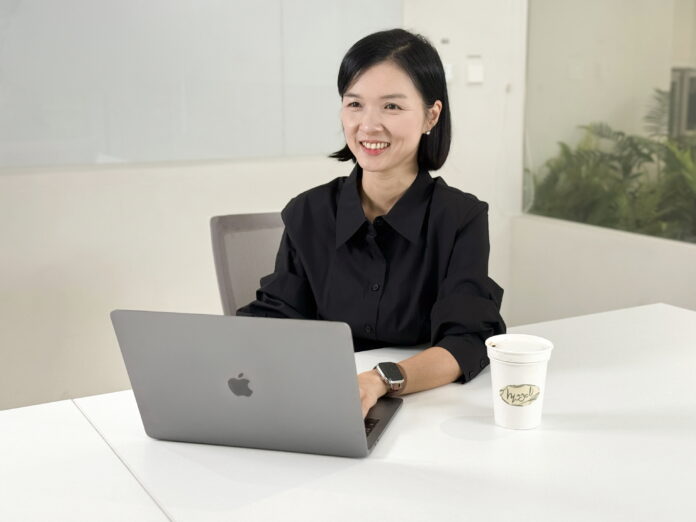
Cheongyeon Care is expected to address blind spots in elderly care.
Anyone aged 65 or older can apply for long-term care benefits under the National Long-Term Care Insurance. This social insurance system provides support for physical and household activities for those who have difficulty performing daily activities due to old age or geriatric illness. Applicants' physical and cognitive functions are assessed to determine their long-term care level. Benefits are divided into home care benefits, which provide visiting caregivers, facility benefits, which are provided upon admission to a nursing facility, and special cash benefits, which are paid to families in areas with limited facilities.
According to the 2024 Long-Term Care Insurance for the Elderly Statistical Yearbook published by the National Health Insurance Service, among the 10.4 million elderly people aged 65 and older covered by health insurance as of the end of 2024, 1.165 million were recognized as eligible for long-term care, accounting for approximately 11.2% of the population. The long-term care approval rate was 89.5% as of 2024, meaning that one in ten applicants was not recognized. The government's total long-term care benefit payments in 2024 exceeded 16 trillion won, an 11.6% increase from the previous year.
The National Assembly Budget Office projects that the long-term care insurance reserve fund will be depleted by 2030 due to the deteriorating financial situation. To overcome this crisis, some argue that diversifying payment plans and introducing an income-based differential payment system are necessary. However, amidst the rapid aging population and deteriorating financial situation, government support alone has limitations.
"Only 10% of seniors receive care. Not everyone who applies for long-term care benefits is eligible. There are blind spots where people need care but aren't receiving it. It's problematic that everyone, rich or poor, relies on government assistance. I believe we need a multi-tiered system, where those who can afford it use private services, and those who receive government assistance use government services."
Cheongyeon launched "Cheongyeon Care" late last year to serve seniors who fall outside the reach of government long-term care services. Anyone can apply, regardless of their level of care or income, and a professionally trained care manager is assigned to each client. The program provides emotional support, meal preparation, health management, daily living assistance, and basic housekeeping services. Upon agreement, walks and hospital accompaniment are also available. However, specialized care, such as medical procedures or specialized cleaning, is not provided.
Cheongyeon plans to focus on Cheongyeon Care this year. With nearly 90% of seniors not receiving nursing care, the market for care services they desire is vast. The infrastructure is also robust. With 200,000 managers, 2 million customer households, and a network of trust and support built over nine years, Cheongyeon is poised to take the lead in the emerging market of senior care.
Representative Yeon believes that the government and the private sector should complement each other, not compete. He emphasized the need for private services, saying, "If the government is responsible for caring for the most vulnerable elderly, such as the extremely poor, the elderly without family, and those with severe illnesses, the private sector should create diverse options for the middle-class and above, those with family members who cannot provide direct care, and those with mild illnesses before they become severe. A revitalized private sector will reduce the government's financial burden. Above all, all elderly people will be able to receive appropriate care tailored to their circumstances."
Creating jobs for 200,000 women
I asked what the nine-year achievements of the 'Cleaning Research Institute', which started in February 2017, were.
“Cheongyeon is the only company in the domestic service industry that has created this many jobs for women.”
Cheongyeon created 200,000 jobs. This isn't just a simple number. It's significant in that it opened up economic opportunities for women in diverse situations: women on career breaks, housewives juggling work and family, women in need of additional income, and those without a platform to showcase their talents.
The average age of 56 for housekeepers reflects the economic reality of Korean women. It's common for women in their 30s to take a career break after having children. As of 2023, Korea's female economic participation rate was 63.1%, ranking only 31st among 38 OECD countries. With 64.2% of economically inactive women citing childcare and housework as the main reason for their absence, the burden of family life is the biggest obstacle limiting women's economic activity.
Thorough training of managers to standardize services
Since its launch, Cheongyeon has prioritized manager training. This is because cleaning is never a static task. New tools are constantly being developed, detergent technology evolves, and each household's environment is diverse. To accommodate these changes, Cheongyeon produces and provides ten educational content pieces each week. Managers are required to complete these training sessions through the app.
Domestic services have long been dismissed as something anyone can do, dismissing it as requiring specialized skills or training. Cheongyeon has redefined domestic services as a specialized field and raised the bar for the entire industry through systematic training and management.
Cheongyeon's philosophy is clear: if you don't learn, you'll fall behind. Housekeeping services are a human endeavor, so there are variations among managers. To eliminate these variations and ensure all managers provide the same level of service, we provide rigorous training based on a standardized manual. Cheongyeon is the only company that offers this type of professional cleaning training.
Another competitive edge of Cheongyeon is its user experience. Housekeeping services frequently receive requests for changes. Customer requests are immediate and diverse, ranging from changing reservations to adjusting service cycles and changing managers. Cheongyeon anticipated all these situations and developed a sophisticated system that automatically responds to each one. This system ensures that all customer change requests are processed immediately.
"For platform businesses, I believe that simply matching is all that matters. Connecting customers and managers and managing basic information is often sufficient. However, Cheongyeon manages every step of the process after connection. The key is how to efficiently handle the moment-to-moment changes customers need."
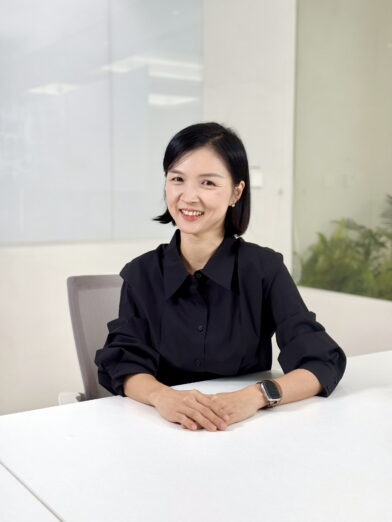
Beyond the business of housekeeping services, to industrial reform
CEO Yeon Hyun-joo has another role to play. Last November, major domestic home care platform companies joined forces to establish the Korea Home Care Platform Association, and CEO Yeon was appointed its inaugural president. As a private solidarity organization dedicated to institutionalizing the industry and supporting work-life balance, the association plans to protect worker rights, improve service quality, and implement policies to address the low birth rate and aging population.
The association's first mission is to standardize the various domestic care voucher programs offered by each local government. Currently, vouchers for domestic care services, single-parent families, and dual-income couples all have different budgets, support methods, and application procedures. Even within the same province, support levels vary from city to city. To resolve this confusion, the association plans to work with the central government to develop unified guidelines and standardize local government funding.
Expanding tax deductions for domestic helpers and caregivers is also a key task. This goes beyond simple tax benefits; it's a policy initiative aimed at fostering industry development. Every household spends significant amounts on domestic helpers and caregivers, yet these costs are not eligible for tax deductions at all.
"Families spend significant amounts of money on housekeepers and caregivers every year, yet there's no tax deduction for this. It's contradictory. Traditional market visits, movie theater admissions, and gym membership fees are all deductible. The result of introducing tax deductions is clear. It will bring 'shady' transactions into the 'sunny' light, making the industry more transparent and ensuring managers' rights are properly protected."
The Domestic Workers Act is also drawing attention. The core of the "Act on the Improvement of Employment of Domestic Workers, etc." (effective 2022) is that government-certified domestic service providers directly hire domestic workers.
"While the intention to strengthen worker protection through direct employment is sound, it's unrealistic. If you do the math, covering all four major insurances would require a 20% increase in service fees. Domestic services are not cheap, and this would put households out of reach."
Representative Yeon argues that direct employment alone is not the answer to worker protection. He believes that platform companies, when they function effectively, provide secure jobs. While not directly employed, Cheongyeon managers enjoy significant protections through a consistent customer base, systematic training, clear work processes, and dispute resolution.
"Even if there's no direct employment, the platform can be fully responsible. We need to consider flexible employment options.
This means that in an era of low birth rates and an aging population, if we want to encourage flexible participation in the female workforce, we cannot simply enforce the rigid framework of direct employment.
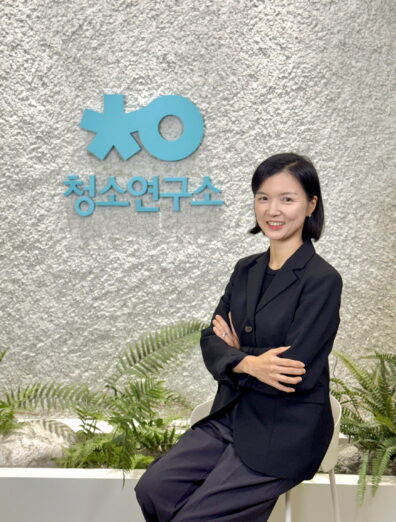
The domestic service industry has long been considered low-barrier to entry, low-skills, and accessible to anyone. However, Cheongyeon has revolutionized and standardized the industry through technology, education, and systems, elevating the overall standard of the industry.
Cheongyeon's next goal is clear: senior care and expansion into a comprehensive life care platform.
We must watch Cheongyeon's journey to see if it can become the innovative company that provides the new life care demanded by the era of low birth rates and an aging population.
You must be logged in to post a comment.