



– The first domestic MICE company to define international conferences as an 'industry'
A multilateral diplomatic operating structure built on eight summits and over 2,000 international conferences.
– Demonstrate 40 years of field experience and global consulting capabilities verified through APEC 2025
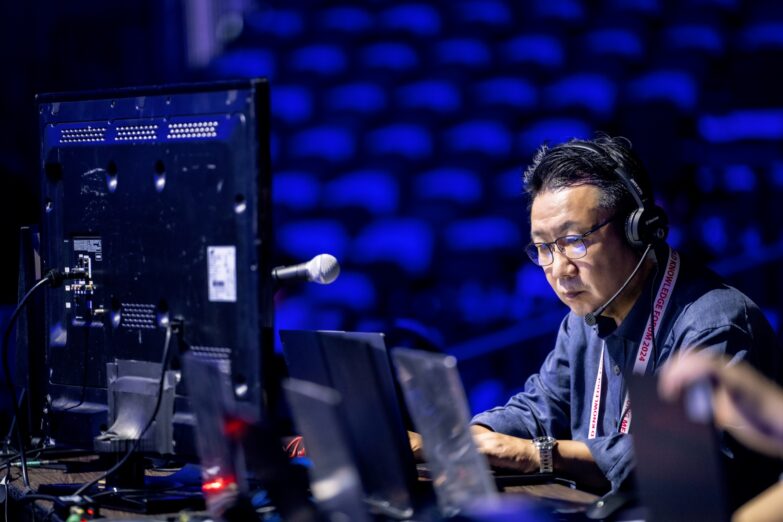
Before the word "startup" even existed, someone was already doing what startups do today. In the mid-1980s, when there was no market, no investment, and no references, a small organization started with the challenge of hosting a proper international conference. Forty years later, it has become Korea's leading MICE company, operating and consulting for global summits, including the APEC Summit.
Intercom CEO Choi Tae-young was the architect of the scene. From conferences that became the face of the nation, to summit diplomacy that captured the world's attention, to spaces where industry and discourse were born, his 40-year trajectory overlaps with the very way the Korean MICE industry was created.
Choosing a 'market no one has ever been to'
Intercom didn't start with a grand business plan. In 1985, the very concept of professionally planning and managing international conferences was virtually nonexistent in Korea. While international speakers and events were held, these conferences were largely one-off events, involving interpretation, protocol, and event management.
CEO Choi Tae-young viewed international conferences as an industry unto itself. He recognized that international conferences were not mere events, but rather sophisticated communication platforms through which nations and organizations could present themselves to the world. He founded a company called International Communication Convention Services (ICCS) INTERCOM, and set out to create a "proper way" to hold international conferences.
By successfully hosting the "1988 Seoul Olympic Sports Science Conference," Intercom became the first company in Korea to computerize international conference operations and the first private company to secure a turnkey international conference contract. This decision defined a market that didn't exist before and established its own standards.
"Back then, it was a difficult time to even call international conferences a business. However, someone felt it needed to be systematized, and we offered to take on that role."
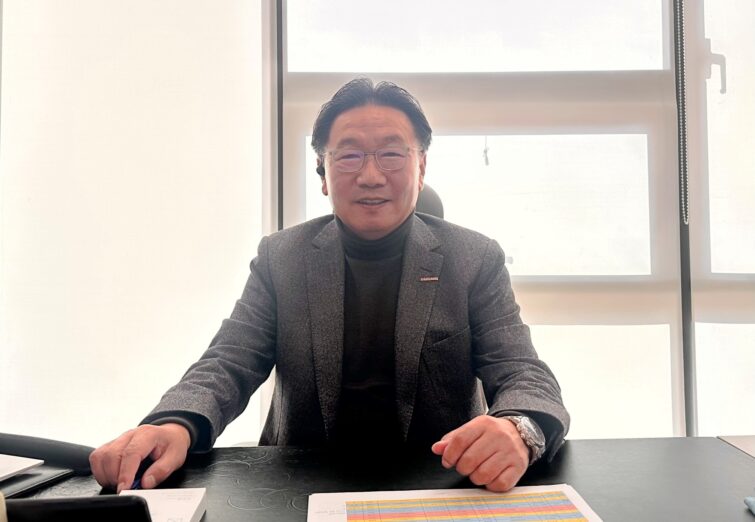
Summits and the World Knowledge Forum: 40 Years of Shaping the Face of the Nation
Intercom's growth story is intertwined with Korea's expanding international presence. Founded in 2000, the World Knowledge Forum has established itself as Asia's leading global knowledge platform for 25 years. The World Breast Cancer Conference, launched in 2007, continues to this day, with Intercom participating as a core PCO.
Intercom's name appears repeatedly on the international stage of state diplomacy. It has managed key multilateral diplomatic events, including the Seoul G20 Summit and the Seoul Nuclear Security Summit, the Korea-ASEAN Special Summit, the Korea-Africa Summit, and the Korea-Pacific Islands Summit. It has hosted eight multilateral summits, a record for the country.
It's clear why Intercom has been repeatedly chosen in this arena where failure is unacceptable. Having hosted over 2,000 international conferences and conventions, this accumulated experience is synonymous with trust.
"International conferences aren't about events, they're about trust. One mistake can ruin the impression on a country and the entire organization."
The most notable recent development in Intercom's activities has been the 2025 APEC Summit. Intercom has been responsible for the operation of numerous meetings, including the APEC Informal Senior Officials' Meeting (ISOM) and the first, second, and third Senior Officials' Meetings (SOMs), the establishment and operation of the summit media center, and the overall management and operation of multilateral diplomatic events, including the 2025 APEC Summit.
APEC is not a single event. It's a complex diplomatic project, spanning months, involving senior officials and working-level meetings, national delegations, international organizations, and thousands of media personnel. It's not just individual events; it's a stage where the entire operational structure must operate simultaneously. At the heart of this APEC operation lies Intercom's extensive experience in managing multilateral summits and its collaborative structure. The presence of a team operating under the same standards and methods ensured the stable management of this complex, long-term agenda.
CEO Choi Tae-young explained, “This was an event that clearly demonstrated the operating method we have developed over a long period of time.”
Not an 'event' but an 'industry'
The keyword that has permeated Intercom's 40-year history is not "event experience," but "industry structure." While many companies have experience hosting international conferences, few have created systems that make them repeatable. CEO Choi Tae-young was aware of this gap early on. He believed that establishing standards and trust that enable future meetings is more important than successfully conducting a single meeting.
When Intercom was founded in 1985, government-sponsored international events weren't typically contracted out to the private sector on a turnkey basis. Most were limited to partial contracts, and it was unprecedented for a private PCO to handle overall operations. The turning point came in 1999. During President Kim Dae-jung's presidency, the three-day live broadcast "International Conference on Democracy and Market Economy" was commissioned on a private turnkey basis, and Intercom assumed overall management of the event. This event marked a turning point in the structure of government-sponsored international conferences.
“That event wasn’t just a project; it was the first instance of proving that the private sector can also oversee national events.”
Since then, Intercom has not been a specific event, but rather a series of multilateral summits held under the same structure and standards. This process has naturally formed a long-term collaborative structure that has shaped the field of multilateral diplomacy. Some partners have shared the same platform for over 30 years, and many for over 20 years.
What mattered most was not how partners were used, but how they grew together. Intercom didn't treat its partners as mere subcontractors, avoiding excessive price pressure or routine negotiations. It believed that investing in equipment and systems would elevate the quality of work on the ground.
"International conferences aren't something that can be accomplished by just one person. Teams that are the best in their respective fields must operate with the same standards."
That's why CEO Choi Tae-young says, "A successful international conference has no episodes." The very fact that the schedule proceeds without any special incidents is a testament to the proper functioning of the systems and relationships.
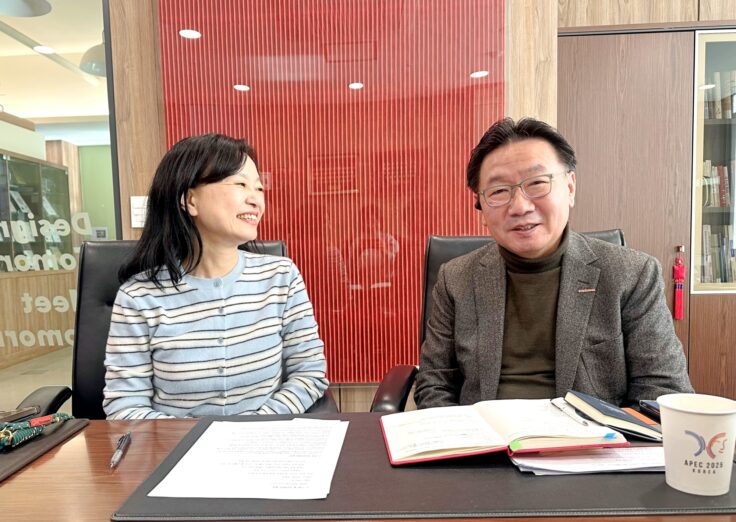
Korea's MICE, first discovered by the world
Intercom's experience wasn't limited to Korea. An official from the UAE presidential palace, deeply impressed by the 2012 Nuclear Security Summit held in Korea, later returned to Intercom. He remembered the meeting management style he'd experienced in Korea, and this experience led Intercom to receive a consulting offer from the UAE.
This project led to unprecedented overseas exports in the convention services industry, and Intercom became the first company in the industry to achieve this milestone, receiving a $1 million export tower award. Previously, Intercom had received requests for operational and advisory services for government-sponsored international events in countries such as Mongolia and Myanmar. Intercom has played a role not only in conference operations but also in strengthening the structure and standards.
Establishing a corporation in New York, USA, and expanding our global business was in the same vein. This wasn't simply a matter of event management; it was a process of verifying that the operational methods we'd developed in Korea could be applied overseas.
"As K-content gains traction, perceptions of how Korea operates international events have also shifted. We're no longer just following suit, but now we're questioning the standards."
40 years proven in numbers, and the next stage
Intercom has hosted eight multilateral summits, setting a domestic record, and has hosted over 2,000 international conferences and conventions. It was the first company in the industry to receive the Silver and Stone Tower Orders of Industrial Service Merit, and has also received numerous Presidential Commendations. Most importantly, it has maintained a debt-free management system for nearly 40 years, maintaining a financial structure uncommon in project-based industries.
However, CEO Choi Tae-young's next goal isn't about numbers. The future he envisions is about making the standards of MICE operations cultivated in Korea into a "global standard" applicable to the international stage. This approach isn't about exporting events, but rather about taking the structure, systems, and collaboration methods with you.
"I want to continue to operate in a trustworthy manner overseas, just as I have done in Korea. I believe Korea can become a benchmark in the MICE industry."
Starting in an era when the term "startup" didn't even exist, he pioneered the language and structure of the industry. Intercom CEO Choi Tae-young's 40 years aren't just a chronicle of a single company, but the very story of how the Korean MICE industry has connected with the world. And that trajectory now extends beyond national borders.
You must be logged in to post a comment.